
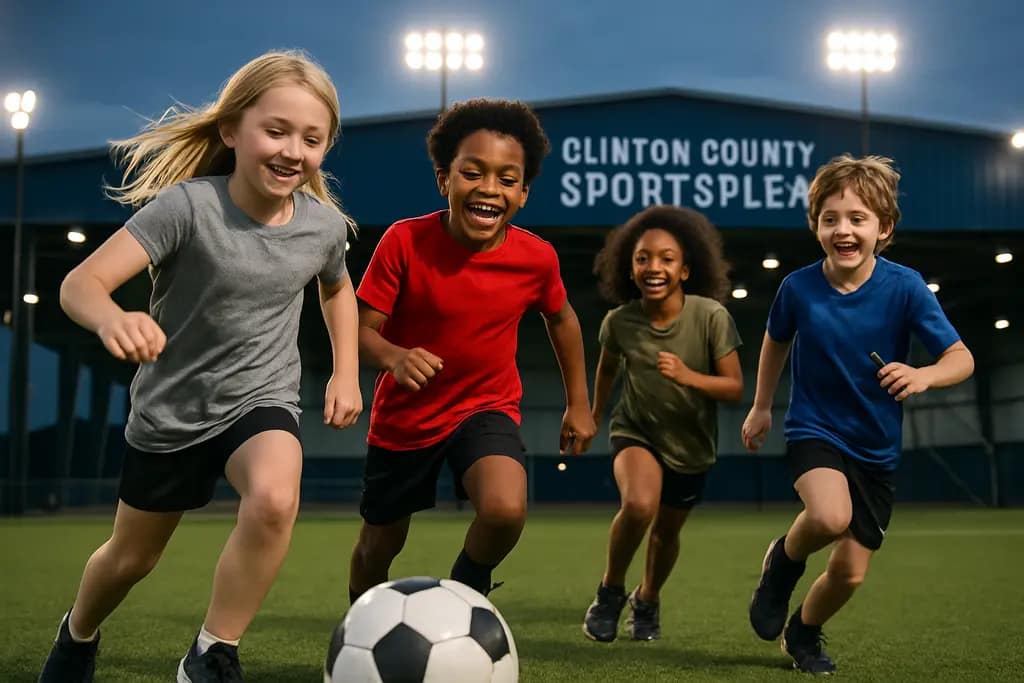
Clinton County Sportsplex is taking shape in Aviston, Illinois, as a sports-first answer to a local need: more indoor space for young athletes to practice, train, and keep improving when outdoor fields and school gyms are not enough. As of September 3, 2026, construction was underway on the project, according to the Southern Illinois University System release on the Sportsplex development.
The facility is being developed by Melinda and Ryan Voss, who started the project to address a shortage of indoor practice space in rural Clinton County, according to the same Southern Illinois University System release. That purpose matters because youth sports access is often shaped by simple but powerful limits: court time, weather, transportation, scheduling, and cost. A local indoor facility does not solve every barrier, but it can give coaches, families, and athletes a stronger base for training and team connection.
For Aviston and the surrounding area, the project also points to a broader community story. Youth athletics can support confidence, leadership, school connection, and shared local pride when programs are built with families in mind. The best sports spaces are not only about square footage. They become places where a fifth-grade basketball player learns how to listen, a new volleyball team finds practice time, a baseball player gets extra swings, and parents see their community investing in young people.
How Clinton County Sportsplex Expands Access
A Facility Built Around Practice Needs
The planned 15,000-square-foot indoor sports and recreation facility will include two full-size courts for basketball and volleyball, a 5,000-square-foot indoor turf field, four full-size batting cages, and two HitTrax baseball and softball simulators, according to the Southern Illinois University System release. The same release said those amenities were not available elsewhere in the surrounding region at the time of publication.
That mix of space matters for player development. Basketball and volleyball teams need predictable court time to build timing, communication, and skill under pressure. Baseball and softball players need year-round reps, especially in Illinois months when outdoor work can be limited. Turf space can support soccer-style footwork, speed work, fielding drills, and general conditioning. When one building can support multiple sports, families with more than one athlete may gain a clearer path to consistent activity.
The Clinton County Sportsplex also plans to include a concession area and future basketball and volleyball tournaments, according to the Southern Illinois University System release. Tournaments can help bring teams, families, coaches, and local businesses into the same orbit. For young athletes, tournament settings also create lessons that practices alone cannot fully teach: handling nerves, responding after a loss, supporting teammates from the bench, and respecting officials and opponents.
Clinton County Sportsplex And Youth Development
The most meaningful impact will depend on how the facility is used. Indoor space can create the conditions for stronger youth programs, but coaches, parents, and organizers will shape the experience. A practice court becomes a youth development setting when coaches teach effort, accountability, body language, and teamwork along with footwork and shooting form.
That is where local sports leadership can make a difference. A rural facility that welcomes school teams, club teams, small-group training, and casual practice can support a wider youth pipeline. Athletes who may not be ready for a travel roster still need a place to learn. Middle school players need safe places to try, fail, and try again. High school athletes need extra repetition as they prepare for school seasons. Younger children need positive first experiences that make sports feel welcoming rather than intimidating.
This project also fits a larger pattern discussed in community sports work: facilities are strongest when they connect athletics with belonging and personal growth. Youth Rise has covered similar ideas in sports-based youth programs, where coaching, access, and safe spaces help turn games into growth opportunities.
What The Aviston Project Includes
Construction Timeline And Location
Construction officially began with a groundbreaking on July 14, 2026, and main construction was scheduled to begin around the second week of August 2026, according to The Breese Journal report. The same report said the facility was slated to open in fall 2026. As of October 5, 2026, the fall 2026 opening remained pending based on the research provided.
The facility is located at 850 Steel Bridge Street in Aviston, on land owned by the Voss family and next to other property they already had, according to The Breese Journal. That local ownership detail is significant because it frames the project as more than a distant development. It is tied to a family decision to create sports space in the same area where local athletes already live, go to school, and build friendships.
The Clinton County Sportsplex is also planned with no age limit for users, according to The Breese Journal. That detail can widen the building’s community value. Youth athletes may be the heart of the story, but adults using the same space can help model lifelong physical activity. Older siblings, parents, coaches, and community members can all be part of a sports culture that supports healthy routines.
Scheduling, Access, And Daily Use
The Southern Illinois University System release said the facility will use a fully automated reservation system through a mobile app to manage space reservations, payments, and facility access. For teams and families, scheduling clarity can reduce one of the most common barriers in youth sports: not knowing when or where practice space will be available.
Digital reservations may also help smaller groups find open time without relying only on large leagues or school schedules. A hitting instructor, a volunteer coach, a volleyball group, or a family looking for extra practice can benefit from clear booking options. The value, though, will rest on how accessible those times are for local families across income levels, school schedules, and transportation needs.
- Basketball and volleyball courts: support team practices, skill sessions, and future tournament use.
- Indoor turf: gives athletes space for field training, conditioning, and multi-sport drills.
- Batting cages and simulators: help baseball and softball players get more controlled repetitions.
- Reservation system: offers a way to organize payments, access, and space use through a mobile app.
Why Indoor Space Matters For Rural Athletes

Consistency Builds Confidence
Rural athletes often face a different rhythm than players in larger metro areas. Gym time may be limited by school events. Weather can interrupt field practice. Travel to larger sports centers can add time and cost for families. A local indoor facility can make improvement feel more reachable because practice becomes part of normal community life rather than a long trip.
For coaches, the Clinton County Sportsplex could help with planning. Consistent practice windows allow coaches to teach progressions over time. A volleyball coach can move from serving basics to serve-receive patterns. A basketball coach can teach spacing, transition defense, and late-game decision-making. A baseball or softball coach can track hitting reps and adjust mechanics over several sessions.
For young athletes, consistency can build more than skill. It can build confidence. A player who gets regular practice time may feel more prepared during school tryouts. A beginner may feel less pressure when they can practice outside a formal game setting. A team that trains together through the off-months can start a school season with stronger trust and communication.
Community Benefits Beyond The Scoreboard
Sports facilities can also bring people together across school grades, teams, and family circles. In a place like Aviston, that gathering effect can matter. A tournament or busy practice night can connect grandparents, parents, players, coaches, and local supporters. The concession area, sidelines, and waiting spaces can become informal community meeting points.
Still, the strongest measure of success should not be only how many games are hosted. It should also include whether young people feel safe, supported, and encouraged. Do athletes learn how to respond to coaching? Do they stay active during difficult school years? Do younger kids see older athletes leading with patience? Do families feel that the facility adds to community life?
Those questions are central because sports can be a powerful tool for community improvement when access, coaching, and positive expectations work together. The building gives Aviston a new platform. The culture built inside it will determine how far the impact reaches.
Why Clinton County Sportsplex Matters For Aviston
The Clinton County Sportsplex matters because it responds to a clear local sports need with a facility designed for real practice, not just occasional events. Its courts, turf, cages, simulators, reservation system, and planned tournament use all point toward more chances for athletes to train close to home.
As of October 5, 2026, the facility had not yet reached its fall 2026 opening based on the research provided. That makes this a key moment for community planning. Schools, coaches, parents, and local sports organizers can think now about how the space might support youth teams, beginner clinics, offseason training, and inclusive programming for athletes at different skill levels.
If the project keeps youth development at the center, Aviston gains more than an indoor sports building. It gains a place where effort can be practiced, confidence can grow, and community pride can meet player development. For Clinton County families, that is the deeper promise of a new sports home: more young people with a place to play, improve, and belong.