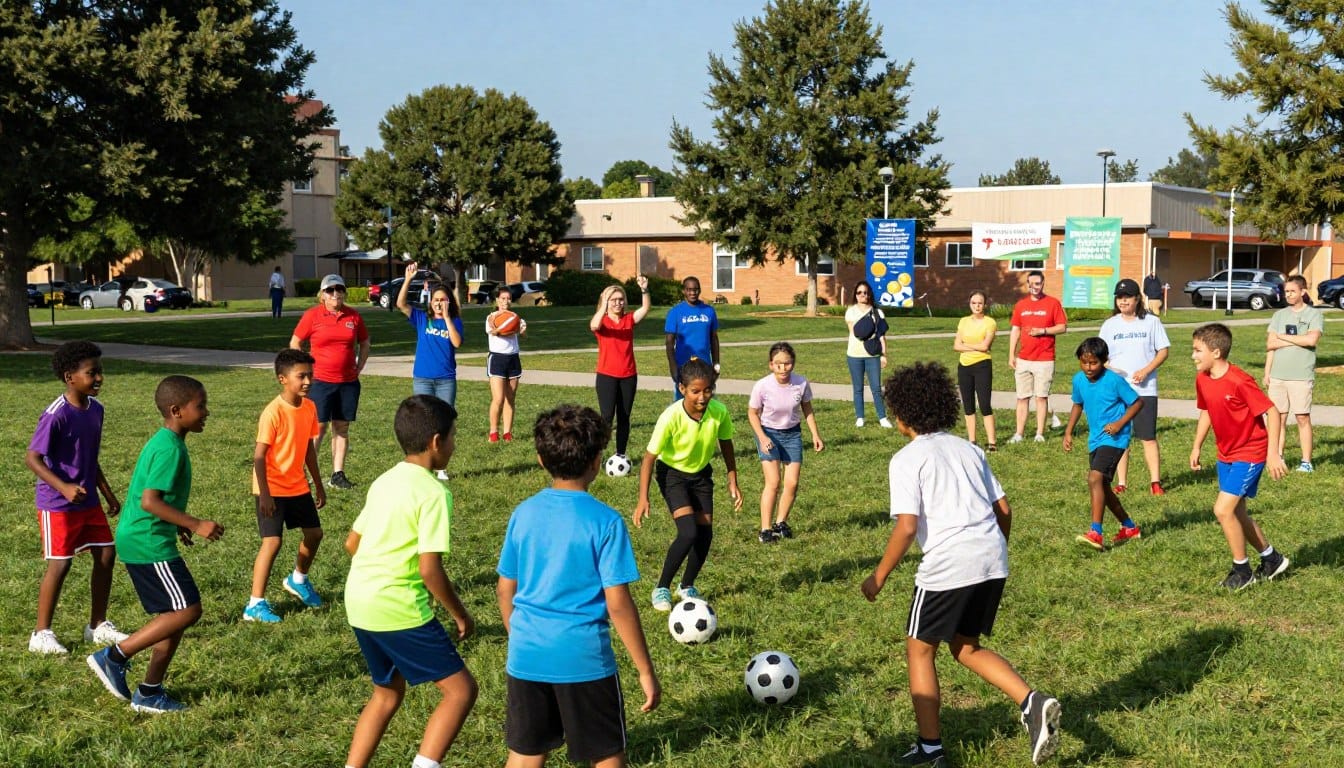
Youth sports are key in shaping kids’ lives, giving them chances that go beyond playing games. These programs are vital for a better future, helping kids gain skills that change their lives. The LISC Sports & Youth Development team has worked hard on this goal for 25 years, getting funds for safe places to play and programs.
Having safe places for kids to play and exercise is essential for good neighborhoods. But, 28 million kids in the U.S. don’t have a safe park within a 10-minute walk. This problem hits low-income areas the hardest, where parks are rare.
Structured sports programs help kids grow and make communities better. They improve school grades, build emotional strength, and cut down on bad behaviors. By investing in sports facilities, we can make neighborhoods healthier and more united.
Creating and Supporting Youth Programs
Youth programs are key to shaping the future of communities through sports. They fall into three main areas: philanthropy, advocacy, and community building. Each plays a big role in making youth programs effective.
Philanthropy means giving money to help youth sports. Parents can add a few dollars to their fees to help. This small amount can add up to a lot for local groups helping kids.
Also, hosting events with sports groups can help more. It’s a great way to raise money for kids who need it most.
Advocacy is about speaking up for youth sports. Joining groups like the PLAY Sports Coalition helps make a difference. States like New York and Minnesota now use sports betting money for youth sports.
This shows how important it is to keep pushing for support. It helps keep programs going for years.
Building a community is also key. It’s about working together with parents, players, and coaches. After-school programs and safe spaces are great for kids.
Online platforms for training help young athletes connect. The Local Initiatives Support Corporation (LISC) works with donors to help communities.
Many programs invest in sports for kids. The NFL Foundation Grassroots Program and others have given millions. These partnerships make sports dreams real for kids.
In short, focusing on giving, speaking up, and building community helps a lot. These efforts make sports better for kids and bring people together. It’s all about creating a supportive and inclusive place for everyone.
Measuring Impact and Success
It’s key to know how sports help communities grow. Studies, like those from the CDC, show that sports help students do better in school. They focus better, remember more, and behave better in class.
After-school sports also help kids avoid bad choices. They are less likely to use drugs or alcohol. This is important because kids might be tempted during after-school hours.
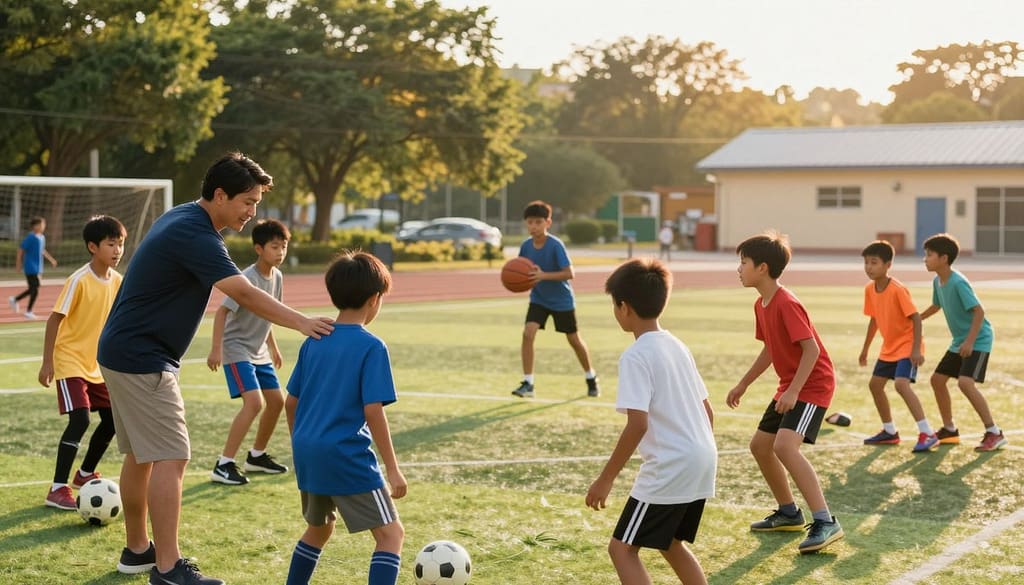
Sports also improve mental health. They help reduce depression and anxiety and boost self-confidence. High-energy sports, like boxing, are great for stress relief and building confidence.
Sports teach important life skills like teamwork and leadership. These skills help kids grow into strong, healthy adults. For kids facing tough times, sports can be a game-changer. They help kids stay resilient and avoid trouble with the law.
Real-life examples show the power of sports. The LISC National Sports & Youth Development initiative has spent over $80 million on youth programs. The Fullmer Legacy Foundation in Utah helps over 200 kids each year with free boxing and support.
To learn more about sports’ impact, check out this resource. Also, see how schools and groups work together in sports-based youth development here.
Overcoming Community Barriers
In the U.S., many kids can’t get to youth sports programs because of barriers. Over 28 million children don’t have a park within a 10-minute walk. This shows a big gap in chances for kids to be active and grow.
High-income areas have much more parkland than low-income ones. This difference affects how much kids can benefit from sports.
Groups like LISC (Local Initiatives Support Corporation) are working to fix this. They help build better parks and facilities in poor areas. This makes it safer and easier for kids to play and learn.
They also turn empty lots into fun places for kids to play. This shows that with creativity, we can make a difference.
LISC also focuses on more than just parks. They help kids get jobs, find mentors, and prepare for college. The Foot Locker Foundation does something similar. It helps kids through community outreach, mentorship, and career help.
Sports can change a kid’s life, even in tough times. Programs offer a steady place for kids to feel safe and supported. This helps kids grow strong and confident.
Communities need to figure out what’s holding kids back. Working together with schools, parents, and businesses can help. By making sure all kids can play sports, we can make them happier and healthier.
Inviting Future Participation and Support
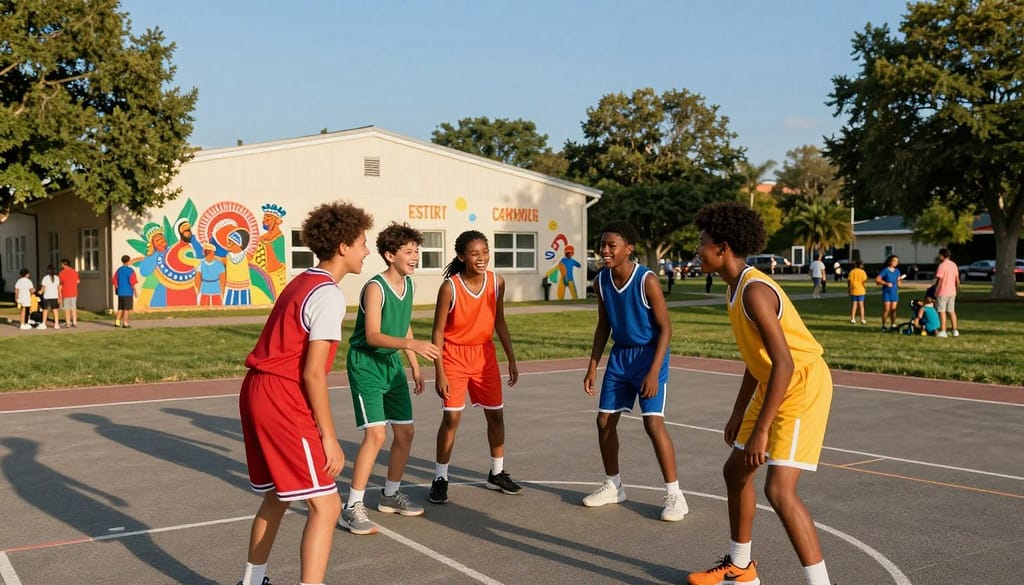
Community development grows when everyone joins in. Youth sports groups are key in shaping young athletes. They help in both skills and character.
Look into what your state is doing for youth sports. Talk to local assembly members to improve these programs. Groups like PLAY Sports Coalition offer help and resources for change.
New chances in sports are opening up. Organizations like LISC help youth in media, tech, and business. These paths help grow both personally and professionally, linking sports to community betterment.
Structured programs for youth bring many benefits. They lead to better graduation rates, mental health, and community bonds. The Fullmer Legacy Foundation shows how sports can change lives.
Investing in youth means investing in the future. These efforts make neighborhoods healthier and more connected. When young people succeed, so do communities, showing the value of youth sports.