
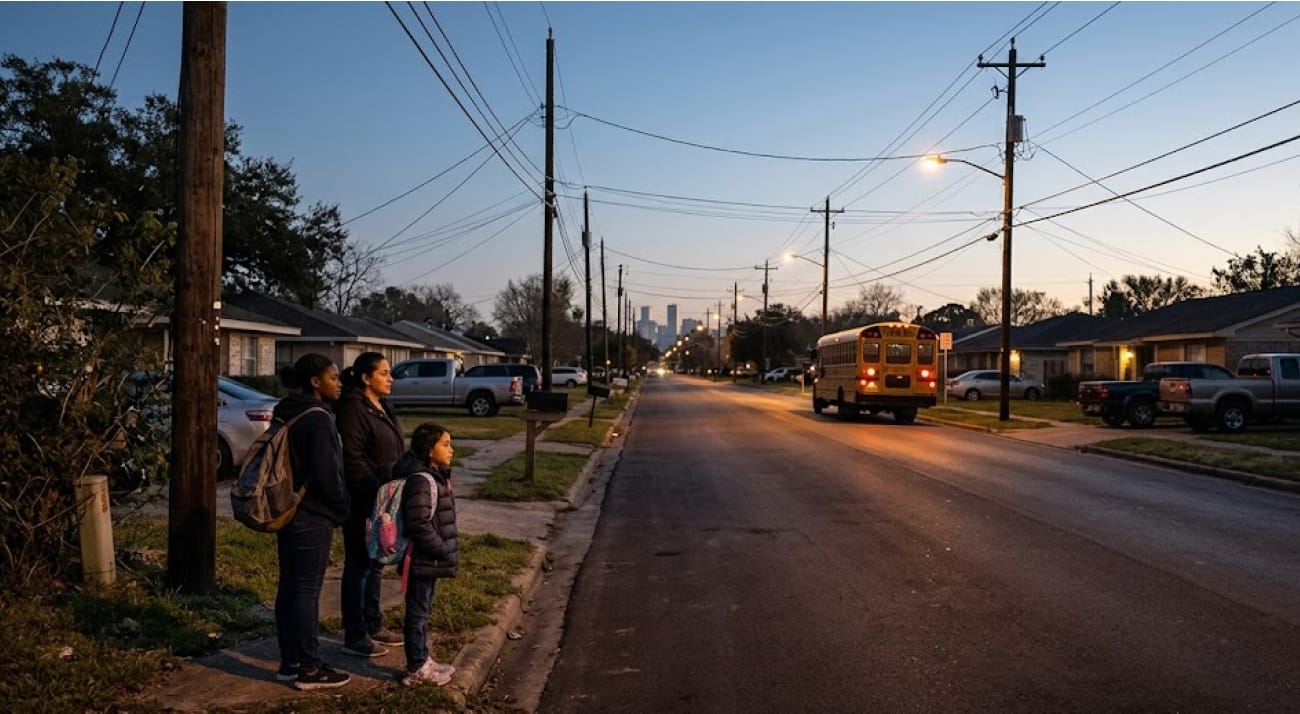
Houston ISD has changed how thousands of magnet and other school-choice students access school transportation for the 2026–27 school year, replacing many neighborhood-style stops with centralized bus hubs that can require families to drive farther before students board a bus.
The change is intended to address a different transportation problem: some HISD students previously spent as much as two hours on school buses. District transportation officials say consolidating stops can reduce ride times and make the bus system more efficient. But for some families, shorter time on the bus has created a new requirement—getting children to and from a centralized stop that may be several miles from home.
The issue gained renewed attention in Houston reporting published October 3 and updated October 5, 2026. Parents described longer morning routines, additional driving and difficulties coordinating pickup and drop-off with work schedules. HISD transportation officials, meanwhile, have defended the system as an effort to improve reliability and reduce excessive ride times.
The debate illustrates a broader challenge for a large urban school district: transportation can determine how realistically students can access specialized academic programs, particularly when those programs draw students from across a much larger geographic area than a conventional neighborhood school.
HISD Shifted Magnet Transportation To Centralized Hubs
The centralized hub system affects students attending schools through HISD’s school-choice programs, including magnet programs. The district’s official transportation guidance says eligible school-choice students may be assigned to stops that are three miles or more from their homes when necessary to keep bus travel within the district’s target limits.
That represents a significant difference from the transportation model used for students attending their zoned schools.
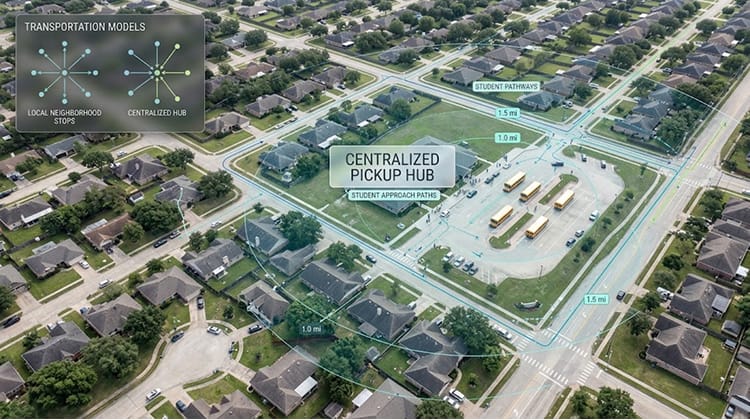
HISD says eligible students attending their zoned school are generally assigned a bus stop within approximately two miles of home. School-choice transportation operates differently because students may live throughout Houston and surrounding communities while attending a specialized campus located far outside their neighborhood.
The district has set a target of keeping school-choice students’ bus rides to no more than 90 minutes each way. If a student cannot reach school within that target from a stop within three miles of home, HISD says it may establish a stop farther away to reduce the student’s total time on the bus.
That policy creates the central tradeoff behind the current controversy.
A family may have a shorter bus ride, but the student may have a longer trip before getting on the bus.
For families without flexible work schedules, reliable transportation or another adult available for morning and afternoon trips, that distinction can be significant.
HISD Says Long Bus Rides Were A Major Problem
HISD’s rationale for the change centers on ride times.
Dr. Dontarious Rowls, the district’s deputy chief of transportation, said officials had heard concerns from families about students spending as much as two hours on buses in previous years. The district’s stated goal is to reduce those excessively long trips by consolidating pickup locations.
That problem is substantial in a district as geographically large as Houston.
Magnet and school-choice programs are specifically designed to allow students to attend campuses outside their neighborhood attendance boundaries. A student living in southwest Houston might attend a specialized program on the opposite side of the city, while another student could travel from a different part of the metropolitan area to the same campus.
The transportation network therefore has to solve a fundamentally different problem from neighborhood school transportation.
A traditional neighborhood stop model prioritizes proximity to students’ homes. A centralized model prioritizes efficient movement of students toward a common destination.
Neither approach eliminates the underlying geographic challenge.
The district’s current transportation policy says its goal is to limit school-choice ride times to 90 minutes each way, while also providing reliable and timely service. That means a student could spend less time physically riding the bus while spending more time traveling by car with a parent before and after the bus journey.
The policy makes the transportation tradeoff easier to understand: HISD is optimizing the portion of the journey it directly controls, while some families are absorbing more of the journey themselves.
The Change Does Not Apply Equally To All HISD Students
One important distinction has been somewhat obscured by the debate over centralized stops.
The new hub approach is not the transportation model for every HISD student.
According to district information, roughly 14,000 students attending their zoned schools continue to use the traditional bus-stop system. The centralized approach is primarily associated with magnet and other school-choice transportation.
| Student Group | General Transportation Approach |
|---|---|
| Zoned-school students | Traditional stops, generally within approximately 2 miles of home |
| Magnet/school-choice students | Centralized or consolidated stops |
| School-choice stop target | HISD strives for approximately 3 miles or less |
| School-choice exception | Stop may be farther away if needed to keep ride time below 90 minutes |
This distinction matters because the transportation burden is connected to the way students access schools.
A zoned student generally attends a campus designed to serve a specific neighborhood. A magnet student chooses a program that may be located much farther from home.
That broader access is one of the central benefits of magnet education, but it also creates additional transportation costs and logistical demands.
The problem becomes more complicated when a student qualifies for a specialized program but lacks a practical way to reach the centralized transportation network.
That can turn transportation from a support service into a potential barrier to participation.
Some Families Are Driving Miles To Reach The Bus
Houston parent Danielle Riley described the practical impact of the change in recent reporting. Her two daughters attend different HISD schools, and she said they previously had access to bus stops closer to home.
Under the new arrangement, Riley learned that her daughters would be assigned to two different hubs. One was approximately 1.5 miles from home, while the other was about 2.8 miles away. The routes also raised concerns because they included busy portions of Beechnut Street and Bellaire Boulevard, with the walking portions beginning before sunrise.
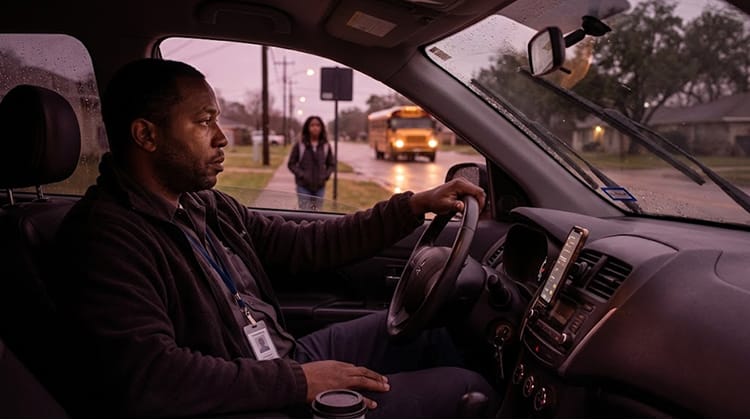
For Riley, the issue was not simply the mileage.
A parent who drives a child to a centralized stop still has to build that trip into the morning schedule. In the afternoon, the reverse journey can require another drive, potentially forcing a parent to leave work earlier than they otherwise would.
That can turn a school bus system into a two-stage transportation arrangement: the family provides the first and final portions of the trip, while HISD provides the longer middle segment.
The difference becomes even more pronounced when siblings attend different magnet campuses.
Instead of one family making a single trip to one neighborhood stop, parents may have to coordinate multiple hubs with different departure times. That can become particularly difficult for households with multiple children, rotating work schedules or limited access to a second vehicle.
HISD’s system is therefore testing a basic question about school-choice transportation: how much additional responsibility can reasonably be placed on families in exchange for shorter bus rides?
Transportation Can Affect Access To Magnet Programs
Magnet schools exist in part to give students educational opportunities that may not be available at their assigned neighborhood campus.
Those programs can include specialized academic themes, career pathways, language programs, fine arts and other offerings that attract students from across a district.
HISD’s own school-choice transportation information describes transportation as a way to reduce geographic barriers to those opportunities. The district specifically says transportation plays a role in ensuring that distance does not become an obstacle to access.
The centralized hub model creates a tension with that goal.
If a family has access to a car and a parent with a flexible schedule, a three-mile drive to a bus hub may be manageable.
For another family, the same three miles could represent a significant obstacle.
Consider two students who live in the same neighborhood and attend the same magnet school. One may have a parent who works remotely and can drive to the hub each morning. The other may have a parent who begins work at 7 a.m. and cannot make the trip without changing employment arrangements.
The school opportunity is technically available to both students, but the transportation burden is not equal.
That is why transportation policy can have consequences beyond buses and bus stops.
It can influence which families can realistically take advantage of school-choice programs.
Safety Concerns Add Another Layer
Distance is only one part of the issue.
Parents are also considering whether children can safely reach centralized stops, particularly when the route involves major streets or when students leave home before sunrise.
HISD says parents who believe a walking route is unsafe can request a hazardous route review. Transportation officials use field safety investigators to examine routes and compare them with applicable state criteria.
That process provides an important mechanism for addressing individual problems.
A centralized stop that appears reasonable on a map may look very different when evaluated from a student’s perspective. Sidewalk availability, road crossings, traffic volume, lighting, construction and the time of day can all affect the practical safety of a route.
Parents therefore have an interest in more than the straight-line distance between a home and a bus stop.
A 2.8-mile route along quiet residential streets is fundamentally different from a shorter route that requires crossing a heavily traveled arterial road.
HISD’s transportation department says families can submit concerns through its transportation support system, while route information and transportation updates are also available through the district’s online resources. HISD transportation support provides instructions for families dealing with route, stop and service questions.
The System Also Reflects Houston’s Transportation Costs
The centralized-stop controversy is occurring against a larger financial problem affecting school transportation across Texas.
Districts face rising costs for buses, fuel, maintenance, personnel and route operations, while state reimbursement does not necessarily cover the full cost of transporting students.
Recent reporting found that Texas districts are spending substantially more on transportation than they receive from the state. The issue is particularly significant in large suburban and urban districts with extensive geographic coverage.
HISD’s transportation changes therefore cannot be viewed entirely as a question of convenience.
There is also a financial calculation behind the network.
Every neighborhood stop requires additional route time, fuel and driver availability. More stops can mean longer routes, while fewer centralized stops can allow a single bus to serve more students efficiently.
But efficiency has a corresponding cost for families when they must provide transportation to the hub.
That creates an important distinction between district-level efficiency and household-level transportation costs.
The district may reduce miles driven by buses while increasing miles driven by parents.
For families, the relevant question is not simply whether the district’s buses are traveling fewer miles. It is whether the total transportation burden on students and households remains reasonable.
HISD Is Still Adjusting Routes And Transportation Support
The transition is not entirely static.
HISD says its Transportation Department continues updating routes and communicating with families as requests are processed. The district’s transportation help page says routes are updated twice each week and that families can submit transportation requests and concerns throughout the year.
That creates an opportunity for individual transportation problems to be addressed even after the school year has begun.
HISD’s transportation request process also gives the district a mechanism for determining eligibility and reviewing student transportation needs. Requests are processed by the Routing & Scheduling Department, with the district stating that eligible requests can take up to 10 business days to process.
For families, the practical process is therefore important.
Parents should verify the address HISD has on file, confirm the assigned stop and report safety or routing concerns through the district’s established channels rather than relying solely on informal information.
That is particularly relevant during the first months of a new transportation model, when route assignments and hub usage can continue changing.
What The Hub Model Means For Students
The centralized-stop approach is an attempt to solve one problem—long bus rides—without abandoning transportation for magnet students altogether.
That distinction matters.
HISD could have responded to financial and operational pressure by eliminating transportation for some school-choice students. Instead, the district has retained bus service while changing how students reach those buses.
For some students, that may produce a meaningful improvement.
A shorter bus ride can mean more time at home, less time sitting in traffic and a more predictable school day. A centralized stop can also allow buses to collect larger groups of students from strategic locations instead of making numerous individual neighborhood stops.
For other families, however, the new arrangement may create a different set of problems.
Parents may have to drive farther, coordinate multiple children, adjust work schedules or evaluate whether a walking route is safe enough for their child.
That is why the success of the policy should ultimately be measured through more than bus ride duration.
| Measure | Why It Matters |
|---|---|
| Bus ride time | Determines how long students spend on the vehicle |
| Distance to hub | Determines the family’s transportation burden |
| Walking conditions | Affects student safety and accessibility |
| Parent work schedules | Determines whether daily transportation is practical |
| Route reliability | Determines whether students arrive consistently on time |
| Magnet enrollment access | Shows whether transportation remains a realistic path to school choice |
The larger issue is whether HISD can make transportation more efficient without making magnet programs less accessible to the families they are intended to serve.
Houston Families Are Paying Attention To The Tradeoff
The controversy surrounding HISD’s centralized bus stops reflects a larger shift in how school districts are thinking about transportation.
For decades, the familiar image of a school bus has been a neighborhood stop where students walk a short distance from home, board a bus and travel directly to campus.
That model becomes harder to maintain when students attend schools across a large metropolitan area and transportation budgets are under pressure.
HISD’s new approach changes the equation.
The district is asking families to participate more directly in the first and final portions of the trip while it concentrates bus service around larger pickup locations.
For some households, that may be a reasonable tradeoff for shorter rides. For others, especially families with multiple magnet students or inflexible work schedules, the additional responsibility may be substantial.
The experience of families such as Danielle Riley’s shows why the issue is more complicated than a simple argument over bus efficiency. Her daughters’ different hub assignments demonstrate how a transportation system can create additional coordination problems even when the buses themselves operate more efficiently.
For Houston youth education, transportation is ultimately part of the broader question of educational access. A magnet program can offer a student an opportunity far from home, but that opportunity remains practical only if the student has a safe and reliable way to reach it.
HISD’s centralized bus system will therefore be judged by two competing outcomes: whether it reduces excessive time on school buses and whether families can realistically manage the additional distance to the hubs.
The district has established a system for reviewing routes, addressing safety concerns and adjusting transportation requests. The coming months will show whether those mechanisms are enough to balance efficiency with the everyday realities of Houston families.
For students, the most important measure is straightforward: a school-choice program should remain an educational opportunity that families can actually reach, not one that becomes harder to use because the transportation required to access it has moved farther from home.