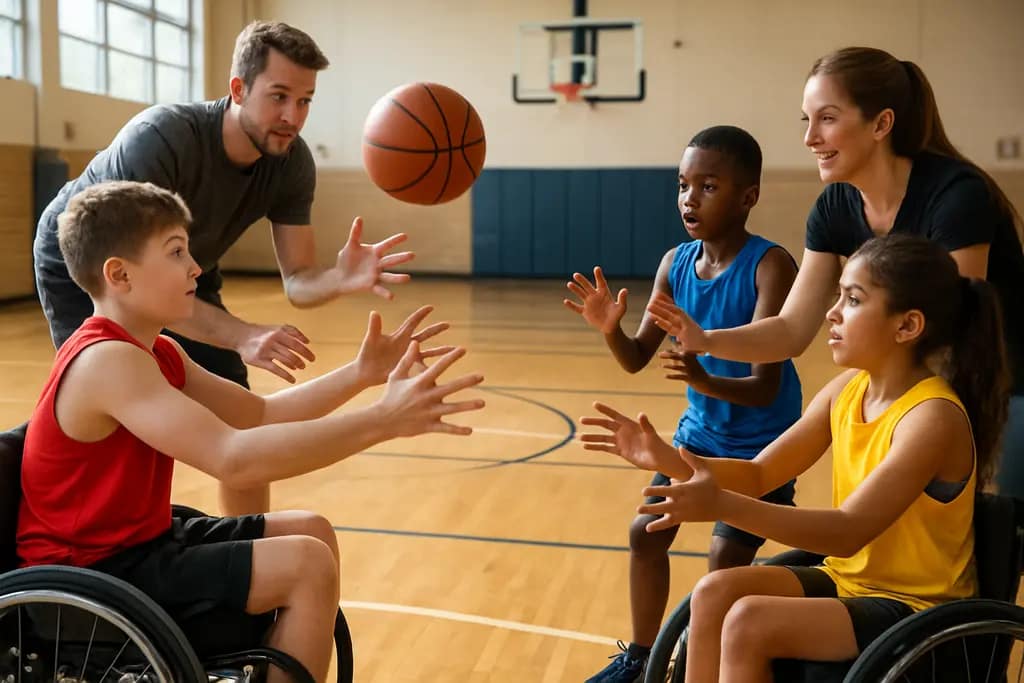
The FIGS Initiative grew from a simple sports invitation into a school-based inclusion model for the Kingwood-area sports community. In fall 2025, Kayli Heine invited students from New Caney ISD’s ASPIRE program, which serves students with intellectual and developmental disabilities, to join a West Fork High School volleyball practice during a bye week NFHS report. That first practice mattered because it placed students side by side in the athletic period, not off to the edge of school life.
Heine was a senior at West Fork High School, a school that opened in 2022, and she brought two experiences into the work: competing in volleyball and track and field, and volunteering with ASPIRE students. The result was Friends in Gator Sports, known as FIGS, a program formed in late 2025 with special education teacher Kaelin Morkisch. Its purpose was direct and school-centered: connect West Fork student-athletes with ASPIRE students across the school year through different sports during the school’s athletic period.
How The FIGS Initiative Took Shape
The FIGS Initiative Started Inside Practice
The strongest part of this story is that it began inside a real team setting. Heine did not build the program around a one-time assembly or a separate field day. She opened a regular volleyball practice to ASPIRE students during a bye week, giving both groups a shared athletic experience. That choice sent a clear message: inclusion can happen in the same gym, on the same court, and during the same school routine where athletes already learn teamwork.
After that first invitation, Heine and Morkisch shaped the idea into a formal program. The monthly structure gave FIGS a rhythm that students could expect. Each month, ASPIRE students joined West Fork student-athletes in a different sport during the athletic period. That format helped the program move beyond a single team and into the wider school sports culture.
Why The Athletic Period Matters
Using the athletic period is significant because it places inclusion inside the daily structure of school athletics. Student-athletes already use that time for skill work, conditioning, team habits, and peer connection. By welcoming ASPIRE students into drills and practices, FIGS gave inclusion the same time and space as player development.
This approach also helped students without intellectual and developmental disabilities learn through action. They were not simply hearing about acceptance; they were practicing communication, patience, encouragement, and shared effort. For ASPIRE students, the model created chances to take part in sports alongside peers in a familiar school setting. That kind of shared participation can help belonging feel less like a slogan and more like a normal part of campus life.
What Growth Showed At West Fork
Participation Expanded Through Trust
In its first year, FIGS grew from about 10 ASPIRE students to about 20 participating students. That growth does not need to be overstated to be meaningful. For a school program built around trust, consistency, and peer relationships, doubling participation suggests that students and staff saw value in returning.
The program also reached across the school’s sports offerings. By the most recently completed academic period described in the NFHS account, every sport offered at West Fork High School had hosted ASPIRE students at least once through FIGS. That point is important for community impact because it shows that inclusion was not limited to one coach, one roster, or one sport culture. It became a shared responsibility across athletics.
For readers following similar school-based work, a related local example is Kayli Heine’s inclusive sports initiative, which also centers peer friendship through school sports rather than isolated programming.
Recognition Followed The Work
Heine’s leadership was recognized in June 2026, when she was named the Houston Chronicle’s Community All-Star Athlete for girls in connection with her efforts starting and leading FIGS NFHS profile. The award matters because it honored service through athletics, not only athletic performance.
That recognition fits the broader lesson from West Fork: youth sports can develop leaders who notice gaps in their own school communities and respond with practical action. Heine used her position as an athlete to widen access for others. She also helped build a structure strong enough to continue after graduation, while she moved on to Texas A&M University.
Inclusion Through Shared School Sports
No Separate Sideline
The program’s design matters as much as its intent. FIGS did not create separate teams for ASPIRE students or place them in isolated events. Instead, it integrated ASPIRE students into regular athletic periods, drills, and practices. That difference is central to how inclusion works in school sports. Separate activities can be positive, but shared practice gives students a chance to build friendships through repeated, ordinary contact.
For student-athletes, that can shift how they understand leadership. Leadership is not only calling a play, winning a race, or pushing through a hard workout. It can mean explaining a drill, celebrating effort, adjusting communication, and making sure a teammate feels seen. Those lessons carry into classrooms, hallways, and future community settings.
Friendship As A Development Goal
The stated purpose of FIGS was to connect West Fork student-athletes with ASPIRE students across the school year. That goal places friendship alongside competition as a valid outcome of school athletics. Sports programs often measure success through wins, times, scores, and postseason results. Those measures still matter for teams, but school sports also shape identity, confidence, and peer culture.
When students with and without intellectual and developmental disabilities share drills, they build a common reference point. A pass, a serve, a lap, or a practice station can become the start of conversation. Over time, those small contacts can make a campus feel more connected. The value is not abstract; it shows up in who gets greeted, who gets included, and who feels comfortable entering athletic spaces.
Lessons For School Sports Leaders

Start With Existing Team Structures
One lesson from West Fork is that schools do not always need to create a new event from scratch. Heine’s first step used an existing volleyball practice during a bye week. That made the invitation practical. Coaches already had space, students, and a sports setting. The idea grew because it fit within the school’s normal athletic schedule.
For other schools, the model points toward a few grounded steps:
- Use existing practice periods where coaches and athletes are already gathered.
- Build cooperation between student-athletes and special education staff.
- Rotate sports so inclusion belongs to the whole athletic department.
- Keep participation regular so friendships have time to develop.
These steps are not presented as a universal plan for every campus. Each school has its own staffing, schedules, facilities, and student needs. Still, the West Fork example shows that a student-led idea can become a lasting program when adults help provide structure and continuity.
Protect The Student-Led Spirit
Heine’s graduation could have ended the work if the program depended only on one student’s presence. Instead, the program was established with enough structure to continue beyond her time at West Fork. That is a key point for youth development. Student leadership should be encouraged, but school support helps the work survive roster turnover, graduation, and schedule changes.
For athletic departments, this balance is valuable. Student voice brings energy and credibility. Teacher and coach support brings consistency. Together, they can create programs that serve students now while training the next group of student leaders to carry the work forward.
Why The FIGS Initiative Matters In Kingwood Sports
The FIGS Initiative matters because it shows what can happen when school sports are treated as a shared community space. Kayli Heine’s idea began with volleyball, grew through collaboration with Kaelin Morkisch, and expanded across West Fork athletics. It connected ASPIRE students and student-athletes through regular sports participation, giving both groups a chance to learn from one another.
For the Kingwood-area sports community, the lesson is hopeful and practical. Inclusion does not always require a large launch or a separate stage. Sometimes it starts with a coach opening practice, an athlete inviting peers in, and a school choosing to repeat that welcome month after month. In that setting, youth sports become more than competition. They become a place where students practice belonging, leadership, and community care together.