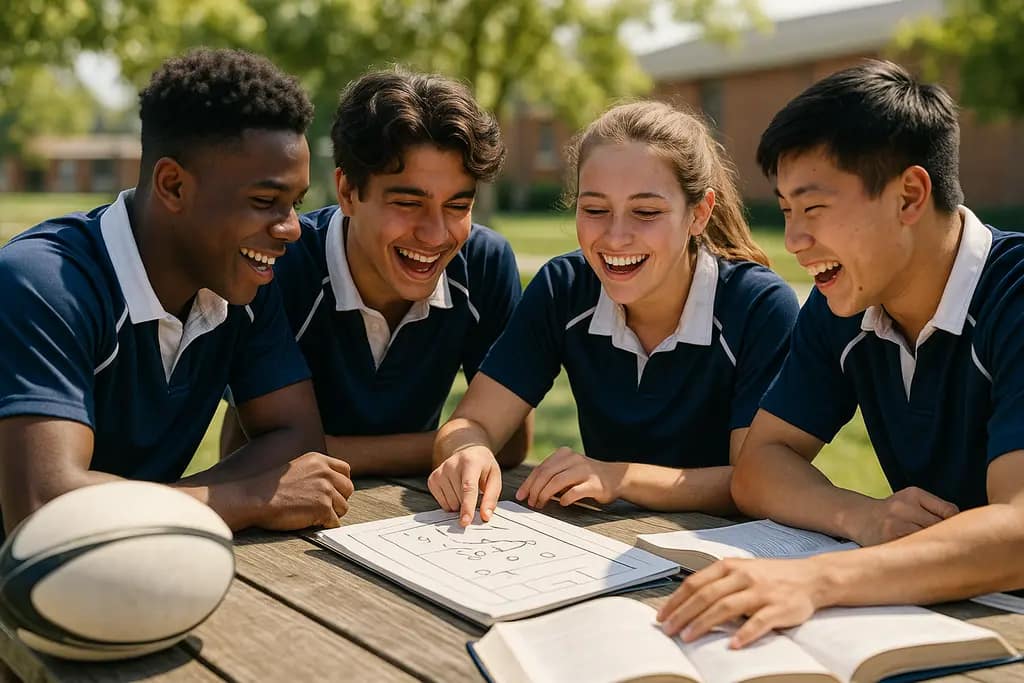
Play Rugby USA gives youth development leaders a hopeful sports-first model: use the demands of rugby to build confidence, teamwork, school focus, and a real path toward higher education. The New York City nonprofit reports that all high school seniors in the Play Rugby Academy graduate on time and enroll in college, a striking outcome for a program serving youth through sport and social-emotional learning Play Rugby USA impact.
That result matters because the model is not built around athletic performance alone. Rugby becomes the meeting place where young people practice communication, trust, effort, emotional control, and responsibility. The ball, the drills, the contact rules, the sideline conversations, and the shared team goals all become part of a wider youth development plan. For families and community partners, the college enrollment achievement is not just a number. It is a sign that sport can help young people see themselves as students, teammates, and future leaders.
What Play Rugby USA Shows About College Pathways
Why Play Rugby USA Connects Sport And School
The strongest lesson from this model is that college readiness can be supported in places that do not look like a classroom. A rugby practice asks a young athlete to listen, respond, adapt to teammates, and keep working after mistakes. Those habits travel well. They fit school days, group projects, application deadlines, and the first year on a college campus.
The program’s reported academic and personal outcomes give that idea weight. According to its impact reporting, 82% of students say playing rugby helped improve their academic performance, 86% say rugby helped them develop more positive personal qualities, and 88% report better physical fitness reported outcomes. Those measures are based on participant reporting, so they should be read as program outcome indicators rather than independent academic records. Still, they point to a powerful pattern: young people are connecting sport with school effort, self-belief, and healthier routines.
College Enrollment As A Community Signal
A 100% college enrollment figure for academy seniors sends a message beyond one roster. It tells younger players that the pathway is visible. It tells parents that practice time can be part of a larger plan. It tells schools and community groups that sports programming can be aligned with graduation goals instead of competing against them.
That is where rugby’s team culture becomes so useful. Players depend on one another in open play, support one another after tackles, and learn quickly that no one advances alone. In a community setting, those lessons can soften isolation. A young person who may not yet feel confident in school can find a role on the field, then carry that confidence into advising meetings, tutoring sessions, or college conversations.
Play Rugby USA In Practice
A Rugby Model Built For Belonging
Play Rugby USA works with nearly 500 boys and girls ages 11 to 18 each year, according to RBC Capital Markets’ profile of the organization RBC profile. That age span is meaningful. Middle school and high school are years when young people are forming identity, testing independence, and deciding whether they feel connected to school and community life.
Rugby can be a welcoming fit because it has positions for different body types, movement styles, and skill sets. Speed helps. Strength helps. So do awareness, patience, communication, and courage. A youth who is new to organized sports can still learn where to stand, how to pass, how to support a teammate, and how to contribute. That opens the door for more young people to feel useful early, which can keep them engaged long enough for deeper growth.
The model also offers a helpful reminder for local programs: sport-based youth development works best when the sport is real. Young people can tell when adults water down competition or treat games as a thin cover for lectures. Rugby gives them a true athletic challenge. The teaching comes through the sport, not around it.
Program Design Lessons For Local Leaders
Play Rugby USA offers a clear structure that other communities can study without simply copying it. Each city has different schools, field access, transportation needs, and family schedules. The transferable piece is the alignment between sport, values, mentoring, and school aspiration.
- Keep the sport central. Skills, fitness, teamwork, and match preparation create the trust needed for youth development.
- Name the life skills. Coaches can connect respect, confidence, health, and teamwork to both practice behavior and school behavior.
- Track outcomes honestly. Graduation, college enrollment, student confidence, and youth development gains help partners understand what the program is building.
- Invite families into the pathway. Parents and caregivers are more likely to support sports participation when they see how it connects with academics and future planning.
For readers comparing models across sports, this connects naturally with the wider work of community sports youth leadership, where coaches, schools, and families use team settings to grow young leaders.
Social-Emotional Learning On The Rugby Field
How Contact Sports Can Teach Self-Control
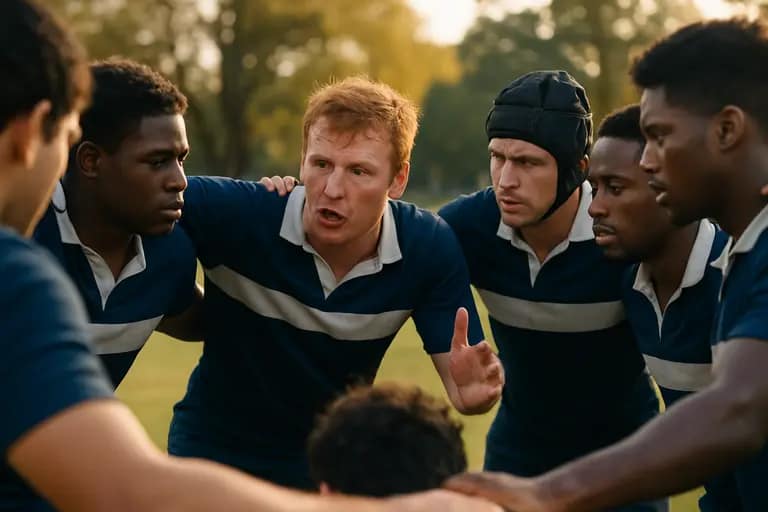
Social-emotional learning in rugby is not abstract. Players have to manage emotion after a missed tackle, a hard run, or a referee’s whistle. They must communicate under pressure and reset quickly after errors. Those moments create teachable openings for coaches: breathe, listen, respect the decision, support the next phase, and keep your head in the match.
That is especially valuable for youth development because the field gives immediate feedback. If a player refuses to communicate, the team loses shape. If a player supports a teammate, the attack keeps moving. If a player stays calm, the group steadies. SEL becomes visible, physical, and shared.
Positive Youth Development Measures
The organization reports that 81% of students show significant gains in their positive youth development score, which it links to long-term thriving. It also says Algorhythm placed the organization in the top 5 out of 150 youth development programs in its network youth development data. These are not small claims, and they should be read carefully as reported program impact measures. Even so, they help explain why the college enrollment outcome may fit within a larger pattern of growth.
Positive youth development is about more than avoiding trouble. It is about young people gaining the tools to make choices, build relationships, set goals, and recover from setbacks. Rugby practice can create a weekly rhythm for those tools. The same athlete who learns to support a runner on Saturday may be better prepared to ask a teacher for help on Monday. The same student who learns to speak up in a team huddle may feel more ready to speak with a college adviser.
Why Play Rugby USA Matters For Youth Pathways
A Sports Model With Local Impact
The most encouraging part of the Play Rugby USA story is that it shows how a less common schoolyard sport can become a strong community connector. Rugby may not have the same youth footprint as basketball, soccer, or football in many neighborhoods, but that can be part of its strength. New players often start together, learn together, and build a shared identity from the ground up.
For local schools and community groups, the takeaway is not that every neighborhood needs the same rugby program. The lesson is that a well-run sport can carry high expectations. Young people deserve coaches who care about footwork and futures, passing and persistence, fitness and college access. When those pieces are linked with care, a practice field can become one of the most steady places in a young person’s week.
Play Rugby USA offers a model worth studying because it keeps the joy and challenge of sport at the center while pointing youth toward graduation and college. That is the kind of community impact families can rally around: kids moving, learning, belonging, and beginning to imagine what comes next after high school.