
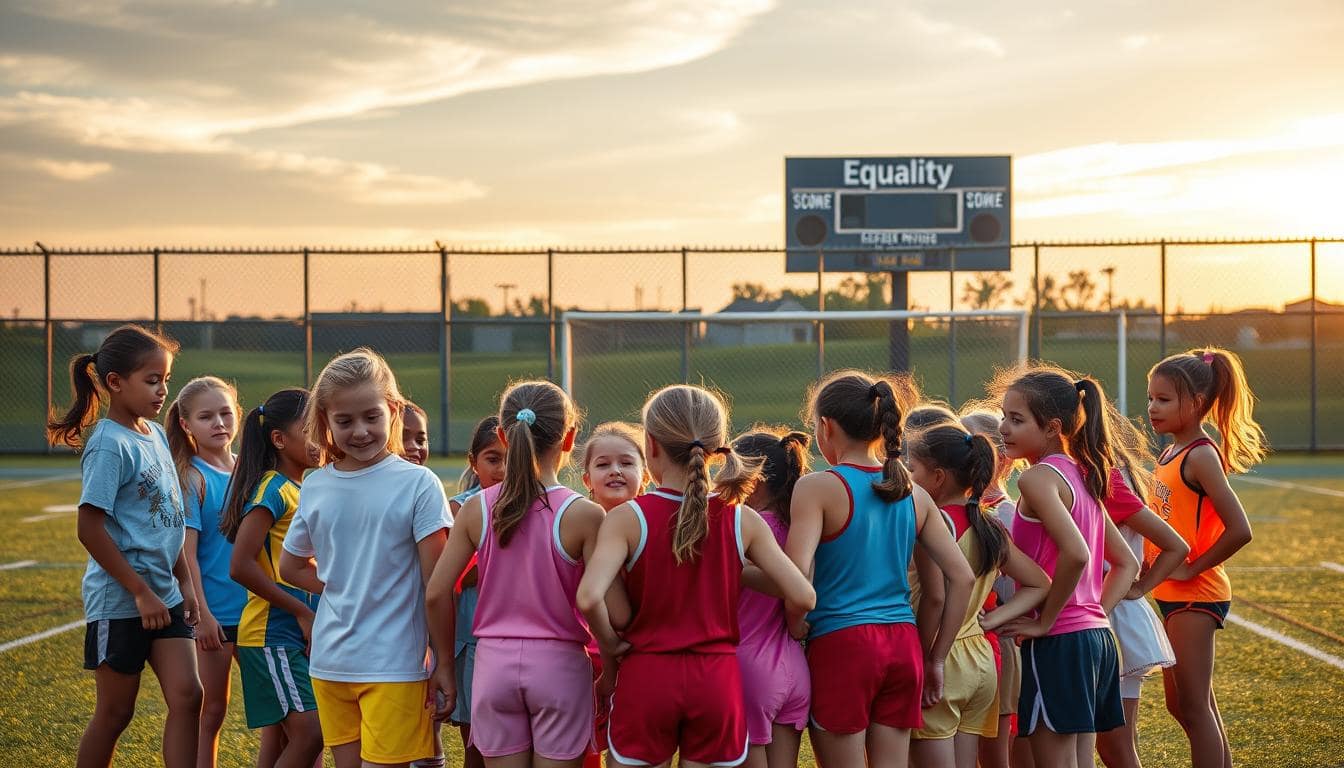
The playing field is not yet level. We’ve celebrated over 50 years of Title IX, a law for equal opportunity. But the scoreboard shows a different story.
Before Title IX, about 300,000 girls played high school sports. Now, that number has jumped to 3.4 million. Sounds like progress, right?
But look at the boys’ side: 4.5 million athletes. That’s a 1.1 million person gap. Saying “lack of interest” is outdated.
The real barriers are deep-seated. There are subtle messages that sports aren’t for certain kids. The cost of equipment is a barrier. And women and gender-expansive athletes lack visibility.
When was the last time a girls’ high school soccer game got prime-time? Exactly.
A law on paper doesn’t automatically mean gender equity on the field. True equity means equal chances, treatment, and benefits. We have the law. Now, we need the real world to catch up.
Recruitment and Retention Strategies
Think recruiting girls in sports is just about posting flyers? That’s not enough. It takes a solid strategy, not just hope.
You need a plan that tackles doubt head-on. This means going beyond just posting on school bulletin boards.
Start by reaching out proactively. Look for athletes in community centers, after-school clubs, and online. Partner with local groups that already connect with them. It’s about building a bridge, not waiting for them to cross a moat.
But let’s get real. The biggest hurdle is often gear. For many young athletes, a sports bra is more than just clothes. It’s a financial barrier.
Initiatives like #KeepHerPlaying are more than feel-good stories. They’re practical steps. Giving out over 15,000 sports bras helps remove a big cost of entry. Organizations like Leveling the Playing Field work to remove equipment barriers that stop athletes before they start.
Recruitment gets them in the game. Retention keeps them playing. This is the real challenge. It’s what turns a one-season tryout into a lifelong passion.
To build a lasting culture, follow a three-point plan:
- Belonging Over Performance: Focus on more than just winning. Celebrate effort, teamwork, and personal growth. Make sure everyone’s voice is heard.
- Visible Pathways: Show them the future. Highlight successful athletes, coaches, or alumni. If they can’t see a future, why stay?
- Dignity in Details: This means providing proper equipment. It shows they belong and their safety is important.
The goal is more than just filling a team. It’s about sparking a passion. With smart recruitment and a focus on inclusivity, you’re not just building a team. You’re changing the game for girls in sports, one season at a time.
Safe Facilities and Scheduling Equity
The Washington Mystics’ 2019 move to their own arena was more than just a change of address. It was a declaration of freedom. For years, they shared space and got leftovers. But with the Entertainment and Sports Arena, they got a real home. This is what we mean by gender equity.
Title IX doesn’t just suggest fairness. It demands it. Fair facilities and schedules are essential. Does the girls’ soccer team get the bad field while the boys play on the best? Do their games get the worst time slot?

Scheduling equity means giving everyone the best game times. It means equal access to practice facilities. The quality of the locker room and playing surface are not just perks. They are basic rights for safety and respect.
This change is huge. It makes sports-based youth development real. A good facility and prime game times show respect. This is how you show you value someone.
So, what does it take to make a difference? Let’s look at the difference between just doing something and building a culture.
| Aspect | Equitable Practice | Inequitable Practice |
|---|---|---|
| Game Times | Rotating prime evening and weekend slots between all teams | Consistently assigning less desirable times to one group |
| Facility Quality | Equal access to the best available fields, courts, and equipment | Tiered system where quality correlates with team gender |
| Scheduling Priority | Needs-based scheduling for practice times and facility access | Historical precedence favoring established programs |
| Maintenance & Safety | Uniform safety standards and maintenance across all spaces | Disparities in upkeep, creating unequal risk environments |
Notice the difference? The equitable column is about equal, not more. The inequitable column often hides behind tradition or “logistics.” But really, tradition usually favors the first ones there.
This is where gender equity truly matters. It’s in the early morning practices and shared facilities. The Mystics didn’t just get a new building. They got a statement: your franchise deserves its own stage. Our youth deserve nothing less.
Getting facilities and scheduling right is a big test. It’s expensive and requires saying “no” to old interests. But it’s the difference between telling athletes they belong and showing them they do. It’s the difference between a policy and a principle.
Coaching Representation and Mentorship
Let’s talk about something real. Representation isn’t just about pretty pictures. It’s the backbone of girls in sports. Seeing women and diverse voices in sports is key. It shows that everyone can succeed.
Think about it. A young athlete learns a lot from their coach. When a coach looks like them or shares their experiences, it’s powerful. It tells them, “You can do this too.”
Athletes Unlimited is a great example. They’re not just playing; they’re changing the game. They have athletes on the board and in key roles. This way, they can shape policies and support each other.
Look at the impact. Coaches like Mike Thibault and Kris Ward show that success is possible. Owners like Y. Michele Kang prove that women can make big decisions. This shows many paths to success.
So, what does real representation look like? It’s about working together, not just one person telling everyone what to do.
| Aspect | Traditional Model | Representation-First Model |
|---|---|---|
| Leadership Structure | Hierarchical, front-office heavy. | Athlete-inclusive boards and committees (e.g., Athletes Unlimited). |
| Mentorship Focus | Technical skills and game strategy. | Career navigation, leadership development, and life-balance advocacy. |
| Athlete Agency | Limited; athletes are “talent.” | High; athletes are stakeholders and decision-makers. |
| Long-Term Impact | Produces better players. | Produces future coaches, executives, and league founders. |
The table shows a big difference. It’s not just about playing well. It’s about inspiring a lifetime of dreams. When girls in sports see role models, they dream bigger.
Mentorship is more than a program. It’s a whole system. It’s making sure every girl has a path to follow. Building this is hard but essential. Get representation right, and you change the game and the league.
Policy Templates and Codes of Conduct
Let’s talk about the paperwork—the unsexy scaffolding that holds up every truly inclusive athletic program. You can have the best intentions, the most diverse coaching staff, and perfect facilities. Without the right documents, it’s all just goodwill floating in the legal ether. The paperwork isn’t bureaucracy; it’s architecture.
A code of conduct should read less like a list of “don’ts” and more like a cultural manifesto. It sets the tone before the first whistle blows. Does it value respect? Does it explicitly welcome gender-expansive youth? Does it state, in plain language, that discrimination or harassment gets you benched? This document is your program’s personality on paper.
Title IX isn’t a suggestion box; it’s the law. And here’s the part many programs treat like fine print: the prohibition against retaliation. A player speaks up about unequal practice times. A parent questions why the boys’ team gets new gear every season. A coach advocates for a non-binary athlete. What happens next?
That’s where Title IX’s prohibition against retaliation becomes the safety net. Complaining about inequity shouldn’t cost anyone their spot, their playing time, or their peace. This legal shield is why clear, accessible policy templates are non-negotiable. They turn abstract principles into actionable steps.
What should these templates include? Think beyond the basic “here’s how to file a complaint.” A robust template outlines the entire journey:
- Reporting Pathways: Multiple, confidential ways to raise concerns.
- Investigation Protocols: Who investigates, timelines, and standards of evidence.
- Interim Measures: How to protect the complainant during an investigation.
- Resolution Options: From mediation to formal disciplinary action.
- Appeal Processes: A fair chance for review.
Adopting these templates proactively is the mark of a program that’s serious about fairness. It’s not about checking a compliance box. It’s about building trust. When athletes and families see a clear process, they’re more likely to speak up early. Small issues get addressed before they become big, toxic problems.

The landscape gets more interesting at the state level. The federal Title IX framework is the floor, not the ceiling. States are building their own equity structures on top of it. California’s AB 2404 is a prime example. It extends equity requirements beyond school-sponsored sports to include community-based athletic programs.
State laws like California’s AB 2404 build on Title IX’s foundation, applying similar principles of equal treatment, facilities, and opportunities to club sports, recreational leagues, and private organizations. It’s a patchwork of progress, recognizing that discrimination doesn’t stop at the school gate.
So, what does an effective policy ecosystem look like? The table below breaks down the core components, showing how each piece supports the whole structure.
| Policy Component | What It Does | Why It Matters | Common Pitfall |
|---|---|---|---|
| Code of Conduct | Defines expected behaviors and prohibited actions for all participants. | Sets the cultural tone proactively; prevents “he said/she said” disputes. | Being too vague. “Be respectful” is less powerful than “No misgendering, slurs, or exclusionary jokes.” |
| Non-Retaliation Clause | Explicitly protects anyone who reports concerns or participates in an investigation. | Creates psychological safety for reporting. It’s the heart of a trustworthy system. | Burying it in legalese. It should be highlighted, repeated, and explained in simple terms. |
| Grievance Procedure | Provides a step-by-step roadmap for reporting and resolving complaints. | Democratizes access to justice. Everyone knows how the process works. | Having only one point of contact. What if that person is the problem? |
| State Law Addendum | Tailors the policy to meet specific state requirements (like CA’s AB 2404). | Ensures full legal compliance and often raises the standard beyond federal minimums. | Treating it as an afterthought. It should be integrated, not stapled on. |
Getting started doesn’t mean reinventing the wheel. Excellent templates exist to guide you. For a foundational example, review this code of conduct template from the humanitarian sector. Its clarity and structure translate surprisingly well to sports. Adapt it. Make it yours.
The goal is simple: create a framework where the rules of the game are fair, clear, and enforced equally. That’s how you move from hoping for equity to architecting it. The best play you’ll ever design might just be a document.
Measuring Participation and Outcomes
From 300,000 to 3.4 million—that’s the headline, but the real story of girls’ sports lives in the footnotes. Peter Drucker wasn’t talking about athletics when he said, “What gets measured gets managed,” but the shoe fits. Are we managing gender equity, or just tallying it?
The post-Title IX surge is undeniable. Three hundred thousand high school girls playing sports in 1972 became 3.4 million by 2019. That’s progress you can graph. Yet, numbers can hide as much as they show. A headcount doesn’t tell you who showed up once and never returned.
It doesn’t tell you about the quality of the experience. This is where measurement gets interesting—and where real impact gets tracked. Take Leveling the Playing Field. They don’t just move sports equipment; they measure it. To the tune of $12 million worth of gear distributed to over 1,500 programs. That’s data you can feel—a tangible metric of access created.
But equipment is just the entry fee. The real game is played in retention rates, facility quality comparisons, and long-term benefit tracking. We need a scorecard that goes beyond the sign-up sheet. How many girls of color are on the roster? How many from low-income communities actually complete the season?
What were the observed health benefits? The social confidence gains? Did participation influence academic engagement? These are the metrics that transform a participation statistic into an outcome story. They move us from asking “how many?” to asking “how did it change them?”
This requires intentional measurement and evaluation frameworks built for youth development. It’s not about adding bureaucracy. It’s about replacing guesswork with insight. Without this data, equity efforts are shooting in the dark.
The path forward is clear. We must champion nuanced measurement that captures continuity, quality, and community impact. Only then can we move from inspiring anecdotes to irrefutable evidence. Only then can we truly manage the gender equity we claim to value.
Community Partnerships for Visibility
No team wins a championship alone. Leveling the playing field for girls in sports requires teamwork. The Washington Coalition of Women’s Professional Sports understands this. The Mystics, Spirit, Divas, and Shadow work together, showing that women’s sports are important.
These partnerships create a strong feedback loop. Pro athletes support community programs like #KeepHerPlaying. This encourages more girls to play sports, seeing athletes as role models.
True visibility means both ways engagement. It’s about listening to community needs and sharing research. This builds trust for lasting change, as seen in community-academic partnerships. It turns inspiration into lasting participation.
Strategic alliances make equity clear. They show every girl her place on the field is her right. That’s how we win.