

The playing field was never fair. It was set up to favor a certain group, like a reality TV show.
The NCAA made a lot of money off Black athletes without paying them well. It’s like a bad side hustle where interns make billions but can’t buy lunch. The numbers show the difference: 55.2% of Black athletes graduate, but 69.3% of all students do. Also, 86.2% of top football coaches are white.
This issue isn’t old news. It’s just in a new place. Today, sports spaces are unfair too. In Greater Manchester, 42% of South Asians don’t exercise much, unlike 28% of White British people. Only 7% of the UK sports workers are from minority groups.
This is a big problem, not just small issues. It goes back to slavery and today’s “wellness deserts.” Fixing it with small changes won’t work. It’s like trying to fix a broken leg with a Band-Aid.
It’s important to understand the legacy of slavery to tackle today’s inequality. True racial equity and anti-racism need a complete change, not just tweaks.
Equity Lens for Policies and Budgets
If your budget were a crime scene, would the evidence show racial equity or just excuses? An equity lens isn’t about adding “diversity snacks” at meetings. It’s about checking who gets the benefits and who bears the costs of every dollar.
This change needs two key things: Financial Investment and Reparations. The first means setting aside money each year for racial justice work. The second is harder, but it’s about fixing the harm done for centuries. It’s moving from giving charity to seeking justice.
Take the NCAA’s huge TV revenue, made mostly by Black athletes. Plans to use that money for degree completion aren’t just being kind. They’re paying back a historical debt. It changes a one-sided deal into a fair agreement that helps athletes long after they play.
For community sports groups, this is just as important. Does your budget help the same old places, often favored areas? Or does it fund culturally responsive programs and leaders for communities of color? Not funding these efforts is a choice, shown in your budget.
Offering money for hiring diverse coaches and leaders, and penalties for not doing so, makes good plans real. It’s where your mission meets your financial reality.
| Category | Traditional Budgeting Approach | Equity-First Budgeting Approach |
|---|---|---|
| Revenue Allocation | Major revenue (e.g., TV deals) flows into the general fund, supporting existing infrastructure. | Earmarks a significant percentage of specific revenue streams (e.g., TV revenue) for reparative justice programs like athlete degree completion funds. |
| Program Funding | Funds “core” programs that have always existed, often in well-resourced areas. | Prioritizes and creates line items for new, culturally responsive programming designed with and for underserved communities. |
| Leadership Investment | Relies on traditional networks for hires; minimal budget for recruitment or retention of diverse staff. | Includes budget for financial incentives to hire people of color, executive coaching, and robust leadership pipeline development. |
| Facility Spending | Capital improvements focus on maintaining or upgrading existing, often central, facilities. | Directs capital funds equitably to renovate and build quality facilities in historically neglected neighborhoods. |
| Success Metrics | Measures success by overall participation numbers and revenue growth. | Tracks disaggregated data on participation, leadership roles, and funding access by race to measure progress toward racial equity goals. |
The table above isn’t just a theory. It’s a mirror. Asking “Does our budget show a commitment to racial equity?” is key for sports leaders today. It’s about moving from just including everyone to actively fixing past wrongs.
This effort is tough, but it begins with looking at your budget. For groups ready to act, showing a real commitment to racial equity can be a powerful example. It turns budget ideas into real change.
Culturally Responsive Coaching Practices
If your organization feels like a ‘white space,’ your coaching is not culturally responsive. It’s not just adding diversity to old practices. It’s about changing everything.
The NFL has about 70% Black players but only one Black head coach. This is not a pipeline issue but a power problem. Black athletes see leadership that doesn’t reflect their reality. This affects how they feel about their workplace.
True culturally responsive coaching means doing a tough self-audit. It’s about asking hard questions like “Do Black people enjoy working here?” or “Would a Black person be surprised to see a Black Lives Matter poster here?” If yes, you’ve found the empathy gap.

This work is more than just using slang or talking about culture. It’s about tearing down “cultures of whiteness.” These default settings view some backgrounds as lacking. A player’s racial trauma, community, and cultural background are key to their growth.
Switching to a holistic investment model is key to anti-racism in sports. It means seeing athletes as whole people, not just their athletic skills. This approach helps them grow academically and personally in a hostile system.
This change makes the locker room and front office welcoming. It moves from ignoring differences to embracing them. Using frameworks like culturally responsive SEL frameworks helps build emotional safety and belonging.
The aim is to make culturally responsive coaching the norm, not an extra workshop. Anti-racism should be seen in real actions, not just words. This is how we bring about true change.
Understanding the Impact of Racial Equity and Anti-Racism
Racial equity and anti-racism are key to a fair society. They help us see and fix the unfairness in our world. By working together, we can make sure everyone gets the chance they deserve.
Anti-racism is about fighting racism in all its forms. It means we must speak out against racism and work to change systems that are unfair. This way, we can create a world where everyone is treated equally.
When we talk about racial equity, we’re focusing on making sure everyone has the same chances. This means we need to look at things like education, jobs, and healthcare. We must make sure these things are fair for everyone, no matter their race.
By understanding and working on racial equity and anti-racism, we can build a better future. We can make sure everyone is treated fairly and has the chance to succeed. This is important for creating a society where everyone can thrive.
Benefits of Racial Equity and Anti-Racism
Working on racial equity and anti-racism has many benefits. Here are a few:
- Creating a Fairer Society: By fighting racism and working for racial equity, we can make our society fairer. Everyone will have the same chances to succeed.
- Building Trust: When we work on racial equity and anti-racism, we build trust. People from different backgrounds can work together and understand each other better.
- Improving Health Outcomes: Racial equity and anti-racism can help improve health outcomes. By making sure everyone has access to good healthcare, we can reduce health disparities.
- Boosting Economic Growth: When we work on racial equity and anti-racism, we can boost economic growth. Everyone has a chance to succeed, which helps the economy grow.
These are just a few of the benefits of working on racial equity and anti-racism. By understanding and working on these issues, we can create a better future for everyone.
Data Collection and Disaggregation
In today’s world, we can measure a basketball’s arc with great accuracy. Yet, we measure racial equity with outdated methods. This shows a big gap in how we track racism in sports.
We track sleep and hydration levels closely, but racism in sports is overlooked. This is a major blind spot in the analytics world. It’s not by chance.
The first source clearly states the need for better data. It says schools should track the college athlete experience by race, gender, and sport. This isn’t just about filling out forms. It’s about seeing the real picture behind the numbers.
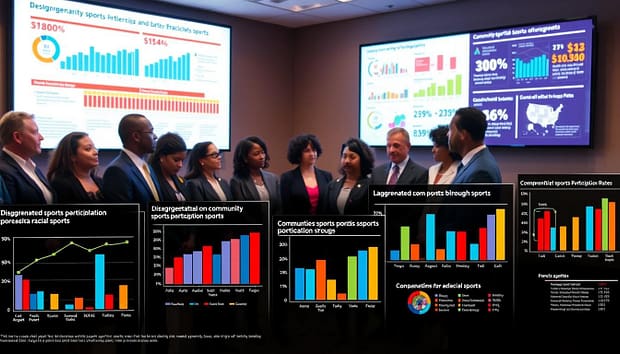
The Academic Progress Rate (APR) is a good example. It was meant to measure academic success. But, it unfairly hurt under-resourced HBCUs. The data was right, but it was too simple to show the real issues.
When everyone is measured the same way, we miss the big differences. Some people start behind, and we don’t see it.
True culturally responsive practice needs detailed data. This means breaking down big numbers into smaller, more meaningful parts:
- Graduation rates by sport and race
- Employee satisfaction surveys analyzed by demographic
- Program participation rates separated by ethnicity
- Coaching retention statistics viewed through a racial lens
This approach makes data more than just a report card. It helps us understand the real issues. For example, research on college athlete experiences shows how detailed data can reveal important truths. It answers questions that big numbers can’t.
The GM Moving case study is a great example. They started tracking demographics and found a big problem. Their leadership program was not as diverse as they thought. The data showed they were missing the mark.
This kind of data collection is not about blaming. It’s about finding solutions. It’s like a doctor diagnosing a problem, not just saying you’re sick.
Think of it like fixing a leaky pipe. You don’t just measure the wet floor. You find where the leak is. Disaggregated data does the same thing. It shows us where we need to improve.
Without detailed data, we’re flying blind. We rely on stories instead of facts. We assume solutions work for everyone. But, they don’t. Bad data is not just useless. It’s harmful. It makes us think we’re making progress when we’re not.
The real question is, are we brave enough to look at the data it provides?
Understanding the Importance of Anti-Racism and Culturally Responsive Practices
Anti-racism and culturally responsive practices are key to creating a fair and inclusive society. They help us understand and address racism, ensuring everyone is treated equally. By focusing on these practices, we can build a better future for all.
Anti-racism is about actively working against racism in all its forms. It involves recognizing and challenging racist beliefs and behaviors. By doing this, we can create a society where everyone has the same opportunities and is treated with respect.
Culturally responsive practices, on the other hand, involve understanding and valuing different cultures. It means recognizing the importance of cultural diversity and adapting our practices to meet the needs of all individuals. This approach helps ensure that everyone feels included and valued.
By combining anti-racism and culturally responsive practices, we can create a society that values diversity and promotes equality. This is essential for building a fair and inclusive community where everyone has the chance to thrive.
The Benefits of Anti-Racism and Culturally Responsive Practices
Implementing anti-racism and culturally responsive practices offers numerous benefits. These practices help:
- Addressing systemic racism: By actively working against racism, we can dismantle the systems that perpetuate inequality.
- Creating inclusive environments: Culturally responsive practices ensure that everyone feels welcome and valued, regardless of their background.
- Improving educational outcomes: By addressing racism and valuing cultural diversity, we can create a more inclusive and supportive learning environment.
- Building stronger communities: Anti-racism and culturally responsive practices foster a sense of belonging and promote unity among diverse communities.
By embracing anti-racism and culturally responsive practices, we can create a society that values diversity and promotes equality. Together, we can build a brighter future for all.
Success Stories and Templates
Cynicism about changing systems is common. But showing what works is hard. The real challenge is sharing the plan for change.
There are already successful examples out there. The NFL’s “Inspire Change” initiative has a $250 million budget. The Lakers have a Director of Racial Equity and Action. GM Moving created a space for 15 people from racialized backgrounds.
These successes are not just celebrations. They are smart strategies that can be used again. They have key elements: money, safe spaces, leadership support, and goals. We should study them to create a clear plan for change.
The “Bill Russell Rule” in college sports shows how to interview fairly. Companies offer bonuses for hiring diverse teams. This turns small wins into a lasting fire for racial equity. The next step doesn’t have to start from scratch. They just need the right plan for change.