

Let’s start with a confession: the phrase “level playing field” is a big lie. We use it in meetings, but do we really check if the field is level?
This isn’t just about who gets the best shifts or gym access. It’s about something deeper. It’s about time and space—the things we all need.
We’ll look at these issues through the lens of fairness. It’s like doing a deep dive into two big problems.
The numbers are harsh. Bad shift times make people leave their jobs. And, poor areas and minority groups don’t have enough places to play.
So, let’s get ready to dig into this. We’re not just fixing schedules or opening doors. We’re making things fair.
Auditing Current Access Patterns
Auditing access patterns is about finding out who gets in and when. It’s not about finding a smoking gun. It’s about understanding the rules that guide access.
You can’t manage what you don’t measure. In the world of scheduling equity, we can’t rely on intuition. It often leads to unfairness.
We stop relying on gut feelings. Instead, we use spreadsheets to understand access. The first question is: what does “fair” mean here? Is it based on who comes first, their skills, or how much money they make?
Often, the answer is a mix of business needs and personal wishes. This mix is called policy.
When it comes to scheduling, we dive into spreadsheet spelunking. We track who gets the best shifts and who doesn’t. It’s about more than just hours. It’s about opportunities and how well people live.
We need to ask if the current pattern is fair. Is it based on skill, bias, or tradition?
For physical spaces, we map out where things are and who uses them. Honolulu County is a great example. They used experts to see how schools could share spaces better. They wanted a fair map, not one based on old habits.
The data collection is thorough:
- Interviewing Administrators: We get the official story and policies.
- Deploying Surveys: We ask users about their needs.
- Analyzing Existing Data: We look at records to see what’s really happening.
This process shows us who has access to what. It reveals if policies are fair. It shows if “open use” policies are just for show.
This audit is the first step towards change. It’s about understanding the problem before we can solve it. It moves us from guessing to knowing, which is key for real change. This work also involves valuing the people affected by the data.
Prioritization Criteria and Transparency
If you think a first-come, first-served sign-up sheet solves scheduling equity, I have some oceanfront property in Arizona to discuss. Auditing reveals the problem; prioritization is where you build—or burn—trust. Deciding “who gets what” is the bureaucratic thunderdome where good intentions go to die without a clear, multi-variable algorithm for fairness.
In the workplace, the smart solution isn’t seniority. It’s a dynamic system. Think rotation to spread undesirable slots, or a points-based model where working a brutal holiday shift earns you credits for a prime summer day. Even better is preference-based scheduling that actually honors employee choices instead of filing them into a digital void.
The magic ingredient? Radical transparency. The allocation criteria must be as public as a royal wedding. When people see the rules, they may not love the outcome, but they can’t claim the game was rigged. This transforms a schedule from a source of resentment into a tool of understood, if imperfect, justice.
Now, transpose that to community facilities. The stakes are higher. It’s not about what the parks department *thinks* the neighborhood needs. Is it a soccer field or a community garden? A basketball court or a picnic shelter? A top-down guess is a spectacular waste of resources. True prioritization demands robust, ongoing community engagement.
Here’s the uncomfortable part: any improvement can unintentionally spike property values. Without community-led prioritization, your well-intentioned shared-use agreement might be the first act in a displacement drama. Engaging residents isn’t just polite; it’s a strategic shield against gentrification, ensuring improvements serve current needs.
The goal is a transparent social contract, not a cryptic privilege. For both employee shifts and public spaces, clear, published criteria turn allocation from a secretive power play into a collaborative process. This is the bedrock of genuine scheduling equity, where the system’s logic is visible and its goal is fair access for all. Building this kind of equitable opportunity provision requires moving beyond simple fixes to embrace complex, honest systems.
Weather/Lighting Considerations for Safety
Let’s talk about the elephant in the room—or the shadow in the parking lot. Even the best digital schedule won’t help if the space feels unsafe. Safety is essential, not just an extra feature.
Equity meets reality in the real world, which can be dark, cold, or wet. Crime Prevention Through Environmental Design (CPTED) is simple yet effective. It’s about making spaces visible and well-lit.
Who suffers when safety is ignored? The data shows it’s women, children, and the elderly. A parent might not use a playground at dusk if it’s not safe. An employee might skip a late shift if the parking is dark.
So, what does CPTED mean in action? For shift workers, it’s about well-lit paths and secure parking. For community spaces, it’s about keeping areas populated and well-maintained.
Ignoring weather and lighting is like building a staircase without a handrail. The most vulnerable will be the first to fall. Your field allocation policy must consider these physical needs.
To make this clear, let’s look at risks and solutions. The table below shows common scenarios and how to address them with CPTED principles.
| Time / Condition | Primary Safety Risk | CPTED Principle Applied | Recommended Action for Field Allocation |
|---|---|---|---|
| Dusk & Nighttime | Poor visibility, reduced natural surveillance | Lighting & Natural Surveillance | Schedule high-use activities earlier; mandate and fund adequate perimeter and pathway lighting for late slots. |
| Inclement Weather (Rain, Snow) | Slippery surfaces, obscured paths, quicker darkness | Access Control & Maintenance | Prioritize well-maintained, drained fields for wet weather; communicate clear closure policies for safety. |
| Isolated / Low-Traffic Locations | Lack of “eyes on the street,” feeling of isolation | Natural Surveillance & Territorial Reinforcement | Pair allocations in adjacent areas to increase foot traffic; use signage and programming to claim the space. |
| Early Morning or Late Evening Shifts | Limited staff/public presence, travel in darkness | Lighting & Access Control | Implement secure, well-lit designated pickup/drop-off zones; review security patrol routes for shift changes. |
This isn’t about building walls. It’s about designing spaces that invite use. A well-lit path welcomes users. A clean hedge shows someone cares. This turns an abstract field allocation into a real, safe place. Without it, you’re managing risks, not resources.
The truth is, an empty field is a design failure, not a lack of demand. If users are afraid to come, you’ve lost the game of fair access.
Transport and Curfew Impacts
Transportation is more than just moving people around. It’s a key factor that can make any field allocation plan useless. Even the best schedule can’t help if people can’t get to the venue safely.

In low-income areas, basic walking paths are rare. Streets often lack sidewalks. This makes walking to facilities a big challenge for many.
Public transit adds to the problem. Winning a daytime slot at a community center is great. But if the bus is canceled, your plans are ruined. For those without cars, unreliable transit means no access.
There’s also the issue of curfews. These aren’t official rules, but they’re real barriers. A late-night event is pointless if the last bus leaves early. A community garden plot is useless if you can’t get home safely.
The “Parks After Dark” program in Los Angeles changed this. It made parks safe and lively at night. It showed that parks are only valuable if people can get there easily.
So, how do we fix this? We need to look beyond the facility itself. We must ask:
- Are there safe, well-lit walking and biking routes to the site?
- Do public transit schedules align with your prime time slots?
- Does closing time create a “curfew” for certain populations?
As public health research confirms, safe travel routes are key. If getting there is hard, the facility might as well be unreachable. True equity comes from good infrastructure, not just permits.
Negotiating with Parks and Schools
Talking to a public entity about using their facilities is all about the details. It’s not about big dreams but understanding their rules. The goal of scheduling equity is put to the test here.
The locked gate is more than a barrier; it’s a story of fear. It’s about avoiding big legal problems. We need to show that safety can be managed well.
To solve this, we need to focus on safety checks, good insurance, and clear rules. This builds trust. Look at successful joint-use agreements for examples. They show that sharing space can work well.
Now, let’s think about the budget. Imagine a Boys & Girls Club paying for cleaning at a school. They get to use the gym at night. It’s a win-win for everyone.
| Negotiation Hurdle | External Fear (Parks/Schools) | Internal Parallel (Your Workplace) | The Structural Solution |
|---|---|---|---|
| Liability & Insurance | “What if someone gets hurt on our watch?” | HR’s fear of grievance filings or overtime disputes. | Clear, signed agreements defining responsibility and required coverage. |
| Maintenance Costs | “Our budget can’t handle the extra wear and tear.” | Operations’ concern about resource drain from flexible schedules. | Cost-sharing models or dedicated cleaning fees baked into the agreement. |
| Scheduling Priority | “Our core programs must come first.” | Seniority rules or business-critical shifts taking precedence. | Transparent, tiered priority systems published for all to see. |
| Unsupervised Access | “We can’t have staff there all the time.” | Managers’ anxiety about remote or off-hours work. | Strict access protocols (key cards, check-in systems) and user agreements. |
This isn’t just about sports facilities. Your team is like a parks department. They worry about legal issues and costs. You need to create clear rules for everyone.
The solution might be a digital system for scheduling, not a legal contract. But the idea is the same. Good planning can overcome fears and open doors to scheduling equity.
Publishing Schedules Accessibly
If a tree falls in a forest and no one’s around, does it make a sound? If a gym is open for public use and no one knows, is it really accessible? This isn’t just philosophy. It’s the core failure of most scheduling equity efforts. Information is power, but only if it escapes digital purgatory.
A PDF buried on a municipal website is like a whisper in a hurricane. For the community seeking park time or a parent looking for open gym hours, it’s a dead end. True field allocation justice begins when the “open” sign is visible to everyone, everywhere.
Accessible publishing means meeting people where they are, on their terms. It turns a bureaucratic output into a user-centric service. This is where fairness gets practical.
| Method Type | Typical Format | User Experience | Impact on Equity |
|---|---|---|---|
| Opaque & Static | Paper flyer in a break room, buried PDF | Frustrating scavenger hunt. Information is stale. | Reinforces existing access for “insiders.” Creates hidden barriers. |
| Transparent & Dynamic | Mobile app, public digital calendar, multilingual site signage | Real-time, on-demand clarity. Self-service access. | Democratizes information. Levels the playing field for all users. |
For employees, the shift is revolutionary. A digital shift marketplace isn’t just an app. It’s a transparent, liquid market for time. Think of it like a stock ticker for work hours.
- Employees can swap shifts based on real-time needs.
- Availability updates instantly, honoring personal preference profiles.
- It creates agency, turning workers from passive recipients into active participants.
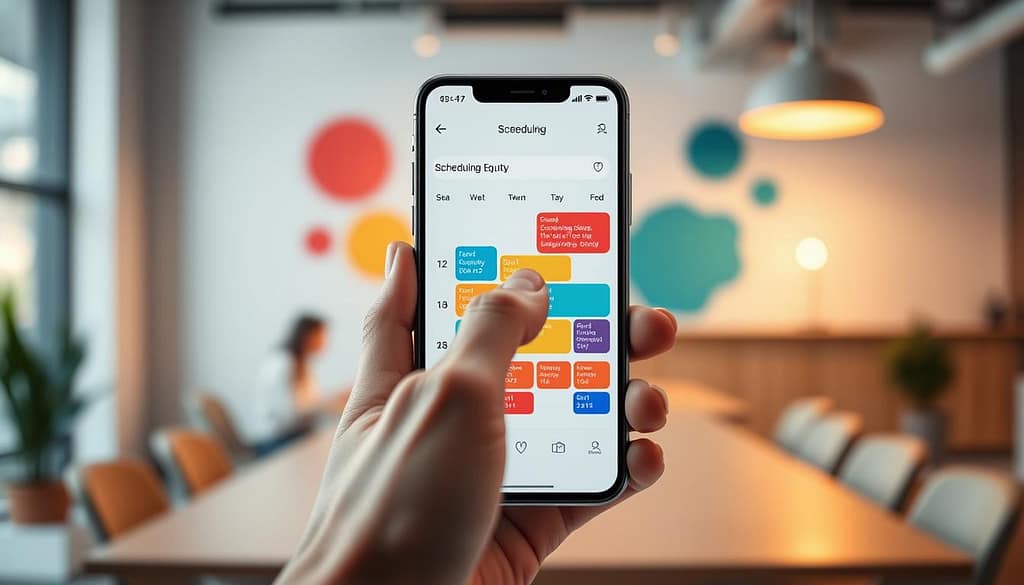
For the community, the principle is the same. Clear, multilingual signage at the school gate listing public hours is non-negotiable. An online calendar showing when the Zumba class occupies the gym or when the soccer league has the field makes field allocation a public fact, not a private rumor.
This act of publishing, done right, is a promise kept. It says, “We are not hiding the rules. Here they are. Play fair.” Transparency isn’t a bonus feature. It’s the foundation.
When schedules live in the light, scheduling equity moves from a theoretical goal to a lived reality. It transforms hidden bureaucracy into an open marketplace for time and space.
Monitoring Equity KPIs
So, you’ve built the system. But is it working? This is where your equity initiative gets its report card. Forget vanity metrics. We need Key Performance Indicators that would make a sociologist nod.
For true scheduling equity, track more than just shifts filled. Measure the Schedule Fairness Rating across your team. Analyze the Preference Accommodation Rate—are certain demographics always getting their requests denied? Dive into Schedule Satisfaction Scores and Work-Life Balance Index data. Those scheduling complaints aren’t just noise; they’re data points highlighting systemic stress fractures.
For field allocation and facility access, don’t just count heads. Map them. Are usage rates spiking in the communities you targeted? Is there a measurable shift in community cohesion or health outcomes? The Los Angeles Parks After Dark program famously tracked reductions in gang violence—a profound KPI that goes far beyond simple headcounts.
This monitoring is your feedback loop. It transforms a one-time policy into a living, breathing system. It tells you if your beautifully negotiated park agreement is fostering community or gathering dust. For a deeper dive into tracking effectiveness, explore key performance metrics that matter.
The ultimate question isn’t about intention. It’s about impact. Are we just admiring our blueprint, or is the playing field actually getting level? The data holds the answer.