

Professional sports teams have a huge impact worldwide. But, their big events create a lot of waste. For example, an NFL game can make about 35 tons of trash.
The sports world is moving towards being more green. Leaders now see sustainability as key, not just an afterthought. They know cutting down on waste helps their business and image.
It’s not just a choice anymore; it’s a must for leaders who want to succeed. By planning well and using resources wisely, sports can meet the need for being responsible.
Creating Eco-Friendly Sports Initiatives
Investing in energy-efficient buildings is changing the game for sports arenas. Companies focusing on sustainability find that modern designs are key to success. Green technology helps lower carbon emissions and improves fan experiences.
High-performance building standards are key to eco-awareness in sports. The Golden 1 Credit Union Center in Sacramento is a prime example. It’s the world’s first LEED Platinum arena, showing the world what’s possible.
Leaders need to see the benefits of using renewable energy. Adding solar or wind power can save a lot of money. These investments are essential for a company’s sustainability plan.
Switching to green infrastructure shows a company’s commitment to eco-awareness. This commitment wins over fans and investors. It keeps sports programs competitive and responsible in today’s world.
Case Study: Greening the Field and Beyond
Large arenas are key places for testing new ways to reduce waste in the United States. They make big changes to how they work. This helps fans and staff learn about taking care of the planet. It takes a lot of effort and smart planning to make these changes.
The Atlanta Hawks’ State Farm Arena is a great example. They made it so no trash goes to landfills by getting rid of over 90% of waste. This shows that sports teams can handle a lot of trash by planning well and keeping an eye on things.
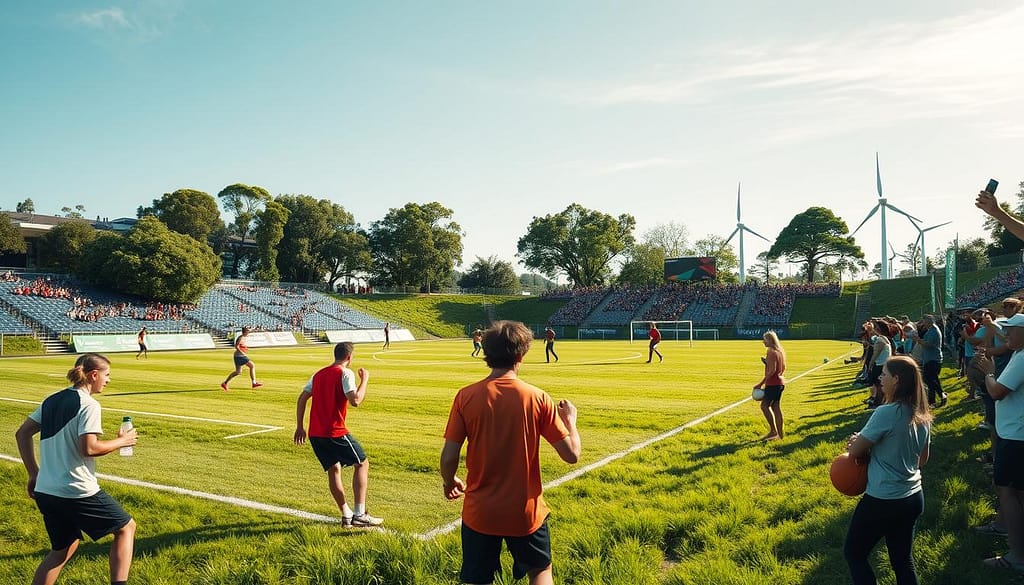
Success comes from tracking waste closely and having good composting programs. Managers who focus on saving the environment can find ways to cut costs and help the planet. Studies on sustainable facility management show how these changes set new standards for the industry.
To really care about the environment, it’s not just about recycling. It’s about checking every part of how things are done to make sure it’s efficient. Places that do this well often get better with their community and help the planet for a long time.
| Metric | Traditional Venue | Sustainable Arena |
|---|---|---|
| Waste Diversion Rate | 20% – 30% | 90% + |
| Composting Program | None | Full Scale |
| Data Tracking | Annual | Real-Time |
| Energy Sourcing | Standard Grid | Renewable Mix |
Fostering Environmental Awareness among Youth
Engaging young athletes in environmental initiatives is key to a responsible culture. Collegiate athletics offer a chance to shape the next generation’s values. By focusing on Environmental Awareness, universities can turn sports programs into forces for good.
EcoAthletes is a pioneering program that teaches student-athletes about climate action. It helps them use their influence to promote a greener planet.

Universities that embrace sustainability see a big change in campus life. By promoting Environmental Awareness, they link their sports with academic goals. This way, leadership training includes caring for the planet.
Student-athletes can inspire their peers and communities. When they talk about climate issues, they connect sports with civic duty. Here are ways athletic departments can support this:
- Offering workshops on climate and sustainable living.
- Working with local groups for community service.
- Encouraging athletes to share their green efforts on social media.
The impact of sports leadership goes beyond the field. By focusing on Environmental Awareness, programs equip young leaders to tackle today’s big challenges. This dedication to the planet ensures the next generation of athletes cares for our environment.
Measuring Environmental Impact Actions
Organizations need clear metrics to track their environmental programs. Data-driven reporting shows the success of long-term sustainability efforts. People now want to know how sports facilities handle their ecological impact.
The UVA Green Games show the importance of tracking closely. In the 2023-24 school year, they kept over 66,000 pounds of waste out of stadiums and arenas. This proves that careful monitoring can lead to big improvements in waste reduction.
Conservation needs regular checks against goals. Managers who use these metrics understand their operations better. This makes environmental care a key part of sports management today.
Leaders should check their data collection methods to find ways to improve. Sharing these results builds trust with the community. Please share your organization’s progress in tracking these important metrics to help set better industry standards.