
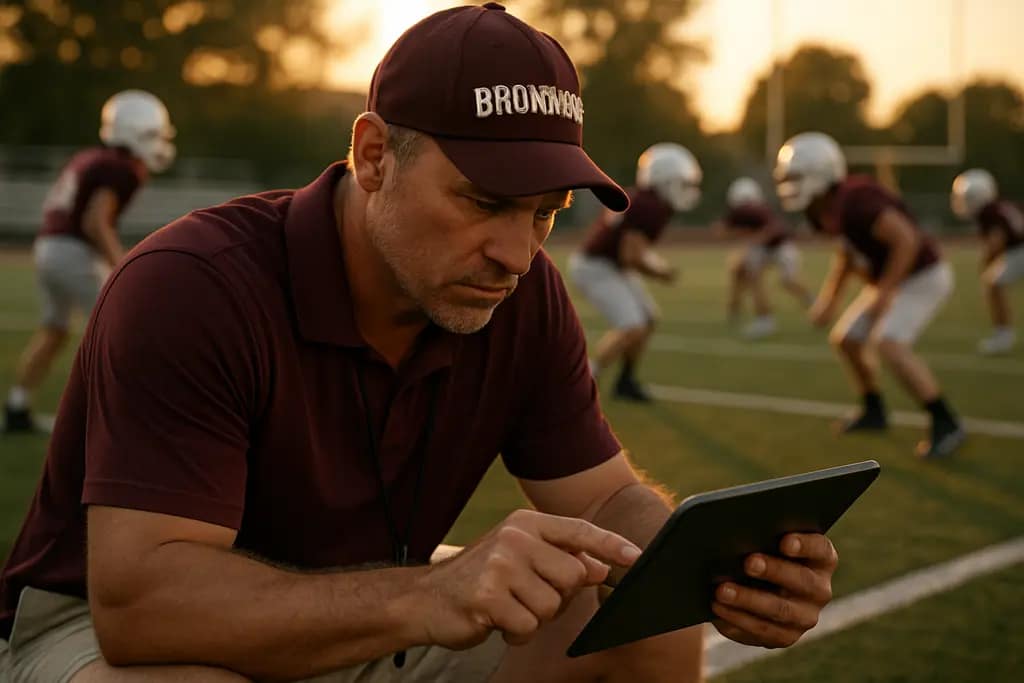
Brownwood Coaching Strategies now sit at the center of a meaningful football shift for Brownwood High School. The Lions entered their second campaign under head coach Jeryl Brixey after a 7-5 record in 2025 and a fourth straight bi-district championship, according to Brownwood News. That combination creates a clear coaching challenge: honor a winning standard while helping teenagers grow through a new competitive setup.
For the 2026 season, Brownwood moved into Class 4A Division II, Region IV and District 13-4A Division II, a classification and region Brownwood News reported the program had not competed in before. The shift matters because unfamiliar opponents often test more than talent. They test practice habits, position depth, sideline communication, travel routines, and how well young athletes respond when a game asks them to solve problems under pressure.
The record from 2025 gives useful context without reducing players to numbers. Dave Campbell#8217;s Texas Football listed Brownwood at 3-1 in district play in 2025, second behind Stephenville at 4-0, on its Brownwood Lions team page. For a youth development lens, that means the staff is not starting from scratch. It is building from a group that has already experienced district pressure, postseason standards, and the daily expectations that come with wearing Brownwood colors.
Brownwood Coaching Strategies For A New Class 4A Test
The move into Class 4A Division II Region IV asks Brownwood to prepare for opponents that may bring different schemes, travel demands, and matchup profiles. Brownwood News reported on July 31, 2026, that the Lions#8217; five-game pre-district slate was set to include five ranked opponents and a 7-on-7 state championship squad, plus two scrimmages. By September 15, 2026, those early-season dates may have already shaped the team#8217;s growth, but the coaching lesson remains clear: a demanding opening stretch can be used as a teaching lab rather than just a scoreboard test.
Brownwood Coaching Strategies Start With Depth
Brixey identified several focus areas before the 2026 season: building depth on the offensive and defensive lines, developing receivers and tight ends, and adjusting to a new starting quarterback, Riggs Gray, as reported by Brownwood News. Those details point to one of the most practical parts of high school coaching. A program cannot depend only on its most visible starters. It needs younger players, role players, and multi-position athletes to feel prepared before they are needed on Friday night.
That is where Brownwood Coaching Strategies can be both competitive and inclusive. Depth is not only a roster chart. It is a culture of meaningful reps. Coaches can use practice periods so second-team linemen face live teaching moments, receivers rotate through route concepts, tight ends learn both blocking and passing responsibilities, and quarterbacks communicate protections with confidence. When athletes know why their role matters, they are more likely to stay engaged even if their playing time changes week to week.
Fundamentals Can Travel
In a new region, Brownwood cannot assume every opponent will look familiar on film. But fundamentals can travel from one setting to the next. Tackling leverage, pad level, route spacing, ball security, pursuit angles, and communication before the snap are teachable skills that support players against many styles of football. This is especially helpful for teenagers because it gives them stable habits during uncertain game situations.
Coaches can also protect young athletes from overload. A team facing strong early opponents may be tempted to add too many checks, formations, or weekly wrinkles. A youth-centered approach asks a different question: what can players execute with confidence when the game speeds up? Clear language, repeated cues, and film sessions that show both errors and growth can help athletes learn without feeling singled out.
Inclusive Coaching Builds Roster Depth
Inclusive coaching does not mean lowering competitive expectations. It means creating more ways for athletes to contribute to the team#8217;s standard. For Brownwood, this is especially relevant because Brixey#8217;s listed priorities touch several position groups. Line depth, receiver development, tight end growth, and a new quarterback all require teaching systems that reach starters and backups alike.
Reps That Keep Players Engaged
High school football programs serve students at different stages of physical, emotional, and technical development. Some players are ready for varsity contact early. Others need time, strength work, or confidence. Good practice design can keep both groups moving. Split-field periods, position-specific teaching, scout-team recognition, and short competitive segments give coaches more chances to teach without leaving developing players standing behind a drill.
These are not soft ideas. They are competitive habits. A third offensive lineman in a rotation may protect a drive late in the fourth quarter. A young receiver who understands spacing may help a quarterback find a safe throw. A tight end who learns the details of alignment may turn a short-yardage call from a guess into a reliable option. Brownwood Coaching Strategies should treat those moments as part of player development, not as backup plans.
Leadership Shared Across Positions
Inclusive coaching also expands leadership. Captains and seniors matter, but position rooms can carry leadership in smaller daily ways. A senior lineman can teach a younger teammate hand placement. A receiver can model how to finish a route even when the ball is not thrown. A quarterback can learn to encourage corrections without blame. These habits help teenagers practice accountability in a setting where adults can guide the tone.
- Use clear role language: Tell each player what he is working toward and how it helps the team.
- Rotate teaching voices: Let position leaders demonstrate drills with coach support.
- Celebrate teachable effort: Praise communication, hustle, and assignment growth, not only touchdowns or tackles.
- Connect varsity and sub-varsity: Keep younger players familiar with core concepts before they move up.
For families and community members, this kind of coaching builds trust. Parents see that the program values development, not only stars. Younger athletes see a pathway. Teachers and campus leaders see football supporting discipline, attendance habits, and peer responsibility. A strong Friday night program can then feed pride back into the school week.
Preparing Players And Families For Region IV
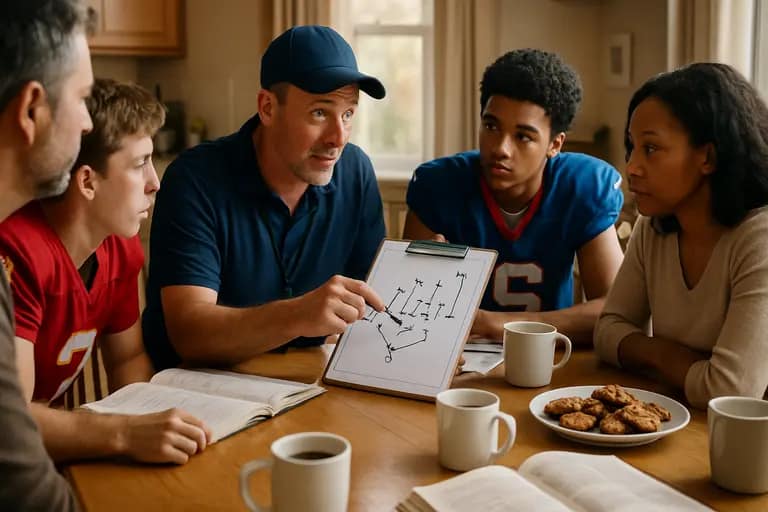
A new competitive environment affects more than the playbook. It affects weekly routines for students, families, coaches, trainers, band members, cheerleaders, and community supporters. Region IV competition can ask athletes to handle fresh venues and opponents they may not have seen in earlier Brownwood schedules. That means preparation should include football details and life skills.
Game Planning Without Overloading Teens
Players need scouting reports, but they also need clarity. Coaches can group weekly keys into small sets: formation recognition, top defensive fronts, special teams alerts, and two or three opponent tendencies that matter most. That keeps the plan teachable. It also gives students a healthy model for problem-solving: gather information, focus on what matters, and execute one assignment at a time.
The same idea applies to film. Instead of using film only to correct mistakes, coaches can show improvement from one week to the next. A lineman who fixes footwork, a receiver who sharpens a stem, or a quarterback who gets the ball out on schedule should see that growth recognized. Teenagers build confidence when they can connect practice corrections to real progress.
Community Support Around The Program
Brownwood football is also a community gathering point. Local support can help athletes feel seen, but adults have a responsibility to keep that support healthy. Encouragement should not turn teenagers into public targets after a hard night. A supportive community praises effort, respects coaches, and remembers that high school athletes are still students learning how to handle pressure.
That same theme appears across Texas high school football. Coaching changes and new competitive settings can test both results and community trust, a point that connects with the broader discussion of DFW 6A coaches facing high expectations in 2026. Brownwood#8217;s setting is its own, but the shared lesson is familiar: strong programs need alignment between coaches, players, families, and school communities.
Brownwood Coaching Strategies For Class 4A Growth
The clearest path for Brownwood in Class 4A Division II is not built on one adjustment. It is built on daily coaching choices that help students become more prepared, more resilient, and more connected to one another. Brownwood Coaching Strategies should keep competitive goals and youth development goals tied together: build depth, teach fundamentals, communicate roles, and protect a team culture where every athlete can grow.
The 2026 move into District 13-4A Division II gave the Lions a fresh set of opponents and preparation questions. Brownwood#8217;s 2025 record, district finish, and bi-district success show that the program had a foundation entering the change. The next measure is how well the staff turns unfamiliar competition into learning moments for players who will carry those habits beyond football.
For the Brownwood community, that is the deeper value of the season. Wins matter, and standards matter. So do the young people learning how to listen, compete, recover from mistakes, lead peers, and take pride in representing their school. If Brownwood Coaching Strategies keep those goals together, the move into Class 4A Division II can strengthen both the football program and the students it serves.