
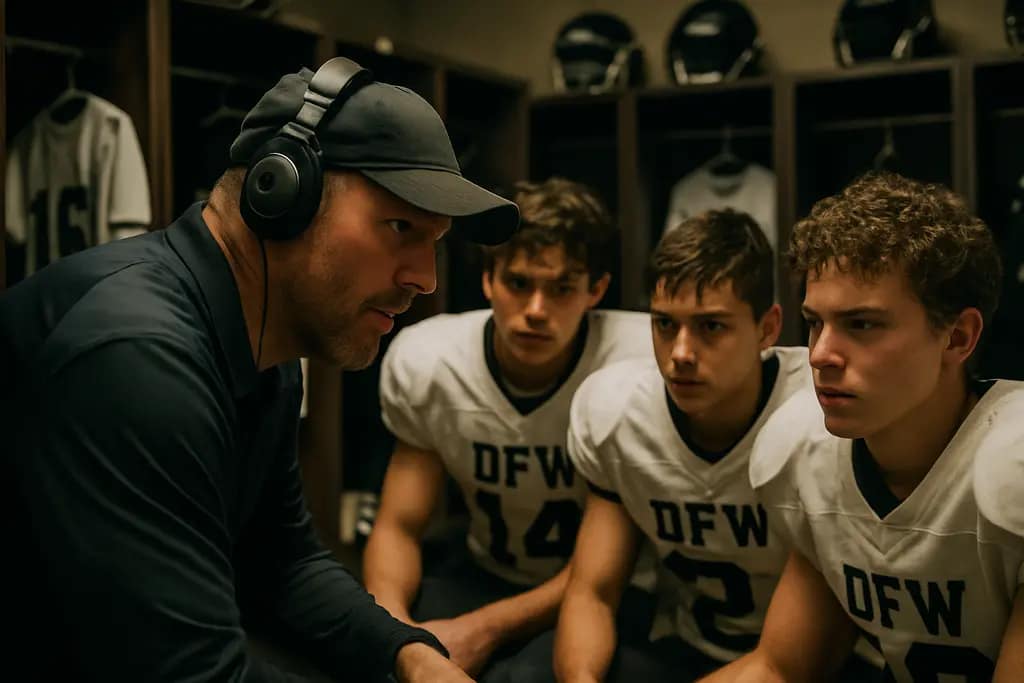
DFW 6A coaches entered one of the most demanding high school football environments in America during the 2026 offseason. In Dallas-Fort Worth, a head coach at a premier Class 6A program is not only asked to win games. He is asked to guide teenagers, steady families, support campus culture, and protect the sense of pride that gathers around a stadium on Friday nights.
That challenge grew sharper because several high-profile programs changed leadership at the same time. During the 2026 offseason, Rockwall-Heath, North Crowley, Southlake Carroll, and Waxahachie hired new head coaches, and those four programs combined for a 45-9 record in the 2025 season; North Crowley and Waxahachie reached regional finals, while Southlake Carroll advanced to the 6A Division II state semifinal, according to a Yahoo Sports report. Those results set a high bar before the first practice whistle under new leadership.
Why DFW 6A Coaches Inherit More Than A Playbook
DFW 6A Coaches And The Standard Already Set
The central coaching challenge in these programs is not starting from scratch. It is taking over teams that already expect deep playoff runs. For players, that can be both inspiring and heavy. A senior who has spent years preparing for one final season wants stability. A sophomore trying to earn varsity trust needs clear teaching. A freshman watching from the sideline needs to see that the program has room for his growth, not just the varsity scoreboard.
For DFW 6A coaches, the assignment is part football design and part relationship work. Parents want communication. Assistant coaches want clarity. Campus leaders want a program that reflects well on the school. Younger athletes in middle school feeder programs are watching, too, and they often form their first idea of leadership by seeing how varsity coaches treat players after wins, losses, injuries, and mistakes.
Pressure That Can Build Better Habits
Pressure is not automatically harmful. In the right hands, it can create structure. A new head coach can use high expectations to teach players how to prepare, how to respond to feedback, and how to treat teammates. The scoreboard will always matter in Texas high school football, but the daily standards behind it matter just as much for youth development.
That is where community impact enters the picture. A strong program can become a shared classroom for discipline and belonging. Players learn punctuality at workouts. They learn accountability in film sessions. They learn service when coaches connect the team with school events and youth camps. Families who may not know each other outside football sit together in the stands, volunteer together, and build trust through a common purpose.
What The 2026 Coaching Changes Say About Trust
Promotions From Within Show A Need For Continuity
Several of the 2026 hires reflected a desire to keep program culture steady. Waxahachie, North Crowley, and Southlake Carroll promoted defensive coordinators, while Rockwall-Heath hired Casey Dick. Waxahachie’s Lawrence Williams, who was promoted, spoke about keeping standards in place while adding his own adjustments. That kind of continuity can be especially helpful for teenagers, because it reduces the feeling that every routine has changed at once.
Southlake Carroll’s move carried its own weight. Lee Munn, previously the defensive coordinator, became head coach, and he was described as the only one among the four new hires without prior head-coaching experience. He also became only the second coach not named Dodge to lead Carroll since 2000. In a community with a long memory for football success, that kind of transition asks for patience, trust, and steady communication.
Statewide Movement Raised The Stakes
The local shifts were part of a much larger coaching cycle. Across Texas, there were 209 head-coaching changes during the 2026 high school football offseason, and four of the preseason Top 11 Class 6A teams had new head coaches, according to Dave Campbell’s Texas Football. That scale shows how often school communities ask new leaders to settle in fast while athletes keep training, studying, and competing.
The best path for DFW 6A coaches is not to copy the previous staff or reject everything that came before. It is to explain what stays, what changes, and why. Teenagers handle demanding standards better when they understand the purpose. If a new practice structure is meant to improve conditioning, say so. If a new defensive call sheet is meant to simplify reads, teach it clearly. If leadership roles are open, give players a fair way to earn them.
Player Development Under New Leadership

Varsity Expectations Should Feed The Youth Pipeline
Elite high school programs can sometimes look like they are only about varsity wins, but their lasting value reaches younger athletes. A new head coach has the chance to connect varsity standards with middle school and sub-varsity development. That means teaching the same language across levels, giving younger players a path they can understand, and making sure late bloomers are not lost because they were not ready at age 14.
For families, this matters. A parent wants to know that a child will be coached as a whole person, not treated as a depth-chart entry. Athletes need strength training that fits their age, skill instruction that builds confidence, and mentors who notice classroom effort. The head coach sets that tone, but the full staff carries it every day.
Community Identity Starts With Daily Conduct
A Friday night crowd sees the final product. The deeper community work happens earlier in the week. It shows in how players greet teachers, how they support classmates, and how they respond after a tough practice. If a new coach rewards only stars, the team culture narrows. If he rewards effort, listening, improvement, and unselfish play, more students can see themselves as part of the program.
- Clear communication helps families understand expectations around practice, schoolwork, and conduct.
- Consistent coaching language helps younger athletes see a path from feeder programs to varsity roles.
- Shared standards can turn a football program into a source of campus pride beyond game night.
That kind of leadership is not soft. It is demanding in a healthier way. It asks teenagers to compete hard while learning how to handle responsibility. It gives assistant coaches a shared mission. It reminds adults in the stands that high school football should serve students first.
Dallas-Fort Worth 6A Coaching Pressure And Community Growth
Winning And Belonging Can Support Each Other
The 2026 coaching changes at Rockwall-Heath, North Crowley, Southlake Carroll, and Waxahachie put a spotlight on a simple truth: successful programs need more than schemes. They need trust. The teams that entered 2026 with new head coaches had already proven they could win at a high level. The next test was whether new leadership could protect the habits, relationships, and youth pathways that helped make those programs strong.
DFW 6A coaches carry a public role, but their most meaningful work often happens in small moments: a player learning to lead warmups, a backup staying ready, a younger athlete being encouraged after a mistake, a team showing respect in the hallway after a big win. Those moments shape school culture. They also remind the community that football can be a place where young people learn courage, patience, and shared responsibility.
If Dallas-Fort Worth communities support new coaches with honest expectations, strong school backing, and patience for player growth, the impact can reach beyond the standings. The season can become a point of connection for students, parents, teachers, youth players, and local supporters who all want the same thing: young people growing through sport while representing their schools with pride.