
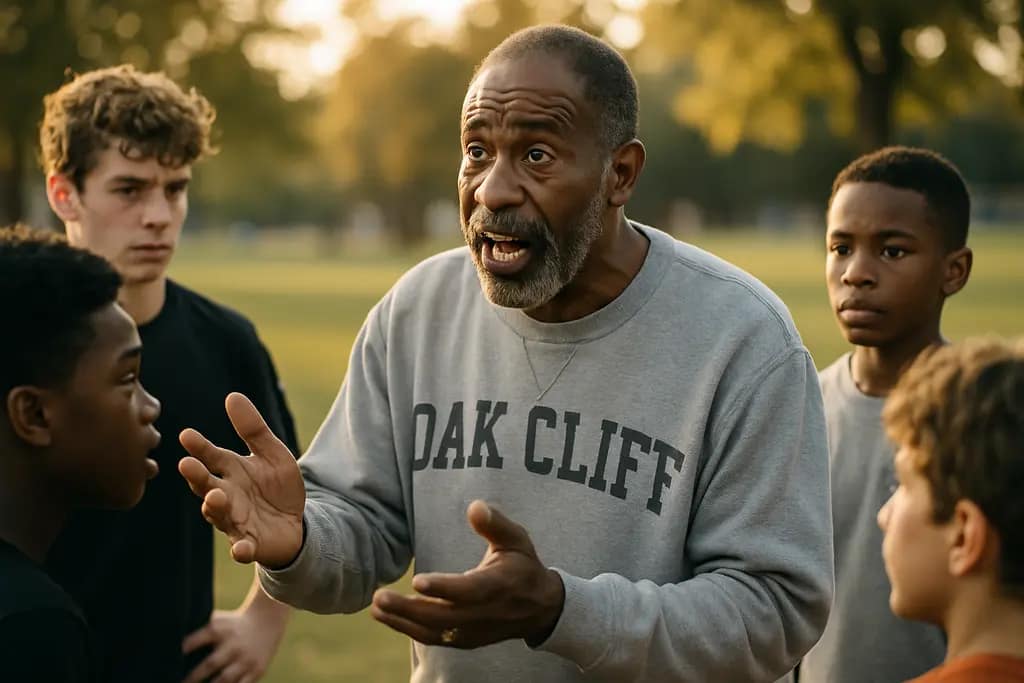
Oak Cliff sports carry stories that live far beyond a final whistle, and Coach Earl “Coach” Thompson’s story is one of steady presence, youth belief, and community care. The public record marks his life with clear dates: he was born on September 26, 1948, and passed away on February 25, 2026, in Cedar Hill, Texas, according to the Evergreen Memorial Funeral Home obituary. On April 16, 2026, the Dallas Park and Recreation Board approved naming the athletic field at Thurgood Marshall Park as Earl “Coach” Thompson Field, as shown in the Dallas board agenda. Those facts are brief, but their meaning is wide: a coach’s name now stands in a public sports space tied to youth opportunity.
For Logan Pierce, stories like this show why local sports infrastructure matters. A field is not only turf, lights, lines, and schedules. It can become a youth development platform where young people practice discipline, build trust with adults, learn how to recover after mistakes, and see that their neighborhood values them. Coach Thompson’s recognition gives families, park leaders, and youth coaches a clear example of what community-based sports can leave behind when care is consistent.
Oak Cliff Sports Remember Coach Earl Thompson
Oak Cliff Sports And A Field With A Name
When a city places a coach’s name on a public athletic field, it sends a message about what the community wants to honor. Winning matters in sports, but youth sports are also about attendance, safety, encouragement, and the adult who keeps showing up. For Oak Cliff sports, the naming of Earl “Coach” Thompson Field at Thurgood Marshall Park reflects a public choice to connect athletic space with mentorship.
The approval date, April 16, 2026, is not just an administrative marker. It gives the community a point of reference for remembering Coach Thompson in a lasting civic way. Young athletes may not know every chapter of his life when they first step onto the field. Yet the name can invite questions from players, parents, and volunteers. Who was Coach Thompson? Why did the city honor him? What should a field bearing his name ask from the adults who coach there now?
Dates That Anchor The Public Record
The official records available for this remembrance confirm the main public milestones: his birth on September 26, 1948, his passing on February 25, 2026, and the Dallas Park and Recreation Board’s April 16, 2026 approval of the field name. Some community stories are carried in memories that are not fully captured by public documents. That is common with youth coaches, whose deepest influence often appears in habits formed by former players, in families who felt welcomed, and in neighborhoods that kept youth activity alive.
Because this tribute relies on confirmed public sources, it does not claim unsupported totals, records, or private anecdotes. The stronger point is clear without embellishment: Dallas attached Coach Thompson’s name to a youth sports setting, and that formal act preserves a model of community recognition rooted in service.
A Coach’s Model For Youth Development
Belonging Before Performance
Youth development through sports begins with belonging. A child who feels seen is more likely to listen, practice, ask for help, and return after a hard day. Coaches who build that sense of belonging help young athletes connect effort with growth. That approach is especially valuable in local park programs, where sports can reach children from many backgrounds and give them a shared routine.
Coach Thompson’s public honor points toward that kind of work. The field name is attached to a place where practice, games, and family presence can shape daily life. A strong youth program does not depend only on standout athletes. It depends on clear expectations, patient instruction, family trust, and adults who understand that every drill is also a lesson in responsibility.
What A Named Field Can Teach
A named field can become a teaching tool. Coaches can use it to remind players that sport is bigger than personal attention. Players can learn that community respect is earned over time through service. Parents can see that local sports spaces are not disposable; they are shared assets that deserve care, fair access, and steady support.
This is where innovative program models matter. A park field can connect practice with tutoring partnerships, family resource nights, health education, leadership roles for older athletes, and volunteer pathways for former players. None of those ideas require changing the nature of sports. They simply use the natural rhythm of teams and schedules to support young people more fully. A related Youth Rise TX feature on how Earl Thompson Field honors Oak Cliff youth offers local context for that connection between place, memory, and youth opportunity.
Community Impact Beyond The Scoreboard

Parks As Shared Youth Spaces
Public athletic fields are one of the few places where youth, parents, grandparents, coaches, and neighbors can gather around a common purpose. That matters in community development. When a park is active, families have a reason to be present. When families are present, young athletes see support around them. When coaches set a positive tone, a field can become a safer and more hopeful place after school and on game days.
Coach Thompson’s name at Thurgood Marshall Park gives that shared space a clear identity. It tells young people that local service can be remembered. It also tells adults that youth sports depend on more than equipment and schedules. They depend on relationships. A field named for a coach asks today’s volunteers to think about the standard they are setting for the next group of children.
School And Family Connection
Oak Cliff sports can support school success when coaches, families, and educators work from the same values: attendance, respect, preparation, and follow-through. A child who learns to arrive on time for practice is learning a habit that can carry into class. A player who learns to accept correction can build the patience needed for academic growth. A team that practices communication can help young people gain confidence speaking with adults and peers.
Not every child will play at an advanced level, and that should never be the only measure of a sports program. The deeper community impact is seen when young people learn to care for teammates, manage disappointment, celebrate effort, and stay connected to positive adults. That is why Coach Thompson’s public recognition belongs in a broader conversation about local youth development. The field name is a marker, but the daily work continues through every coach who chooses encouragement over neglect and structure over drift.
Why Coach Thompson’s Oak Cliff Sports Legacy Matters
A Place For The Next Player
Coach Earl “Coach” Thompson’s legacy matters because it links memory with responsibility. The name Earl “Coach” Thompson Field can help the next player understand that sports are not only about personal performance. They are about the people who prepare the space, teach the rules, calm the pressure, and keep children connected to something constructive.
For Oak Cliff sports, this remembrance is also a call to keep youth programs people-centered. Fields need maintenance, schedules need coordination, and teams need coaches who know how to teach. Yet the heart of the work is still relational. A young athlete grows when an adult believes in them long enough to correct them, encourage them, and welcome them back.
That is the lasting lesson in Coach Thompson’s public honor. A community can use sport to build character, strengthen family ties, and protect spaces where young people feel they belong. The record confirms the dates and the naming action. The ongoing task belongs to the coaches, families, park leaders, and neighbors who will carry that spirit forward at the field that now bears his name.