
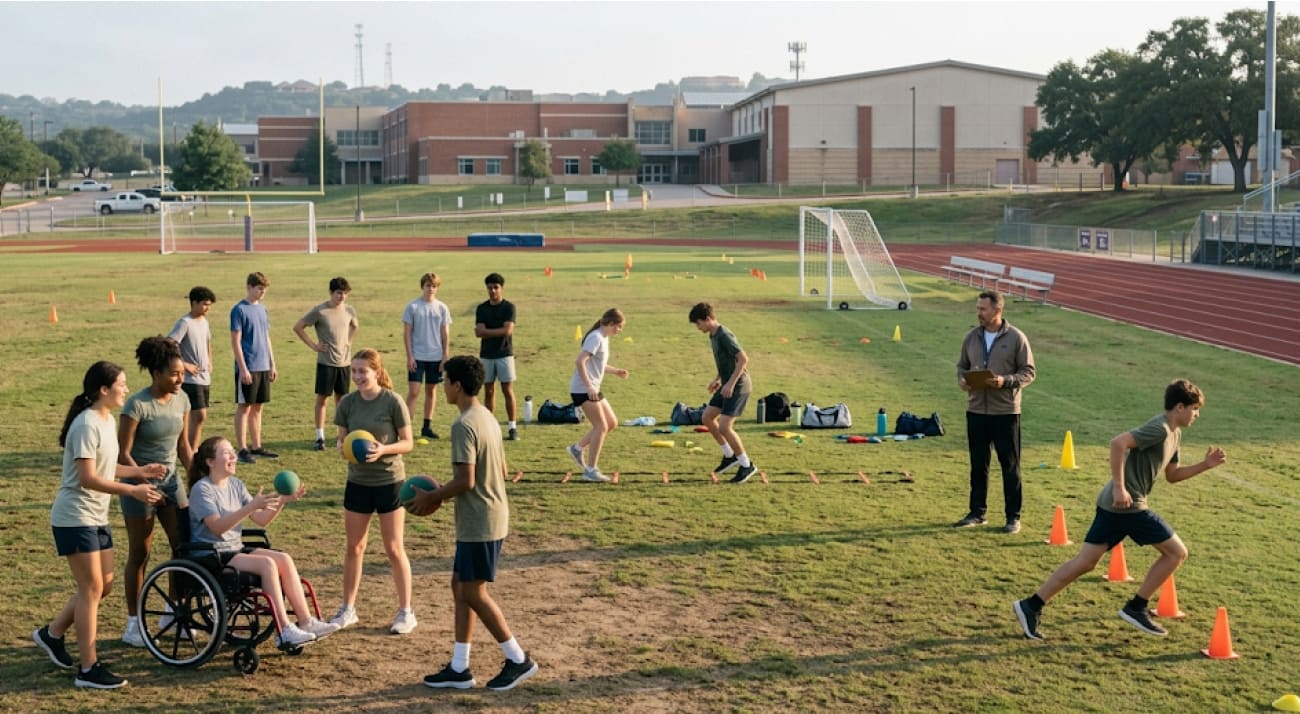
The U.S. Department of Health and Human Services announced a $10 million federal competition on October 1, 2026, challenging schools, school districts and youth-serving organizations to develop better ways to get children physically active. The Presidential Fitness School Innovation Challenge was unveiled at Westlake High School in Austin, Texas, by Health and Human Services Secretary Robert F. Kennedy Jr. and Education Secretary Linda McMahon. The initiative offers cash prizes and fitness-equipment vouchers to organizations that implement the revived Presidential Fitness Test and create positive experiences that encourage young people to build lasting healthy habits.
The announcement comes as new federal research highlights a persistent challenge for American schools. According to the Centers for Disease Control and Prevention’s 2025 Youth Risk Behavior Survey, only 25% of U.S. high school students reported getting at least 60 minutes of physical activity every day for all seven days of the previous week. The findings give schools and youth organizations a measurable reason to examine how physical education, sports programs and community activities can help students move more often.
For Texas schools, the new competition creates a potential opportunity to improve fitness programming, obtain equipment and test approaches that encourage participation. However, organizations must meet the competition’s requirements, demonstrate their work and submit entries by February 5, 2027. The program is an incentive for schools to develop and document effective approaches; it is not a guarantee that every applicant will receive funding.
HHS Announces Two Funding Tracks Worth $10 Million
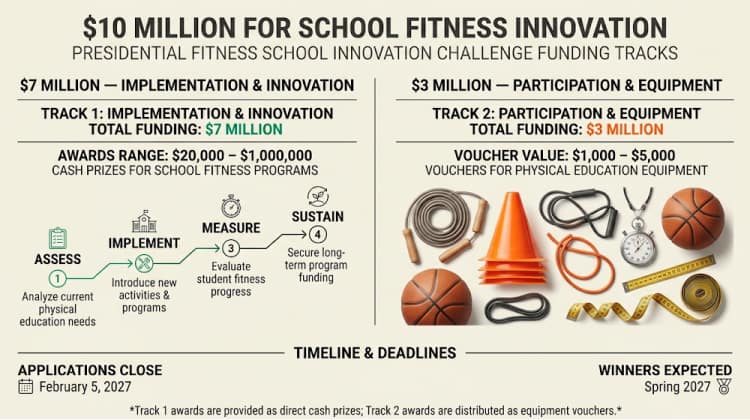
The Presidential Fitness School Innovation Challenge divides its $10 million in potential awards into two tracks, giving organizations different ways to participate based on their programs and needs.
The first track, called PFT Implementation and Innovation, accounts for $7 million in cash prizes. Eligible organizations can compete for awards ranging from $20,000 to $1 million by showing how they have implemented the Presidential Fitness Test, what results they have observed, what they learned and how they plan to sustain or expand their approach.
This track is aimed at organizations that can demonstrate more than a one-time fitness event. Schools may need to document how their programs work, how students participate and how the activities can continue after the initial competition period.
The second track, PFT Participation and Equipment, accounts for $3 million in equipment vouchers and recognition awards. Vouchers range from $1,000 to $5,000 and are intended to help participating organizations obtain fitness or sports equipment that supports continued physical activity.
The distinction between the two tracks matters for schools with different levels of experience. A district with an established fitness program may be better positioned to document results and pursue a larger cash award. A school or youth organization seeking to create a more encouraging testing experience may find the equipment track more relevant.
According to the official HHS announcement, the competition is open to eligible schools, school districts, state and local education agencies, and youth-serving organizations. Applicants must register, implement or administer the Presidential Fitness Test with students, and submit their entries by the February 5, 2027 deadline. Winners are expected to be announced in spring 2027.
Why the Fitness Challenge Matters for American Students
The funding announcement arrives alongside evidence that many teenagers remain below recommended physical activity levels.
The CDC published its latest national findings from the Youth Risk Behavior Survey on October 15, 2026. The report examined physical activity and dietary behaviors among U.S. high school students in 2025, comparing results with earlier survey years.
The findings show that 25% of students met the aerobic activity guideline by reporting at least 60 minutes of physical activity on every day of the preceding week. Approximately 51% reported muscle-strengthening activity on at least three days, while just 16% met both the aerobic and muscle-strengthening guidelines.
School-based opportunities are also a concern. Only 19.8% of students reported attending physical education classes on all five school days in an average week. Meanwhile, 57.6% said they had played on at least one sports team during the preceding 12 months.
These figures suggest that participation in organized sports and consistent daily physical activity are different measures. A student may play on a school or community team yet remain inactive on several days outside practices and games. Another student may not join a competitive team but still benefit from walking, cycling, dancing, recreational games or other forms of movement.
The complete findings are available in the CDC’s 2025 Youth Risk Behavior Survey report.
For educators, the challenge is to build opportunities that work for students with different interests, abilities, schedules and access to facilities. Fitness testing can provide a starting point for setting goals, but long-term participation depends on whether students find activities accessible, encouraging and worthwhile.
Westlake High School in Austin Becomes the Launch Site
Texas became the starting point for the federal initiative when HHS announced the challenge at Westlake High School in Austin on October 1.
Kennedy was joined by McMahon, Dr. Stephanie Haridopolos, director of national health communications for the Office of the Surgeon General, and leaders of the President’s Council on Sports, Fitness & Nutrition. Professional golfer Bryson DeChambeau, who chairs the council, and Paul “Triple H” Levesque, its vice chair, were also associated with the announcement and the broader fitness campaign.
Students participated in Presidential Fitness Test activities during the event. The administration also launched Fitness.gov as a central resource for instructional materials and information about the revived test.
The choice of a Texas high school gave the announcement a direct connection to the setting where many participating programs could operate. Schools can incorporate fitness activities into physical education classes, organize structured challenges or coordinate with community organizations that offer recreation and sports.
However, the Austin launch does not mean Texas schools receive automatic priority or guaranteed awards. The competition is nationwide, and applicants must follow the published eligibility and submission requirements.
For Texas districts considering an application, the next step is to assess existing programs, identify what can be measured and determine whether the school can sustain its activities after the competition.
How Schools Could Use the Awards to Expand Physical Activity
The two funding tracks create several possible approaches for schools and youth organizations. The best option will depend on existing facilities, staff capacity, student interest and the organization’s ability to document its work.
A school with a functioning physical education department might use the innovation track to support a program that gives students individual fitness goals, tracks progress over time and offers multiple ways to participate. The school would need to demonstrate the approach it implemented and explain its results rather than relying solely on attendance figures or the number of students who completed a test.
A youth-serving organization could build activities around inclusive recreation, helping participants explore movement through team games, strength exercises, running, coordination drills or other age-appropriate activities. Its application would need to align with the competition’s official rules and the requirement to implement or administer the Presidential Fitness Test.
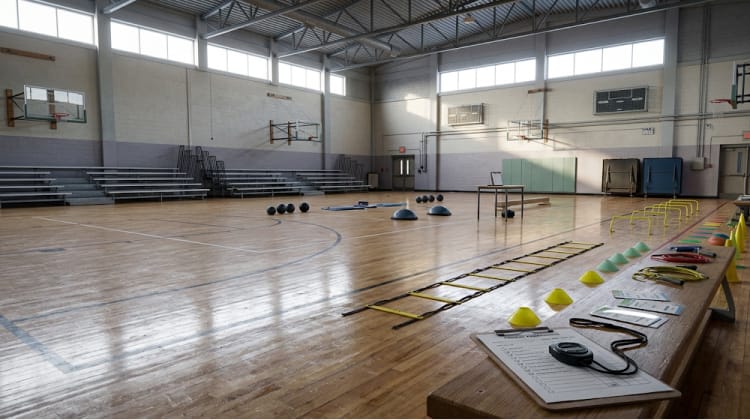
The equipment track could be relevant to organizations that need practical resources to keep students active. Depending on the program and eligible purchases, equipment could support physical education lessons, recreational activities and fitness stations. Applicants should check the official rules rather than assume every purchase will qualify.
Schools should also consider how students experience fitness assessments. A program that publicly ranks children by performance could discourage those who are new to exercise or have disabilities. By contrast, individual progress tracking, clear instruction, age-appropriate goals and different participation options may help more students feel comfortable taking part.
The competition specifically seeks approaches that create positive experiences and support continued activity. Organizations should therefore explain how their programs encourage students, accommodate different starting points and remain useful after the initial event.
Texas Schools Must Consider Access, Facilities and Participation
The funding opportunity could be especially relevant to schools that want to improve physical education without relying exclusively on competitive athletics.
Not every student has access to club sports, paid coaching, transportation to practice or specialized equipment. School-based activities can provide a more consistent starting point, but schools also differ in gym space, outdoor fields, staffing and time available for physical education.
An effective plan should account for those differences. A school with a large athletic complex may be able to run several fitness stations at once, while a smaller campus may need activities that use limited indoor space or existing playground areas.
Weather is another consideration in Texas. Extreme heat can restrict outdoor exercise, especially during late spring and early fall. Schools need appropriate scheduling, hydration access, rest periods and indoor alternatives when outdoor conditions are unsafe.
The federal initiative does not remove these operational challenges. Instead, it gives eligible organizations a reason to identify practical solutions and document whether they work.
For families, the value of a school fitness program should not be measured solely by test results. Participation, confidence, regular activity and opportunities to develop new skills also matter. A student who begins with little interest in sports may benefit from discovering an activity that fits their abilities and can continue outside school.
These goals connect directly to youth development in Texas, where access to constructive activities, supportive adults and opportunities for personal growth can help young people build skills beyond the classroom.
What the Research Says About Physical Education and Sports
The CDC’s October 2026 findings offer an important backdrop for the new competition because they distinguish daily physical activity, muscle strengthening, physical education attendance and team sports participation.
In 2025, 57.6% of high school students reported playing on at least one sports team during the previous year, up from approximately 52% in 2023. Yet the proportion reporting at least 60 minutes of physical activity every day remained broadly unchanged, at 25%.
Daily physical education attendance also declined between the two survey years, from approximately 27% in 2023 to 19.8% in 2025. These figures do not establish that reduced physical education caused lower activity levels, but they highlight a school-day opportunity that policymakers and educators may want to examine.
The CDC’s guidance recommends that children and adolescents ages 6 through 17 engage in at least 60 minutes of moderate-to-vigorous physical activity each day. Regular movement supports physical fitness and can benefit bone and muscle health, while research also links activity with aspects of brain health, cognition and emotional well-being.
The distinction between guidance and outcomes is important. The fitness challenge has been announced as a prize competition, and the announcement alone does not establish that the Presidential Fitness Test will increase activity levels or improve long-term health. Its impact will depend on how schools implement the program, whether students continue participating and what evidence emerges from the organizations involved.
The CDC’s physical activity guidance for students provides a useful reference for schools developing age-appropriate programs.
The February 2027 Deadline Gives Applicants a Short Planning Window
Schools and youth organizations interested in the challenge have a defined timetable. HHS says entries must be submitted by February 5, 2027, with winners expected in spring 2027.
That schedule means applicants need to review the rules, register, implement or administer the test, gather evidence and prepare their submissions before the deadline. Organizations that already have a program may be able to document existing work, provided it meets the competition’s eligibility requirements. Others will need to determine whether they have sufficient time and resources to establish a qualifying approach.
A practical preparation process would include reviewing the official rules, assigning responsibility to a staff member or program leader, outlining the activities, documenting participation and deciding how the organization will evaluate its results. Applicants should also explain how they intend to continue the program if they receive an award.
The opportunity extends beyond schools to eligible youth-serving organizations and education agencies, potentially allowing local partnerships to support fitness activities. However, each organization must confirm that it qualifies and that its proposed approach fits the applicable track.
For Texas schools, the challenge represents a chance to connect federal attention to youth fitness with local decisions about physical education, recreation and student engagement. The more useful applications will be those that treat fitness as a sustained part of student life rather than a single testing day.
The $10 million competition puts financial incentives behind that goal, but the larger question is whether schools and communities can turn a national announcement into regular opportunities for young people to move, participate and build healthy habits. The results will become clearer as organizations implement their programs, submit evidence and the federal government announces the winning entries in spring 2027.