
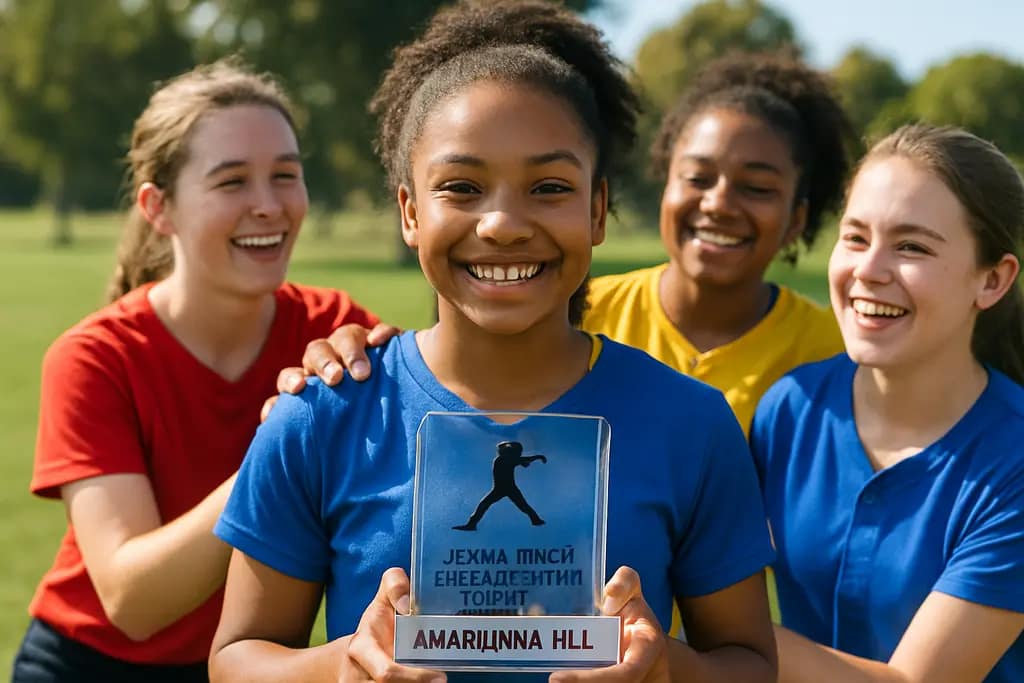
Jennie Finch Empowerment Award recognition reached Amarianna Hill on July 14, 2026, when the 16-year-old North Fortney High School student and Texas Rangers Youth Academy member was named the 2026 recipient during the Softball Elite Development Invitational. As a coach, I see this kind of honor as bigger than one plaque or one ceremony. It points to the daily habits that shape a young athlete: listening well, encouraging teammates, serving the community, and staying coachable when the work gets hard. MLB reported Hill’s age, school, academy connection, award date, and scholarship details in its award announcement.
Hill’s story gives families, schools, and youth coaches a clear example of what player development can look like beyond box scores. Softball gave her a field to compete on, but it also gave her chances to lead, volunteer, and build trust. That is the heart of strong youth sports. The best programs do not only ask, “Can this athlete perform?” They also ask, “Is this athlete growing into someone who helps others rise?”
Jennie Finch Empowerment Award And Youth Leadership
Why The Award Matters In Softball Development
The Jennie Finch Empowerment Award, presented by Arm & Hammer, recognizes young softball players who show leadership, integrity, humility, commitment, motivation, and related values. Each recipient receives a $10,000 scholarship from Arm & Hammer to support college, according to MLB’s report. Since the program began in 2019, it has honored four girls each season from MLB softball-based events, including the Softball Breakthrough Series, Jennie Finch All-Star Classic, Elite Development Invitational, and RBI World Series, as described by The Ultimate Lineup.
For a young athlete, that combination of recognition and scholarship support sends a strong message. Talent matters, but character is being watched too. A player who brings energy to practice, respects coaches, and serves beyond the team can set a standard that younger athletes notice. That is how a youth pipeline becomes healthier: not by celebrating skill alone, but by naming the behaviors that build dependable teammates and future community leaders.
Jennie Finch Empowerment Award Values
The award criteria fit closely with what good coaches try to teach every week. Leadership is not limited to being the loudest voice in the dugout. Sometimes it is showing up early, helping a teammate reset after an error, or staying positive when the game turns difficult. Humility can look like accepting feedback without excuse. Commitment can show up through steady attendance, hard practice reps, and care for school responsibilities.
MLB noted that Hill was viewed through the award’s values of leadership, motivation, commitment, humility, and integrity, and that she “checked all these boxes” through how she carried herself on and off the field. For coaches, that is a useful reminder: the clearest evidence of leadership is often repeated behavior. One strong speech is nice. A season of dependable actions is better.
How Hill Led Through Softball And Service
Teammate Habits That Build Trust
Hill’s teammates described her as “one of the best teammates you will ever meet,” with a positive attitude, a habit of encouraging others regardless of the situation, and strong coachability. Those are not small details. In youth sports, team culture can change quickly based on how athletes respond to pressure. A player who stays encouraging when the score is tight helps the whole dugout breathe. A player who accepts coaching gives others permission to do the same.
The Jennie Finch Empowerment Award helps place value on those quieter forms of leadership. Not every athlete will lead the roster in every statistical category. But every athlete can contribute to the team climate. Coaches should name those contributions in front of the group, because young people repeat what adults reward. If we only praise outcomes, players may think winning is the only measure. If we praise effort, service, and accountability, we teach them how to compete with character.
Community Service Beyond The Field
Hill’s off-field work included Angel Tree, Fortney ISD elementary field days, Fortney ISD Special Olympic events, local community clean-ups, and support for local families during the holiday season, according to MLB. That list matters because it connects a youth athlete to real people in her school district and local area. Service helps athletes understand that leadership is not only about their own goals. It is also about noticing needs close to home.
For younger students watching Hill, the lesson is practical. They can see that softball and service belong together. They can help at a school field day. They can join a clean-up. They can support a family drive. Those actions may not show up in a scoreboard recap, but they build empathy, confidence, and a sense of belonging. Communities grow stronger when student-athletes learn that their influence extends past practice and game day.
What Coaches And Schools Can Learn
Make Character Visible In Player Development
Schools and youth academies can use Hill’s recognition as a teaching tool. A coach might ask players to identify what encouragement sounds like during a difficult inning. A school leader might invite athletes to plan one service activity connected to elementary students, adaptive sports, or neighborhood support. The goal is not to copy Hill’s exact path. The goal is to build systems where more young people are invited to lead.
One practical step is to track character habits with the same seriousness as attendance and practice effort. Coaches can recognize athletes for listening, helping with equipment, encouraging a new player, and showing respect to officials. Athletic departments can partner with student groups so service becomes a natural part of team identity. Families can reinforce the same message at home by asking not only, “How did you play?” but also, “How did you help your team today?”
- For coaches: praise coachability and positive teammate behavior in specific terms.
- For schools: connect teams with service events that support younger students and local families.
- For families: celebrate effort, kindness, and responsibility alongside performance.
- For athletes: look for one teammate or community member to encourage each week.
The Jennie Finch Empowerment Award also shows why scholarships tied to values can matter. A $10,000 college scholarship is a significant support for a teenager planning her next steps. Just as valuable is the message behind it: the softball community is paying attention to the whole person, not only the player in uniform.
Amarianna Hill’s Award And Community Impact
Hill was presented the award by Natasha Watley, a former UCLA National Softball Champion and two-time Olympian, according to MLB. That moment linked generations of softball leadership. A decorated athlete presented an honor to a young player whose influence is still growing. For girls in youth programs, seeing that bridge can be powerful. It says there is room in the sport for achievement, service, education, and leadership to move together.
MLB also reported that Hill would be honored alongside other recipients from MLB youth events during a World Series pregame ceremony as part of the award tradition. The exact ceremony date was not provided in the research source. Since today is September 4, 2026, that recognition had not been documented here as completed. What is already clear is that Hill’s July 14, 2026 honor gave her school, academy, and community a shared story to celebrate.
Hill’s Jennie Finch Empowerment Award win is the kind of impact story youth sports needs. It reminds us that a young athlete can compete hard, serve generously, and influence classmates in positive ways. As coaches and mentors, we should use stories like hers to raise the standard with care. We can tell every player: your attitude matters, your service matters, and the way you treat people may become your strongest legacy in sports.