
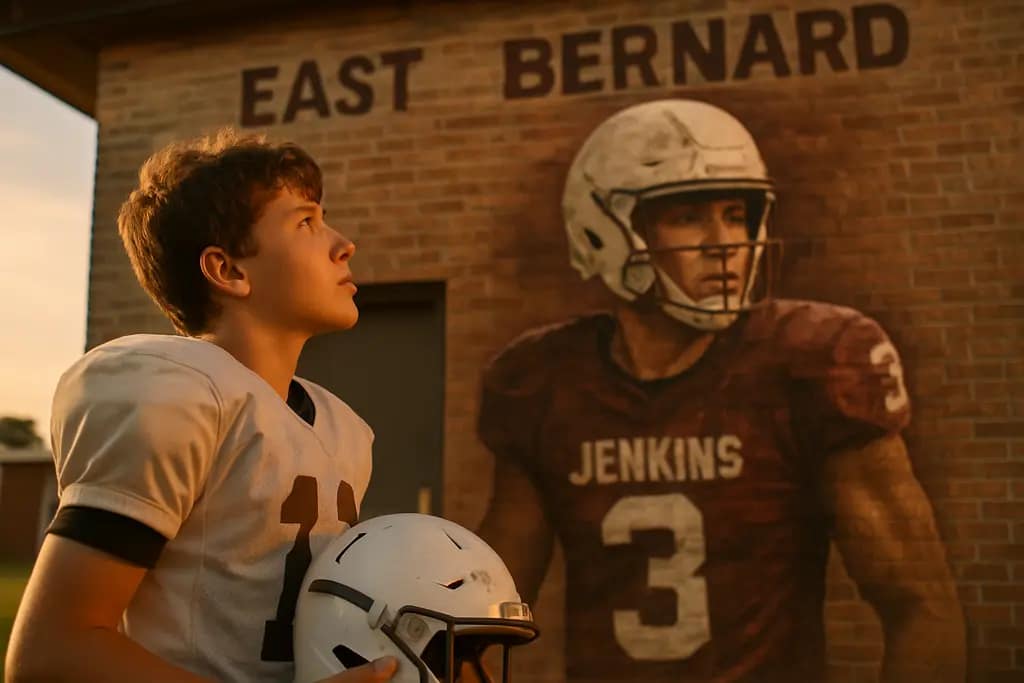
Jeremy Jenkins Legacy is being remembered in East Bernard through football, school care, and the many students who knew Coach Jeremy Jenkins as more than a Friday-night leader. Jeremy Shane Jenkins, 51, and his wife, Brandy Jenkins, 46, died in a single-vehicle crash on State Highway 60 in Wharton County on Saturday, August 15, 2026, according to a Chron report. The loss reached far beyond a scoreboard because the Jenkins family had become part of the daily rhythm of East Bernard schools.
For young athletes, a coach can become one of the steady adults who helps them connect effort with identity. That is why this loss has carried such weight. East Bernard students did not only lose an athletic director and head football coach. They lost a mentor who was remembered for pushing players to grow, watching film with purpose, caring for every athlete, and teaching character, perseverance, and accountability through the structure of sport.
Jeremy Jenkins Legacy And East Bernard Football
Jeremy Jenkins Legacy In Daily Coaching
The Jeremy Jenkins Legacy at East Bernard begins with the daily work that often happens away from the stadium lights. Jenkins became East Bernard ISD athletic director and head football coach in February 2024 after leading the Harmony High School program for two seasons. Under his leadership, East Bernard football went 20–7 across two seasons, and the 2025 team advanced to the Class 3A Division II state semifinals. A memorial service for Jeremy and Brandy Jenkins was held on Saturday, August 22, 2026, at Sugar Creek Baptist Church’s Sugar Land campus, as reported by Yahoo Sports.
Those results matter in a sports community because they gave students a shared goal and a visible standard. Yet the record alone does not explain why East Bernard responded with such emotion. Colleagues, students, and community leaders remembered Jenkins as an “all-in” coach. That description points to the hours that build trust: film sessions, hard conversations after practice, encouragement after mistakes, and the repeated demand that young people do things the right way.
A Program Built Around Accountability
High school football can create a powerful classroom for youth development when expectations are clear and relationships are real. In East Bernard, Jenkins’ leadership was remembered not only for athletic performance but for the habits attached to it. Accountability in a football program can mean showing up on time, accepting a coaching point, serving a teammate, and responding to disappointment without quitting.
That kind of culture gives students language they can carry into school, work, and family life. The Jeremy Jenkins Legacy is rooted in that connection between sport and character. When young athletes see a coach invest time in them, they often begin to believe their effort matters. For a student, that belief can be as meaningful as any playoff run.
Grief, Care, And Student Support
How The School Responded
East Bernard ISD provided on-site counseling and ongoing support services for students and staff after the crash. That response recognized a central truth in school sports: athletes and classmates grieve as whole people, not only as players or students. A locker room, classroom, track, and hallway can all become places where young people feel the absence of adults who cared for them.
Support services gave students and staff a place to process that loss in community. In moments like this, the school setting matters because it is where many students first learn how to name grief, accept help, and support friends who are hurting. Coaches, teachers, counselors, administrators, and parents each help create the safety young people need after a sudden tragedy.
Why Shared Rituals Matter
A candlelight vigil was held on Friday, August 21, 2026, at East Bernard High School’s track stadium. More than 600 people from the student body, coaching staff, and wider community gathered to honor Jeremy and Brandy Jenkins. The setting mattered. A school track and stadium are places where students train, compete, cheer, wait for rides, and build friendships. Holding space there connected grief to the everyday life that the Jenkins family had touched.
Rituals like vigils do not erase pain. They give a community a way to stand together while the pain is still fresh. For students, seeing adults show up with care can teach that strength is not the same as silence. It can mean leaning on teammates, accepting a counselor’s support, or remembering a coach by living out the values he taught.
Community Support Beyond The Stadium
Neighboring Districts And Local Families
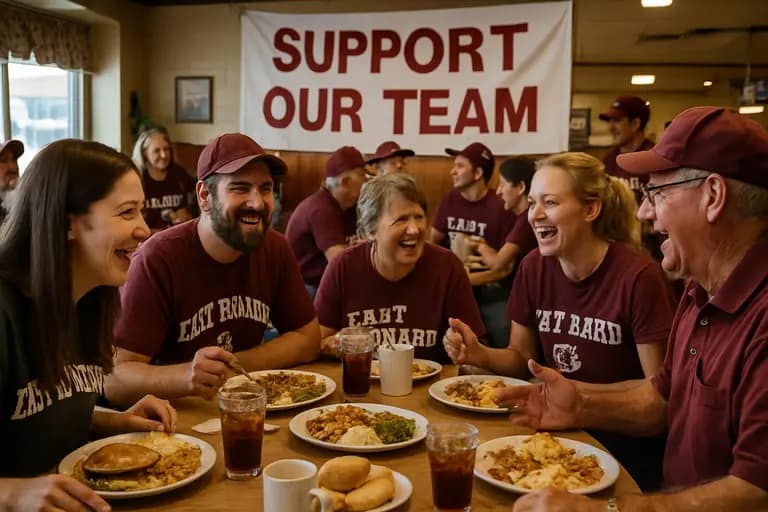
The response extended beyond East Bernard. Students and staff at Needville, George Ranch, Foster, Sealy, Columbus, and other neighboring districts wore East Bernard’s maroon in solidarity. Athletic booster clubs matched fundraising efforts, and local businesses created campaigns, including “Cookies for Coach,” to benefit the family. As of Saturday, August 21, 2026, the Jenkins Brothers Benefit Fund had raised around $212,000 from more than 1,300 contributors to support the family’s needs.
That kind of support shows how high school sports can connect towns that usually meet as competitors. Rivalries can be meaningful, but they are not the deepest bond in local athletics. The deeper bond is the shared understanding that coaches help raise young people, families give time and trust, and schools become gathering places when loss affects one of their own.
Brandy Jenkins And The School Family
Brandy Jenkins had recently started teaching at East Bernard Junior High and was three days into the school year when the crash occurred. She was remembered for making students feel seen in a short time, for warmth, for hosting meals and community, and for bringing players into the family circle. Her impact reminds us that sports families are often supported by people whose work is not listed on a roster.
Players may remember the coach on the sideline, but they also remember the home that welcomed them, the meal after a long day, and the adult who asked how they were doing. Brandy’s presence helped shape the environment around the program. In youth sports, that environment can be the difference between a team that only practices together and a team that learns how to care for one another.
What East Bernard Carries From Coach Jenkins
Youth Development After Loss
The Jeremy Jenkins Legacy now lives in the choices East Bernard students and athletes make after grief. It can live in how a senior encourages a younger player, how a teammate owns a mistake, how a classmate checks on someone sitting alone, or how a coach keeps character at the center of competition. These are small acts, but they are the same kinds of acts that build a sports culture over time.
East Bernard’s response also offers a model for how communities can support youth when tragedy reaches a school program. The first step is care: counseling, trusted adults, and space to grieve. The next step is connection: families, neighboring districts, booster clubs, and local businesses standing together. The lasting step is practice: keeping the values taught through sport alive in daily routines.
- Student-athletes can honor Jenkins by carrying accountability into practice, class, and team relationships.
- Adults can support grieving students by staying present after memorial events have passed.
- Local sports programs can remember that wins matter most when they are tied to growth and belonging.
For East Bernard, the memory of Jeremy and Brandy Jenkins is not separate from the school’s sports identity. It is tied to the field, the track, the junior high classroom, the family meals, and the way people from nearby districts chose compassion over distance. The Jeremy Jenkins Legacy will be measured not only in records or playoff milestones, but in the young people who keep learning how to lead with effort, care, and accountability.