SDVR Athletic Development gives Englewood youth sports a deeper purpose than practice schedules and scoreboards. The L.E.D.G.E. of Hope Foundation, a Chicago-based nonprofit operating in Englewood, frames athletics as one part of Stabilization-Driven Violence Reduction™ (SDVR™), a systems-level coordination framework built to address instability in high-impact communities official foundation information. That structure matters because young athletes often need more than a place to play. They need steady adults, clear expectations, chances to lead, and community supports that connect sports to life beyond the field or gym.
What stands out is the order of the model. L.E.D.G.E. describes its athletic work with the philosophy “stability first, performance follows.” In practical youth sports language, that means the program does not treat talent as the first or only measure of progress. It values behavioral consistency, communication, positive peer engagement, and emotional regulation before athletic output. For families, schools, coaches, and neighbors, that is a hopeful shift: sports become a pathway for steady growth, not only a weekly activity.
How SDVR Athletic Development Starts With Stability
Why SDVR Athletic Development Is Not Recreation
L.E.D.G.E. identifies the SDVR™ Athletic Development System as part of its larger SDVR™ work, not as a recreation program. That distinction is more than wording. Recreation can be healthy and joyful, but this model is structured around specific developmental outcomes: discipline, accountability, leadership, communication skills, behavioral consistency, emotional regulation, and positive peer engagement. Those are the same habits a young person draws on during school, work, family conflict, and peer pressure.
That makes SDVR Athletic Development a sports model with a community safety lens. Instead of viewing violence reduction only as direct intervention after harm has already occurred, the foundation frames violence reduction as a measurable outcome of upstream stabilization across life domains, including economic mobility and behavioral health. In a neighborhood context, that approach asks a bigger question: what supports help a young person stay connected, regulated, and future-focused before a crisis appears?
Practice As A Place For Consistency
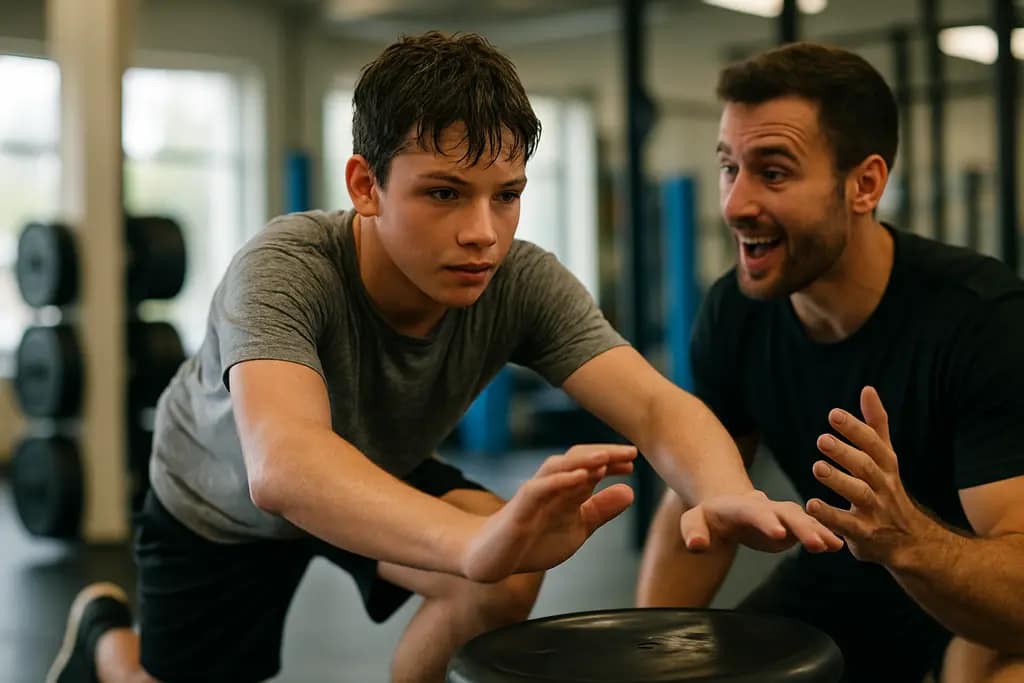
Sports are well suited for this kind of structure because practice naturally repeats. A young athlete returns to the same space, sees expectations modeled again, and gets another chance after a mistake. In the L.E.D.G.E. model, each practice, game, and interaction is aligned with the broader SDVR™ framework. That means the sport itself becomes a teaching setting for stability. A missed assignment, a conflict with a teammate, or a hard drill can become a moment to practice communication and accountability.
As of August 22, 2026, the system is active and integrated with L.E.D.G.E.’s ongoing work in Englewood. It is not described as a standalone pilot or a concluded effort. That active status is meaningful for community partners because it signals that athletics sit inside a larger operating model, rather than being separated from workforce, healing, reentry, and youth leadership support.
A Sports Model Built Around Whole-Life Support
The Four Outcome Areas Around The Athlete
The SDVR™ framework includes four core outcome areas: youth leadership and prevention pipelines, workforce development, behavioral health/healing and reentry support, and community stabilization and violence reduction. For a young athlete, those categories can shape a stronger support circle. Leadership gives youth a way to see themselves as contributors. Workforce development connects growth to future opportunity. Healing and reentry support recognize that trauma exposure and justice involvement can affect families and neighborhoods. Community stabilization keeps the focus on shared conditions, not just individual effort.
L.E.D.G.E. also functions as a coordination hub. According to the foundation’s public materials, it aligns existing community resources across workforce, behavioral health, reentry, and youth leadership under the SDVR™ framework rather than duplicating isolated after-school or athletics-only programming L.E.D.G.E. program details. That hub approach is especially relevant in youth sports because families often need clear pathways, not scattered referrals. When sports connect to other support areas, coaches and program leaders can help young people move from participation toward wider stability.
- Sports offered: flag football, basketball, soccer, baseball, and boxing/fitness.
- Development focus: emotional regulation, discipline, accountability, leadership, communication, and positive peer engagement.
- Program measures: participant engagement and retention, completion and progression rates, workforce placement and skill credentialing, and community stabilization indicators across service areas.
Why Englewood Context Matters
The foundation’s target area is Englewood, Chicago, which L.E.D.G.E. identifies as a high-impact community affected by systemic instability tied to economic opportunity, trauma exposure, justice involvement, and other underlying drivers of violence. A sports-first program model in this setting cannot be copied from a generic youth league template and expected to meet every local need. The L.E.D.G.E. approach stays rooted in place: it treats athletic development as one part of a coordinated neighborhood strategy.
Readers who are comparing models across communities may find helpful parallels in this site’s discussion of sports-based youth programs, especially the shared idea that youth sports can strengthen more than athletic skill. In Englewood, the SDVR™ frame gives that idea a specific structure connected to stabilization, prevention, and opportunity.
Coaching Values Inside SDVR Athletic Development

Discipline Without Losing Care
In practical terms, SDVR Athletic Development points coaches and program leaders toward a balanced standard: high expectations paired with steady support. Discipline is not treated as punishment for being imperfect. It is a learned habit. Accountability is not only about correction. It is about helping a young person understand how choices affect teammates, coaches, and the wider community.
That balance matters in sports because young athletes constantly face emotional tests. A close game, a tough opponent, a missed shot, or a hard fitness session can bring frustration to the surface. Under this model, those moments are not distractions from development; they are development. The practice setting gives youth a supervised space to name emotion, reset behavior, and return to the group with a stronger sense of responsibility.
Leadership Through Everyday Roles
Leadership in youth sports does not have to wait until a player becomes the best athlete on the team. It can show up when a young person encourages a teammate, listens during instruction, arrives ready, or helps settle tension before it grows. Because L.E.D.G.E. names youth leadership and prevention pipelines as one of its core outcome areas, the athletic system can treat these everyday actions as part of a larger growth path.
The public materials also name founder and executive director Dr. Tirenzy Wilson as the developer of the proprietary SDVR™ framework, with operational leadership by Anthony Lash. That leadership detail helps explain why the sports model appears intentional rather than loosely attached to community outreach. The athletic system has a defined place inside a broader plan, which can help partners understand how practices, games, and support services fit together.
What SDVR Athletic Development Means For Englewood
SDVR Athletic Development matters because it treats youth sports as a stabilizing force without pretending that sports alone solve every challenge. The model keeps athletics connected to workforce readiness, behavioral health/healing, reentry support, youth leadership, and community stabilization. That is a grounded and optimistic way to view player development: a young person can grow in skill while also building steadier habits for school, work, and relationships.
As of August 22, 2026, L.E.D.G.E. describes expansion plans that include structured leadership cohorts, community-based conflict mediation strategies, workforce readiness programming, and strategic partnerships for pilot implementation in the upcoming program cycle. Those plans fit the same pattern as the current athletic system. The goal is not to separate young athletes from the realities around them, but to surround them with organized supports that make positive choices more reachable.
For Englewood families and community partners, the hopeful lesson is clear: a practice field, court, or fitness space can become part of a wider support network when the model is built with purpose. The L.E.D.G.E. of Hope Foundation’s approach gives local sports a steady assignment: help young people regulate, lead, connect, and keep moving toward stability together.