
Youth sports remain one of the strongest environments for helping children develop confidence, resilience, teamwork, and leadership. Across the United States, participation has rebounded after the pandemic, with the Aspen Institute’s Project Play initiative reporting that 58% of children now participate in organized sports, one of the highest rates recorded in recent years. At the same time, families, educators, nonprofit organizations, and policymakers are confronting a different challenge: making organized sports financially accessible to every child.
The discussion has intensified during the past month as news organizations and lawmakers highlighted how rising registration fees, travel expenses, equipment costs, and private club models are affecting participation across many communities. Rather than questioning the value of youth athletics, these conversations focus on preserving opportunities for children regardless of family income.
For organizations committed to positive youth development, the debate presents an opportunity to rethink how communities invest in sports. Recreation departments, schools, nonprofit organizations, local businesses, and volunteers each play a role in creating programs that remain affordable while continuing to deliver meaningful developmental experiences.
Participation Is Growing, but Costs Are Rising Too
Interest in youth sports continues to increase across baseball, soccer, basketball, volleyball, football, and many other activities. Families recognize that athletics offer benefits extending well beyond physical health. Children who participate consistently often build stronger communication skills, learn how to manage setbacks, and develop habits that transfer into school and future careers.
Current research shows, though, that participation costs have increased much faster than general inflation. According to Project Play, the average American family spent approximately $1,016 annually on a child’s primary sport in 2024—a 46% increase since 2019. Competitive travel programs frequently require substantially larger investments after equipment, transportation, lodging, tournament fees, and specialized coaching are included.
The issue extends beyond elite competition. Community coaches interviewed recently by KPBS described families struggling with registration fees that can reach several hundred dollars before uniforms and travel are considered. In many communities, volunteer organizations have responded by waiving fees or expanding scholarship opportunities so children are not excluded because of financial barriers.
| Challenge | Community Response |
|---|---|
| Rising registration fees | Scholarship funds and reduced-cost leagues |
| Equipment expenses | Community equipment donation programs |
| Travel costs | Local recreational leagues and regional tournaments |
| Limited access in underserved areas | Partnerships among schools, nonprofits, and municipalities |
Why Affordable Youth Sports Matter Beyond Competition
Sports participation produces outcomes that cannot be measured solely by wins and losses. Young athletes learn to communicate under pressure, solve problems collaboratively, respect authority, and support teammates facing adversity. These lessons become especially valuable during adolescence, when positive peer relationships and structured activities contribute to emotional well-being.

Organizations that prioritize youth development frequently describe sports as an extension of education rather than a separate activity. Coaches become mentors, teammates become support systems, and practices become opportunities to strengthen responsibility and accountability.
Research from the Aspen Institute’s Project Play continues to demonstrate that increasing access to organized sports strengthens communities as a whole by encouraging lifelong physical activity and expanding opportunities for children from every background.
For readers interested in broader national research, the Project Play Youth Sports Research provides extensive data on participation trends, affordability, coaching quality, and strategies that communities are using to keep more children active in sports.
Communities Are Finding Local Solutions
Although rising costs receive significant national attention, many communities are responding with practical solutions instead of accepting reduced participation as inevitable.
Across Texas and throughout the United States, municipal recreation departments continue expanding low-cost leagues. Local businesses sponsor uniforms. High school athletes volunteer as youth coaches. Colleges organize instructional clinics. Foundations award grants for equipment purchases. These collaborative efforts reduce financial pressure while strengthening relationships across generations.
Some professional sports organizations have joined these efforts as well. Recent initiatives supported by professional franchises focus on providing equipment grants, improving community playing fields, and helping local leagues remain affordable for families who might otherwise struggle to participate.
These partnerships demonstrate that expanding access does not always require entirely new programs. Small investments distributed across existing community organizations often create meaningful opportunities for hundreds of children.
How Community Partnerships Keep Youth Sports Accessible
Successful youth sports programs rarely depend on a single organization. Instead, they grow through partnerships that combine public resources, nonprofit leadership, volunteer support, and private investment. Local governments maintain parks and recreation facilities, schools provide fields and gyms, businesses sponsor teams, and community organizations coordinate volunteers who keep leagues operating throughout the year.
These partnerships become even more valuable in neighborhoods where families face financial challenges. Scholarship programs, equipment exchanges, and reduced registration fees allow more children to participate without lowering the quality of instruction or competition.
Recent national discussions have emphasized that sustainable youth sports systems rely on collaboration rather than isolated funding sources. The Aspen Institute’s Project Play recommends community-wide strategies that connect schools, recreation departments, health organizations, and local businesses to increase participation while reducing financial barriers.
For additional research on community-based youth sports strategies, the Project Play Strategies for Communities initiative offers extensive guidance for local leaders and youth organizations.
Balancing Competitive Excellence With Inclusive Opportunities
Competitive leagues play an important role in helping athletes reach their highest potential, yet community recreation remains equally valuable for children whose primary goal is learning, social development, or physical activity.
Many youth development specialists encourage communities to maintain multiple participation pathways rather than concentrating resources solely on elite travel programs. Recreational leagues often serve as the first introduction to organized sports, allowing children to build confidence before deciding whether they wish to pursue higher levels of competition.
This balanced approach benefits entire communities. Recreational programs reach larger populations, while competitive teams continue providing advanced opportunities for athletes seeking additional challenges.
Programs that welcome participants with different skill levels also create stronger social connections. Younger athletes gain role models, experienced players learn mentorship, and families become engaged in broader community activities surrounding youth athletics.
These outcomes reflect many of the same values discussed in character development through youth sports, where leadership, teamwork, and sportsmanship remain central to long-term athlete development.
Volunteers and Mentors Create Lasting Impact
Facilities and equipment matter, but people remain the foundation of successful youth sports programs.
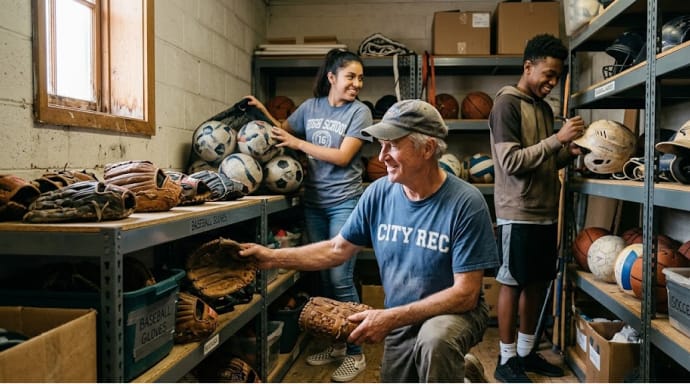
Volunteer coaches, officials, team parents, athletic trainers, and older student-athletes contribute thousands of hours every year across communities throughout the United States. Their involvement allows leagues to remain affordable while providing children with consistent adult mentorship.
Research from the CDC Youth Physical Activity Resources has repeatedly shown that participation in organized physical activity supports physical health, emotional well-being, and positive social development among children and adolescents.
Parents also influence participation outcomes. Supportive encouragement, healthy communication, and realistic expectations help young athletes enjoy sports while reducing unnecessary pressure. Communities that educate families alongside coaches often experience higher participation and stronger long-term retention.
Looking Ahead: Investing in Opportunity Rather Than Expense
The conversation surrounding affordability is unlikely to disappear soon. Equipment prices, facility maintenance, travel expenses, and staffing costs continue affecting organizations across every level of youth sports.
Yet many encouraging examples demonstrate that communities can respond successfully.
Public-private partnerships continue funding new athletic facilities. Foundations expand scholarship opportunities. Colleges organize youth clinics. Professional teams support local recreation initiatives. Volunteers continue donating their time because they recognize the value organized sports bring to future generations.
These efforts represent investments that extend well beyond athletics. Children who participate consistently gain experiences that strengthen communication, responsibility, resilience, and leadership—qualities that benefit schools, workplaces, and communities for years to come.
Rather than viewing affordability as an obstacle alone, many organizations now see it as an opportunity to redesign youth sports systems around inclusion, accessibility, and long-term community impact. Every child who gains access to a safe, supportive athletic environment represents another opportunity for positive development that reaches far beyond the final score.