
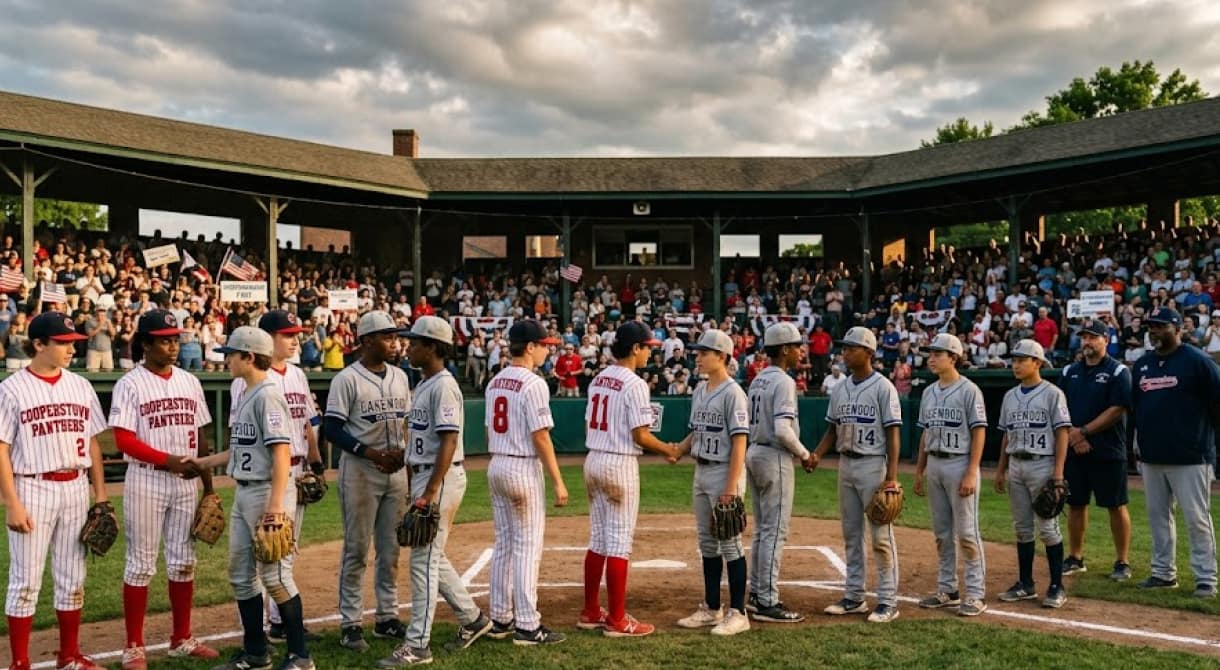
The rise of large-scale youth baseball tournaments in the United States has created a parallel conversation alongside competition: what kind of athlete development actually lasts beyond the scoreboard. The inaugural Ripken National Championships, hosted at Cooperstown All Star Village in New York, enters that conversation with a clear emphasis on development beyond wins and losses.
Scheduled across the 2026 summer tournament season, the event brings together elite youth baseball teams from across the country under a structured competitive format presented by Unrivaled Sports and aligned with the values of Cal Ripken Jr.—a career long associated with consistency, discipline, and respect for the game. The event’s framing centers on “The Ripken Way,” a philosophy built around effort, sportsmanship, and accountability as core performance standards.
While championship environments often spotlight rankings and outcomes, this tournament structure places equal weight on behavior, preparation, and team conduct. That balance reflects a broader shift in youth sports, where organizations are increasingly responding to concerns about pressure, specialization, and the commercialization of youth athletics.
Within this context, the Ripken National Championships become more than a competition—they function as a controlled environment for testing how character-driven frameworks shape athlete development under pressure.
The Tournament Model and Its Development Philosophy
The championship format at Cooperstown All Star Village is designed to simulate a national-level competitive environment for youth athletes, with structured brackets, multi-day schedules, and high exposure to different playing styles. But unlike purely performance-based tournaments, this model incorporates behavioral expectations as part of the athlete experience.
Organizers emphasize that players are evaluated not only on athletic performance but also on how they conduct themselves in dugouts, interactions with opponents, and response to officials. This reflects a long-standing approach associated with Cal Ripken Baseball programs, where development is framed as both technical and personal.
This aligns with broader research in youth sports development. According to the Aspen Institute Project Play, long-term athletic participation is strongly correlated with positive coaching environments and reduced emphasis on early specialization. Programs that prioritize enjoyment, inclusion, and personal growth tend to retain athletes longer and produce stronger developmental outcomes.
Project Play youth sports research has consistently shown that children who remain engaged in sports through adolescence benefit from improved social skills, resilience, and academic performance.
The Ripken model fits within this framework by embedding character expectations into the competition structure itself rather than treating them as external lessons.
Character Development in High-Pressure Youth Competition
One of the defining tensions in youth tournaments is the pressure placed on athletes to perform at increasingly high levels at younger ages. This pressure often comes from multiple directions: travel team expectations, parental investment, and the visibility of rankings and showcases.
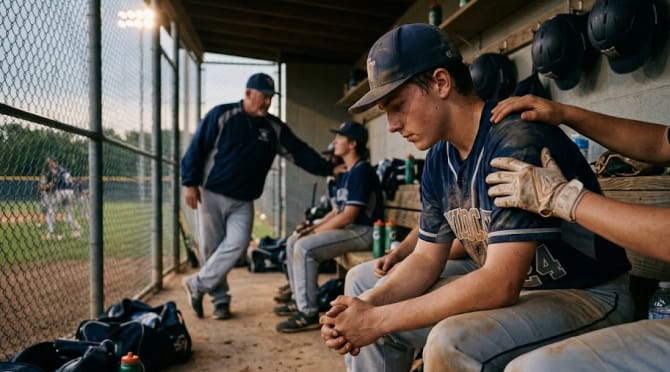
The Ripken National Championships attempt to counterbalance this pressure by reinforcing behavioral standards as part of the competitive identity. Athletes are encouraged to compete intensely but within defined boundaries that prioritize respect and accountability.
This approach reflects findings from USA Baseball’s development initiatives, which emphasize that positive emotional environments improve decision-making and long-term athletic retention. Programs focused on sportsmanship and emotional regulation show higher rates of continued participation beyond middle school years.
USA Baseball development programs highlight structured approaches to teaching fundamentals alongside character-based expectations, reinforcing the idea that athletic growth and personal development are interconnected.
At Cooperstown, this philosophy becomes visible in how teams are expected to manage both success and failure. Celebrations, disputes, and transitions between innings all become moments where behavior is observed and shaped.
How Tournament Culture Shapes Long-Term Athlete Identity
Youth tournaments like the Ripken National Championships do more than determine seasonal winners. They shape how athletes interpret their role within sport itself. When competition is structured around both performance and conduct, young players begin to associate success with consistency in behavior rather than isolated game outcomes.
This shift is important in a broader youth sports ecosystem that has increasingly leaned toward early specialization and high-stakes competition. Events structured around character frameworks introduce a stabilizing counterweight, where athletes are exposed to the idea that identity as a player includes discipline, teamwork, and accountability.
In this environment, repetition matters. Players experience multiple games across short timeframes, interact with unfamiliar opponents, and adapt to rotating pressure situations. Each interaction reinforces behavioral expectations that extend beyond technical skill.
The Ripken model reinforces the idea that development is cumulative, not situational. A strong performance does not replace accountability after a poor interaction, and a loss does not erase demonstrated leadership.
Community and Family Presence in Competitive Environments
Another defining feature of large-scale youth baseball events is the presence of families and community networks. At venues like Cooperstown All Star Village, parents, guardians, and extended supporters form a visible part of the tournament ecosystem.
This presence creates a layered accountability structure. Athletes are not only performing for coaches and teammates but also within a broader community audience that observes behavior as closely as performance. This dynamic reinforces standards of respect and emotional control.
The Aspen Institute Project Play has noted that parental involvement plays a dual role in youth sports outcomes. Supportive engagement improves retention and enjoyment, while excessive performance pressure can negatively affect long-term participation.
Youth sports participation and family influence research shows that balanced parental involvement correlates with stronger athlete motivation and reduced burnout rates.
In tournaments like the Ripken National Championships, this balance becomes part of the lived experience of competition. Families witness both the intensity of play and the behavioral expectations placed on athletes, reinforcing consistency between home values and athletic environments.
The Role of Coaches and Adult Influence
Coaches in the Ripken tournament structure function as more than tactical leaders. They serve as behavioral anchors within a highly competitive environment. Their influence extends beyond lineup decisions into how players interpret pressure, failure, and success.

Research from the National Alliance for Youth Sports (NAYS) shows that coaching behavior is one of the strongest predictors of youth sports retention and athlete satisfaction. Athletes exposed to positive coaching styles are significantly more likely to continue participating in sports into high school.
National Alliance for Youth Sports coaching standards emphasize communication, fairness, and emotional stability as core coaching competencies.
Within the Ripken National Championships, this translates into structured expectations for how coaches engage with players during games. Instead of focusing solely on outcome management, coaching becomes a vehicle for reinforcing composure and respect under competitive stress.
This dynamic creates a layered learning environment where athletes absorb lessons not only from gameplay but also from adult behavior modeling.
From Championship Pressure to Leadership Development
As athletes progress through structured tournaments, they encounter moments that extend beyond sport mechanics. Leadership emerges in how players respond to adversity, support teammates, and handle moments of uncertainty during competition.
The Ripken framework positions these moments as developmental rather than incidental. Leadership is not treated as an abstract trait but as observable behavior within game contexts—calling for responsibility after errors, encouraging teammates during slumps, and maintaining composure in high-pressure innings.
This aligns with broader youth development research from organizations like Positive Coaching Alliance, which emphasizes that sports can serve as a primary environment for leadership skill formation when guided by structured mentorship.
Positive Coaching Alliance leadership development highlights the role of sports in building resilience, empathy, and decision-making capacity among young athletes.
Within this framework, championships become testing grounds for character under pressure rather than purely competitive endpoints.
Programs like these reflect the same principles highlighted in youth sports leadership development initiatives, where structured athletic participation is used as a platform for building responsibility, mentorship, and long-term community engagement.
Final Analytical Layer: Why Character Frameworks Matter Now
Youth sports in the United States continue to expand in scale, investment, and visibility. At the same time, concerns around burnout, inequity, and over-competition have become more prominent in national discussions.
Character-driven tournament models like the Ripken National Championships represent one response to that tension. By embedding behavioral expectations into the structure of competition, these events attempt to redefine success in youth sports as a combination of performance and personal development.
This approach does not reduce competitiveness. Instead, it reframes it. Winning remains a goal, but it is positioned alongside consistency, respect, and team accountability.
In doing so, tournaments create environments where young athletes are evaluated not only on what they achieve, but how they achieve it—an approach that shapes both immediate performance and long-term identity in sport.
Research from the State of Play youth sports analysis reinforces this direction, showing that youth sports systems that prioritize character, enjoyment, and balanced development produce higher retention and healthier long-term participation outcomes across all demographics.