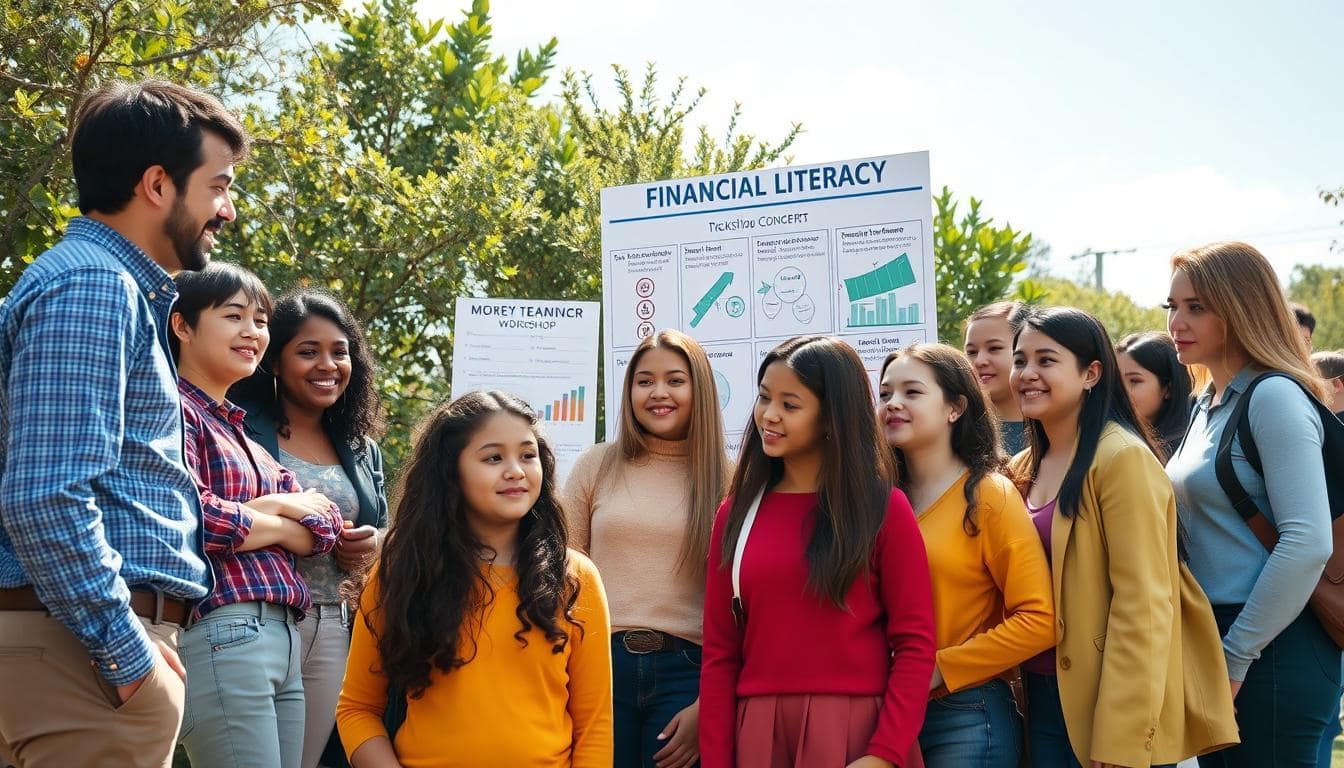
Teaching Financial Literacy to young people is key for their future. Programs like the FDIC Money Smart for Young People help. They give students the skills to handle money in the real world.
Starting early with these lessons helps kids see money as a tool, not just numbers. It turns abstract ideas into tangible life skills. These skills need regular practice to grow.
Sports and clubs are great places to teach budgeting and resource management. Young athletes learn to manage their time and energy. This helps them develop economic skills for the future.
This way, Financial Literacy becomes a real skill, not just a classroom topic. It’s important to teach these lessons early and often. This prepares the next generation for success.
Case Study: From Soccer Fields to Savings Accounts
Watching young athletes manage their money shows a link between physical effort and financial smarts. They learn to handle their finances as well as they do their sports. This skill in economic skills comes from applying the same dedication to money as they do to training. Studies on Financial Literacy show that learning about money early on helps a lot in the long run.
Going from playing soccer to using a bank is a big step for young people. Athletes learn to be patient, just like they do in sports. They start to see their savings as a way to achieve future goals, not just a quick win.
Real-life experiences make abstract economic skills easier to understand. Seeing their savings grow helps young people stay on track with good money habits. This shows how important it is to link physical activity with learning.
The table below shows how sports skills can help with money management. It shows how sports and resource management go hand in hand.
| Athletic Trait | Financial Habit | Outcome |
|---|---|---|
| Consistent Practice | Regular Saving | Compound Growth |
| Strategic Planning | Disciplined Budgeting | Reduced Debt |
| Goal Setting | Financial Literacy | Long-term Stability |
The discipline from sports helps a lot with budgeting and being financially independent. By linking sports and money, mentors can guide young people toward a stable financial future. This way, the lessons from their youth stay useful in their adult lives.
Incorporating Financial Lessons in Sports Programs
Teaching Financial Literacy in sports programs links athletic skills with personal growth. It helps young athletes learn important life skills along with their sports training. This way, they grow up with a sense of responsibility, all while keeping their athletic training top-notch.
Coaches and directors are key in teaching these lessons. They use guides and handouts to teach budgeting and economic skills. This method keeps the lessons professional and effective for all athletes.
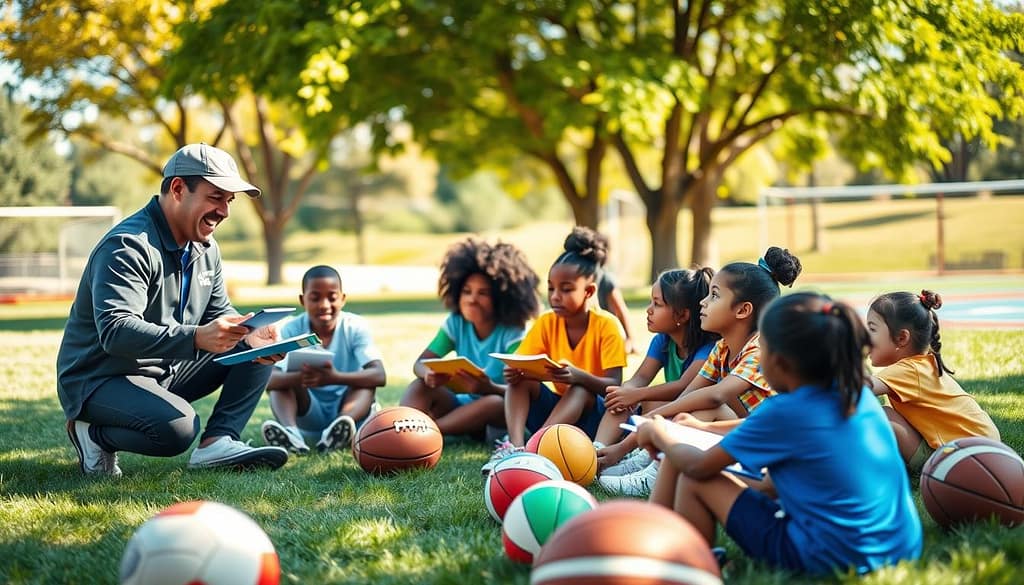
Learning to manage resources is a big lesson in sports and finance. Athletes learn to use their time and energy wisely. This skill helps them handle their finances better in the future. It’s also used to teach college athletes for their financial success.
The aim is to make Financial Literacy a key part of youth development. Using top-notch materials, programs give a full education for the modern world. This focus on total development sets these programs apart in a competitive field.
Practical Exercises & Real-World Scenarios
Real-world scenarios help youth connect abstract theory with real money management. They learn economic skills to handle complex financial situations. This hands-on approach makes Financial Literacy a useful tool, not just a theory.
The “save, share, spend” framework is key for teaching children to manage resources. It teaches them to make choices and understand the costs of budgeting. Through practice, they learn that managing money well needs discipline and planning.

Hands-on activities build confidence in managing personal finances. Coaches and mentors help by setting up mock markets or investment portfolios. These safe environments let youth test their decision-making skills.
- Goal Setting: Defining short-term and long-term financial goals.
- Trade-off Analysis: Looking at the cost of every purchase.
- Resource Allocation: Deciding how to use limited funds.
The table below shows how experiential learning differs from traditional teaching in Financial Literacy and budgeting.
| Method | Focus | Outcome |
|---|---|---|
| Traditional | Theory | Conceptual knowledge |
| Experiential | Application | Practical competence |
| Simulation | Decision-making | Behavioral change |
These exercises deepen understanding of resource management. By applying economic skills in a controlled setting, youth become ready to face real financial challenges.
Measuring Financial Awareness Growth
Keeping track of how well students manage money is key. Teachers need to see how students use what they learn every day. Talking openly about money helps break down any shame around it.
Seeing students use budgeting shows how much they’ve learned. When they manage resources better, it means they really get money matters. This lets teachers adjust their teaching to better help students.
It’s important to keep talking about money openly. This helps young athletes grow in their financial knowledge. By focusing on these skills, programs help them face adult life’s financial challenges.
Students who learn these skills have a big advantage later on. They handle money with skill and confidence. This prepares them to deal with money in the real world.