
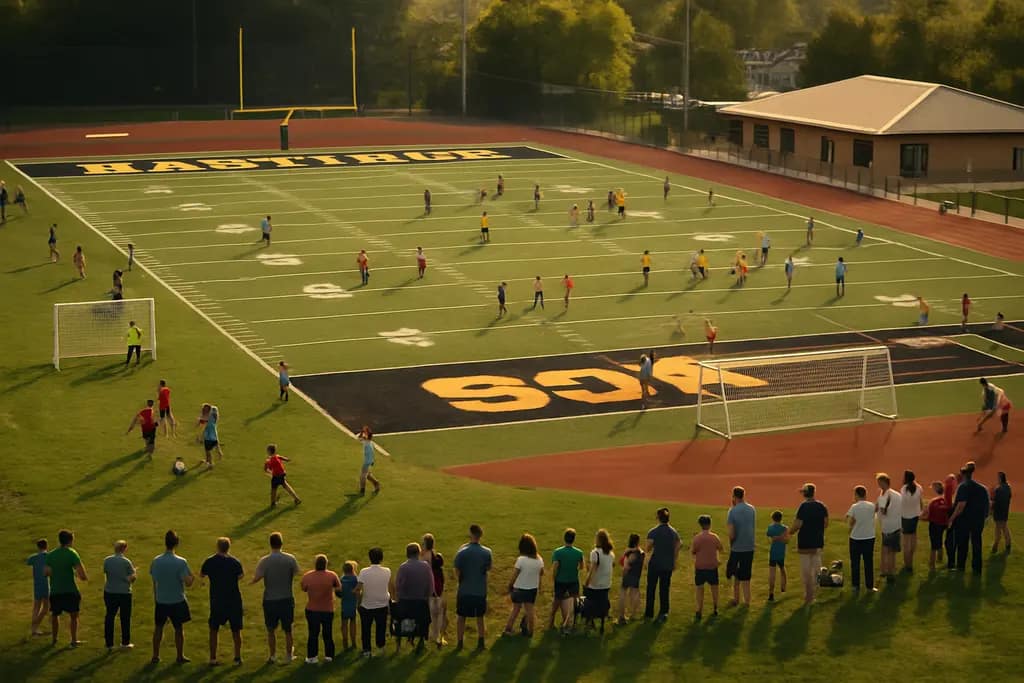
Hastings Athletic Improvements matter because school fields are more than places to host games. They shape who gets practice time, how often teams can meet, whether younger athletes see a path into varsity sports, and how families gather around local school pride. On June 17, 2025, Hastings-on-Hudson voters approved a Capital Bond with three propositions, including Proposition 3 for athletic fields and site work at Burke Estate, according to the district’s Capital Bond information. For a village sports community, that approval marked a clear investment in student access, team schedules, and shared athletic space.
The approved athletic proposition was listed at $8,171,259 and covers two artificial turf fields at Burke Estate: one multi-purpose field and one softball field, along with related site work, according to the same district bond information. The district newsletter also stated that the full Capital Bond totaled $38,475,491 after value engineering reduced an earlier $45,500,000 proposal, as shown in the district’s bond newsletter. Those numbers help families understand that the field work is one part of a larger facilities plan, but one with direct impact on daily sports participation.
As of October 8, 2026, the public sources used here confirm the approved scope and planning goals, but they do not verify final field opening or completed use. That means the access benefits discussed below should be read as planned outcomes tied to the approved bond documents, not as a claim that every benefit has already been achieved. For parents, coaches, and student-athletes, that distinction matters. Good community planning starts with clear facts and honest expectations.
How Hastings Athletic Improvements Widen Field Access
Why Field Time Shapes Youth Development
Field access is one of the quiet forces behind youth development. A middle school player who gets regular practice time learns more than passing, footwork, and spacing. They learn punctuality, patience, communication, and how to respond when a coach gives feedback. A high school athlete preparing for a season learns commitment through repeated team sessions. When fields are overbooked, washed out, or hard to schedule, those learning chances shrink.
The district’s bond newsletter described the planned synthetic turf fields as all-weather, dependable playing surfaces intended to reduce scheduling conflicts, support more equitable field time among teams, allow extended seasons, and provide more year-round access for students. That is the core access case. If fields can handle more playable days than natural surfaces, coaches can plan practices with less disruption, and students can count on a steadier sports routine.
Hastings Athletic Improvements And Shared Field Time
For a smaller district, shared field time can be a pressure point. Soccer, football, softball, physical education, youth clinics, and informal skill work all compete for space in different parts of the school calendar. A multi-purpose field can help by giving athletic staff more options for practice blocks and game-day operations. A dedicated softball field can also support a sport that often needs consistent infield work, outfield reps, and safe batting practice space.
This is where local sports planning becomes youth-centered. Better scheduling is not only about fitting more events onto a calendar. It is about making sure a freshman who is still learning has a field, a modified athlete gets coached in a safe setting, and a varsity team does not absorb every prime practice window. Communities that plan this carefully can build a stronger youth pipeline because younger players see that their time matters too.
What The Burke Estate Fields Could Change
From Cancellations To Consistency
Weather-related disruptions can affect skill growth. Missed practices are not easy to replace, especially during short school seasons. The approved plan for artificial turf at Burke Estate points toward a more dependable sports calendar. That could help coaches build weekly routines, support athletes recovering from missed instruction, and give teams more consistent preparation before league play.
Consistency also helps families. Parents and guardians arrange rides, work shifts, sibling care, and meals around practices and games. When field conditions create frequent changes, sports become harder for some families to manage. A steadier schedule can make participation more realistic for students whose households have limited transportation flexibility. In that way, facility planning connects directly to equity, even before a scoreboard is involved.
Building A Stronger School Sports Identity
School fields help young people feel connected to place. When a student walks onto a field used by older classmates, they see a pathway. When younger children watch school teams play locally, they can picture themselves joining that program later. That sense of belonging is part of why facility decisions carry community weight.
The Hastings plan also offers a useful model for other school communities weighing sports access against facility needs. The lesson is not that every district needs the same type of surface or the same site plan. It is that public planning should connect dollars to student use, coaching needs, family access, and community benefit. A similar point comes through in local school facility discussions such as Mount Vernon sports planning, where safer spaces and shared planning are tied to youth opportunity.
Program Model Lessons For Local Sports Access
What Other Districts Can Learn
Hastings-on-Hudson offers a program model because the athletic plan is not isolated from broader school facilities work. The athletic proposition sits within a larger approved bond, and the district used public-facing materials to explain the financial scope. That matters for trust. When residents can see the project amount, the proposed field uses, and the broader bond total, they are better able to judge whether the plan fits student needs.
For youth sports advocates, the best part of this kind of model is the focus on access. Facility upgrades should not be measured only by how they look on opening day. They should be measured by whether students get more reliable practice time, whether coaches can teach with fewer interruptions, whether younger athletes gain entry points, and whether families can take part in school sports life.
- Plan around student time: Field improvements should create fair practice windows across grade levels and sports.
- Connect facilities to coaching: Better surfaces matter most when paired with strong instruction and safe team culture.
- Communicate the timeline: Families need clear updates on access limits, opening dates, and field-use rules.
- Track use after opening: Districts can learn by watching which teams gain time and where gaps remain.
Hastings Athletic Improvements also show why local sports access should be discussed before, during, and after construction. A bond vote answers one question: whether the community approves the investment. The next questions are just as important. How will field time be assigned? Which programs gain practice space? How will physical education, interscholastic sports, and possible community use fit together? Those operating choices will shape the day-to-day youth impact.
Community Questions For Coaches And Families

Keeping Students At The Center
Families can support the project’s youth-development value by asking practical, student-centered questions. Not every question needs to be critical; many are about making the strongest use of a shared asset. Coaches may ask how practice slots will be balanced between levels. Parents may ask how communication will work when schedules change. Students may ask whether the fields will support open skill-building time under school rules.
Those questions help protect the community purpose of the investment. Athletic facilities can easily become a topic of cost, construction, and debate. Those pieces matter, but they should lead back to students. A seventh grader trying field hockey, a ninth grader learning weight of responsibility on a team, or a senior preparing for one last home season all experience the field in personal ways. The best facility plans leave room for those stories.
Access Means More Than A Surface
Hastings Athletic Improvements can support access, but access is broader than turf. It includes transportation, communication, inclusive scheduling, coach development, and clear expectations for how teams share space. It also includes the emotional access that comes when students feel welcome regardless of skill level. A new field can open the door; adults in the system help young people feel they belong once they step through it.
That is why this project should be viewed as both infrastructure and youth development. Sports can teach students how to handle pressure, respect teammates, manage time, and recover from setbacks. Those lessons become easier to repeat when facilities support steady participation. A dependable field does not create character by itself, but it gives coaches and teammates more chances to build it together.
What Hastings Athletic Improvements Mean For Youth
For Hastings-on-Hudson, the approved athletic work at Burke Estate represents a local choice to invest in school sports as a daily part of student life. The approved Proposition 3 amount, the planned multi-purpose and softball fields, and the stated goal of dependable playing surfaces all point toward a future in which sports access can be more consistent and more fairly scheduled.
The community impact will depend on follow-through. If the fields are managed with students first, Hastings Athletic Improvements can help reduce lost practice days, support better team preparation, and make school athletics feel more open to younger players. That is the promise worth protecting: not just new fields, but more chances for young people to grow through sport, connect with classmates, and feel proud of where they play.