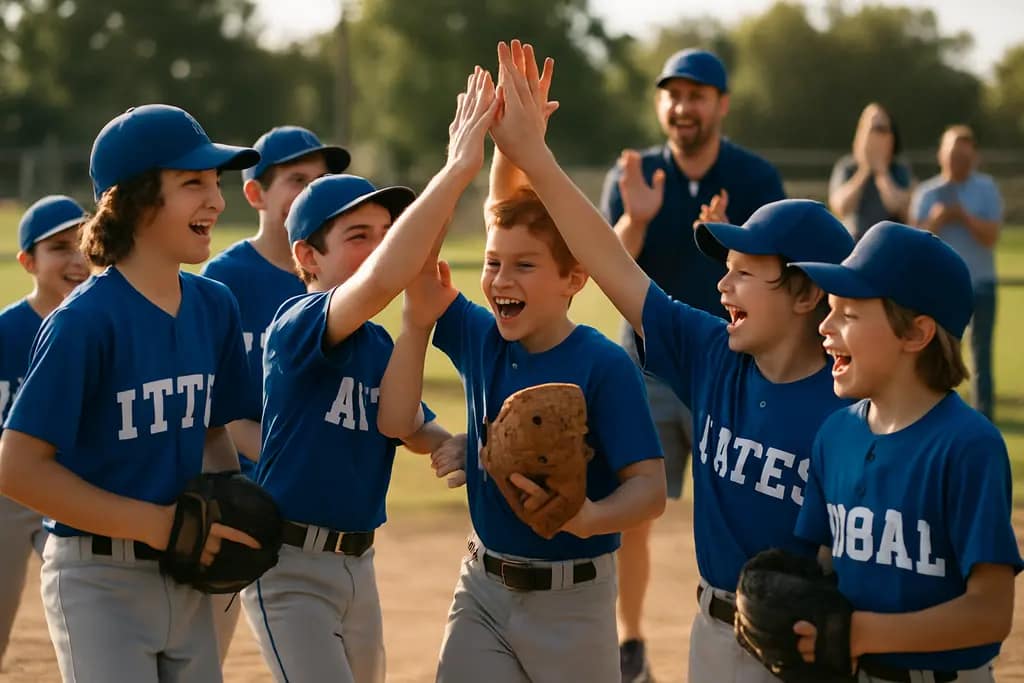
Youth Baseball Grants from the Texas Rangers Baseball Foundation and Globe Life carried a clear community message on September 3, 2026: young players need places to practice, gear that fits, and adults willing to invest in their growth. The 2026 Globe Life Baseball and Softball Grant Program distributed $120,800 to 18 nonprofit organizations across Texas, Louisiana, and Oklahoma, according to the Rangers grant announcement.
As a coach, I see this kind of support as more than a line item. A new batting cage can become the place where a shy sixth grader learns to ask for feedback. Field lights can give working parents a better chance to see practice after a long day. A set of uniforms can help a first-year team feel like it belongs before the first pitch is thrown. That is the power of sports when community partners treat youth development as part of the game plan.
Youth Baseball Grants And Local Player Development
How Youth Baseball Grants Reach Teams
These Youth Baseball Grants were awarded through a program that has run for 15 consecutive years since its start in 2012. The stated purpose has been to grow youth participation by funding needs such as facility upgrades, equipment, uniforms, field improvements, and league development. Since the program began, it has awarded more than $1.4 million to over 165 organizations that support youth baseball and softball across the region, according to the same Rangers announcement.
Good Youth Baseball Grants meet young athletes where they are. Some teams need bats, helmets, catcher’s gear, and softballs. Others need lights, safer fields, or a batting cage that lets players build muscle memory after school. None of those items replace good coaching, but they give coaches the tools to teach with consistency.
What Coaches Can Build With Better Tools
When a league receives equipment or field support, the biggest impact often shows up in small habits. Players arrive knowing practice will start on time because the field is usable. Coaches can split athletes into stations instead of making everyone wait for one drill. Younger players get more repetitions, and repetition builds confidence.
For families, local access matters. A community-based baseball or softball program can become a steady weekly rhythm: practice, schoolwork, dinner, and rest. For players, that rhythm teaches responsibility. They learn to bring their glove, respect the lineup, listen to instruction, and encourage teammates after mistakes. Those lessons follow them into classrooms, part-time jobs, and family life.
Where The 2026 Funding Went
Fields, Lights, And Safer Practice Spaces
The 2026 recipients included organizations such as Arlington Bowie High School Baseball Booster Club, Everman Youth Athletics, Greater Helotes Little League, and Wapanucka Softball. The grants supported a range of needs tied directly to youth participation, including field renovations, scoreboard upgrades, equipment and uniforms, construction projects, league development, and field safety improvements.
Several examples show how practical the funding was. Greater Helotes Little League planned to purchase and install new field lighting systems. East Brownsville Little League planned to build an outdoor modular batting cage facility. Sundown Youth Softball planned to support field renovations and equipment purchases. Each project speaks to a different local need, but they share the same goal: helping more young people stay connected to the game.
School Softball And New Team Identity
Wilson ISD’s funding was tied to a newly launched school softball team, with support for essential equipment and supplies. For a new school team, equipment is not just inventory. It is a starting point for identity. A player who may never have pictured herself in a school uniform can walk onto the field with teammates and feel that she has a place to contribute.
That matters for school culture. A new team gives students another reason to represent their campus. It gives families another reason to gather. It gives coaches another doorway to teach accountability, effort, and care for others. Those are the moments where sports become part of youth development, not just competition.
Why Community Partners Matter
Grant Access And Eligibility
The 2026 grant cycle was open to nonprofits with IRS 501(c)(3) status operating in the Rangers’ five-state territory of Texas, Oklahoma, Louisiana, New Mexico, and Arkansas, and serving baseball or softball players age 18 or younger, as reported by KSWO’s grant application report. Applications for the 2026 cycle were due June 30, 2026, and recipients were announced before the early September distribution.
That eligibility structure matters because it keeps the focus on community-serving organizations. Local nonprofits, booster clubs, leagues, and school-connected groups often know the barriers families face: worn-out gear, limited practice times, aging fields, and the cost of starting or sustaining a team. When a grant helps remove one of those barriers, it can open the gate for a child who was close to walking away from the sport.
A Coaching View On Belonging
For coaches, Youth Baseball Grants are best understood as support for belonging. A player does not need a perfect field to grow, but a safe, cared-for space sends a message. It says the community expects young people to show up, work hard, and be seen. That message can be especially powerful for athletes who are still learning where they fit.
Community sports work best when families, schools, nonprofits, and local partners pull in the same direction. Our related piece on sports-based youth programs shares a similar lesson: games can build confidence, but the real progress comes from the relationships around the field.
- For players: better equipment and practice spaces can create more chances to learn skills and stay engaged.
- For coaches: facility and gear support can make practices safer, more organized, and more productive.
- For families: stronger local programs can keep sports closer to home and easier to support.
- For communities: teams can become gathering points that strengthen school pride and neighborhood connection.
What The Rangers Grant Means For Young Players
Small Improvements That Carry Big Lessons
The best Youth Baseball Grants do not try to make every program look the same. They help each community solve a real problem. In one town, that may be lights. In another, it may be a batting cage. In another, it may be the first set of supplies for a school softball team. Each improvement gives coaches a better chance to keep young athletes active, learning, and connected.
That is why the Texas Rangers Baseball Foundation and Globe Life grant stands out as an impact story. The $120,800 distribution in 2026 was not only about baseball and softball operations. It was about investing in young people through the structure of sport: showing up, listening, practicing, failing safely, trying again, and learning how to be part of a team.
For every player who steps into a cage in East Brownsville, takes the field under new lights in Greater Helotes, or joins a new school softball team at Wilson ISD, the support can feel personal. A grant may begin with paperwork, but on the field it becomes a coach’s extra drill, a parent’s proud evening, and a young athlete’s reason to keep going.