Kayli Heine’s inclusive sports initiative brought a simple but powerful idea into West Fork High School athletics: students should not have to stand apart from the sports culture of their own school. Heine, a 2026 graduate of West Fork High School in Kingwood, Texas, created Friends In Gator Sports, known as FIGS, to pair student-athletes with students in New Caney ISD’s ASPIRE program, which serves students with intellectual and developmental disabilities NFHS account.
That school-based approach matters because it placed inclusion inside the normal rhythm of athletics rather than on the edge of campus life. FIGS did not ask students to leave school identity behind. It connected them through the same gyms, fields, coaches, teams, and athletic periods that shape high school belonging for many young people.
How The inclusive sports initiative Started
The origin of FIGS was rooted in volleyball, timing, and a willingness to invite more students into the practice setting. According to the NFHS account, the idea began in September 2025 during a volleyball bye week, when Heine worked with coach Tammy White to invite ASPIRE students to a West Fork practice. That first session used adapted volleyball drills, giving students a way to participate together without making competition the only measure of success.
Why The inclusive sports initiative Fit West Fork
The first practice showed how high school athletics can become a shared school space. A bye week usually gives a team room to reset, refine drills, or prepare for the next match. In this case, it became a chance to widen the circle. Volleyball served as the entry point, but the idea was larger than one team or one practice plan.
The inclusive sports initiative began with students moving together through adapted drills. That detail is worth holding onto because it shows the difference between inviting someone to watch and inviting someone to take part. A student who handles a ball, runs a drill, laughs with a teammate, or receives encouragement from a peer is experiencing school sports in a direct way.
The Name And The Message
FIGS also carried a message chosen by Heine. The name came from a reference to Luke 6:44, selected to express the belief that every student has value and belongs. In a high school setting, where team shirts, practice periods, and game-day routines can shape identity, that message gave the club a clear purpose: inclusion was not a side activity. It was the reason the program existed.
What The inclusive sports initiative Built At West Fork
By the end of the 2025-26 school year, FIGS had grown from about 10 ASPIRE students to about 20 participants, according to NFHS. The program also expanded across West Fork athletics. During 2025-26, every team sport at West Fork hosted ASPIRE students at least once during the school’s athletic period, and FIGS events were held monthly with a different sport each month.
Monthly Sports Inside The Athletic Period
Holding FIGS during the school athletic period made the program part of the school day’s sports structure. That choice reduced separation between athletes and ASPIRE students. Instead of building an experience far away from team routines, FIGS placed shared activity in the same time block that already carried meaning for West Fork student-athletes.
The monthly format also gave the program a steady rhythm. Students could return, see familiar faces, and try different team sports. That consistency is valuable in youth development because relationships are rarely built in a single event. FIGS grew through repeated contact, peer recognition, and the expectation that another shared sports session would come.
Shared Responsibility Across Teams
The fact that every team sport hosted ASPIRE students at least once matters for school culture. Inclusion did not rest only on volleyball after the first practice. It became a broader athletic-department effort, supported by students and adults across campus. NFHS identified key adult supporters including special education teacher and program sponsor Kaelin Morkisch, coach Tammy White, Athletic Coordinator Brian Cope, and principal Bridgett Heine, Kayli’s mother.
That kind of support matters because student-led ideas need trusted adults to help with timing, access, and continuity. Heine supplied the vision and peer leadership, while school staff helped make sure the club could work within the schedule and athletic setting. The result was a program model that felt personal without depending on one student working alone.
- Student leadership: Heine created FIGS and connected the idea to school athletics.
- Peer friendship: Student-athletes and ASPIRE students took part in sports together.
- School support: Coaches, special education staff, athletic leadership, and administration helped the program operate.
- Repeated participation: Monthly events gave students more than a one-time activity.
Why Peer-Led Sports Inclusion Matters
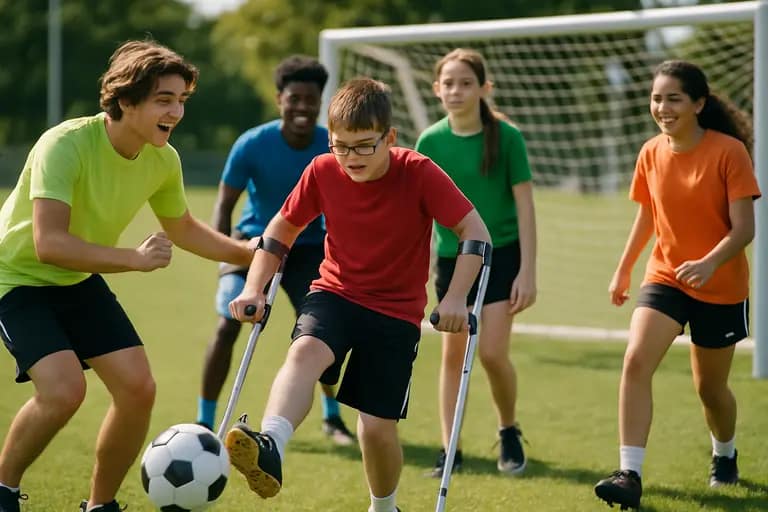
FIGS shows how school sports can support youth development beyond wins, rosters, and standings. For ASPIRE students, the stated goal was to provide the same opportunities to participate in sports, feel seen and valued, and build friendships with peers rather than being placed only in fully separate programming. For student-athletes, the program offered a different kind of leadership test: not just leading in competition, but helping classmates feel welcomed in a team environment.
Recognition Beyond Athletic Results
In June 2026, Heine was honored as the Houston Chronicle’s Girls Community All-Star Athlete for her work with FIGS, along with her athletic achievements in volleyball and track and field Houston Chronicle report. That recognition placed community service beside athletic performance, a helpful signal for student-athletes who want their school impact to reach beyond scoreboards.
For readers following similar examples of student-athletes making an impact beyond competition, Youth Rise TX has also covered student leadership through athletics. Heine’s story fits that same community-minded pattern, while standing out because it centered students with intellectual and developmental disabilities inside the everyday sports life of a high school.
A Career Interest Shaped By Service
The Houston Chronicle reported in June 2026 that Heine planned to attend Texas A&M University starting in August 2026 and was aiming for a career in special education, with her FIGS experience helping inspire that path. As of September 14, 2026, that reported August start date had passed, but the available source supports the statement that this was her stated plan at the time of the award coverage.
That detail adds depth to the story. FIGS was not only a club that created school events. It also helped clarify a young leader’s sense of purpose. Sports gave Heine a setting where service, peer connection, and future professional goals could meet in a practical way.
What FIGS Means For Kingwood Youth Sports
For Kingwood, the inclusive sports initiative offered a hopeful model for how athletic departments can bring more students into school identity. The program did not require a new league, a separate venue, or a distant event. It used the school’s existing sports structure and asked a better question: who else can be included in what we already do?
That question can shape how communities think about youth sports. A gym or practice field can be more than a training site. It can be a place where students learn patience, encouragement, communication, and friendship. FIGS made those lessons visible by connecting West Fork student-athletes with ASPIRE students through monthly sport participation.
The growth from roughly 10 to about 20 ASPIRE participants by the end of the 2025-26 school year does not need to be overstated to matter. The available reporting supports a clear point: more students became involved after the first practice. Every team sport hosted ASPIRE students at least once. Adult leaders across special education, coaching, athletics, and administration supported the effort. Those facts show a school community choosing inclusion through action.
Kayli Heine’s FIGS work is a strong reminder that youth sports can build belonging when students are invited to lead with care. In Kingwood’s athletic community, the program bridged gaps not through slogans, but through shared drills, monthly participation, and classmates seeing one another as teammates.