
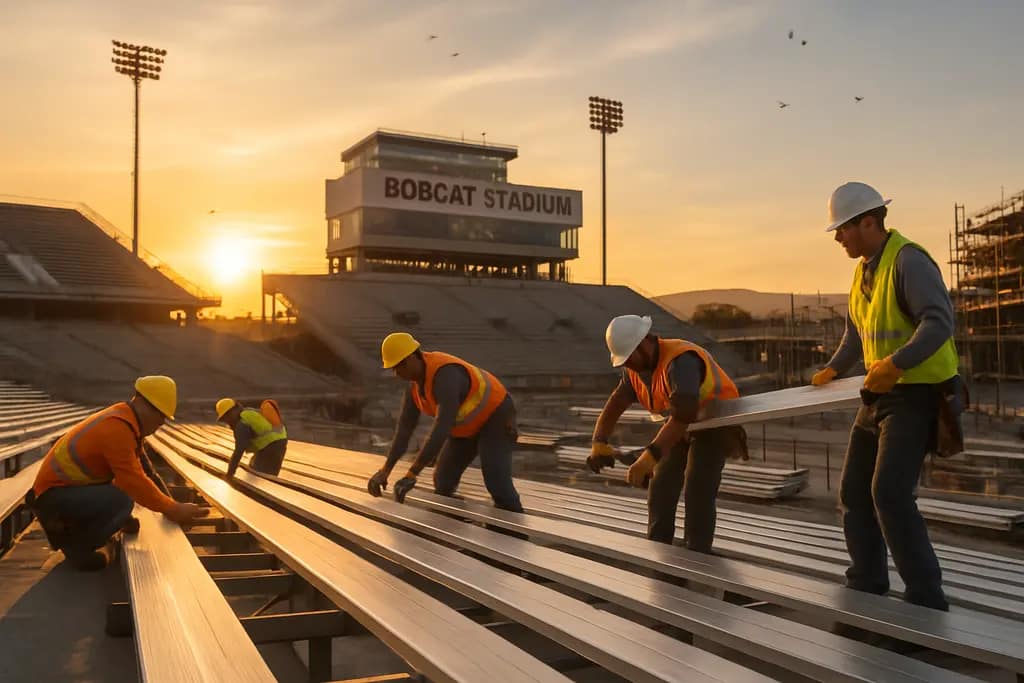
Bobcat Stadium Upgrades are more than a construction project for Rio Hondo ISD. They are a sports-first investment in the daily experience of student-athletes, coaches, families, and the school community that gathers around football, track, baseball, and softball. In June 2026, Rio Hondo ISD broke ground on a $6.2 million renovation for Bobcat Stadium and its athletics complex, according to a San Benito News report.
For young athletes, a school sports venue is often where confidence is built one practice at a time. It is where a freshman learns the pace of varsity preparation, where a senior closes out a season with teammates, and where younger students picture themselves wearing school colors one day. The planned work at Bobcat Stadium gives Rio Hondo a clear chance to connect facility planning with youth development, school pride, and local sports identity.
Bobcat Stadium Upgrades And The Rio Hondo Sports Plan
What The Bobcat Stadium Upgrades Include
The project is broad in scope, touching multiple competition and practice areas. The same San Benito News report detailed several planned allocations tied to the $6.2 million renovation:
- $2,514,995 for Hellas synthetic turf work connected to the football field and track.
- $1,776,280 for the baseball field and fencing.
- $961,450 for the softball field and fencing.
- $399,900 for a Musco LED entertainment lighting system for the football field.
- A new digital scoreboard measuring 39 feet wide by 19 feet high, along with video scoreboard and sound system enhancements.
The project also includes a new track facility around the football field, with surfacing planned for the oval, chutes, high jump area, and field event runways, as reported by San Benito News. That matters because track and field athletes need event-specific spaces for repetition, pacing, approach work, and meet preparation. A well-planned track area can help coaches organize practices across running, jumping, and field events without treating those athletes as an afterthought.
How Funding Choices Shape Community Trust
The funding approach is also part of the local sports story. The project is funded largely through ad valorem taxes, with the district committed to low-interest debt spread across a 15-year term, according to San Benito News. That structure places the project inside a long-term community conversation rather than a one-season improvement.
For families, this kind of investment invites fair questions: How will the fields be used? Which teams benefit? How will younger athletes gain from the work? Clear communication from school leaders can help residents see the connection between facility dollars and student growth. The strongest case for school sports infrastructure is not just the Friday night atmosphere; it is the day-to-day support for practice, coaching, and belonging.
How The Project Can Support Youth Development
Multi-Sport Value For Student-Athletes
For coaches, Bobcat Stadium Upgrades can support a wider view of athlete development. The athletic complex upgrades are set to benefit football, baseball, and softball fields, all receiving synthetic turf surfaces, according to KRGV coverage. That multi-sport reach is a key detail. It signals that the work is not limited to one roster or one night of the week.
In a smaller school community, many students may participate across more than one sport or support classmates across seasons. A football player may run track. A softball player may train in strength and conditioning with athletes from other teams. A younger student may watch an older sibling compete and begin to imagine a path into school athletics. Better shared facilities can help those connections feel visible.
The Bobcat Stadium Upgrades also give coaches a chance to reinforce habits that matter beyond the scoreboard: showing up on time, caring for shared spaces, respecting teammates from other sports, and learning how preparation connects to performance. Those habits are part of youth development because they help students see themselves as contributors to something larger than one game.
Better Event Tools For School Pride
The planned 39-by-19-foot digital scoreboard, video enhancements, sound upgrades, and LED football-field lighting all point toward a stronger event setting. In practical terms, those tools can help with introductions, timing, announcements, and recognition. Used well, they can make room to celebrate more than varsity starters. Band members, trainers, student managers, cheer squads, youth teams, and academic honorees can all become part of a fuller school event experience.
That is where sports infrastructure can meet community care. A stadium is one of the few places where students, parents, grandparents, alumni, staff, and local supporters gather around a common school identity. When the venue experience feels organized and welcoming, families may feel more connected to the work students are putting in throughout the week.
Managing Timing, Access, And School Spirit

Practice Planning During Construction
As of September 5, 2026, the public record supports that renovation work had begun and was underway. The June 2026 report said district officials projected the renovated stadium, including the track, lighting, and scoreboard, to be completed by the first home game of the 2026–27 varsity football season. Because school construction schedules can shift, the most responsible approach is to treat that as a reported projection, not a guarantee.
That timing matters for student-athletes. Construction around an athletic venue can affect routines, practice locations, equipment movement, and coaching plans. For students, the key is consistency: clear instructions, steady expectations, and adults who keep the focus on preparation. Facility work should not become a distraction from the core purpose of school sports, which is helping young people grow through commitment and teamwork.
Community Patience With A Student-Centered Goal
Families may see temporary inconvenience before they see the finished product. That can include changes to access, practice flow, or event planning. A student-centered approach keeps the conversation grounded. The purpose of the work is not simply to add new surfaces or brighter lights; it is to improve the setting where students train, compete, and represent Rio Hondo ISD.
Community patience is easier to build when residents understand who benefits. Football gains field and lighting improvements. Track athletes gain dedicated surfaces for running and field events. Baseball and softball gain field and fencing work. Fans gain scoreboard, video, and sound enhancements. Each piece connects to a larger school sports environment.
What Bobcat Stadium Upgrades Mean For Rio Hondo
A Local Investment In The Youth Sports Pipeline
The most promising part of Bobcat Stadium Upgrades is the way the project can serve students across age groups. High school athletes may be the first to compete on the improved surfaces, but younger students often absorb the message from the stands: athletics are valued here, effort is noticed here, and representing the school is something worth working toward.
That message matters in Rio Hondo because school sports can create bridges between classrooms, families, and neighborhoods. A strong athletic complex can support coaches as mentors, give students a place to practice responsibility, and give families shared moments around school identity. The facility itself will not do that work alone. The impact will come from how Rio Hondo ISD, coaches, athletes, and supporters use the space once the renovation is complete.
If the Bobcat Stadium Upgrades are completed as planned, the best outcome will be measured not only in new turf, a brighter scoreboard, or updated fencing. It will be seen in athletes who feel prepared, younger students who feel invited into school sports, and a community that keeps showing up for its kids.