
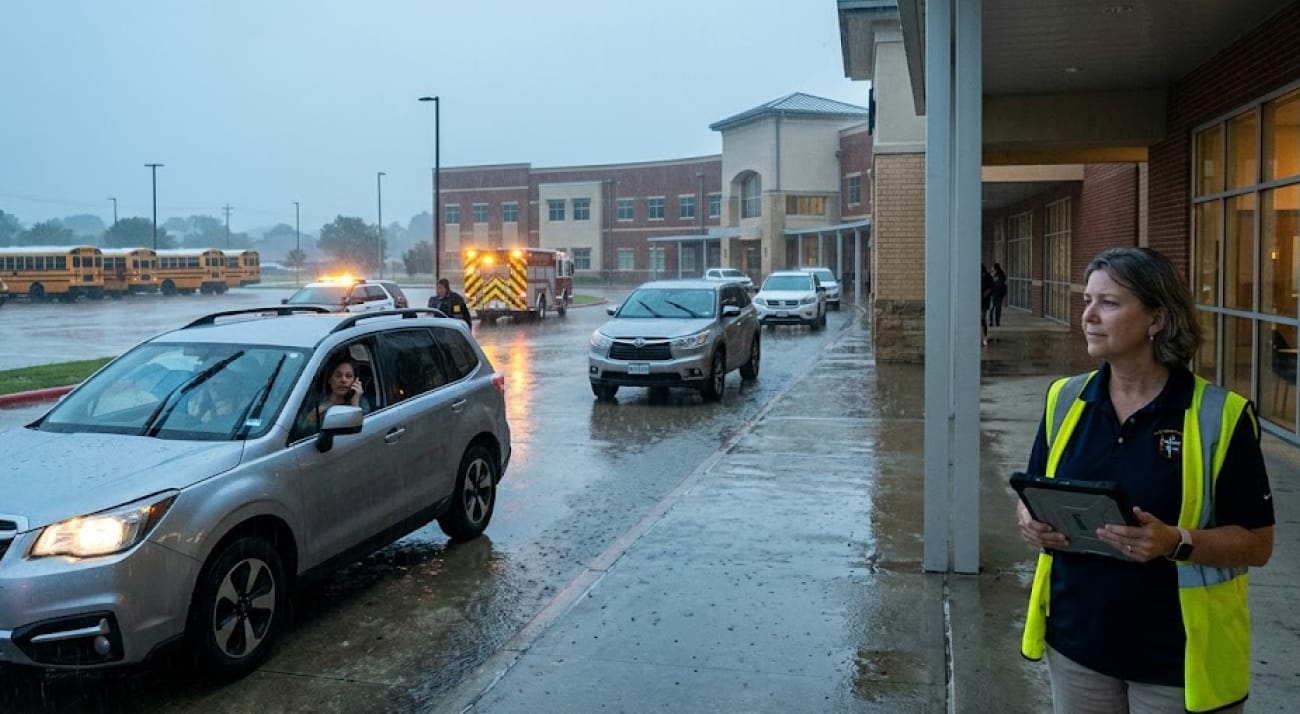
Tropical Depression Edouard is disrupting the start of September across Southeast Texas, forcing several Houston-area school districts to cancel classes as heavy rain, flooding, power outages and hazardous road conditions create new challenges for students, families and school employees. Conroe ISD and Willis ISD closed all campuses and district offices on Wednesday, September 2, while other districts continued monitoring conditions after earlier cancellations and schedule changes. For families following Houston student news, the storm illustrates how quickly severe weather can reshape school schedules, transportation, athletics and childcare across a large metropolitan region.
The closures come after Edouard made landfall near the Texas-Louisiana border on Tuesday before weakening from a tropical storm into a tropical depression. Although the system lost some of its wind strength, the most significant concern for many communities shifted toward rainfall and flooding rather than the storm’s classification.
That distinction is important for schools.
A weaker tropical system can still create dangerous conditions for buses, student drivers, staff commuters and families traveling during the morning rush. On Wednesday, the National Weather Service’s Houston/Galveston office maintained a flood watch through 7 p.m. for portions of Southeast Texas and warned that heavy rain could produce flooding on roads, in low-lying areas and near rivers and creeks.
Why Districts Chose To Close Schools
School closure decisions are rarely based on the storm category alone. District leaders have to evaluate how weather conditions affect the entire transportation and operating network that allows thousands of students to reach campus safely.
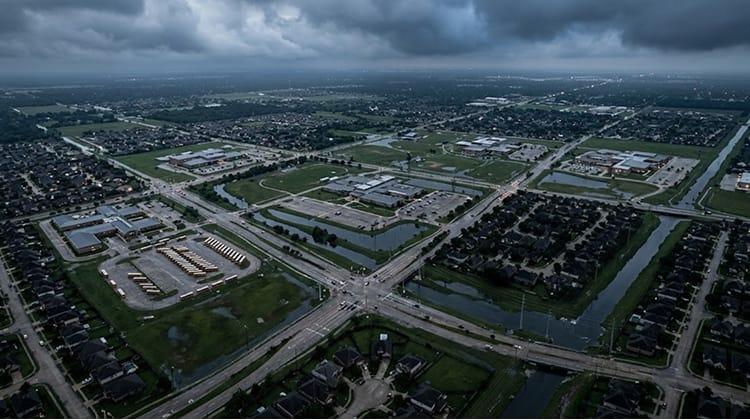
For Conroe ISD, that calculation was particularly complicated because the district covers approximately 348 square miles. District officials said some communities could experience relatively minor effects while others could face heavy rainfall, flooding, power outages and hazardous roads. The district also considered employees who commute from areas that could be more heavily affected by the storm.
Conroe ISD announced that all schools and district offices would close Wednesday, September 2, and canceled after-school activities. The district said it would continue monitoring conditions before determining how schools would operate Thursday.
Willis ISD made a similar decision, citing the potential for significant rainfall and flash flooding. District officials specifically highlighted the risk facing student drivers, parents and employees traveling during early-morning hours when visibility could be reduced and roads could become hazardous.
These decisions show why school safety planning extends well beyond the physical condition of a campus. Even if a school building remains dry and fully operational, students may still be unable to reach it safely.
The National Weather Service Houston forecast provides the weather information that local officials and families can use to monitor changing flood and wind conditions.
Edouard Has Already Disrupted Schools Across Southeast Texas
The disruption began before Wednesday.
On Tuesday, September 1, numerous Southeast Texas districts canceled classes or modified their schedules as Edouard approached. Anahuac ISD, Channelview ISD, Cleveland ISD, Crosby ISD, Dayton ISD, Deer Park ISD, East Chambers ISD, Galena Park ISD, Goose Creek ISD, Hardin ISD, High Island ISD, Huffman ISD, Hull-Daisetta ISD, Humble ISD, Liberty ISD, Pasadena ISD, Sheldon ISD and Splendora ISD were among the districts announcing closures for Tuesday.
Other districts took a more limited approach.
Clear Creek ISD, for example, announced different early-release times for different grade levels. Conroe ISD released high school students 30 minutes early and elementary students 15 minutes early Tuesday before moving to a full district closure Wednesday. Willis ISD also used an early-release schedule before deciding to close Wednesday.
This staggered response reflects the uncertainty that often accompanies tropical weather. Rainfall can vary dramatically across relatively short distances, and conditions can change during the same school day.
For school leaders, waiting for certainty can create a different problem: buses may already be on the road, students may already be on campus and parents may already have arranged work schedules around a normal school day.
That is why districts often make decisions conservatively when flooding or dangerous travel is possible.
Flooding Is The Bigger Threat After Landfall
Edouard’s weakening does not mean the threat has disappeared.
The storm made landfall near Johnson Bayou, Louisiana, on Tuesday with sustained winds of up to 60 mph before moving westward into southeastern Texas and weakening. The National Hurricane Center expected the system to weaken quickly, but forecasts still called for substantial rainfall along its path.
For Houston-area schools, that creates a different type of emergency than a hurricane making a direct landfall near the city.
The primary concern becomes water.
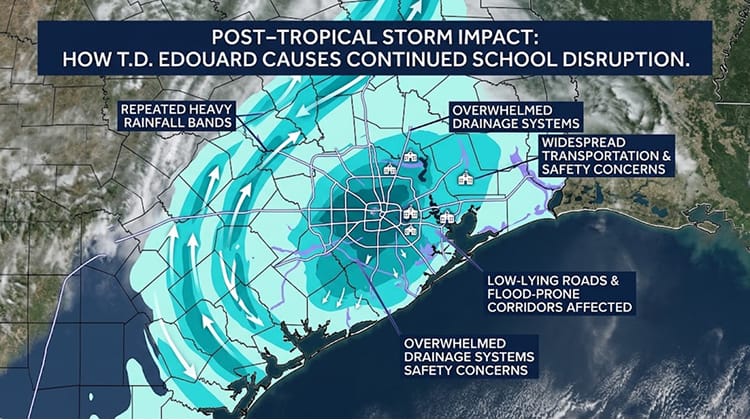
Current forecasts indicate that some areas could receive 3 to 6 inches of rain, with isolated totals potentially exceeding 10 inches. Areas north of Interstate 10 and east of Interstate 45 were identified as particularly vulnerable, with repeated rain bands capable of producing localized flooding.
The repeated nature of those rain bands is particularly important.
When several rounds of heavy rain move over the same location, water can accumulate faster than drainage systems can handle it. Roads that are passable during one part of the morning can become dangerous later in the day.
That creates obvious problems for school transportation.
A school bus route may cross low-lying roads, drainage channels or areas that flood quickly. Student drivers may also encounter standing water during their commute. For districts covering hundreds of square miles, officials must evaluate conditions across multiple communities rather than rely on weather observations from a single location.
Power Outages Add Another Layer Of Disruption
Weather-related school decisions also depend on electricity.
As Edouard moved through Southeast Texas, power outages spread across the region. More than 56,800 Texas utility customers were without power Wednesday morning, according to the Houston Chronicle, with the Beaumont area among the hardest-hit locations.
Power loss can affect schools in several ways.
Campus lighting, internet systems, air conditioning, security equipment, food service and communications can all be affected. Even if a campus remains structurally safe, the loss of electricity can make normal instruction impractical.
For families, power outages create another challenge. Students may be unable to complete assignments, charge devices or access online communication from districts.
That is particularly relevant at the beginning of the school year, when teachers are still establishing routines and students are adjusting to new schedules.
Storm disruptions therefore have consequences that can continue after the rain stops.
The Harris County emergency information system has also urged residents to remain weather-aware and maintain multiple ways to receive emergency alerts as conditions change.
Athletics And After-School Programs Are Also Affected
School closures do not only interrupt classroom instruction.
Sports practices, competitions, clubs, tutoring sessions and other after-school programs can also be canceled when districts determine that travel conditions are unsafe.
That became clear Tuesday when several districts canceled after-school activities even while campuses remained open. Houston ISD, Aldine ISD, Cypress-Fairbanks ISD, Klein ISD, Spring ISD, Spring Branch ISD, Tomball ISD and YES Prep were among the systems that canceled after-school activities.
For student-athletes, those cancellations can have a meaningful impact.
The early weeks of the high school football season are particularly schedule-intensive in Texas. Teams practice during fixed windows, travel to opposing campuses and coordinate transportation for athletes, coaches, trainers and families.
A storm can therefore affect more than one day.
A canceled practice can change preparation for a Friday game. A postponed contest can create scheduling conflicts later in the season. Outdoor activities can also become unsafe because of lightning, saturated fields and strong wind.
This is one reason weather planning has become an important part of youth sports management across Texas.
Families Face The Hidden Cost Of A School Closure
For students, a day away from school can look simple.
For working parents, it can be much more complicated.
When schools close, families may need to arrange childcare, modify work schedules or keep older students at home. Parents who work in industries where remote work is not possible can face particularly difficult choices.
That is why districts often acknowledge the inconvenience associated with closures even when they believe the safety rationale is clear.
Conroe ISD explicitly recognized that closing schools creates challenges for families and employees. The district’s decision was based on the fact that weather conditions could vary substantially across its large geographic area and that employees themselves could be traveling from more heavily affected communities.
This creates a difficult balance for school officials.
Closing too early can create unnecessary disruption. Closing too late can expose students and staff to dangerous travel conditions.
The best decision is therefore not necessarily the one that keeps schools closed the longest. It is the decision that gives families enough notice while reducing exposure to avoidable risks.
Houston’s Geography Makes Storm Decisions More Complicated
Houston’s geography adds another variable.
The metropolitan area includes coastal communities, densely developed urban neighborhoods, suburban corridors and inland communities extending deep into surrounding counties. Flooding does not affect every location equally.
The same storm can produce manageable rainfall in one part of the region while creating dangerous road conditions several miles away.
That is why districts have responded differently.
On Tuesday, Katy ISD, Fort Bend ISD, Pearland ISD, Lamar CISD, Friendswood ISD, Waller ISD and several other districts remained open while monitoring conditions. Other districts canceled classes, released students early or canceled only extracurricular activities.
There is no contradiction in those decisions.
Each district has different geography, transportation routes, student populations and local weather conditions.
The result is a patchwork of school schedules across the Houston region, requiring families to rely on district-specific communications rather than assume that neighboring districts will make the same decision.
What Students And Parents Should Watch Next
The biggest question for families is whether schools will reopen Thursday, September 3.
That decision will depend on conditions overnight and Wednesday morning, including road safety, flooding, power availability and additional rainfall.
Conroe ISD said it would provide an update regarding Thursday operations as conditions develop. Other districts are similarly monitoring local weather and transportation conditions before making additional announcements.
Families should pay particular attention to five issues:
- Official district announcements about closures, delays and extracurricular activities.
- Flood warnings affecting the roads used for school transportation.
- Power outages affecting homes or campuses.
- Changes to bus routes caused by flooded or blocked roads.
- Weather-related changes to football, soccer and other outdoor activities.
The National Weather Service flood information remains particularly important because rainfall and flooding conditions can change rapidly even after a tropical system has weakened.
Edouard Shows Why School Safety Extends Beyond The Campus
Tropical Depression Edouard is a reminder that school safety does not begin when students walk through the front doors.
It begins with the roads they travel, the buses that transport them, the employees who operate campuses and the families who need reliable information to make decisions.
The storm has already produced a broad range of responses across Southeast Texas. Some districts closed completely, others modified schedules, and some remained open while monitoring conditions. That variation reflects the highly localized nature of flooding and severe weather.
For Conroe ISD and Willis ISD, the decision to close Wednesday came after officials considered rainfall, flooding, power outages, transportation and the safety of employees traveling from surrounding communities.
Meanwhile, the broader Houston region remains under close weather monitoring as Edouard’s remnants continue producing rain.
The storm’s classification may have changed from tropical storm to tropical depression, but for students and families, the relevant question is simpler: Can they safely get to and from school?
Until the answer is clear, school districts will continue balancing instructional time against the risks created by flooded roads, power outages, lightning, strong winds and rapidly changing conditions.
That decision-making process is likely to remain part of daily life across Southeast Texas as Edouard’s remnants move away and the region works to return to its normal school schedule.