

Youth sports programs rarely succeed on coaching alone. Behind every functioning league, after-school program, or weekend tournament sits a structure of community investment that determines whether participation grows or fades. Facilities, transportation, volunteer coaching, scholarships, and local sponsorships collectively shape access long before a whistle is blown on the field.
Across the United States, participation trends consistently show that access and affordability remain the strongest predictors of youth sports involvement. Research from organizations like the Aspen Institute Project Play highlights that families in lower-income communities face significantly higher barriers to consistent sports participation, particularly due to cost, travel distance, and lack of facilities. These structural gaps make community investment not just supportive, but foundational to youth sports continuity.
Within this context, community investment is not limited to financial contributions. It includes school district programming, municipal recreation budgets, nonprofit partnerships, and private-sector sponsorships that collectively determine whether youth sports exist as inclusive systems or fragmented opportunities.
How Community Investment Shapes Early Access to Sports
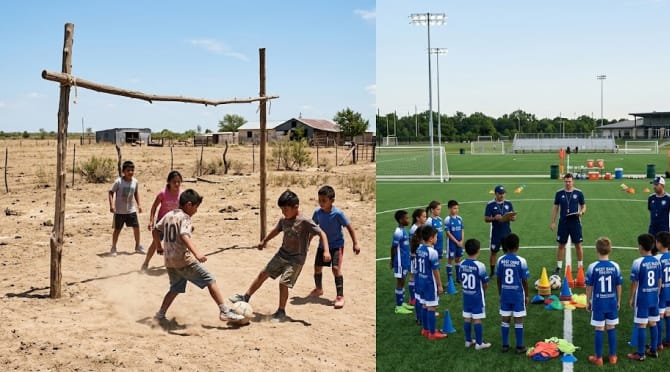
The first entry point into organized sports often depends on what exists within walking or short driving distance. Parks, school gyms, recreation centers, and church-based leagues frequently serve as the initial exposure for young athletes. Where these resources are limited, participation drops sharply regardless of interest or talent.
Data from the Centers for Disease Control and Prevention (CDC) shows that only about one in four children in the United States meets recommended physical activity levels, a statistic closely tied to uneven access to structured sports programs. Communities that invest in youth sports infrastructure tend to see higher participation rates and improved long-term engagement in physical activity.
In many districts, partnerships between schools and local organizations have become the primary mechanism for expanding access. These collaborations often combine shared facility use, subsidized program fees, and volunteer staffing to reduce entry barriers for families.
For example, school-based athletic initiatives documented through Youth sports development programs show how structured community involvement can extend participation beyond traditional school teams, especially in areas where extracurricular funding is limited.
The Economic Structure Behind Youth Sports Programs
Community investment in youth sports can be understood through three primary funding streams: public funding, private sponsorship, and nonprofit support. Each plays a distinct role in sustaining participation.
| Funding Source | Primary Role | Community Impact |
|---|---|---|
| Public Funding | School and municipal programs | Provides baseline access and facilities |
| Private Sponsorship | Equipment, leagues, and events | Expands program quality and reach |
| Nonprofit Support | Scholarships and outreach | Reduces financial barriers for families |
Public funding typically supports infrastructure such as fields, gyms, and maintenance. Private sponsorships—often from local businesses—help cover uniforms, equipment, and tournament fees. Nonprofit organizations fill critical gaps by funding scholarships and outreach programs targeting underserved communities.
A report from the Sports & Fitness Industry Association (SFIA) notes that youth sports participation declines significantly when annual household costs exceed affordability thresholds, reinforcing the importance of subsidy-based models. Without shared financial responsibility across sectors, access becomes uneven and participation narrows to higher-income households.
Community investment therefore functions as a stabilizing force, balancing cost distribution across multiple stakeholders rather than placing the burden solely on families.
Local Sports Programs as Engines of Social Development
Beyond athletic development, community sports programs serve as informal social systems where young people build communication skills, discipline, and group accountability. These environments often become the first structured setting where children interact with peers outside their immediate school or neighborhood circles.
Organizations such as the U.S. Soccer Foundation have emphasized that structured play environments contribute to improved social-emotional development, particularly in underserved urban and rural communities. Their programs integrate mentorship, physical activity, and educational support, reinforcing the idea that sports can function as a broader development platform.
Community investment strengthens these outcomes by ensuring programs remain consistent rather than seasonal or temporary. When funding is stable, programs can maintain trained coaches, predictable schedules, and long-term participant engagement—factors that directly influence retention and developmental outcomes.
Local programs also create informal leadership opportunities. Older participants often take on mentoring roles for younger children, reinforcing responsibility and peer accountability within the same system.
The Role of Schools and Municipal Partnerships
Schools remain one of the most important entry points for youth sports participation. In many communities, school districts serve as the only organized provider of athletic programming. However, limited budgets often restrict the number of sports offered or the number of students who can participate.
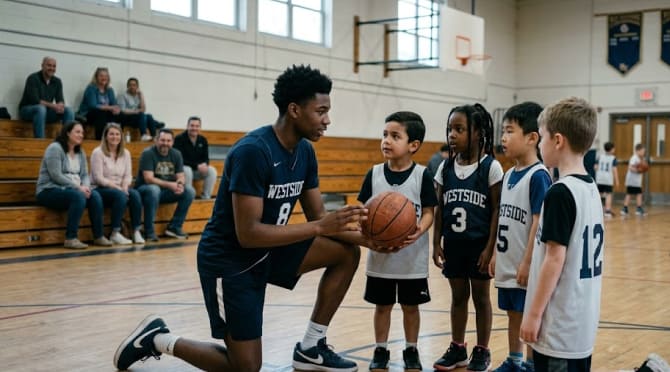
Municipal partnerships help address these limitations by opening public facilities for extended use and sharing operational costs. Recreation departments frequently collaborate with school systems to maximize facility usage outside of school hours, extending access without requiring additional construction.
The National Recreation and Park Association (NRPA) reports that communities with integrated school-municipal sports programming tend to show higher participation consistency and improved facility utilization rates. These partnerships also reduce duplication of resources and allow for more inclusive programming across age groups.
Community investment at this level is less visible than sponsorship banners or major donations, but it forms the structural backbone of youth sports systems.
Equity and the Long-Term Impact of Investment
One of the most significant outcomes of sustained community investment is the reduction of participation gaps. Without targeted investment, youth sports systems tend to reflect broader socioeconomic inequalities, with higher participation rates in affluent areas and lower engagement in underserved communities.
Targeted funding models—such as scholarship-based registration, equipment lending programs, and free community clinics—help reduce these disparities. Over time, these interventions contribute to higher retention rates and more diverse participation pools.
Equity-focused investment also influences long-term outcomes beyond sports. Studies from public health organizations consistently link youth sports participation with improved academic performance, higher graduation rates, and increased civic engagement later in life.
Community investment, in this sense, functions as both an athletic and social intervention. It shapes not only who plays sports today but also who develops the skills and confidence associated with leadership roles in adulthood.
Programs highlighted through youth leadership and sports initiatives demonstrate how structured investment in athletics can extend into broader educational and community outcomes, reinforcing the connection between access and opportunity.
Sustaining Youth Sports Through Shared Responsibility
Sustained youth sports participation depends on shared responsibility across institutions, families, and local organizations. No single entity can maintain access alone. When investment is distributed across multiple stakeholders, programs become more resilient to funding fluctuations and demographic shifts.
Community investment also creates continuity across age groups. Children who begin in introductory programs often progress into more structured leagues, high school teams, or mentorship roles within the same ecosystem. This continuity strengthens both athletic development and social cohesion within communities.
The long-term stability of youth sports systems depends on maintaining this balance of shared responsibility. When investment is consistent, programs evolve from short-term activities into lasting community institutions that support development across multiple stages of youth growth.