
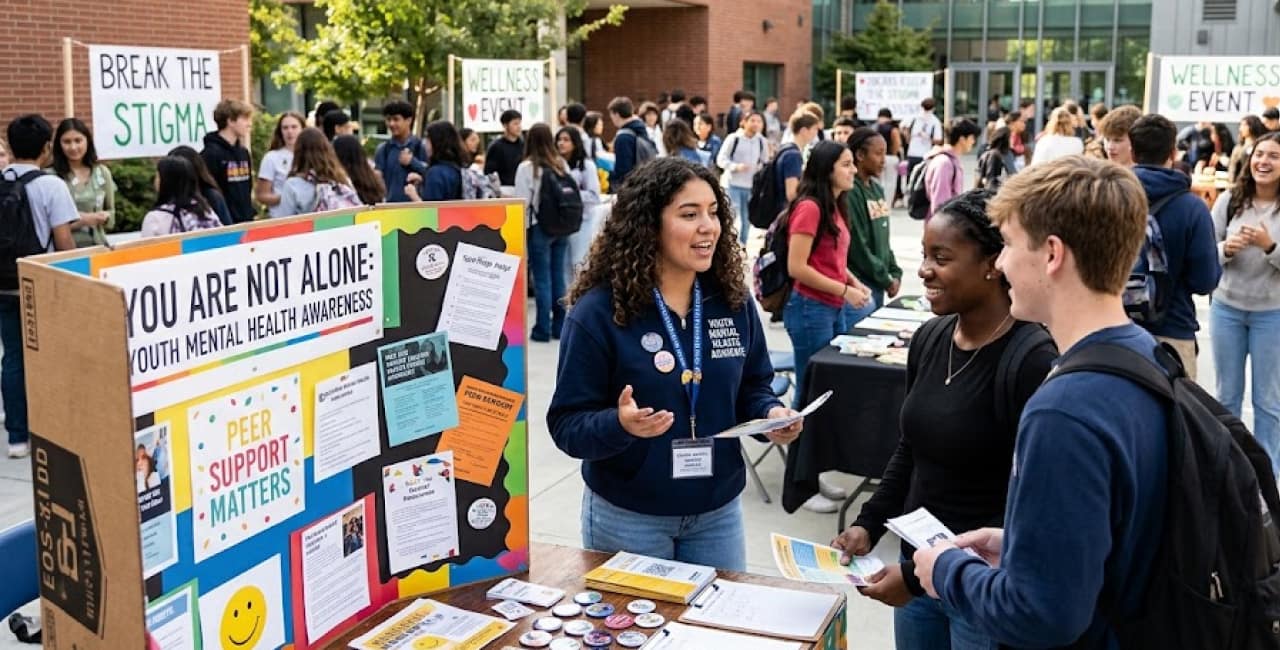
Across the United States, young people are stepping into leadership roles through an issue that directly affects their generation: mental health. What was once viewed primarily as a healthcare concern is increasingly becoming a youth-led movement focused on education, advocacy, peer support, and community engagement.
Recent national initiatives demonstrate this shift. On June 15, 2026, nonprofit organization Active Minds announced a major expansion of its youth mental health programs through a $5 million grant from Google.org. The initiative aims to equip 100,000 students across 154 high schools with tools to support mental wellness, digital well-being, and peer leadership. The program launched in Altadena, California, where students impacted by the Eaton Fire are helping shape solutions for challenges affecting their communities.
These efforts highlight a growing trend: young people are no longer serving solely as participants in conversations about mental health. They are becoming leaders who educate peers, organize programs, and advocate for meaningful change.
Why Mental Health Has Become a Youth Leadership Issue
Mental health challenges affect millions of young people throughout the United States. Schools, families, and community organizations continue searching for effective ways to provide support and reduce stigma.
Many youth advocates believe the most effective solutions include direct participation from students themselves. Young people often understand the pressures experienced by their peers, making them uniquely positioned to encourage open conversations and connect others with available resources.
The growth of youth-led advocacy reflects this reality. Student leaders are organizing awareness campaigns, facilitating peer discussions, and helping create supportive school environments where seeking help is viewed as a sign of strength rather than weakness.
Research published by the Centers for Disease Control and Prevention continues to show the importance of early intervention, social connection, and supportive environments in promoting positive mental health outcomes among young people.
Leadership opportunities emerging through mental health advocacy allow students to contribute to those supportive environments while developing valuable communication and problem-solving skills.
Students Are Leading Change in Their Communities
One of the most significant developments in recent years has been the rise of peer-led initiatives.
Young people are increasingly involved in creating campaigns, workshops, and educational programs that address mental health challenges from a youth perspective. These efforts often resonate strongly with fellow students who may feel more comfortable discussing personal concerns with peers who understand their experiences.
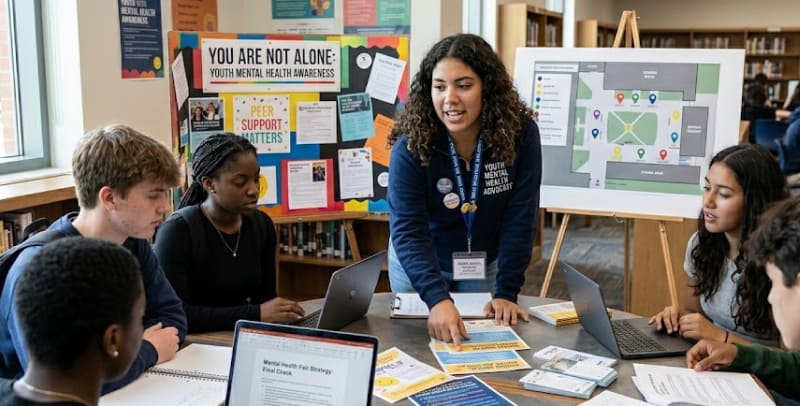
The Active Minds initiative announced in June 2026 reflects this approach. Students participating in the program receive training and resources that help them become advocates within their schools and communities.
Rather than relying solely on adult-led interventions, many organizations now recognize the value of empowering youth leaders to become part of the solution.
| Youth Advocacy Activity | Leadership Skills Developed |
|---|---|
| Peer support programs | Communication |
| Awareness campaigns | Public speaking |
| Community events | Project management |
| Student-led discussions | Active listening |
| Resource coordination | Teamwork and organization |
These experiences provide practical leadership opportunities while addressing an issue that directly impacts young people.
Advocacy Builds Confidence and Purpose
Leadership development often begins when young people recognize their ability to influence positive change.
Mental health advocacy provides a meaningful pathway for students who want to improve their schools and communities. Participants learn how to communicate effectively, collaborate with others, and advocate for causes they believe in.
The process often strengthens personal confidence. Students who organize events, lead discussions, or share personal experiences gain valuable experience speaking publicly and working with diverse groups.
Programs centered on youth leadership development frequently emphasize service, empathy, and community engagement as core leadership qualities. Mental health advocacy aligns naturally with these goals by encouraging young people to support others and contribute to positive change.
Many youth advocates describe a strong sense of purpose that emerges through this work. Helping peers access resources or feel less isolated can become a powerful source of motivation and personal growth.
These experiences often influence future educational and career interests in fields such as education, healthcare, public service, and nonprofit leadership.
Communities Benefit From Youth-Led Solutions
The impact of youth mental health advocacy extends beyond individual participants.
Schools and community organizations frequently report stronger engagement when students help lead initiatives. Peer-led programs often create environments where conversations feel more approachable and relevant.
Youth leaders can identify challenges that adults may overlook and offer perspectives shaped by direct experience. Their involvement helps organizations create programs that better reflect the needs of students.
The Active Minds organization has spent years promoting youth leadership as a key component of mental health advocacy. Their work demonstrates how student involvement can strengthen outreach efforts and encourage broader participation.
Communities that support youth leadership frequently see benefits that extend into other areas of civic engagement. Students who become involved in advocacy often participate in volunteer work, community service projects, and other leadership opportunities.
This broader engagement contributes to stronger communities and creates opportunities for long-term positive impact.
Reducing Stigma Through Peer Engagement
One of the most important contributions made by youth advocates is their role in reducing stigma.

Many young people hesitate to discuss mental health concerns due to fear of judgment or misunderstanding. Peer-led programs can help create safer spaces where conversations feel more natural and accepted.
Open dialogue encourages awareness and helps normalize discussions about emotional well-being. Youth leaders often play a key role in initiating these conversations.
Several common approaches have proven effective:
- Student-led awareness events
- Peer discussion groups
- School wellness campaigns
- Resource-sharing initiatives
These activities encourage participation and help build supportive school cultures where students feel connected and valued.
Reducing stigma remains a central objective for many advocacy organizations, and youth leadership has emerged as one of the most effective tools for achieving that goal.
Mental Health Advocacy Reflects a New Generation of Leadership
Leadership has traditionally been associated with student government, athletics, and academic achievement. Today’s youth leaders are expanding that definition.
Many young people are choosing to lead through service, advocacy, and community engagement. Mental health initiatives provide opportunities to address real challenges while developing practical leadership skills.
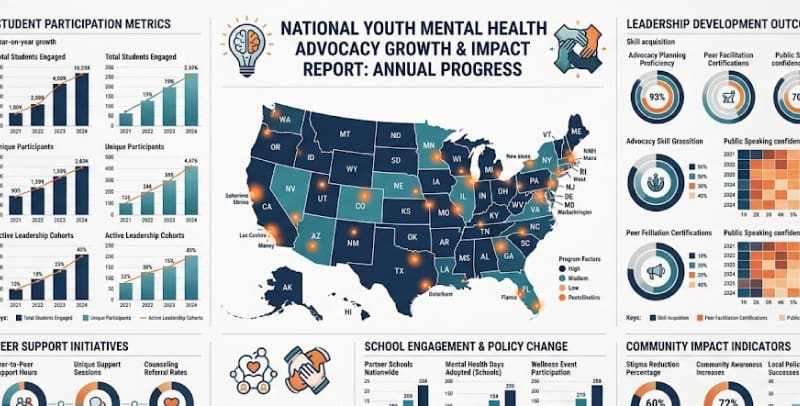
| Leadership Trait | How Advocacy Develops It |
| Empathy | Supporting peers |
| Communication | Leading discussions |
| Problem-solving | Addressing community needs |
| Responsibility | Managing initiatives |
| Collaboration | Working with organizations |
These experiences prepare young people to contribute meaningfully in many areas of life.
The growing momentum behind youth mental health advocacy reflects a generation that is willing to address difficult issues, support one another, and participate actively in shaping healthier communities.
As programs continue expanding across schools and organizations nationwide, young advocates are demonstrating that leadership is not defined by age, title, or position. It is defined by action, service, and a commitment to helping others. Through mental health advocacy, students are creating positive change today while developing the skills needed to become effective leaders tomorrow.