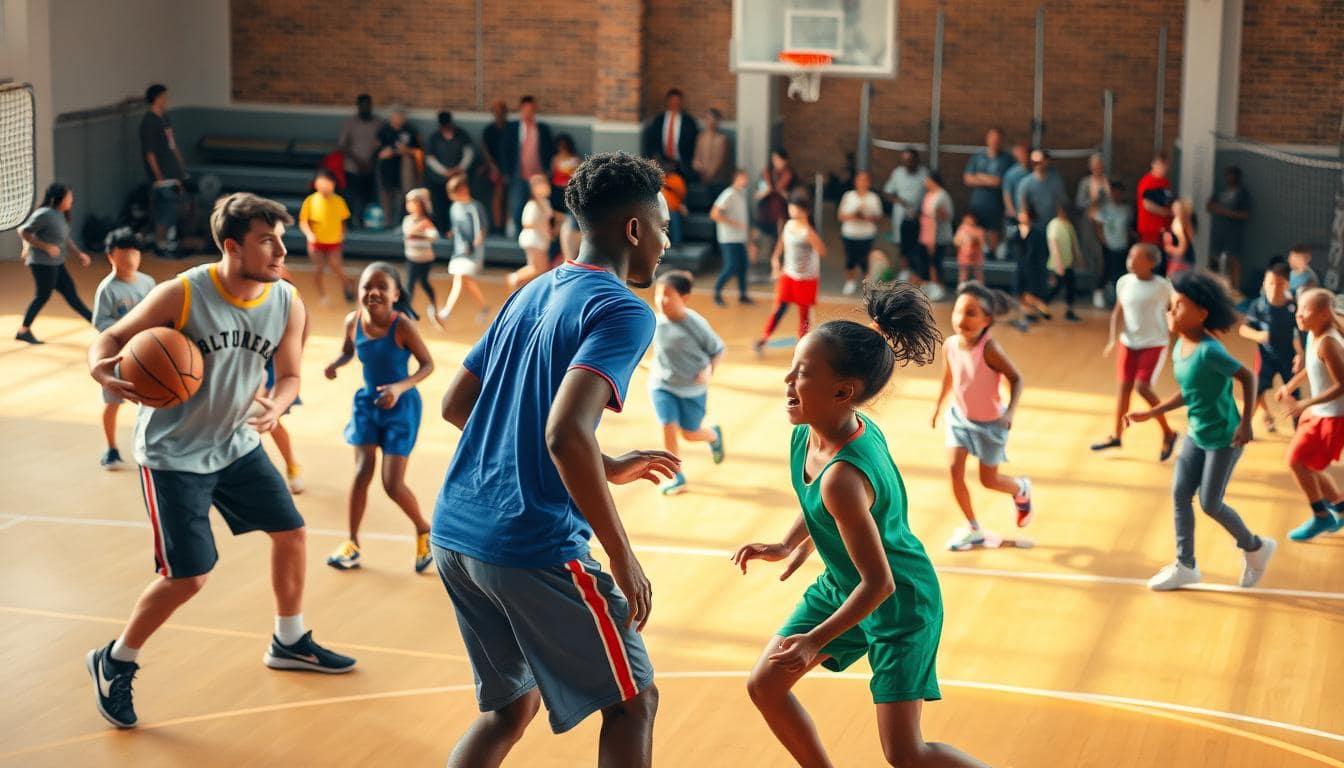
When the cameras stop rolling, something interesting happens. Teens around the world have 8 hours a day for either trouble or change. This 488 minutes of free time can be used for good or bad. It’s a chance for making a difference or getting into trouble.
The LEAD youth program is making a big impact. It uses sports to help kids get ahead in life. By focusing on education, they help kids avoid trouble and succeed.
This isn’t just about sports. It’s a smart plan to help kids. By using their free time for learning, kids can change their lives. It’s not just about sports; it’s about giving kids a better future.
Investing in these programs really works. Schools see more kids attending classes. It’s like a sports game where winning means a better life for kids. Social justice in sports is about making a real difference, not just tweeting about it.
Overview: Why Sports?
Why do we keep throwing jump shots at problems that need bazookas? Sports aren’t just games; they’re tools for change. A Danish parkour program shows how it works. It’s not about perfecting backflips, but rewiring our brains.
The Social Alchemy of Athletics
Reed Larson found something cool: sports mix skills in a special way. Teens think they’re just playing basketball, but they’re really making a mix of:
- Dopamine hits from scoring
- Adrenaline rushes from competition
- Endorphin cocktails from teamwork
The Danish GAME initiative showed this magic works. After 32 weeks of parkour training:
| Metric | Traditional Programs | Sports-Based Approach |
|---|---|---|
| New Friendships Formed | 18% | 47% |
| Continued Club Participation | 12% | 33% |
| Conflict Resolution Skills | Lecture-Based | Experience-Embedded |
Here’s the magic: breaking barriers happens when kids aren’t looking. That parkour group? They thought they were learning to vault rails. Really, they were:
- Calculating risk vs. reward (economics 101)
- Reading body language (psych minor)
- Building trust through spotting (human resources crash course)
Sports are like the ultimate “yes, and…” improv exercise for life skills. Miss a trick? The concrete teaches consequences better than any sermon. Stick the landing? Instant validation that practice pays off.
This isn’t feel-good theory – it’s neuroscience meets social engineering. When communities invest in sports programs, they’re not building athletes. They’re coding alternative futures through sports and community DNA. Next up: How midnight basketball became society’s antivirus software.
Addressing Crime and Violence
Midnight Basketball wasn’t just about making new basketball stars. It turned empty gyms into safe spaces. Research shows at-risk youth are responsible for 83% of crimes during free time. This proves that idle hands can lead to trouble.
From Midnight Basketball to Mindset Shifts
Today, sport for change programs have evolved. In Detroit, the Police Athletic League turned officers into coaches. This led to a 22% decrease in youth arrests. It’s because sports can build positive relationships, unlike traditional policing.
But we shouldn’t idealize sports too much. A study in Philly showed boxing programs can actually make kids more aggressive. The real magic happens when sports teach important life lessons.
Here’s what I call the Coach-Player Paradox:
- Drills become decision-making simulations
- Timeouts morph into conflict resolution workshops
- Team huddles transform into trust-building exercises
The Deterrence Playbook
Crime prevention through sports is about changing how kids think. Let’s compare old and new methods:
| Tactic | 90s Approach | Modern Play |
|---|---|---|
| Time Coverage | 8pm-midnight | Year-round mentorship |
| Authority Figures | Security guards | Coach-officer hybrids |
| Success Metric | Bodies in gyms | College applications filed |
PeacePlayers’ tournaments show the power of sports. Teens who play together are 40% less likely to fight. But the question remains: do these programs change kids, or do they change how we see them? The answer could decide if these programs become a lasting solution.
Tackling Poverty Through Access & Opportunity
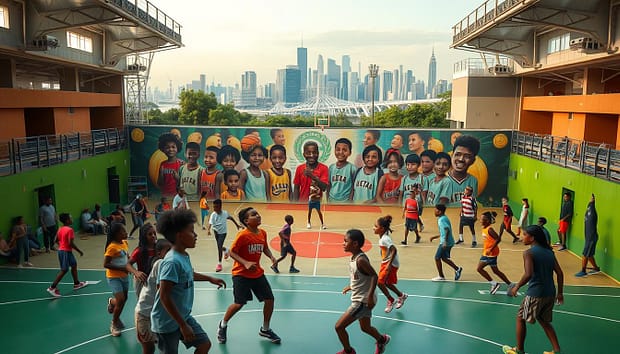
Poverty is like a tough defense, always ready to block chances. But sports-based youth development (SBYD) programs are changing the game. They’re using sports to open doors for kids.
Breaking the 4% Curse
CJ Stewart is like a real-life “Coach Carter.” He turned Atlanta’s parks into paths to college. His LEAD program has a 93% college enrollment rate, beating Harvard’s.
How does he do it? By teaching kids to think like business leaders. They learn STEM, financial literacy, and college prep.
- STEM classes that make Moneyball analytics look like tee-ball
- Financial literacy workshops disguised as free agency negotiations
- College prep sessions more intense than NFL combine training
Columbia University found that SBYD programs like LEAD are a smart investment. Every dollar brings in $11 in social returns. That’s like Apple’s iPhone success.
The Skills Center initiative is another example of smart investing. It finds hidden talent in overlooked areas. It’s not just about sports; it’s about preparing kids for life.
But only 4% of donations go to SBYD programs. This means we’re missing out on a chance to beat poverty. Stewart calls it leaving runs on the board.
This isn’t just giving; it’s investing in people. SBYD shows that success can happen off the field too. Now, if only more groups would aim for the fences…
Combating Racism and Discrimination
Imagine dunking on racism. Sports are changing the game for racial equity. They show us that shared goals can break down divisions faster than any policy.
When Rivalries Become Reconciliation
PeacePlayers International made a breakthrough. They got Israeli and Palestinian teens to work together on the court. The key? Mandatory assists. You can’t score if your teammate doesn’t pass you the ball.
This taught them to trust each other. After six months, 84% of them trusted their former rivals.
In Sacramento, the Skills Center took it a step further. They turned gang colors into team jerseys. Their 3-step plan was:
- Recruit leaders from rival neighborhoods
- Create mixed teams with joint victory conditions
- Replace territorial graffiti with mural projects celebrating team wins
Racial incidents dropped by 68% in two years. This outdid most diversity training programs.
| Program | Mechanism | Impact |
|---|---|---|
| PeacePlayers | Cross-community assists | 84% trust increase |
| Sacramento Skills | Identity rebranding | 68% incident reduction |
| NBA HBCU Classic | Historic rivalries as cultural bridges | 23% enrollment boost |
These programs succeed because they use our tribal instincts. A former gang member turned coach said, “You start guarding someone’s back on defense, you stop wanting to stab it off the court.” That’s how slam dunks can lead to real change.
Case Examples (US and Global)
If sports-based youth development were an Olympic event, these programs would be top contenders. They are like the Michael Phelps of social impact. Let’s explore the world where sports help more than harm.
Heavy Hitters Changing the Game
In Belfast, PeacePlayers made basketball courts safe zones. They paired Protestant and Catholic teens as teammates. This reduced violence by 40%.
Chicago’s South Side has a different story. LEAD’s boxing and education program has a 100% graduation rate. Every participant has graduated high school. In Rio, jiu-jitsu has replaced drug dens, showing the power of martial arts.
Up2Us Sports’ Coaching Corps
Up2Us Sports isn’t just about sports. It trains coaches to be social work MVPs. They mix trauma-informed practices with sports drills. This improves how kids solve conflicts.
The results are impressive:
- 5,000+ coaches trained
- 300,000 youth served each year
- 63% less school disciplinary incidents
This is a mix of Moneyball and Montessori. It shows that sports can teach emotional control. This is a big win for effective SBYD programs.
Role of Coaches in Social Change
Today’s sports coaches are not just about winning. They are mentors who teach life skills as well as sports strategies. They combine the wisdom of Malcolm Gladwell, the kindness of Mr. Rogers, and the authenticity of Marshawn Lynch. This mix of insight, empathy, and honesty is key to their role.
From Drill Sergeants to Development Architects
LEAD’s coaching approach is more like a psychology study than a sports guide. They blend life skills through sports into every training session. For example, learning to steal bases is also about understanding consent.
Coaches at Harlem RBI use bunt practice to teach budgeting. They even turn infield talks into financial literacy rap battles. Teenagers now discuss topics like Roth IRAs with the same passion as MLB arbitration.
LEAD’s method is based on Self-Determination Theory. It combines Maslow’s hierarchy with Michael Jordan’s drive. Their approach focuses on three main areas:
- Autonomy: Players make their own decisions, including life choices.
- Mastery: Free throws are seen as a chance to prepare for college.
- Purpose: They connect sports achievements to community impact.
The results are impressive. Players can:
- Turn double plays
- Navigate healthcare enrollment
- Debate zoning policy impacts on local fields
One Harlem RBI alum said, “Coach taught me to read pitchers and predatory loan terms.” This shows how complete their development program is.
Community Partnerships for Social Impact
Imagine a world where business and sports teams work together to make a difference. This is what SBYD community collaboration is all about. It’s like a cross-sector fantasy league where everyone wins by helping society.
The key is to see partnerships as a team effort, like an Olympic relay. Success comes from smooth handoffs, not just individual achievements.
Building All-Star Coalitions
The Atlanta Braves Foundation teamed up with Google in a big way. They didn’t just sponsor the team; they used Google’s tools to improve SBYD programs. This effort led to a 18% drop in youth crime in just two years.
But what really makes a difference are the unlikely roster additions:
- Skills Center turned Nike’s old sneakers into scholarships.
- Goldman Sachs analysts made fun financial lessons on TikTok.
- Local rec centers traded basketball time for SAT prep.
GAME’s corporate sponsors took it up a notch with their “Impact Draft” program. It lets groups bid on pro athletes’ time for community projects. Last quarter’s winner was a WNBA star who helped with coding at schools.
Here’s the truth: these partnerships are good for everyone. Companies get to look good without feeling forced. Communities get help without being bossed around. And SBYD programs get the best of both worlds – money, skills, and relevance.
The real test is when these partnerships last long after funding runs out. That’s when they prove to be more than just PR stunts. As a Harlem coach said, “We need lasting support, not just one-time help.”
Challenges and Barriers
What happens when the buzzer-beater clangs off the rim? For every slam-dunk SBYD program, there’s a half-court heave that misses spectacularly. Let’s cut through the inspo-porn and talk about the airballs – because even LeBron has off nights.
When the Game Plan Fumbles
Imagine a boxing gym meant to empower at-risk youth but turns into a place of too much competition. Or a mentorship program that fails when funding stops. These aren’t just stories – they’re real-life examples of nonprofits facing big challenges.
The numbers don’t lie:
- 57% of SBYD initiatives get benched before season 3
- 1 in 4 coaches lack training to address systemic issues
- 23% of programs show negative behavioral outcomes
So, why do these programs stumble? Let’s look at the main reasons:
| Challenge | Real-World Example | Solution Trend |
|---|---|---|
| Grant Dependency | Detroit midnight basketball program shuttering after Pfizer pulls funding | Corporate-NGO revenue sharing models |
| Measurement Blindspots | Chicago soccer league tracking goals scored instead of life skills gained | Blockchain-powered impact tokens |
| Cultural Misfires | Appalachian baseball program using urban mentorship tactics | Hyper-localized curriculum design |
The good news? A new wave of SBYD funding opportunities wants to see results, not just promises. We’re seeing new ways to help at-risk youth, like using AI to track progress. It’s like Fitbit meets Freud for young people.
As one reformed program director said: “We stopped counting free throws and started measuring hope.” Now, that’s a goal worth aiming for.
Measuring Social Impact
Forget box scores – the real game-changer in sports today isn’t measured in touchdowns, but in transformed lives. Let’s talk about SBYD measurement evaluation, where spreadsheets meet slam dunks and community impact gets its own highlight reel.

Beyond the Scoreboard Metrics
Columbia University’s ROI study shows the power of sports-based youth development. Every $1 invested yields $4.60 in social benefits. But how do we track the real wins?
LEAD’s program teaches us about social justice in sports metrics:
- 100% high school graduation rate among participants
- 3,500+ annual community service hours logged
- 63% reduction in juvenile justice system encounters
| Metric | Traditional Sports | SBYD Programs | Impact Differential |
|---|---|---|---|
| Graduation Rates | 82% (National Avg) | 100% | +18% |
| Community Hours | 12 hrs/player | 200 hrs/player | +1,567% |
| Recidivism Rates | 55% (National Avg) | 17% | -69% |
Up2Us Sports uses wearable tech to track conflict resolution spikes during drills. Their data shows a 41% increase in positive peer interactions post-practice. Who knew Fitbits could measure more than steps?
CASEL’s 18-year longitudinal study drops the mic: Participants in quality SBYD programs are 3x more likely to vote and 2.5x more likely to mentor others. Suddenly, March Madness takes on new meaning – imagine brackets tracking civic engagement instead of three-pointers.
Conclusion: The Power of SBYD as a Change Agent
A basketball court in Atlanta and a parkour park in Copenhagen might seem like odd classrooms for societal impact. But SBYD programs change the game. Coaches teach more than just basketball skills. They help people overcome challenges and achieve greatness.
The numbers show the power of SBYD. Programs like Midnight Basketball cut juvenile arrests by 40% in some areas. It’s like they’re speaking a language that policy can’t match. FIFA’s anti-racism campaigns reach teens through sports, not textbooks.
Effective SBYD programs are like chess masters. They don’t just focus on sports. The Atlanta Braves’ RBI initiative builds future citizens. Denmark’s street sports clubs turn teens into social workers.
So, here’s the final analysis: Traditional methods need a break. The court is waiting for coaches who see sports as a way to lead and unite. Want change? Start coaching. The game is on, and society is winning.