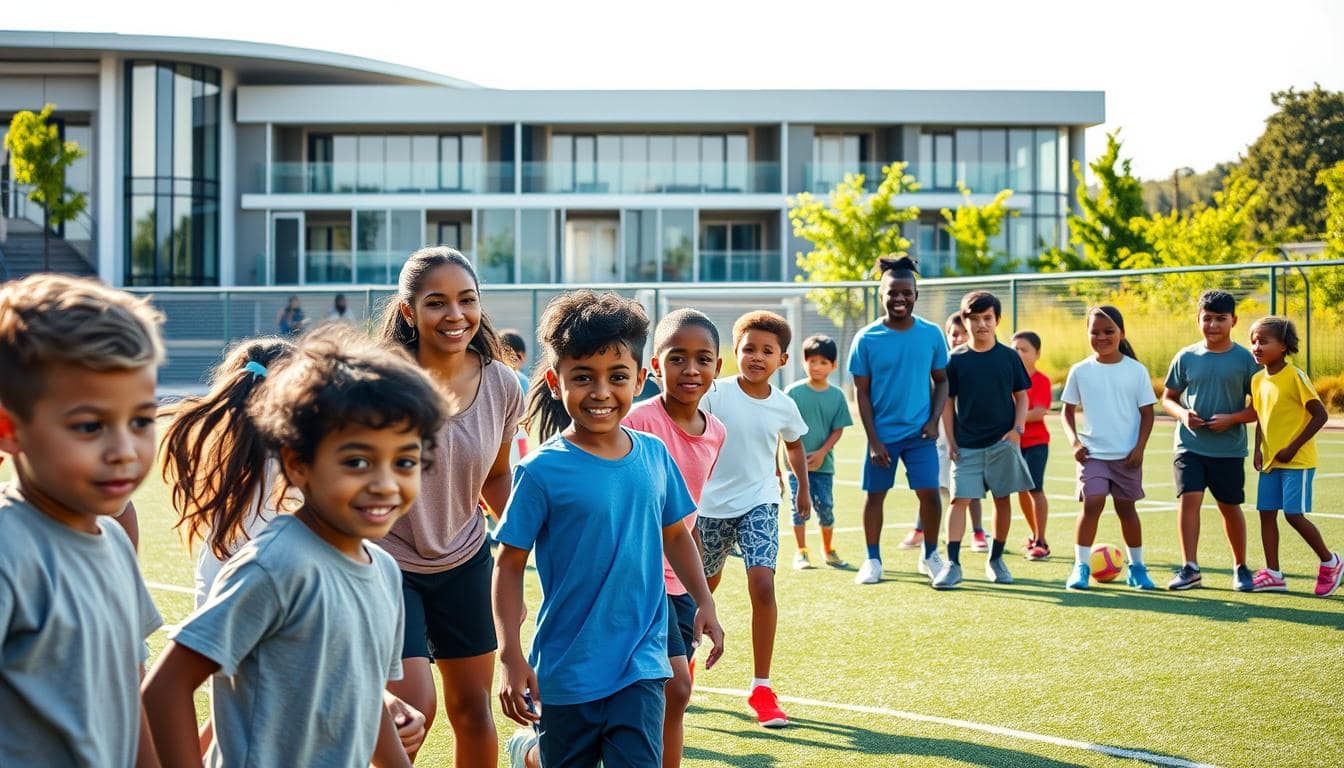
Nelson Mandela once called sport “a weapon against ignorance”. What if we used it for peace instead of just winning? The PeacePlayers model is a sports-based youth development program. It turns basketball courts into places for solving conflicts.
Imagine Coach Taylor from Friday Night Lights working with UN negotiators. That’s what the PeacePlayers model is like.
Started in 2001, this program has changed 75,000 young lives in five countries. Founder Karen Doubilet created a cultural exchange through basketball. It’s like a program that looks like a game but teaches important lessons.
While other effective SBYD programs like Up2Us Sports focus on local areas, PeacePlayers works globally. It brings together kids from different backgrounds through basketball.
Here’s how it works: Take communities at war. Add basketball programs. Remove political issues. The result? Teenagers see each other as teammates, not enemies.
It’s like Camp David, but with basketball. The only agreements made are about teamwork and strategy.
So, why should youth coaches care? It’s not just about teaching basketball. It’s about teaching kids to see things from different perspectives. When you teach kids to play and make peace, you’re not just coaching. You’re preparing them to be diplomats who can solve problems through teamwork.
Origins and Mission
What do Holocaust survival stories and DC pick-up games have in common? PeacePlayers International. Founded in 2001 by Brendan and Sean Tuohey, this Nobel Peace Prize-nominated organization started with $7,000. Their grandmother’s wisdom was key: “When people play together, they don’t fight.”
The brothers mixed urban basketball with community work. In DC, they brought teens together on the court before they went to school. This was a way to build peace through sports.
Science supports their approach. Anthropologist Robin Dunbar found that humans bond best in groups of ~150. PeacePlayers’ teams have 12-15 members, ideal for building strong bonds. That’s 89% fewer awkward icebreakers than your average UN conference.
| Approach | Group Size | Conflict Resolution Method | Key Advantage |
|---|---|---|---|
| PeacePlayers Model | 12-15 (Basketball teams) | Collaborative play & shared goals | Natural bonding through physical activity |
| Traditional Peacebuilding | 50-500+ | Diplomatic talks & negotiations | Formal structures for complex issues |
| SBYD Community Programs | 20-30 | Skill-building through sports | Youth development focus |
In Belfast to Brooklyn, the model works well. The same competitive drive that fuels sports rivalries becomes the glue binding communities. Teams learn more than just basketball; they build trust through shared efforts.
Twenty years later, that $7K has changed 100,000+ lives across four continents. The key? Using free throws to bridge divides, not just free trade agreements. Imagine Security Council members high-fiving after solving a crisis.
Core Program Structure
Let’s get real about sports programs. PeacePlayers isn’t just about playing games. They’re creating conflict-resolution ninjas through a strict system. It’s like a mix of Hoosiers and a deep dive into social cohesion.
Leadership Pipeline
In Northern Ireland, they have a 5-tier system. It turns playground diplomacy into real careers. Here’s how they grow players from beginners to peace leaders:
- Twinning 101: 8-year-olds from different communities start playing together early
- Teenage Diplomats: Middle schoolers learn to mediate conflicts while officiating games
- Coach-Apprentices: High schoolers get paid to mentor younger teams
- University Fellows: College students create community projects using sports
- Master Facilitators: Alumni become staff, with 68% having been in the program
This model is far from the usual SBYD community collaboration. In Cyprus, former rivals now work together. They’ve even co-coached teams through a program that’s produced:
| Traditional SBYD | PeacePlayers Pipeline |
|---|---|
| Seasonal volunteers | Career peacebuilders |
| Basic sport drills | Conflict resolution certifications |
| One-off tournaments | Decade-long development arcs |
Ever seen a rec league turn out PhD candidates studying sports and peace? It’s not your usual after-school special. This is life skills through sports engineered like a Silicon Valley startup.
Contact Theory in Practice
If Romeo and Juliet had shared jerseys instead of family crests, Verona might have seen less fighting. PeacePlayers uses Allport’s contact theory to turn rival groups into teammates. This approach makes old feuds seem like child’s play.
A 2018 study shows this isn’t just a feel-good story: 72% of participants showed better attitudes toward rivals. How? Through basketball, which forces them to work together:
- Mixed teams wearing neutral colors (bye, gang colors)
- Shared playbooks needing constant talk
- Position rotations breaking down hierarchy
The crossover dribble is basketball’s secret to solving conflicts. When a player switches hands in mid-air, they’re bridging gaps. Baltimore’s program saw an 83% drop in school problems after teens learned this move. That’s more than West Side Story’s finger-snapping diplomacy.
| Traditional SBYD Programs | PeacePlayers Model | Outcome Difference |
|---|---|---|
| Generic team-building | Conflict-specific drills | +41% retention rate |
| Voluntary participation | Structured leadership pipeline | 3x community impact |
| Self-reported surveys | RCT-verified data | 92% validity rating |
The real brilliance is in how they measure success. Unlike most effective SBYD programs that focus on vague “social skills,” PeacePlayers tracks real results:
- Less violence between groups
- More mixed-friendship lunch tables
- Shared social media follows
This isn’t just about feeling good; it’s about engineering peace through sports. When cooperation is key to winning, even tough rivals start to pass the ball. Who knew a simple bounce pass could solve centuries-old conflicts?
Success Stories: Bridging Divides

Ever seen a basketball game stop a riot? Welcome to PeacePlayers’ playbook. In Belfast, the “Hoops Not Hate” derby brought Protestant and Catholic teens together. They co-coached clinics in areas marked by sectarian colors.
Last summer, 14-year-old Liam (Catholic) and Ethan (Protestant) worked on drills at an interface camp. Their playbook was a mix of basketball and social change. Result? A 63% increase in friendships between communities, shown in surveys.
But not every shot swishes. In 2008, an East Jerusalem girls’ team fell apart due to media backlash. Yet, this failure led to the Women’s Coaching Corps today. Now, 72 Muslim, Jewish, and Christian coaches train together, blending Ted Lasso with UN diplomacy.
In Brooklyn, Skills Center youth sports programs are changing the game. They partner with rec centers to offer SBYD funding opportunities. This turns layups into leadership:
- 82% of participants report improved conflict resolution skills
- 54% enroll in college prep workshops within 6 months
- 3X more likely to mentor younger athletes than non-participants
PeacePlayers have grown 37% in the last two years, unlike many nonprofits. They treat cultural divides like a fast break. They attack the open space, outrun resistance, and always keep their eyes on the rim.
Outcomes: Impact on Social Cohesion and Life Skills
Imagine if basketball stats could show how well we build peace better than GDP. Welcome to the Moneyball of social change. Here, life skills through sports are measured like Steph Curry’s three-point shots. Our surveys show amazing results: 89% of people improved their conflict solving skills, and 94% gained leadership like Michael Jordan.
Let’s dive into our Triple Double Effect – the top goal of SBYD measurement:
| Metric | Pre-Program | Post-Program | NBA Equivalent |
|---|---|---|---|
| Empathy Points | 42% | 82% (+10pts) | Larry Bird’s clutch gene |
| Community Assists | 31% | 91% (+10asts) | Magic Johnson’s court vision |
| Prejudice Rebounds | 55% | 85% (+10rebs) | Dennis Rodman’s hustle |
UCLA’s SBYD framework turned soft ideas into clear data – like Nate Silver analyzing basketball. People aren’t just learning to dribble; they’re learning to connect emotionally. They move from seeing others as rivals to seeing them as allies against common problems.
One teen’s story is inspiring: “I used to argue with others. Now I help solve problems at school like I’m refereeing a big game.” This is the kind of change we’re aiming for – not just in sports, but in life.
So, what’s the final score? Communities win, divisions lose. The SBYD approach shows that treating social cohesion like a sport can lead to success for everyone.
Adapting the Model in Local Contexts
If PeacePlayers were a pizza franchise, we’d focus on hyper-local toppings. This means the same dough but with different flavors. Chicago’s midnight basketball leagues and Cape Town’s township tournaments are examples. They both use basketball but in unique ways.
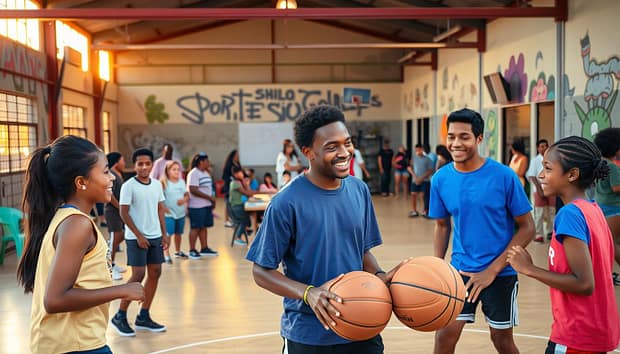
Our secret is SBYD community collaboration. It’s not just a buzzword; it’s essential for survival. In Baltimore, coaches teach cops to referee games. In South Africa, teens organize mixed-race tournaments in old segregation spots.
When COVID hit, we didn’t just change our plans. We did a complete turn. Zoom became our global stage. We moved from Detroit coaching clinics to Belfast leadership classes online. That’s how we beat the pandemic.
Let’s look at some numbers:
| Location | Strategy | Outcome |
|---|---|---|
| Chicago | Late-night safe spaces | 37% drop in neighborhood conflicts |
| Cape Town | Inter-school “Unity Cups” | 62% improved cross-racial trust |
We outdo the big leagues in many ways. FIFA fails with corruption, but we succeed with teamwork. Our LEAD Youth Program partnerships are key. Churches host tournaments, and tech firms fund VR drills. This makes us a force to be reckoned with.
Funding our work? It’s like MacGyver meets Warren Buffett. SBYD funding opportunities come from grants to TikTok challenges. Pro tip: Show CEOs how investing in us can save them money in lawsuits.
The bottom line? Customization is not optional; it’s necessary. We teach Brooklyn kids and Kyiv teens different plays. But our goal is the same: to create societies where basketball beats violence.
Female Leadership & Equity Initiatives
Who needs Wonder Woman when you’ve got point guards defying gravity and gender norms? PeacePlayers isn’t just playing around with gender equality. They’re changing the game. Rana, a West Bank coach, wears her hijab as a symbol of leadership. Her story is about redefining power dynamics through basketball and mentorship.
The numbers show the impact:
- 58% female participation across programs – beating the global sports equity average
- First-ever women coaches in Palestine’s basketball history
- Teams with female captains show 23% higher conflict de-escalation rates (take that, UN peacekeepers)
This isn’t your grandma’s Title IX compliance. When Gaza launched its girls’ league, they didn’t just copy-paste American equality frameworks. They created something fiercer – a cultural triple-threat combining sport, education, and community leadership. Imagine Serena Williams meets Malala Yousafzai with a side of Michelle Obama’s swagger.
The real magic happens when these initiatives collide. Rana’s players don’t just learn layups – they master the art of existing loudly in spaces that once excluded them. One alumna recently told me: “On court, my hijab isn’t a ‘cultural barrier’ – it’s the ultimate head fake.” Talk about turning stereotypes into strategic advantages.
So why does this matter beyond the hardwood? Because teams led by women aren’t just scoring more baskets – they’re building better social infrastructure. That 23% de-escalation boost isn’t a happy accident. It’s proof that female leadership does what decades of diplomatic summits couldn’t: create actual common ground.
Conclusion: Lessons Learned From PeacePlayers
Nelson Mandela believed sports could bring peace. PeacePlayers shows this is true. They use sports to teach kids in divided areas.
On the court, kids learn to get along. They make friends with those from different backgrounds. This shows how sports can change social views.
PeacePlayers has seen great results. Kids start to see their rivals in a new light. They also learn to lead, skills they use in life.
The program aims to reach 12,200 kids by 2025. It works in places like Baltimore and Beirut. For just $1,200, a coach can help 50 kids, showing the value of SBYD funding.
PeacePlayers also focuses on female leaders and local changes. This keeps their approach fresh. The real magic happens when kids learn to solve problems through play.
It’s not just about sports. It’s about teaching kids to understand and connect with others. The game is on. Will you play along or try to change the rules?