
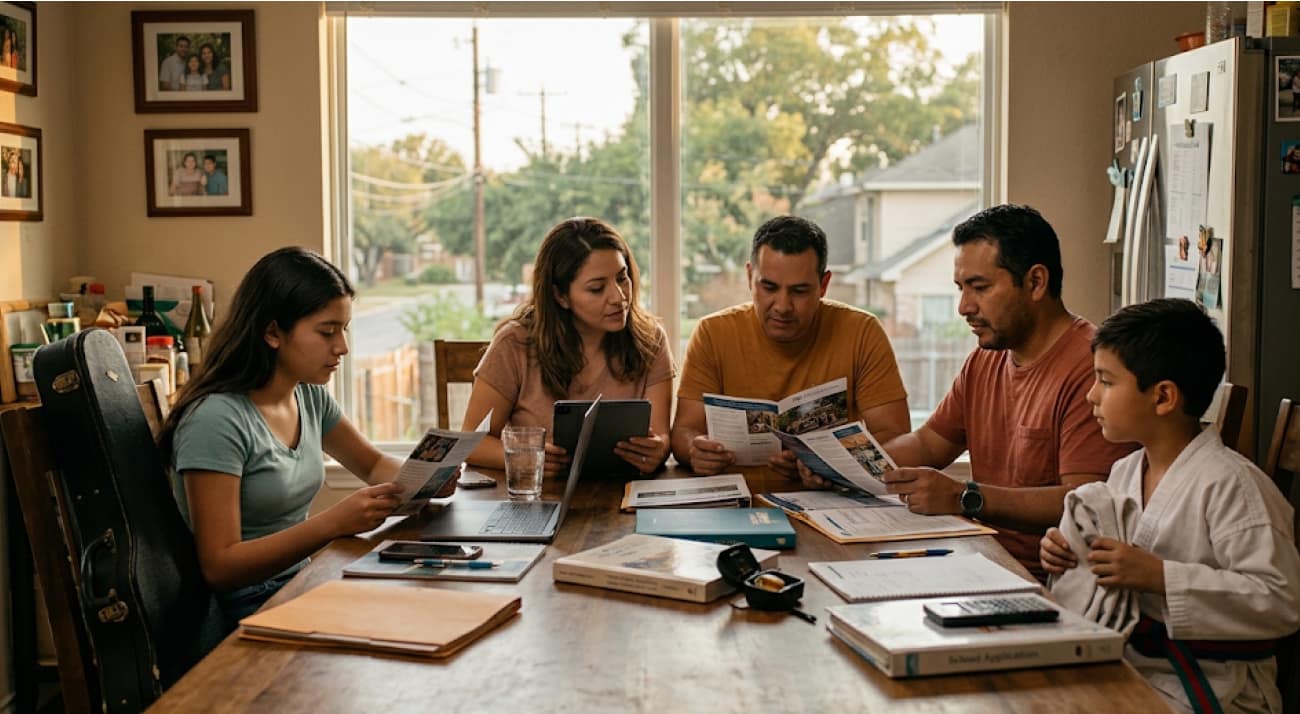
Texas’ first statewide school voucher program is moving from a political promise into a daily reality for families, and the spending choices are revealing how differently parents define education. Under the new Texas Education Freedom Accounts program, families can use state funds for private-school tuition, tutoring, curriculum, computers and other approved educational services. But the marketplace has expanded well beyond traditional classroom expenses, with participating families able to use eligible funds for activities such as taekwondo, bilingual instruction, pilot training materials and musical instruments.
The scale of the program is already substantial. More than 274,000 applications were submitted for the 2026–27 school year, and the state has made more than 100,000 awards. Most private-school students receive $10,474, while eligible students with disabilities can receive up to $30,000. Homeschool students receive $2,000. The official Texas Education Freedom Accounts program says participating families can use the funds through an approved marketplace of schools, providers and vendors.
For families such as the McDaniels in San Antonio, the program has changed where their children attend school. For others, it is changing what they can afford to add to an education outside traditional tuition.
Texas’ Voucher Program Has Reached More Than 100,000 Students
The Education Freedom Accounts program was created by the Texas Legislature and launched for the 2026–27 school year. The state received more than 274,000 applications between February and March, creating demand well above the number of initial awards.
According to the Texas program’s latest figures, more than 100,000 awards have been made. The state prioritized students with disabilities and families with incomes at or below 200% of the federal poverty level before distributing additional awards through a lottery.
That means the first year is already producing a large group of Texas students whose education spending can look very different from that of children enrolled exclusively in traditional public schools.
The program is administered through the Texas Comptroller’s office, with Odyssey serving as the certified educational assistance organization managing the accounts. Parents receive an account that can be used for approved educational expenses through the program’s marketplace.
The Texas Comptroller and official TEFA guidance establish the basic spending rules, while the marketplace determines which participating providers and products families can access.
For Youth Rise Texas readers, the significant question is what those dollars actually mean for a student’s day-to-day education.
San Antonio Families Are Already Using Vouchers In Different Ways
San Antonio provides one of the clearest examples of how quickly the program is changing education choices.
As of early August, more than 8,400 children in Bexar County were using voucher funding, according to the San Antonio Express-News. That number could increase as money is redistributed to families who were originally placed on the waiting list after other recipients declined awards.
The marketplace has also grown. More than 2,100 vendors and 2,700 schools were listed as accepting the public funding in October.
That range matters because the voucher is no longer simply a mechanism for moving a child from a public school into a private school. A family can potentially combine traditional schooling with additional educational services and materials.
The approved marketplace includes categories such as tutoring, therapy, curriculum, technology, transportation and educational classes. The official TEFA family guidance says approved expenses include private-school tuition, textbooks, required uniforms, academic assessments, tutoring, transportation and certain educational therapies.
The result is an education marketplace that looks considerably broader than the word “voucher” might suggest.
Taekwondo, Pilot Training And Electric Guitars Are Part Of The Marketplace
The unusual spending possibilities have become one of the most visible aspects of the program.
Recent reporting found that participating families can use eligible funds for bilingual classes, taekwondo lessons, pilot training books and electric guitars, provided the purchases meet program requirements and are made through approved providers.

The marketplace also includes enrichment categories such as music, dance, martial arts, coding, swimming, science and STEM, sports and physical education, art, cooking, career preparation and outdoor activities.
This changes the traditional idea of what public education funding can cover.
A student who attends a participating private school could potentially use remaining funds for approved educational materials or services after tuition is covered. A homeschool family can use its account for approved curriculum and other eligible expenses.
The official TEFA provider and vendor marketplace explains that vendors can offer tutoring, therapy, teaching services, courses, instructional materials and technology products. Applications are accepted on a rolling basis, meaning the marketplace can continue expanding after the program’s initial launch.
For students, that could mean access to activities that were previously outside a family’s education budget.
For parents, it creates a new responsibility: deciding which purchases actually provide educational value.
The Basic Award Is $10,474, But Private School Costs Can Be Higher
The headline figure for most private-school students is $10,474 for the 2026–27 school year.
That amount represents 85% of the statewide average amount of state and local funding per public-school student, according to the Texas Education Freedom Accounts program.
Students with qualifying disabilities and an eligible Individualized Education Program can receive substantially more, with awards reaching $30,000 depending on the student’s needs.
Homeschool students receive $2,000.
Those figures can sound substantial, but they do not automatically make every private school affordable.
The San Antonio family of Nichole and Trevor McDaniel illustrates the difference between receiving a voucher and having all education expenses covered. Four of their six school-aged children entered private schools this year, with two attending Cornerstone Christian Schools.
Cornerstone’s tuition and discounts left the family with an additional payment of hundreds of dollars beyond the voucher allocation. The family also faced application fees, uniforms, art supplies, books and other costs.
The San Antonio Express-News reported that the family paid about $1,000 beyond the state funding for two children at Cornerstone, while other expenses added to the overall cost.
The experience shows why a voucher’s face value cannot be treated as the same thing as a fully funded private education.
Families Still Have To Pay Attention To School Fees
Private schools operate under different pricing structures, and the state funding does not automatically eliminate every expense associated with attendance.
For the McDaniel family, Cornerstone charged an application fee of $125 per child. Uniforms cost roughly $600, while art supplies and lunches added additional expenses.
Cornerstone’s assistant head of schools, Andrea Freeman, said sports and band generally involved minimal additional fees, while some optional activities such as robotics could cost more.
Those expenses are important for parents considering school choice because a family’s actual cost can depend on more than tuition.
The same issue applies to admission. A school appearing in the TEFA marketplace does not mean a student is automatically accepted. Schools can require academic records, testing, application fees and other admissions steps before enrollment is confirmed.
That distinction creates a gap between having an education account and having access to a particular school.
A family can receive public funding and still discover that its preferred school costs more than the award or has limited capacity.
Students With Disabilities Face A Different Set Of Challenges
The program provides its largest potential awards to students with disabilities, but recent experiences show that additional funding does not necessarily create additional school choices.
Gavin Richardson, a 9-year-old San Antonio student with autism and ADHD, was rejected by two in-person private schools his family considered. His parents ultimately enrolled him in an online program rather than risk losing his voucher funding.
The situation highlights a central issue with private-school choice: a school must have both the willingness and capacity to serve a student’s needs.
Private schools generally are not subject to the same federal special-education obligations as public schools under the Individuals with Disabilities Education Act. That can affect the services available to students who require individualized accommodations.
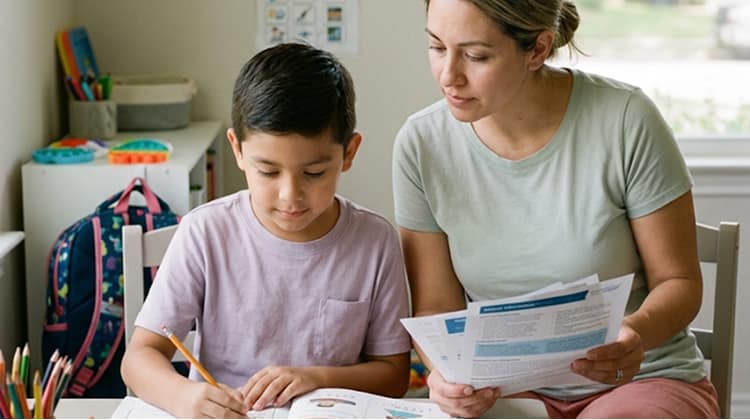
The Texas program specifically allows qualifying students with disabilities to receive up to $30,000. Yet Gavin’s experience shows that a larger account cannot by itself create a school placement where an appropriate program does not exist.
That could become one of the most closely watched issues as Texas evaluates the program.
Voucher Funding Can Also Create Timing Problems
Another challenge emerged when one of the McDaniel children’s early-learning providers changed ownership.
Four-year-old Isaiah McDaniel initially attended Wiggles Early Learning Academy. After the business changed ownership and became Smart Ducklings Daycare, the new provider was no longer approved to accept voucher funds.
His parents then had to work through the process of getting the funding returned and finding another eligible provider.
The family eventually enrolled Isaiah at NextGen Learning Center and began paying $235 per week while waiting for the funding situation to be resolved.
The episode demonstrates why timing matters under the program. Private-school recipients receive their funds in installments rather than one annual payment. According to the official TEFA funding schedule, private-school students receive portions of their awards during the year, with another installment scheduled for October 1 and the remaining 50% scheduled for February 1.
A change in school status can therefore have immediate consequences for a family.
The Marketplace Gives Parents More Choices, But More Choices Require More Research
Texas officials and school-choice advocates have emphasized the flexibility of the new system.
Anita Scott, policy director for the Texas Homeschool Coalition, told the San Antonio Express-News that the large number of applications showed strong demand from families seeking different educational environments.
That demand is also reflected in the size of the provider marketplace.
The official TEFA finder now includes categories ranging from private schools and tutoring to music, martial arts, coding, STEM, sports, art and career preparation. Providers continue to be added as their applications are reviewed.
For parents, however, a larger marketplace can also make the decision more complicated.
Families need to determine whether a provider fits their child’s academic needs, whether a school has space, whether additional fees apply and whether the expense qualifies under TEFA rules.
The state has placed restrictions on some purchases. For example, computer hardware and software cannot exceed 10% of a student’s annual award. Families also cannot use the accounts to pay themselves or other family members.
That means the program offers flexibility within a defined set of rules rather than unrestricted educational spending.
Texas Is Already Preparing For A Much Larger Voucher Debate
The first-year experience is likely to influence the next stage of the program.
Comptroller Don Huffines, who oversees the program, has called for substantially more funding. He has asked lawmakers to consider increasing the program’s funding from $1 billion to as much as $4.4 billion for the next two-year budget cycle.
That proposal could become a major issue during the 2027 Texas legislative session.
The debate will likely include competing questions about demand, private-school capacity, public-school enrollment, program costs and student outcomes.
More than 274,000 applications demonstrate that many Texas families were interested in receiving the funding. More than 100,000 awards demonstrate that the program is already operating at a large scale.
The next question is whether the state wants the program to remain roughly at its current size or expand substantially.
The Real Test Is What Students Get From The Money
The most revealing part of Texas’ voucher experiment may be what happens after families receive the money.
For some students, the account is paying private-school tuition that their parents previously could not afford. For others, it can provide tutoring, curriculum, technology, therapy or enrichment activities.
For the McDaniel family, the program opened the door to Cornerstone Christian Schools while also exposing the limits of a fixed award when tuition and other costs exceed the available funding.
For Gavin Richardson, a $30,000-level disability award did not automatically produce a place at an in-person private school that could meet his needs.
Those different experiences illustrate why the success of the program cannot be measured solely by the number of accounts created or dollars distributed.
The more important questions concern students: Are they finding schools that meet their needs? Are families able to afford the remaining costs? Are students with disabilities finding appropriate services? Are educational vendors providing meaningful academic opportunities?
Texas has now created a system in which public education dollars can follow students into a much broader marketplace of private schools, online programs, tutoring services and enrichment providers.
As families begin using those accounts in real life, the answers to those questions will determine whether the state’s school-choice experiment becomes a lasting part of how Texas educates its children.
For young Texans, the impact is already visible. Education spending is no longer confined to a school building or a traditional classroom. A martial arts lesson, a guitar, a tutoring session or a private-school seat can now be part of the same publicly funded education account—and families are deciding which combination gives their children the best opportunity to learn.