
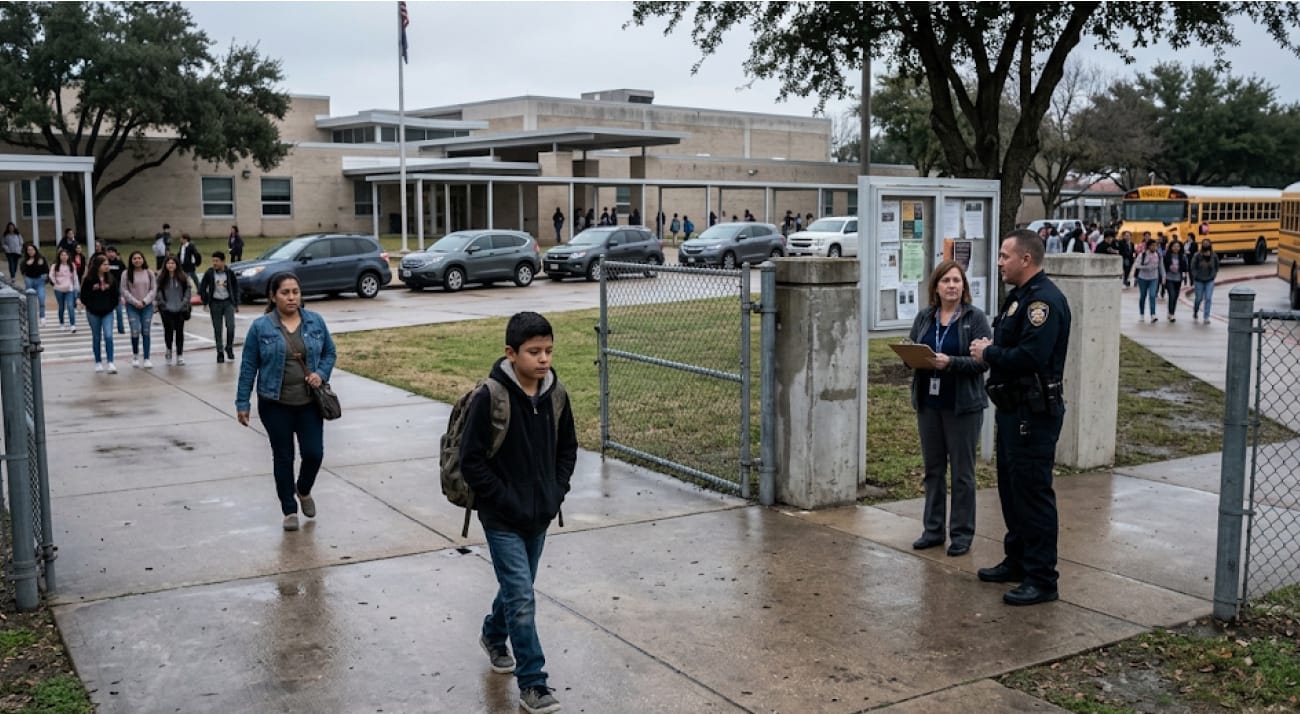
Texas schools have referred children ages 10 to 13 into the juvenile justice system more than 47,000 times since the 2014-15 school year, according to a new analysis of Texas Juvenile Justice Department data by the New York Times and the San Antonio Express-News. About 4,800 referrals involving students in that age group occurred during the 2024-25 academic year alone, roughly one-third higher than a decade earlier.
The findings, published October 15, 2026, raise difficult questions about how Texas schools respond when younger students disrupt classrooms, threaten others, fight with classmates, or refuse instructions. The analysis found that many referrals involved behavior that did not cause serious physical harm, including disobedience, verbal threats and cannabis vaping.
The issue comes after years of expanded school policing in Texas. Following the 2022 Robb Elementary School shooting in Uvalde, school districts increased their use of police and other security measures. Texas now has nearly 400 school district police departments, according to the investigation, while state law requires police coverage at public schools.
The challenge for educators is finding a balance between keeping campuses safe and ensuring that ordinary childhood behavior does not become a pathway into the justice system.
The Number Of Referrals Has Increased Among Younger Students
The statewide analysis examined referrals of students between ages 10 and 13 after incidents at school. Under Texas law, 10 is the youngest age at which a child can be referred to the juvenile justice system, while students who are 17 or older are generally treated as adults.

The researchers found more than 47,000 referrals involving children in this age group since 2014. The 2024-25 school year accounted for about 4,800 referrals, representing a roughly 33% increase compared with the number recorded a decade earlier.
That growth is particularly significant because referrals among younger students increased faster than referrals among older students. The increase also outpaced the growth of the student population.
The numbers do not mean that every child was sent to detention or committed to a state facility. A referral can lead to different outcomes, including community service, counseling, court supervision, or other interventions. Some cases can also be dismissed.
The Texas Juvenile Justice Department’s data and statistics show how much larger the overall juvenile justice system is. In fiscal year 2025, TJJD reported 48,452 youth referrals statewide across all referral sources and ages.
The distinction matters because a referral is an entry point into the system, not the same thing as a commitment to a juvenile facility.
Many School Referrals Involve Behavior Schools Once Handled Internally
The recent investigation found that many of the referrals involving 10- to 13-year-olds stemmed from behavior that historically could have been addressed by teachers, principals, counselors, or school administrators.
Examples included threats, classroom disruptions, conflicts with other students, and incidents involving vaping.
In Kyle, an 11-year-old was referred after bumping into a school counselor. In Victoria, a 10-year-old reported seeing someone on campus with a weapon but later admitted that he had made up the story. In El Paso, a 10-year-old kicked an assistant principal after his cellphone was taken away.
These incidents are different from serious violent offenses, and the circumstances surrounding each case matter. Schools still have a responsibility to respond when students pose genuine risks to classmates or employees.
The concern is what happens when police intervention becomes the default response to behavior that could be addressed through school discipline or counseling.
San Antonio juvenile judge William Shaw told the investigative reporters that some cases reaching his court could have been handled by a school principal. He pointed to pushing and fighting among young people as examples of behavior that can occur among students without necessarily requiring an arrest.
That distinction is especially important for younger students who are still developing emotional regulation, communication skills, and the ability to understand the consequences of their actions.
Texas School Policing Expanded After Uvalde
School safety changed significantly across Texas after the May 24, 2022 shooting at Robb Elementary School in Uvalde.
Texas invested billions of dollars in school security, and the state expanded the presence of law enforcement on campuses. The goal was straightforward: protect students and employees from serious threats.
But the expansion also changed the way some schools handle discipline.
The October 15 investigation builds on earlier reporting showing that Texas school officers have sometimes used physical force against students during disciplinary encounters. A May 2026 investigation by the San Antonio Express-News and New York Times documented officers grabbing, tackling, pepper-spraying, and using Tasers on students in incidents across the state.
That earlier investigation found that Texas has nearly 400 school district police departments and approximately 11,000 officers trained to work in schools.
The presence of officers can provide an important response to genuine emergencies. The challenge is defining the point at which a disciplinary matter becomes a law-enforcement matter.
Texas law says school officers should stay out of “routine student discipline,” but the recent investigation noted that the law does not clearly define routine discipline or establish specific consequences for violations.
That creates room for significant differences between districts.
Black Students Are Referred At Higher Rates
The statewide data also show a racial disparity in referrals involving younger students.
The October 15 analysis found that Black children ages 10 to 13 were referred to the juvenile justice system at about twice the rate of white and Hispanic children.
The disparity adds another dimension to the debate because school discipline already produces different outcomes among student groups in many parts of the country.
The numbers do not establish that every individual referral was inappropriate. They do, however, raise questions about whether similar student behavior is being treated differently depending on the student’s race, school, district, or circumstances.
For school leaders, reviewing referral data can help identify patterns that may otherwise remain invisible.
Districts can examine who is being referred, what behavior triggered the referral, whether police were called before other interventions were attempted, and what happened after the referral.
That type of review can help schools determine whether their disciplinary systems are producing the outcomes they want.
Corpus Christi Shows How Local Policies Can Change Referral Numbers
Corpus Christi provides one example of how local approaches can affect the number of young students entering the juvenile justice system.
According to the recent analysis, referrals of children 13 and younger in Corpus Christi increased to a record 171 during the 2022-23 school year. That number was higher than the number recorded in Houston and Dallas, even though those districts have more than four times as many students.
Kirby Warnke, chief of the Corpus Christi school district police department and president of the Texas School District Police Chiefs’ Association, has defended the use of juvenile referrals as a way for young people to learn from mistakes.
The situation illustrates why statewide numbers need to be examined at the local level. A district’s referral rate can reflect differences in student population, staffing, reporting practices, campus safety concerns, and disciplinary philosophy.
Two districts can face similar student behavior but respond very differently.
That means a statewide increase cannot automatically be attributed to a single cause. The available evidence instead points to a combination of increased policing, changing approaches to discipline, school safety concerns, and local district policies.
Wichita Falls Shows That Referral Numbers Can Fall
Wichita Falls offers a contrasting example.
Superintendent Donny Lee said that when he arrived in 2022, the number of arrests in the district had been “staggering.” He described a system in which elementary students were being charged with offenses and said officers sometimes appeared to “arrest kids first and ask questions later.”
Lee hired a new police chief and replaced most of the officers in the district’s police department. School leaders also began regularly reviewing law-enforcement data.
The result was a significant decline in referrals.
For students 13 and younger, the annual number of referrals fell by more than half, from about 100 to 44, according to the analysis.
The district did not eliminate discipline. Students who broke school rules could still receive in-school suspensions, community service, and counseling.
The difference was that school officials placed greater emphasis on educational and behavioral interventions before resorting to law enforcement.
Lee summarized the philosophy by saying that the district was in the education business rather than the crime-and-punishment business.
Wichita Falls therefore gives other Texas districts something concrete to examine: whether schools can maintain order while reducing the number of students entering the juvenile justice system.
The Consequences Can Extend Beyond The Original Incident
A referral can become much more significant than the behavior that caused it.
One case highlighted in the October 15 investigation involved an El Paso 10-year-old who kicked an assistant principal after his cellphone was taken away.
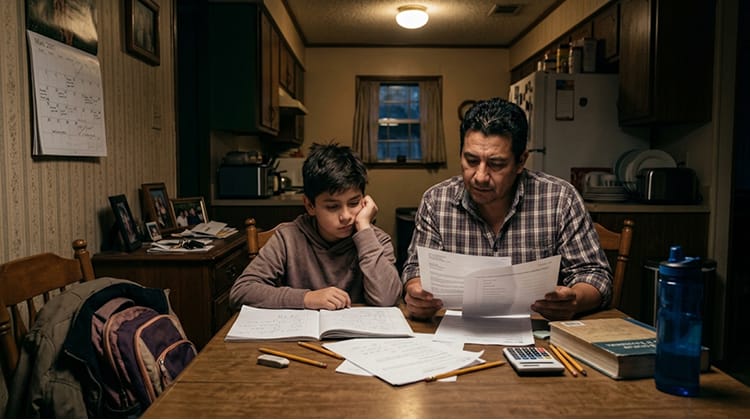
The case was eventually dropped, but his mother, Grace Lee-Vazquez, said the family accumulated thousands of dollars in legal bills. She also reported that her son became anxious about school and that his grades fell.
The family eventually moved from El Paso to Arizona.
The experience illustrates why the impact of a juvenile referral cannot be measured solely by whether a case ends with a conviction or court supervision.
A child may miss class while being processed, lose trust in school officials, experience anxiety, or struggle academically after an encounter with police. Parents may also face legal expenses, transportation problems, missed work, or other costs.
The Texas Juvenile Justice Department’s 2024 probation report shows that the broader juvenile probation system handles tens of thousands of referrals each year. In calendar year 2024, juvenile probation departments received 50,472 referrals from all sources, with law enforcement accounting for 41,175, or 81.6%.
The school-referral issue therefore exists within a much larger system.
Safety And Student Support Do Not Have To Be Opposites
There are legitimate reasons for school officials to involve law enforcement.
The October 15 investigation includes cases involving serious threats and weapons. In one example, an 11-year-old at Harris Middle School in San Antonio’s North East Independent School District was charged after officials found a gun in his backpack.
School leaders cannot ignore credible threats simply because the student is young.
The more difficult cases involve behavior that presents a disciplinary challenge but does not create an immediate threat of serious harm.
Schools need clear procedures for distinguishing between those situations.
That can include behavioral support teams, counselors, restorative practices, parent conferences, in-school consequences, mental health services, and other interventions that keep students connected to education.
The goal is not to remove accountability. Young people need boundaries and consequences. The question is whether the consequence helps the student return to productive learning or instead pushes the student farther away from school.
For Youth Rise Texas, that distinction is central to the broader conversation about Texas youth development.
Districts Have More Data To Examine Than Ever
One opportunity created by the recent reporting is greater attention to school-level discipline data.
District administrators can examine referral patterns by age, race, campus, offense category, and outcome. They can also compare referrals before and after changes to school police staffing or disciplinary policies.
That information can reveal whether a district is relying heavily on police for incidents that could be addressed through other means.
School boards can also ask whether police officers are spending their time on the responsibilities that justify their presence on campus. Officers may be needed to respond to serious threats, secure campuses, investigate crimes, and support emergency situations. Routine classroom management is a different responsibility.
Parents have a role as well. Families can ask schools what happens when a student is accused of misconduct, when police are called, how parents are notified, and what non-police interventions are available.
Those questions are especially relevant for families with younger children, students with disabilities, and students who have behavioral or emotional support needs.
Texas Faces A Difficult Discipline Question
The new statewide analysis does not suggest that every school referral is unnecessary or that police should be removed from Texas campuses.
Instead, it exposes a difficult question about where school discipline ends and juvenile justice begins.
More than 47,000 referrals involving children ages 10 to 13 over roughly a decade represent a substantial number of encounters between young students and the justice system. About 4,800 referrals in the 2024-25 school year show that the trend remains significant.
At the same time, the experience of Wichita Falls demonstrates that referral numbers can fall when school leaders change their approach. Corpus Christi demonstrates how dramatically local referral rates can differ. The racial disparities in statewide data raise additional questions about consistency and equity.
Texas schools now have an opportunity to examine those differences closely.
The strongest school-safety strategy may be one that protects students from genuine threats while giving younger children a meaningful opportunity to learn from mistakes without turning every difficult school day into a justice-system encounter. For a state that has invested heavily in campus security since Uvalde, determining how to maintain that safety while keeping students connected to education will remain an important test for school leaders, families, and policymakers.