
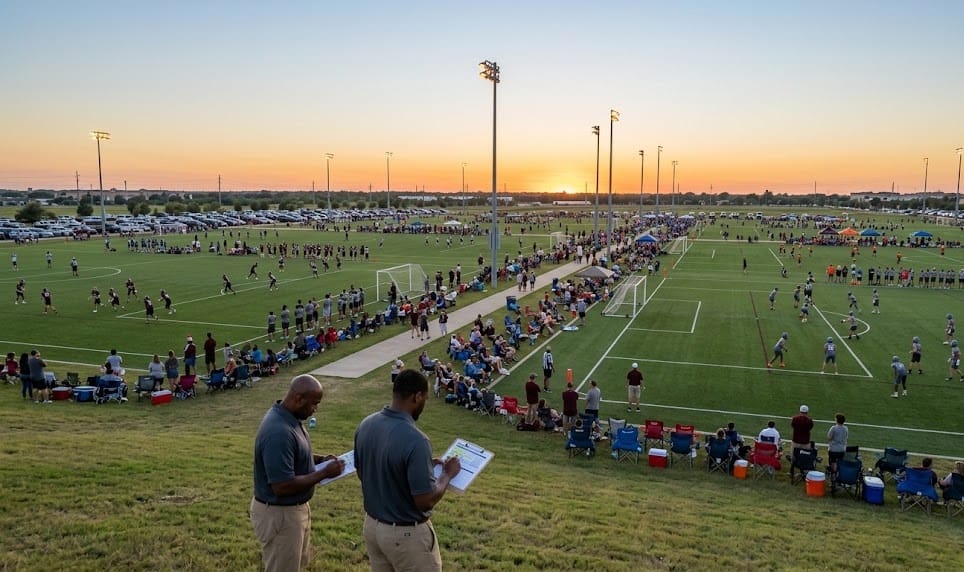
The Texas 7-on-7 State Tournament is more than a summer football stop in College Station. For Texas youth athletes, coaches, parents, and school communities, the event creates a concentrated development environment where passing-game timing, communication, travel routines, leadership, and competitive confidence all get tested before the fall season begins. The 2026 tournament brings that pressure back to Veterans Park and Athletic Complex, giving College Station a familiar role as one of the state’s most important summer football gathering points.
Dave Campbell’s Texas Football lists the 2026 State Tournament dates as June 25-26 for Divisions II and III and June 26-27 for Division I, with games at Veterans Park and Athletic Complex at 3101 Harvey Road in College Station. That schedule matters because it gives teams from across Texas a shared destination, a fixed competitive calendar, and a reason to treat summer preparation as something larger than informal workouts.
Why College Station Gives The Tournament A Strong Development Setting
College Station works for this tournament because it sits at the intersection of Texas football culture, family travel, and multi-field event operations. Veterans Park and Athletic Complex is built for heavy tournament use, with Visit College Station describing the venue as a local, regional, and national tournament site with 13 multi-purpose fields, including four synthetic fields, plus softball fields and event amenities. For a 7-on-7 tournament, that kind of field density matters because the format depends on short games, fast turnover, and enough space to keep several divisions moving at once.
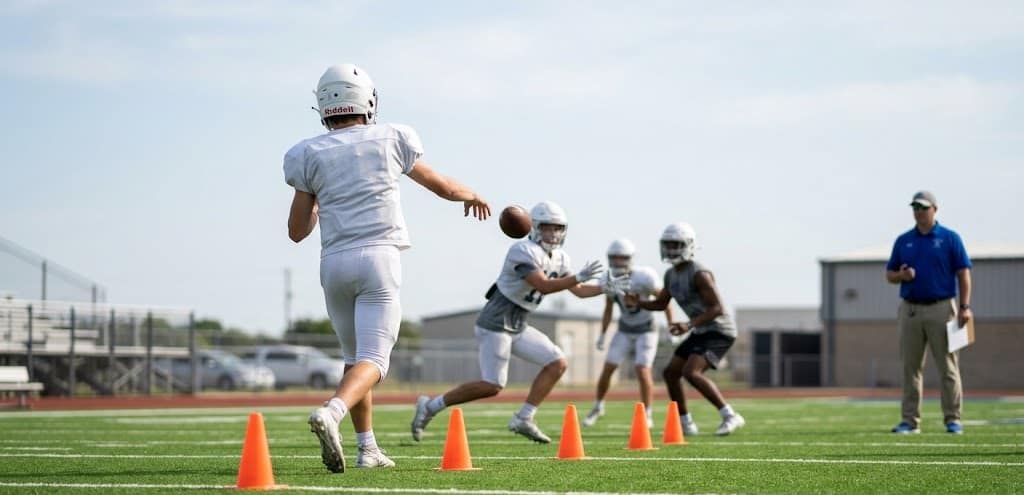
The location also gives families and coaches a practical sports weekend rather than a one-field showcase. Teams are not just arriving to play one opponent. They are entering a tournament rhythm that includes registration, pool assignments, field maps, travel planning, hydration routines, and recovery between games. Those details can shape how young athletes learn to manage the environment around competition.
For youth development, that setting has value beyond the scoreboard. A quarterback has to communicate clearly across multiple games. Receivers have to adjust routes against unfamiliar defenders. Defensive backs have to read concepts without the full structure of padded football. Coaches have to keep groups organized, calm, and focused across a long summer day. Parents have to support the team without turning a developmental event into a pressure trap.
That is why the tournament fits the broader mission of youth sports parent engagement. A well-run youth football weekend asks adults to create the right environment around athletes: supportive, organized, and competitive without losing sight of growth.
How The 2026 Format Rewards Programs That Prepare Early
The state tournament is not an open invitation. Dave Campbell’s Texas Football notes that teams must qualify through State Qualifying Tournaments, and the official 7-on-7 rules explain that qualifier numbers depend on the size of the SQT field. That structure changes the meaning of the event. It rewards programs that organize early, travel well, and build enough passing-game rhythm to earn a place in College Station before the state tournament begins.
That qualification path is important for youth development because it creates a season inside the offseason. Players are learning to prepare for a target date, adjust after losses, and handle the expectations that come with representing their school or local community. For many athletes, that is one of the first times summer football begins to feel like a structured competitive pathway rather than a casual extension of spring practice.
The 2026 Division I field also shows how broad the tournament’s reach is. Recent reporting from Laredo Morning Times said LBJ, Nixon, and United are set to compete in Division I at the June 26-27 event, with Nixon making its first state appearance since 2006. The same report placed Nixon in a pool with Allen, Cypress Fairbanks, and Austin Westlake, while LBJ and United drew their own pool opponents. Those examples show how the state tournament can put local programs next to some of Texas’ most recognized football schools.
That mix is valuable. A program making a rare state appearance can measure its communication, spacing, and decision-making against teams with deeper tournament experience. A more established program can test whether its summer habits are sharp enough under a compressed schedule. The result is a development setting where young athletes see where they stand without turning the weekend into a full-contact fall preview.
Why 7-On-7 Builds Skills That Carry Into The Fall
Seven-on-seven football is not the same as Friday night football. There is no offensive line, no pass rush in the traditional sense, no run game, and no tackling. That limitation is exactly why the format can be useful. It isolates specific skills that are sometimes harder to evaluate during full-team periods: timing, route detail, spacing, coverage recognition, ball placement, hands, defensive leverage, and communication.
For quarterbacks, the format puts a premium on processing speed. They have to identify coverage, trust route timing, avoid late throws, and reset mentally after mistakes. For receivers, it turns every snap into a test of release technique, route discipline, and body control at the catch point. For defensive backs and linebackers, the tournament demands eye discipline, communication, and the ability to defend space without relying on physical contact.
The value is even clearer for coaches. A summer tournament can reveal whether players understand concepts or are simply following instructions. When a team faces unfamiliar opponents in quick succession, coaches learn which athletes can communicate adjustments on the field, which groups stay composed, and which details need more attention before August practices sharpen.
| Development Area | Why It Matters In 7-On-7 | Fall Football Carryover |
|---|---|---|
| Quarterback Timing | Throws must arrive before routes fully uncover | Helps passing-game rhythm in team offense |
| Receiver Detail | Route spacing and leverage decide separation | Improves third-down and red-zone execution |
| Defensive Communication | Coverage calls must be clear before the snap | Supports secondary organization in live games |
| Coach-Player Trust | Adjustments happen quickly between short games | Builds sideline discipline during the season |
| Parent Support | Travel, hydration, and schedule management matter | Creates healthier habits around competition |
The tournament also teaches young athletes that preparation is not only physical. Hydration, sleep, food, body language, and emotional control all become part of the weekend. In Texas summer heat, those habits matter. A player who can stay locked in during a long tournament day is learning a form of competitive maturity that can help once the fall schedule arrives.
How Families And Communities Feel The Impact
A tournament at this scale moves more than football players. Families book rooms, plan meals, coordinate rides, manage younger siblings, and build their weekend around game times. Coaches work through registration materials, pool assignments, field locations, and communication with parents. Local businesses feel the foot traffic that follows youth sports travel. College Station becomes a temporary meeting point for communities that may be hundreds of miles apart.
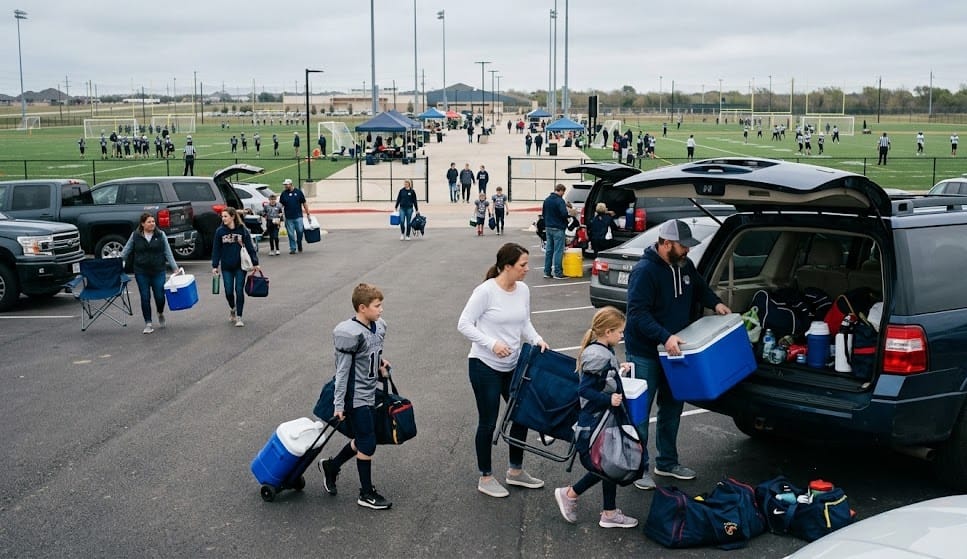
That is why the tournament should be read as a community sports event, not just a football bracket. A school from Laredo, East Texas, Central Texas, or the Dallas-Fort Worth area brings its own identity to the field. Parents wear local colors. Players compete for their teammates and school name. Coaches use the weekend to build standards. Younger athletes watching from the sideline can see a pathway they may want to follow.
The online conversation around Texas football also extends the event’s reach. Families and fans often use message boards, team pages, and community forums to follow summer football, compare schedules, and discuss what programs are building before the fall. That is where broader football fan discussion forums can fit naturally into the sports conversation, as long as the main focus stays on teams, development, and community impact rather than wagering.
For youth sports leaders, the key is making sure that attention helps players instead of overwhelming them. Seven-on-seven can produce highlight clips and social media chatter, but the most useful programs keep the message grounded. The tournament is a chance to improve, compete, represent the community, and return home with clearer goals.
Why The Tournament Matters For Texas Youth Football Development
The strongest youth sports events do not only identify talented players. They teach programs how to organize, travel, communicate, adjust, and support athletes in demanding settings. The Texas 7-on-7 State Tournament does that because it puts players, coaches, and families into a fast-moving football environment where preparation shows quickly.
College Station’s role matters because the tournament has become a recognizable summer checkpoint. Teams know the destination. Families understand the scale. Coaches can build toward it. Athletes can use it as a measuring stick without pretending it replaces the fall season. The event gives Texas football programs a practical development tool during a part of the calendar that can otherwise become unstructured.
For Youth Rise Texas readers, the bigger lesson is that youth football development is not only about producing prospects. It is about building habits that help young people handle pressure, listen to coaching, support teammates, manage travel, and recover after mistakes. A player who learns those lessons in June can carry them into August camp, the school year, and life outside sports.
The 2026 Texas 7-on-7 State Tournament will crown winners, but its wider value will be seen in how teams leave College Station. The programs that use the weekend well will not measure success only by bracket results. They will look at growth, organization, confidence, and the way young athletes respond when the pace gets faster.