
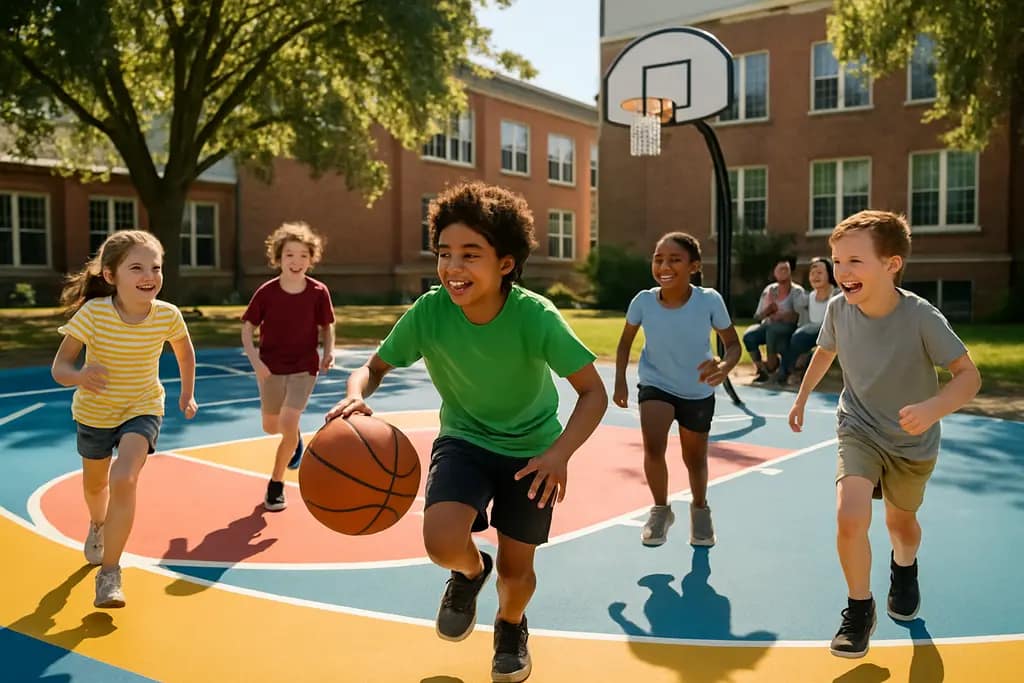
P.S. 69 Schoolyard in Jackson Heights, Queens, moved from a school improvement project to a shared community asset on September 16, 2026, when Trust for Public Land and public partners held a ribbon-cutting for the renovated space TPL ribbon-cutting announcement. For a neighborhood with limited open space, the opening created a practical place where elementary students can run, play, practice cooperation, and build daily habits that connect sports with growth.
The strongest youth sports spaces are not always stadiums or formal league venues. Often, they are schoolyards where a child learns to pass a ball, wait a turn, cheer for a classmate, and recover after a missed shot. At P.S. 69, the renovated yard now serves more than 800 pre-kindergarten through fifth-grade students during the school day and opens to the public outside school hours. That mix of school use and neighborhood access gives the site value beyond recess.
For families, coaches, educators, and local youth leaders, the project shows how play space can support both health and belonging. A safer, greener yard can host informal soccer, running games, basketball practice, tag, fitness circuits, and simple movement breaks. Those activities may look small from the outside, but they help young people practice confidence, patience, communication, and care for shared space.
A New Court For Play In Jackson Heights
P.S. 69 Schoolyard As A Daily Practice Space
The renovated yard matters because access shapes participation. A child cannot build comfort with sports if there is no nearby, welcoming place to move. The P.S. 69 Schoolyard gives students a daily setting where active play can be part of school life rather than a special event. That matters for children who may not have easy access to paid clubs, travel teams, or private training facilities.
Sports-based youth development works best when young people have repeated chances to learn through action. A playground game teaches decision-making because children must read space, react to teammates, and adjust. A relay teaches trust because one runner depends on the next. A simple ball drill teaches focus because improvement comes through repetition. These lessons are powerful because they happen in motion, with peers, and often with caring adults nearby.
The site also supports community use after school hours. According to Trust for Public Land, more than 56,000 nearby residents live within a 10-minute walk of the renovated schoolyard. That reach turns the yard into a neighborhood recreation point, not just a school feature. In a dense area such as Jackson Heights, a short walk can decide whether a child plays outside after school or stays indoors.
Student Context Behind The Space
The school community served by this project includes many families for whom accessible public space can be especially meaningful. The 2023-24 Student and Educator Report for P.S. 69 reported that about 72% of students were eligible for free lunch and 2% were eligible for reduced-price lunch. The same report listed a 94% attendance rate and zero suspensions for that school year NYSED school report.
Those figures do not tell the full story of student life, but they do offer context. A schoolyard investment in this setting is not cosmetic. It places movement, play, and shared outdoor time closer to students who already show a strong connection to school through attendance. For youth development, that connection matters because school can be the place where recreation, learning, and trusted adult support meet.
How The P.S. 69 Schoolyard Expands Access
Why A 10-Minute Walk Matters
Trust for Public Land reported that Jackson Heights ranked 182nd out of 198 New York City residential neighborhoods for access to open space. That statistic helps explain why this project carries community weight. In a neighborhood with limited park access, every safe play area carries more responsibility. A shared schoolyard can ease pressure on crowded public spaces while giving children a familiar setting for active recreation.
For youth sports, proximity can be just as important as equipment. If play space is close, families are more likely to use it for short activity windows between homework, dinner, work schedules, and sibling care. Children can practice a jump shot for 20 minutes, run with friends, or join informal games without needing a long trip. These ordinary routines help build the base for stronger physical confidence.
The renovation also offers a model for other communities thinking about sports access. A field or court does not need to be tied only to formal competition. Open schoolyards can support casual play, beginner skill-building, and family recreation. That is where many young athletes first discover what they enjoy. For more on how shared sports spaces can strengthen neighborhoods, Youth Rise has also covered sports-based youth programs that connect play with community support.
A Shared Space With School Roots
The P.S. 69 project also stands out because it kept community participation in view. Trust for Public Land reported that YouthBuild participated in building planter boxes, while the Groundswell Community Mural Project worked with artists and residents on a mural. Those details matter because young people benefit when they see a recreation space as something their community helped shape.
Ownership changes behavior. When students, families, and neighbors feel connected to a schoolyard, they are more likely to treat it as a place worth caring for. In sports terms, that is the same lesson coaches try to build inside a team: shared space requires shared responsibility. Players pick up cones after practice. Teammates encourage one another. Neighbors help keep a schoolyard clean and welcoming.
Green Design That Supports Active Days
Stormwater Features And Play Value
The schoolyard is not only a recreation project. It also includes green infrastructure. Trust for Public Land identified features such as improved drainage, shaded seating, nature-based play, and stormwater capture elements designed to collect up to 260,000 gallons of stormwater. The project received about $1 million from the NYC Department of Environmental Protection, with support from Con Edison, the School Construction Authority, Trust for Public Land, and local elected officials.
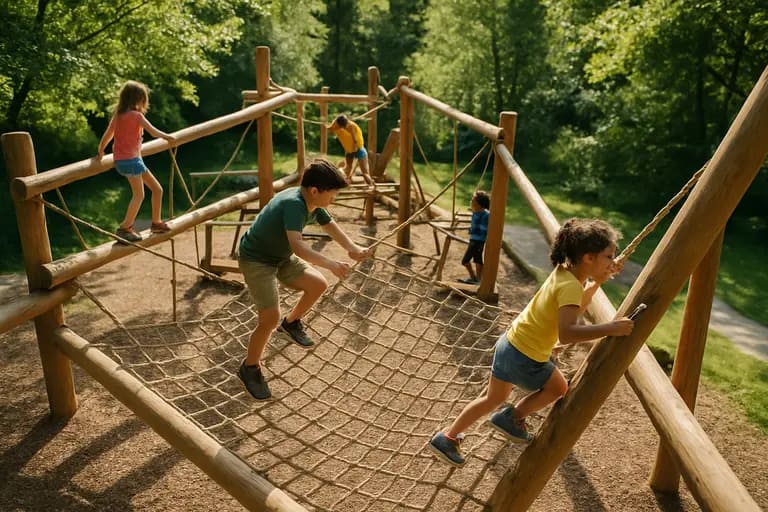
Those design choices connect environmental care with youth recreation. Better drainage can help a play area recover after rain. Shade can make the space more comfortable for families and students. Nature-based play can give younger children different ways to move, climb, balance, and imagine. Together, those features help the yard serve active days while responding to local flooding and runoff needs.
- Improved drainage can reduce standing water that limits outdoor play.
- Shaded seating gives caregivers and students a place to rest between activities.
- Nature-based play encourages movement beyond organized games.
- Stormwater capture supports the neighborhood during heavy rain.
For coaches and youth mentors, the lesson is clear: sports infrastructure can do more than mark lines on a surface. A well-planned yard can support movement, rest, social connection, and climate resilience. That wider purpose is especially useful in school communities, where the same space may support recess, class activities, family time, and informal neighborhood play.
What P.S. 69 Schoolyard Means For Jackson Heights
The P.S. 69 Schoolyard shows how a local school project can carry neighborhood meaning. It gives children a place to be active, gives families a nearby recreation option, and gives the community a shared outdoor space in an area identified as short on open access. The value is not only in the surface, seating, or stormwater system. It is in the daily moments the space can host.
A student who learns to pass before shooting is practicing teamwork. A child who returns after losing a game is practicing resilience. A group that agrees on rules before playing is practicing leadership. These are the quiet wins that make youth recreation matter. They do not always appear on a scoreboard, but they shape how young people treat themselves and others.
The P.S. 69 Schoolyard also offers a hopeful example for cities, schools, and community partners. When public agencies, nonprofit partners, residents, and school communities work together around play, children gain more than open space. They gain a place where movement, friendship, school pride, and neighborhood care can grow side by side.