
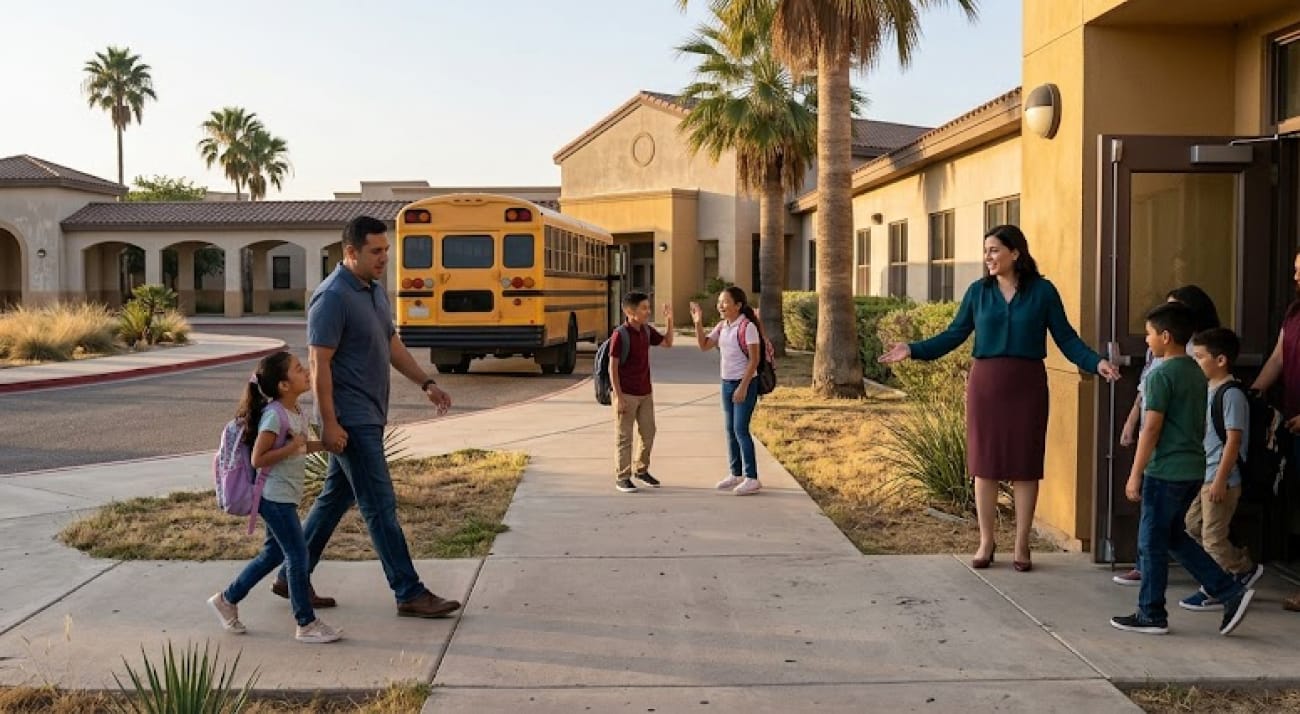
Laredo Independent School District has opened the 2026–27 school year with a new districtwide theme, “Breaking Barriers,” placing student success, academic progress and community collaboration at the center of its priorities. Superintendent Guillermo Pro and Laredo ISD Board President Goyo Lopez welcomed employees and students into the new school year as campuses across Laredo prepared for another year of academic work, extracurricular opportunities and student development. The initiative follows a 2025–26 school year that district leaders characterized as a period of progress while also acknowledging budget constraints and other challenges facing the community.
The theme is more than a slogan for LISD. District officials have described “Breaking Barriers” as an effort to address obstacles that can affect students and schools, including literacy, poverty, social challenges, academic performance and access to support. For organizations focused on Texas youth development, the Laredo approach provides a useful example of how a school district can connect academic priorities with leadership, family participation and broader community involvement.
From “Leveling Up” To “Breaking Barriers”
The transition to “Breaking Barriers” began before students returned to classrooms.
In a May 30, 2026 message, Superintendent Guillermo Pro reflected on his first year leading Laredo ISD and described the accomplishments of the 2025–26 school year. He highlighted the district’s Class of 2026 graduation ceremonies, teacher recognitions, scholarship events and other celebrations before introducing the new theme for 2026–27. Pro said the district would enter the new school year with a renewed sense of purpose and a goal of creating greater opportunities for students, staff and the community.
That progression is significant because it frames the new initiative as a continuation rather than a complete reset.
The district’s previous theme, “Level Up,” focused on building momentum and improving performance. “Breaking Barriers” takes that concept into a more specific discussion about what prevents students from reaching their potential.
Those barriers can be academic, financial, social or institutional.
A student struggling with literacy may need targeted instruction. Another may need stronger family-school communication. A teenager preparing for college or a career may need advising, mentorship or access to specialized programs.
A successful district strategy therefore cannot rely on one solution.
LISD’s new theme creates a framework broad enough to address several of these challenges while keeping student outcomes at the center.
Laredo ISD Brings Staff Together Before Students Return
The district launched the school year with a major employee convocation at the LISD Performing Arts Center, where staff members gathered around the “Breaking Barriers” message.
The event included performances, mascot appearances, costumed characters and presentations from district departments. While those elements created an energetic start to the academic year, the underlying purpose was organizational: bringing employees together around common goals before they returned to classrooms.
Superintendent Pro emphasized that teachers, administrators and support employees all have a role in student success.
That point matters in a districtwide initiative because students interact with far more adults than their classroom teachers. Counselors, librarians, coaches, paraprofessionals, transportation workers, cafeteria employees, campus administrators and other staff members can influence a student’s experience at school.
The convocation also included community partners and support services, reinforcing the idea that student success extends beyond the traditional classroom.
This approach aligns with broader research showing that effective school improvement depends on organizational capacity rather than a single intervention. Texas’ own accountability system evaluates campuses across multiple areas, including student achievement, school progress, academic growth, relative performance and closing achievement gaps. Texas Education Agency accountability resources
Literacy And Poverty Are Central Barriers
One of the most important aspects of Laredo ISD’s new direction is its recognition that academic performance does not exist independently of a student’s circumstances.

District communications surrounding the “Breaking Barriers” initiative specifically identified literacy, poverty and social challenges among the issues educators must confront.
Literacy is particularly important because reading proficiency affects nearly every other academic area.
Students who struggle to understand complex text can face difficulties in science, social studies and mathematics, while older students may encounter additional barriers when preparing for college entrance exams, technical programs or employment.
Poverty can compound those challenges.
Families facing financial pressures may have less access to tutoring, technology, transportation, enrichment activities or other resources that can supplement classroom learning.
That makes community partnerships particularly valuable.
A school district can provide teachers and curriculum, but nonprofit organizations, businesses, universities and community groups can expand the network of opportunities available to young people.
For Laredo, that model is especially relevant because the city sits on the U.S.-Mexico border and has a distinct economic and cultural environment. Programs that connect education with workforce development, leadership and community engagement can help students see how their classroom experiences relate to opportunities beyond high school.
Teachers Remain A Critical Part Of The Strategy
A districtwide student-success campaign ultimately depends on what happens inside classrooms.
Laredo ISD has already placed attention on teacher quality through the Teacher Incentive Allotment, with educators recognized during the 2025–26 school year for meeting standards associated with the Texas Education Agency program. District campuses have highlighted teachers receiving TIA designations at different levels, including Recognized, Exemplary and Master designations.
Those recognitions provide an important context for “Breaking Barriers.”
Improving student outcomes requires teachers who have the skills and resources to identify learning gaps, adapt instruction and maintain high expectations.
The district’s approach also shows why professional development cannot be separated from student achievement.
Laredo ISD’s professional-development calendar for the start of 2026–27 included sessions using the “Breaking Barriers” theme in areas such as fine arts and social studies. One social studies planning session focused on reviewing grade-level objectives, creating lesson plans and developing hands-on activities aligned with student needs.
This type of preparation is less visible than a large public launch event, but it may have a greater effect on students over the course of a school year.
Specialized Programs Give Students More Ways To Succeed
Breaking barriers also means creating multiple pathways for students to discover strengths beyond conventional academic measures.
Laredo ISD has already developed programs that connect students with technology, creativity and leadership.
In 2025, Farias Elementary School became the first school in Laredo to launch a Girls Who Code program. The initiative began with 24 fifth-grade girls and four facilitators, giving students an opportunity to explore coding and computer science while developing confidence in a field where participation gaps remain an issue.
The district has also promoted STEAM experiences. In June 2026, LISD reported that hundreds of elementary students participated in a summer project involving the design of futuristic theme parks, with second-grade student Kaydee Reynaga among the students featured in the program.
These examples matter because student success is not limited to standardized test performance.
A student may discover an interest in engineering through a hands-on project, develop leadership skills through a campus organization or gain confidence through a technology program.
Those experiences can influence future course selections and career ambitions.
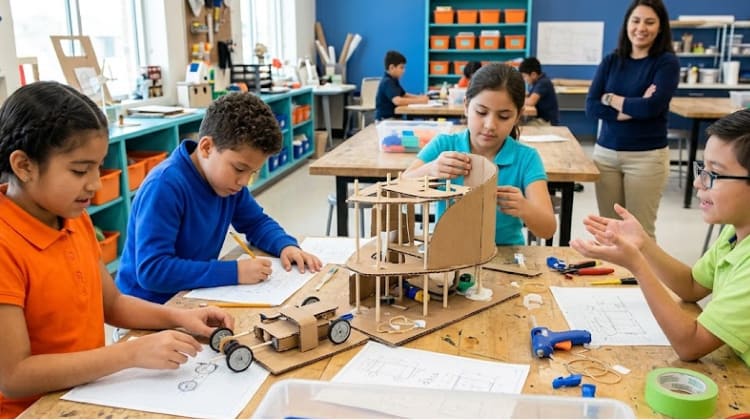
The “Breaking Barriers” strategy therefore has an opportunity to connect academic improvement with a broader definition of student development.
Family Engagement Starts Before The First Bell
Another part of the 2026–27 transition involved making sure families could access school services and registration support.
LISD opened online registration for students from pre-kindergarten through 12th grade and held registration fairs to assist families who needed help completing the process. District departments including Health Services, Fine Arts, College, Career and Military Readiness, Migrant Education and Early Childhood were available to provide information.
The district also hosted a July back-to-school fair and style show at the LISD Performing Arts Complex, where families could access health screenings, sports physical vouchers, school-readiness resources and free backpacks while supplies lasted.
These services may appear separate from academic achievement, but they can affect whether students begin the year ready to learn.
A family that can obtain required health services, complete registration and access school resources has fewer administrative obstacles standing between the student and the classroom.
That is precisely the type of practical issue that a “Breaking Barriers” strategy can address.
Student Leadership Is Becoming Part Of The Model
The district is also giving students opportunities to develop leadership skills directly.
Laredo ISD’s Martin High School recently hosted its annual Summer Leadership Summit, with Superintendent Pro serving as a special guest. The event focused on developing campus leaders and encouraging students to grow as confident, service-oriented leaders.
Leadership development has a different purpose from academic intervention, but the two can reinforce each other.
Students who learn how to communicate, collaborate, organize projects and take responsibility for others develop skills that are useful in college, employment and civic life.
For teenagers, these experiences can also change how they see themselves within their schools.
Rather than viewing students only as recipients of education, leadership programs position them as participants who can influence their peers and communities.
That is an important shift for a district seeking to build long-term student success.
Community Partnerships Expand The Reach Of Schools
Laredo ISD has repeatedly emphasized the role of community partners in its school activities.
That relationship can become particularly important when the district is attempting to address barriers that extend beyond curriculum.
Health organizations can support student wellness. Businesses can provide career exposure. Universities can offer academic pathways. Nonprofits can provide mentoring and enrichment. Community leaders can help students understand the opportunities available in their own city.
The district’s back-to-school activities demonstrate how these relationships can work in practical terms.
The July event, for example, combined school preparation with health services and sports-related resources.
This model creates a more connected student-support network.
For young people, the benefit is that assistance does not have to come from one institution alone.
That is especially important when addressing poverty, literacy and social challenges, which rarely have single-organization solutions.
What “Breaking Barriers” Will Need To Prove
The strongest measure of the initiative will not be how energetic the first-day events are.
It will be whether students demonstrate sustained academic and personal growth during the 2026–27 school year.
That can be measured through several indicators: student achievement, academic growth, attendance, graduation preparation, participation in advanced or specialized programs, postsecondary readiness and student engagement.
Texas’ accountability framework provides one formal way to track school performance, but district leaders will also need to look beyond annual ratings to understand whether individual students are making progress. Texas accountability and performance reporting
The challenge is particularly important because school improvement is rarely linear.
A campus can post stronger test scores in one year and then struggle the following year. A program can attract students initially but lose participation if staffing or funding changes. A teacher initiative can succeed at one campus but require additional support to work elsewhere.
For LISD, maintaining consistency will be as important as launching new ideas.
Laredo’s 2026–27 Opportunity Is Bigger Than A Theme
The opening of the 2026–27 school year gives Laredo ISD an opportunity to turn “Breaking Barriers” from a district message into a measurable student-success strategy.
The foundation is already visible: Superintendent Guillermo Pro has emphasized community involvement, teachers are receiving recognition through the Teacher Incentive Allotment, professional development is being aligned with student needs, leadership opportunities are expanding and families have access to registration, health and school-readiness support.
The next step is connecting those pieces.
If literacy initiatives can be linked with family engagement, if leadership programs can connect students with mentors, if STEAM experiences can lead to career exploration and if teachers receive the support required to respond to academic gaps, the district can create a stronger pipeline from elementary school through graduation.
That is ultimately what makes the “Breaking Barriers” strategy relevant to the wider Texas youth-development conversation.
A school district cannot remove every obstacle a young person faces. It can, however, identify the barriers that schools can influence and build systems that make those obstacles easier to overcome.
As Laredo ISD begins another school year, the real test of its new theme will happen quietly in classrooms, counseling offices, athletic facilities, laboratories and community programs across the city.
Students will determine whether the strategy works.
And for a district that has framed 2026–27 around breaking through limitations, their progress will be the clearest measure of whether the message became more than a slogan.