
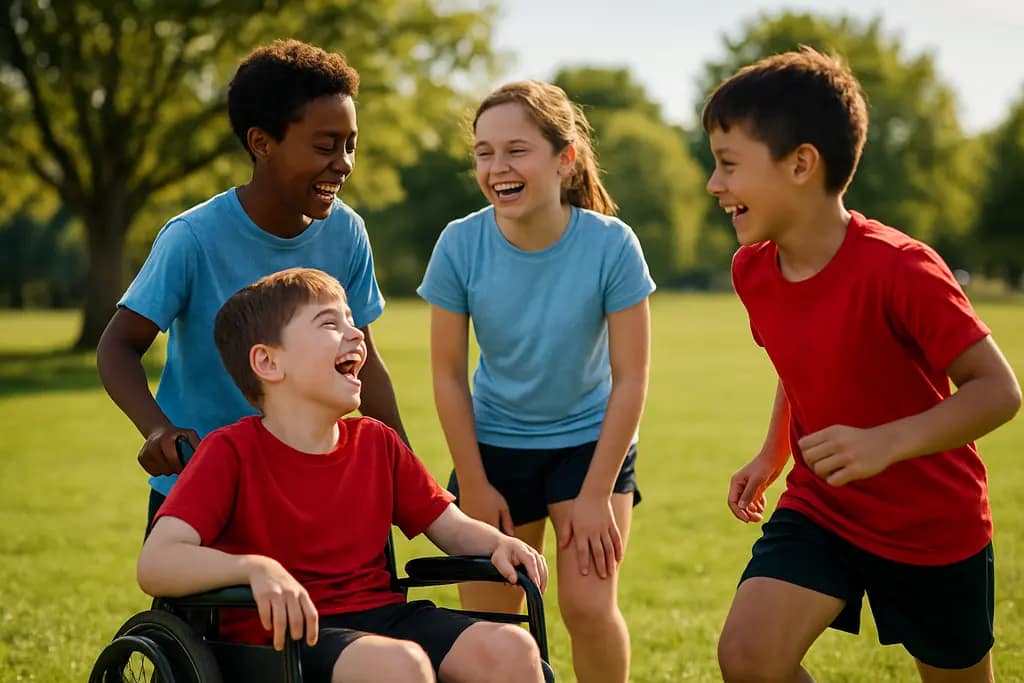
Inclusive sports Ohio has become a practical example of how youth athletics can serve more young people without asking any child to fit a narrow version of sport. The strongest lesson from the Athens pilot was simple: when coaches adjust activities, classmates share the same space, and families see real access, sport can support health, friendship, confidence, and school connection at the same time.
As a community sports advocate, I see the Ohio work as a sports-first model, not a side program. Basketball, volleyball, football, pickleball, track-style movement, and shared practice routines can all become places where young athletes learn effort, communication, and belonging. The point is not only to open a gym door. It is to build a youth development setting where students with and without disabilities can train, compete, and grow together.
What Inclusive Sports Ohio Built In Athens
A Rural Pilot With Real Coaching Value
During the 2024–2025 school year, Ohio’s DDS-led Inclusive Sports Project piloted in Athens, where 11 coaches were trained in engaging adaptive athletes and an after-school sports program served 20 rural youth, over half of whom had disabilities; the project was described as enhancing inclusion and health Ohio DD Council annual report. That matters because rural sports programs often depend on small coaching staffs, shared facilities, and careful scheduling. A model that worked with 20 youth in that setting can help communities think clearly about access without waiting for a large athletic budget.
The coach training piece deserves special attention. Inclusion in youth athletics is not only about equipment or policy language. Coaches set practice tempo, explain rules, adjust drills, group athletes, and shape whether a young person feels like a full teammate. Training 11 coaches gave the Athens pilot a stronger base than a one-day clinic would have offered, because each coach could carry those ideas back into repeated practices and school relationships.
Inclusive Sports Ohio Coaching Lessons
The strength of inclusive sports Ohio is that it keeps the coach-athlete relationship at the center. A coach who knows how to adapt a passing drill, shorten a rotation, pair athletes for peer support, or offer clearer instructions can change the tone of a full gym. Those adjustments are not shortcuts. They are good coaching.
For young athletes, that kind of structure can support personal growth in visible ways. A student may start by learning how to enter a drill safely, then begin calling for the ball, then encourage a teammate. Those small steps are youth development in action. They build communication, self-advocacy, patience, and trust. In a school or community center, they also help other students see ability through participation rather than assumption.
How The Sports Sampler Strengthened The Model
Shared Sports, Shared Standards
Ohio University and local partners ran an Inclusive Sports Sampler pilot in Athens County in October and November 2025 for five weeks, twice per week; 20 youth enrolled, with 55% of participants with disabilities and 45% without disabilities, and basketball, volleyball, football, and pickleball were adapted for participants Ohio State GRC project details. Those participation numbers are important because they show a balanced setting rather than a separated activity. Students with and without disabilities were part of the same sports experience.
That shared design helps address one of the biggest barriers in youth athletics: social separation. If a child only receives adapted play away from peers, the program may offer movement but miss the stronger community benefit. When athletes practice side by side, they learn pace, teamwork, encouragement, and respect together. That is where school culture can begin to shift.
Why Multiple Sports Matter
The Athens sampler did not rely on one sport to carry the full program. Using basketball, volleyball, football, and pickleball gave coaches and youth several ways to find success. Some athletes may respond best to the rhythm of volleyball. Others may enjoy the spacing of pickleball or the movement patterns in football drills. A multi-sport format gives young people more entry points and helps coaches match activities to strengths.
For schools, that approach can guide after-school planning. Instead of asking whether one existing team can include every student right away, leaders can test sport stations, short seasons, mixed-skill groups, and adapted rules. The sports sampler format can lower pressure while keeping expectations positive. Young people still practice, listen, move, and support teammates. They simply do it in a setting built to include them from the start.
Equity In Youth Athletics Starts With Access
What Access Looks Like On Practice Days
Equity in youth sports is often discussed as a policy goal, but athletes experience it in daily details. Can they get to the gym after school? Are instructions clear? Is equipment usable? Does the coach know how to adjust a drill without singling out a student in a negative way? Are classmates prepared to be partners rather than spectators? The Ohio pilots point toward answers that local programs can use.
Access also means giving families confidence that their children will be welcomed. Parents and caregivers are more likely to support participation when they believe coaches understand safety, communication, and dignity. That trust is built through planning and repeated contact. A well-run inclusive practice can show families that sport is not only possible; it can be a healthy part of their child’s weekly routine.
- Coach preparation: adults learn how to adapt drills, group athletes, and set clear expectations.
- Peer participation: students with and without disabilities share activities instead of being separated.
- Multi-sport choice: athletes can find a sport format that fits their movement, interest, and confidence.
- Community partnership: schools, universities, disability partners, and families each support the youth sports setting.
Why Local Partnerships Matter
The Athens work also shows how local partners can stretch the reach of school-based sports. Universities can help with program design and evaluation. Disability-focused organizations can support adaptive practice ideas. Schools can provide trusted spaces and connect with families. Coaches bring sports knowledge, and youth bring the energy that gives the program life.
Communities outside Ohio can learn from this without copying every detail. A small town might start with one after-school sampler. A larger district might begin with coach training across several middle schools. A recreation department might invite student volunteers to support peer play. The shared aim is steady: use sport as a place where more young people can build skills and relationships.
For readers comparing local inclusion models, our related piece on inclusive soccer development shows how another community used sport access, wellbeing, and youth leadership as connected goals.
What Ohio Teaches Coaches And School Leaders

Inclusion Is A Practice Plan
The Ohio example is useful because it turns inclusion into practice planning. Coaches can ask concrete questions before the first whistle: Which drill needs an adaptation? How will partners rotate? What language will be used for feedback? How can the activity keep pace without leaving anyone behind? These are sports questions, and they belong in every youth athletics conversation.
School leaders can support coaches by giving them time to learn, space to test ideas, and permission to build programs that value progress as much as performance. That does not reduce competitive standards. It broadens the path into sport so more young people can experience effort, teamwork, and pride.
Small Pilots Can Shape Bigger Habits
The Athens pilots were limited in size, so they should be viewed as promising examples rather than proof that one model solves every access barrier. Still, small pilots can shape bigger habits. A 20-student program can teach a district how to schedule support staff. A five-week sampler can show which sports fit local facilities. Eleven trained coaches can influence other adults through shared practice ideas.
That is why inclusive sports Ohio matters beyond one county. It gives school leaders a way to begin with what they have: a gym, coaches willing to learn, community partners, and young people who deserve the chance to play.
Why Inclusive Sports Ohio Matters For Youth Equity
The best youth sports programs do more than produce scores. They help young people become teammates, problem-solvers, leaders, and friends. The Ohio pilots showed how adaptive coaching and shared sports can make those benefits more available to students who are too often left out of traditional athletic pathways.
For families, inclusive sports Ohio points to a hopeful standard: a child should not have to choose between belonging and athletics. For coaches, it offers a reminder that adjustments are part of the craft. For schools, it shows that equity can grow through after-school schedules, trained adults, and sports that welcome mixed groups of learners.
That is the community impact worth carrying forward. When young athletes with and without disabilities share a court, field, or gym, they are not only playing a sport. They are practicing the kind of school culture every community should want: patient, active, fair, and open to every child who wants to join the team.