Let’s be honest. Most youth sports talk sounds like a bad sports movie montage. We focus on drills, wins, and that mythical “fundamental” that will transform kids into champions.
But ask any elite athlete what actually shaped them. They won’t mention wind sprints. They’ll talk about the coach who saw them as a person first. The one who built trust and offered real encouragement.
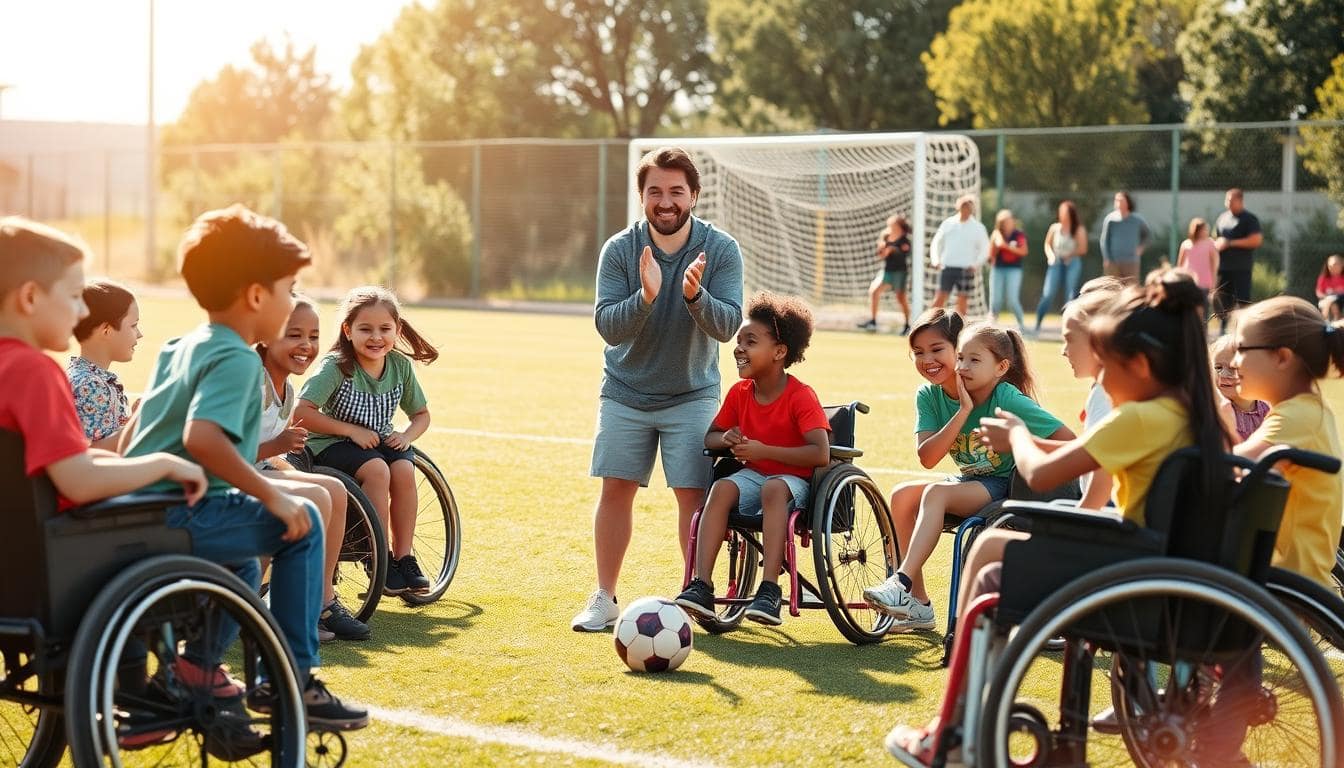
The USOPC’s Million Coaches Challenge gets it. It’s not about creating all-stars. It’s about fostering environments where every young athlete feels they belong.
This is where inclusive coaching becomes essential. It’s the foundation for genuine human growth, not just athletic skill.
The real equity play? Building resilience and confidence in every kid, regardless of background. We’re not just coaching a team. We’re shaping future adults.
Core Principles of Inclusive Coaching
Think of yourself as an architect of human growth, not just a drill commander. The clipboard is useful, but the real blueprint for inclusive coaching comes from different tools. It’s about building relationships, not just winning games.
This shift changes how we see the game and the players. Let’s explore the six key principles.
1. Focus on What the Body Can Do. This isn’t about giving out trophies for showing up. It’s about using each player’s strengths, like spatial awareness or strategy skills. You’re looking for talents in unexpected places.
2. Become a Relational Expert. You’re not trying to be everyone’s best friend. It’s about understanding what’s said and what’s not. A kid’s “bad attitude” might hide anxiety, or silence could be a cultural norm. You’re a facilitator, not just a teacher.
3. Ruthless Self-Reflection. This is the hard part. Check your language. Phrases like “don’t throw like a girl” can hurt. Lazy language means lazy coaching. You must face your own biases.
4. Get Culturally and Contextually Informed. Ignorance is not a coaching strategy. Know that “access” means more than just fees. It includes transportation, gendered expectations, and economic stress. An inclusive coach sees the game in a larger, often unfair, world.
5. Redefine Inclusion as Equity, Flexibility, and Responsiveness. Equality is giving everyone the same things. Equity is giving what fits each person. True inclusive coaching is adaptable. It changes to meet each athlete’s needs, not just your plan.
6. Make Inclusion a Team Sport. Your final step? Teach your athletes to uphold these values. Encourage them to speak up against exclusion. Sports become a place for positive youth development.
This mindset change is key. The table below is a mirror, not a report card.
| Coaching Dimension | Traditional Mindset | Inclusive Coaching Mindset |
|---|---|---|
| Primary Focus | Skill deficit, winning the game | Asset development, winning at youth development |
| Coach’s Role | Director, authority figure | Facilitator, relational expert |
| Approach to Differences | “Sink or swim” standardization | Equity-focused flexibility and adaptation |
| Team Culture | Cohesion through conformity | Cohesion through valued diversity |
| Success Metric | Scoreboard results | Holistic growth & sustained engagement |
Master these principles, and you’re not just coaching a sport. You’re coaching the whole person. That’s true victory.
Assessing Your Program’s Gaps
Gap analysis in youth sports is like a film director spotting plot holes. It’s not about finding a villain. It’s about data.
Tools like the Positive Coaching Alliance’s Positive Youth Sports Culture Index help. They turn feelings into data. It’s a check for your program’s soul.

This audit asks tough questions. Look at your facility access and team socials. Is there a “cool kids” table in your athletic cafeteria?
The mission is equity in action. It’s about finding who thrives and who doesn’t. This includes looking at leadership, language, and program access.
It’s like a pre-season physical for your culture. The diagnosis might be tough, but it’s needed. Sustainable youth development requires this honest look.
This view also supports the whole athlete. Foundational mental health strategies for youth athletes are key. They ensure your environment supports mental health too.
Assessing gaps makes you a strategic leader. You move from hoping for inclusion to making it happen. That’s how you build a program where equity is real youth development.
Practice Design for Mixed Skill Levels
Coaching a team with vastly different skills is like leading an orchestra with some musicians reading sheet music for the first time. The beauty of inclusive coaching shines in the field’s messy, beautiful chaos.
The old way was like a Soviet parade, where everyone moved in perfect sync. The new way is more like jazz, where everyone improvises together. Your playbook should be flexible, not strict.
The Million Coaches Challenge Practice Guide is your secret tool. It offers twelve core practices for any sport. Think of them as building blocks, not strict plans.
Your toolkit should include:
- Tiered Stations: Create three versions of the same drill—basic, intermediate, advanced. Players choose or you guide them.
- Principle-First Design: Design drills around concepts like spatial awareness or communication. Each player works at their own level.
- The Modification Mindset: Have a “simplify” and a “challenge” version of every drill ready to use at any time.
The aim is “productive struggle,” not boredom or panic. It’s the spot where effort meets ability. If your best player and newest member are both fully engaged, you’ve made your session fair. That’s not just good coaching—it’s inclusive coaching genius.
For coaches on this path, ongoing education is essential. The playbook changes, and so must you.
Communication Styles for Diverse Learners
Think of your coaching voice as a Swiss Army knife. It has many uses for different situations. Shouting the same thing to every kid might confuse some. The real youth development comes from understanding, not just following commands.
You need to motivate in many ways. Some athletes want clear, technical advice. Others need to know why they’re doing something. You must be able to adjust your communication to meet each athlete’s needs.
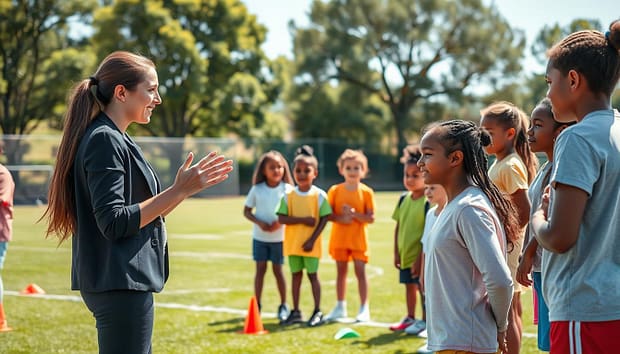
This isn’t just a guess. Programs like the USOPC’s Connection Based Coaching teach this skill. They focus on social and emotional intelligence to understand each athlete better. It’s about listening and communicating with curiosity.
To put this into practice, think about different learners. Matching your communication style to theirs builds trust.
| Learner Type | Their Communication Need | The Coach’s Tool | Youth Development Outcome |
|---|---|---|---|
| The Technician | Clear, concise, corrective feedback. “How.” | Demonstrations, slow-motion breakdowns, focused reps. | Builds competence and self-efficacy through mastery. |
| The Philosopher | Context and purpose. “Why.” | Explaining game theory, connecting drills to real scenarios, storytelling. | Fosters critical thinking and intrinsic motivation. |
| The Introvert | Private, low-pressure encouragement. Safety. | One-on-one check-ins, written notes, non-verbal affirmation. | Strengthens self-worth in a low-anxiety environment. |
| The Energizer | Group-centric hype, public recognition, team spirit. | Pregame speeches, team challenges, celebratory rituals. | Cultivates social belonging and collective identity. |
Let’s check our language too. Using “you guys” or making family assumptions can be off-putting. Saying “athletes,” “bring a partner,” or “families and supporters” is more precise. It makes sure everyone gets your message. For more on this, check out these inclusive communication strategies.
Your words are very powerful. Use them carefully, like a surgeon. When you adjust your communication, you’re teaching more than just sports. You’re teaching how to be understood, which is key for growth.
Creating Inclusive Team Roles
Most youth sports teams feel like a bad reality TV show. A few stars get all the attention, while others are just background extras. This isn’t just unfair; it’s about equity.
True team unity isn’t just about matching jerseys. It’s about making sure everyone has a role that matters. When only the best athletes get roles, it creates a narrow hierarchy. An inclusive coach changes this.
An inclusive team looks at things differently with an equity lens. It’s not just about coaching athletes; it’s about building a community. Leadership isn’t just about being loud or scoring points.
Let’s look at your team’s roles. There’s more than just being the captain. You could have a “Culture Captain” who plans fun activities. Or a “Team Historian” who keeps a journal of the season. There’s a “Warm-Up Energy Leader” and a “Equipment & Logistics Lead” too.
Each role uses a different skill—creativity, empathy, organization, spirit. The goal is to make sure everyone feels valued. Every athlete has a role in the team’s success, not just on the field.
This way of thinking makes us question our traditions. Does your “rookie night” embarrass some kids? Does your team dinner leave out those who can’t afford it? Inclusive roles make everyone feel they belong, not just for their skills.
| Traditional Role | Inclusive Role (Equity Lens) | Core Contribution |
|---|---|---|
| Team Captain (Best Player) | Culture Captain | Fosters inclusive bonding, plans accessible social events. |
| Stat-Keeper (Coach’s Helper) | Team Historian / Storyteller | Documents season milestones, creates a shared narrative. |
| Water-Bottle Manager (Chore) | Equipment & Logistics Lead | Manages gear with pride, ensures everyone has what they need. |
| Benchwarmer (Implicit Role) | Warm-Up Energy Leader / Spirit Captain | Owns pre-game morale, sets a positive tone for all. |
| Guiding Principle: Hierarchy & Merit | Guiding Principle: Equity & Shared Value | Focus shifts from a single metric of value to diverse, recognized contributions. |
This isn’t about adding extra work. It’s about recognizing the hard work and diverse talents that already exist. When a shy athlete becomes the historian, they gain confidence. When the organized kid manages equipment, they feel important.
The team changes from a pyramid to a web of valued members. This is true equity—a team that’s really united, not just wearing the same jersey. Everyone has a role, and every role is respected.
Monitoring Progress and Feedback Loops
In today’s sports world, we track a lot but miss the most important things. We focus on sprint times and completion rates, but forget about confidence, belonging, and teamwork. Inclusive coaching means we need to look at more than just numbers.
This isn’t about ignoring the scoreboard. It’s about adding another screen to watch youth development. It’s like getting a special director’s cut of your season, showing the growth you miss in highlights.
So, what should we track? Let’s change our focus from just “How did we play?” to “How did we grow?” Tools like the Positive Youth Sports Culture Index can help. But your own observations are the most important.
Be both an analyst and an anthropologist. Your field notes should show the changes that numbers can’t:
- The quiet kid who now wants the ball.
- The athlete who is patient after making a mistake.
- The team that solves problems on their own.
These moments are the real victories. Celebrating them shows that personal growth is the biggest win. Studies on motivational climates in sports, like the one here, show that focusing on effort and improvement boosts confidence.
The real magic happens in the debrief. It’s not just about “we need better left-foot passing.” Ask questions that explore the human side: “How did we support each other?” or “Who tried something new?” Make sure athletes feel safe to share how they’re feeling, not just how they’re doing.
This feedback is your most valuable data. It shows if your inclusive coaching is working, if your team culture is strong, and where someone might need extra help. It turns coaching into a real conversation.
Tracking this progress changes what we consider success. The trophy is less important than the growth. You’re not just making better athletes; you’re helping them become more resilient, empathetic, and confident. That’s a win worth measuring.
Resources and Training Pathways
You’ve got the philosophy of inclusive coaching down. Now, where’s the actual playbook? Good news: you’re not reinventing the wheel. An entire ecosystem of organizations has done the heavy lifting.
For foundational youth development, the USOPC’s free “How to Coach Kids” course is a solid start. Need a diagnostic tool? The Positive Coaching Alliance’s “Positive Youth Sports Culture Index” is your go-to. Coaching girls with an equity lens? The “Body Confident Sport” program from Dove and Nike, plus “Coaching HER,” offer research-backed strategies.
Your commitment to equity demands continuous learning. Consider it your advanced degree in inclusive coaching. The Center for Healing and Justice through Sport provides profound trauma-informed guides. For administrators, the Nike Coaching Hub and PCA Resource Zone are treasure troves.
North of the border, coaches can access structured training through the NCCP’s extensive module library. This pathway from theory to practice is non-negotiable. The most inclusive thing a coach can do is admit they don’t have all the answers—and then go find them.