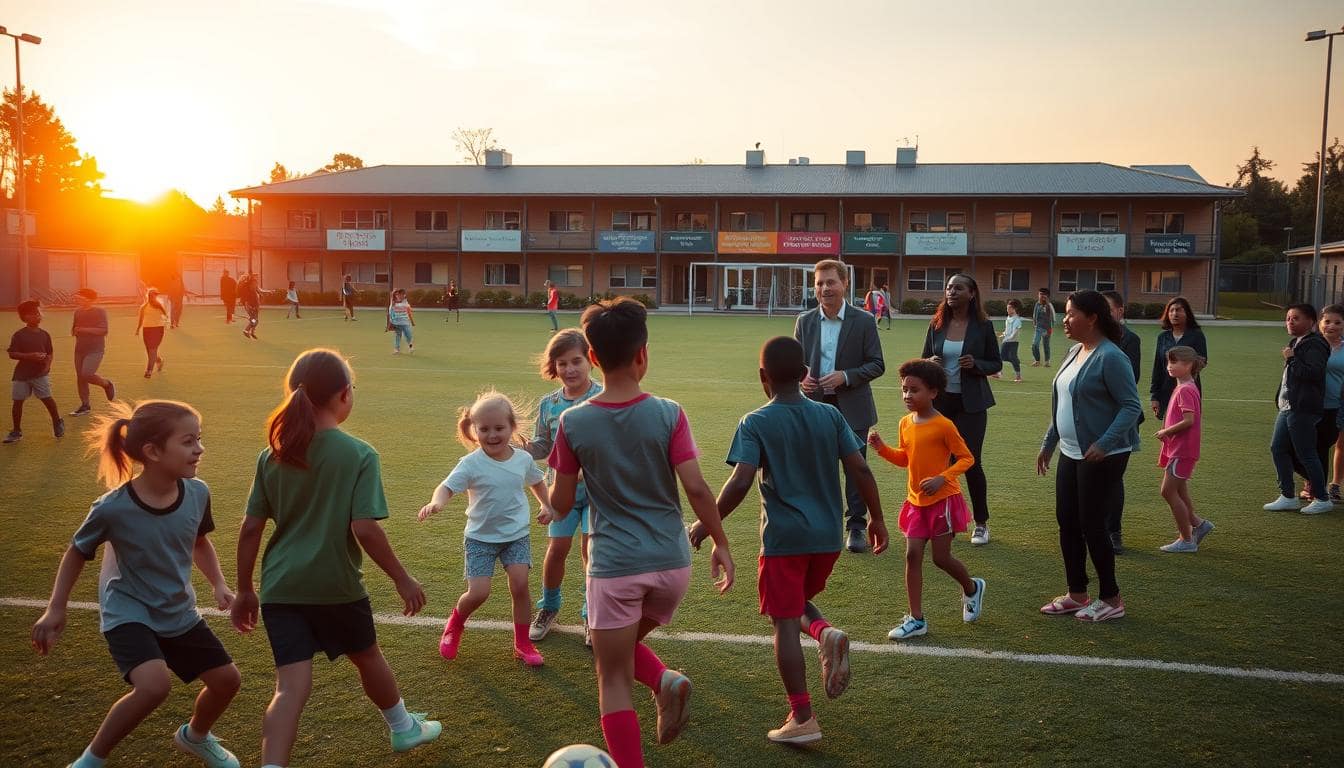
What if the most important scoreboard wasn’t at the stadium? The true power of athletics often shines brightest far from the cheering crowds. It happens in the quiet moments of growth, where discipline is learned and character is forged.
Consider the story of Accountability for Life. It started with a single grant from the Bob Hoffman Sports & Fitness Fund. Coach Russ Stoner saw a need and acted. What began as a lifeline for a high school football team blossomed into a year-round beacon of hope.
Today, AFL serves 135 student-athletes. The focus extends far beyond physical training. It builds a foundation on education, personal discipline, mental wellness, and strong character.
This is just one example of a powerful movement. Sports-based initiatives are tackling critical needs in our neighborhoods. They forge vital partnerships and create life-altering impact. The journey from a simple idea to a force for positive change is what we’ll explore next. To truly understand how programs can accurately track these life-altering outcomes, it is vital to measure what matters and evaluate social impact in youth sports.
Understanding the Community’s Needs
The journey to change starts with listening. Real change comes from empathy and knowing what’s real in our communities. Programs that truly help start by asking, not telling.
Coach Russ Stoner’s work with York High football team is inspiring. He saw more than athletes; he saw young men with great promise. They needed guidance, structure, and values to succeed. His program aimed to fill that need.
Finding the root of problems is key. Leaders look beyond the surface. They seek answers to deeper questions. Is it a lack of mentorship or academic support? Is there nowhere for youth to belong? Identifying these needs is the first step to creating a program that works.
Good programs are tailored to the community’s needs. They are built with respect and understanding. This approach builds trust. When people feel heard, they join in the effort to change.
| Common Community Need | A Generic, Imposed Solution |
|---|---|
| Youth lacking positive adult mentorship and guidance. | Launching a general “sports clinic” with no life-skills component. |
| Students struggling academically without support. | Requiring a minimum GPA without providing tutoring or study halls. |
| A need for safe, structured after-school time. | Opening a gym with no organized activities or supervision. |
| Building self-discipline and personal responsibility. | Focusing solely on winning games instead of character development. |
Understanding needs deeply turns ideas into powerful change. It ensures every effort is focused on the most important gaps. From here, building strong partnerships comes naturally.
Key Partnerships and Stakeholder Engagement
The power of social change comes from working together. No one group can change a community alone. Success comes from strong alliances where everyone plays a key role.
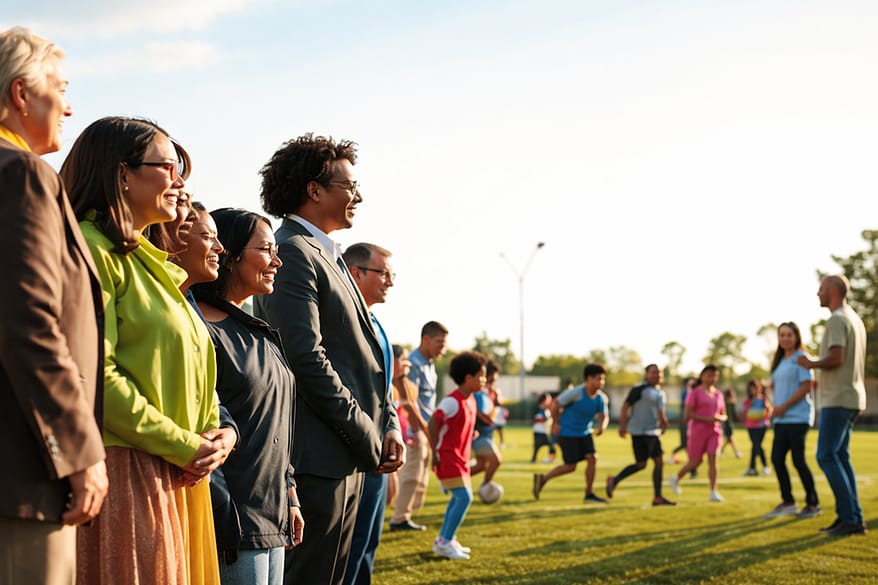
Getting started often needs a big push. For example, the AFL program got a boost from the York County Community Foundation’s Bob Hoffman Fund. This support isn’t just about money. It gives stability and credibility, helping programs plan for the future.
Then, partnerships make a bigger difference. Working with groups like Explore York led to “mega practices” with college coaches. These events inspired young athletes and opened doors to immediate scholarship offers. This shows how partnerships can turn dreams into reality.
Support goes beyond just money and events. Truly transformative programs involve the whole community. They keep parents and caregivers involved, making sure everyone is on the same page. When schools, businesses, and leaders join in, the program’s Community Impact becomes a part of everyday life.
| Stakeholder Group | Primary Contribution | Real-World Example | Resulting Impact |
|---|---|---|---|
| Foundations & Donors | Provide essential funding and long-term stability. | York County Community Foundation’s Bob Hoffman Fund. | Program sustainability and capacity for strategic growth. |
| Community Organizations | Offer venues, expertise, and collaborative event planning. | Explore York partnership for “mega practices.” | Direct access to college coaches and scholarship opportunities. |
| Parents & Caregivers | Ensure participant accountability and reinforce values. | Regular communication and progress updates. | Stronger participant commitment and holistic development. |
| Local Businesses & Schools | Supply resources, volunteers, and integration into community life. | Hosting events, providing mentors, or giving space. | Broadened support network and deeper community roots. |
This approach creates a strong support system for young people. It shows them their community cares about their success. Every partner, from big donors to local businesses, sends a message of unity.
Building this network is key to lasting social change. It turns a good idea into a movement. Shared efforts and successes bring pride and hope to everyone involved.
Creating Holistic Development Models
Building a champion is more than just drills and practice. It’s about nurturing the mind, body, and spirit. Forward-thinking groups now focus on holistic development models.
These programs cover every part of a young person’s life. The Athletic and Fitness Leadership (AFL) initiative is a great example. It has six core pillars that work together to build strong, capable individuals.
- Strength and Conditioning: Builds physical foundation
- Speed and Agility: Enhances athletic performance
- Nutrition Education: Teaches healthy lifestyle habits
- Mental Health Support: Develops emotional resilience
- Leadership Development: Fosters decision-making skills
- Spiritual Growth: Encourages purpose and values
Academic preparation is also part of the program. Students get SAT tutoring and visit college campuses. This helps their athletic talent open doors to education.
Accessibility is key. Programs have modest fees and offer full scholarships to York City students. Need-based aid helps others, removing financial barriers.
Mentorship is at the heart of the program. Coaches and older peers guide younger students. This helps growth go beyond the playing field.
The mentorship aspect has a big Community Impact. Trusted adults and peers show positive behaviors. Young people learn to face challenges with support.
This approach is similar to the holistic model for sustainable impact. Both see lasting change as needing to tackle many life areas at once.
| Program Area | Core Activity | Development Outcome |
|---|---|---|
| Physical Development | Strength, conditioning, speed, and agility training | Enhanced athletic performance, injury prevention, lifelong fitness habits |
| Academic Support | SAT preparation, college visits, tutoring sessions | Improved educational outcomes, college readiness, career pathway awareness |
| Emotional Wellness | Mental health workshops, counseling access, stress management | Increased resilience, emotional regulation, positive coping strategies |
| Life Skills | Nutrition education, financial literacy, leadership training | Practical competence, independent living skills, community leadership |
| Values & Purpose | Spiritual growth sessions, community service, mentorship activities | Stronger moral compass, sense of belonging, contribution to community |
The table shows how each part aims to achieve specific goals. Together, they prepare individuals for success in all areas of life.
Mentorship turns these programs into communities. Older students who benefited often return as coaches. This creates a cycle of guidance and support.
The Community Impact is clear. There are higher graduation rates and better health outcomes. More importantly, it shapes young adults who positively impact their neighborhoods. They become the next generation of mentors and leaders.
Holistic models show that sports programs can be powerful tools for community development. They build more than athletes—they build citizens. This approach ensures mentorship and support last long after the final whistle.
Success Stories: Community Turnarounds
When we talk about social change, we see the power of individual journeys. These journeys, together, change a community’s story. The real proof of a program’s worth is in the lives it changes.
These personal victories spread hope and possibility through neighborhoods. They show us that change is possible.
One program has a 100% high school graduation rate. And 100% of those graduates go to college or join the military. This success is not just luck; it’s the result of hard work and support.
In two years, over $3.6 million in scholarships has been given to these students. This money helps turn dreams of college into reality.
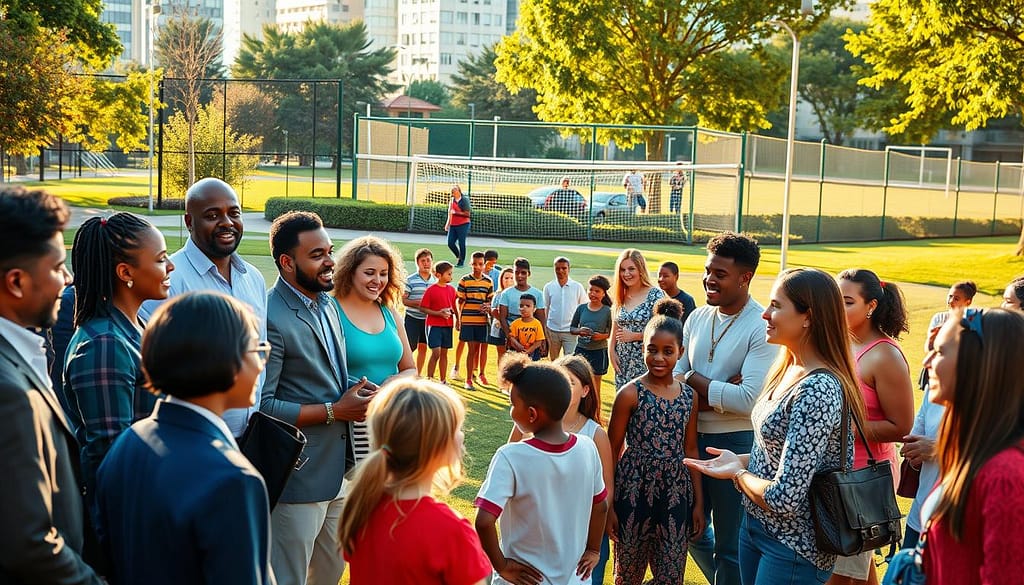
Kyzshion Calixte, now at Lincoln University, credits the program for teaching him critical life skills. These skills helped him succeed in school. His story shows how the program helps in all areas of life.
Jack Gautsch is at Clarion University. His story shows how sports can help with school. The program gave him the support he needed to see a future beyond his neighborhood.
Shavane Anderson is going to Syracuse University. Her involvement in the program greatly improved her GPA. It gave her the confidence and tools to succeed in college. Her story shows how the program unlocks people’s true abilities.
These alumni are just a few examples of the impact the program has. Together, they show how to change lives and communities. This is what Community Impact is all about.
Kyzshion, Jack, and Shavane are not just examples. They are the model for success. Their growth inspires others to reach for more. This is the start of real social change.
The community impact is clear. As more students succeed, the community changes. Education and achievement become the norm. This is how a neighborhood transforms, one graduate at a time.
These success stories prove that investing in youth is key to social change. They show us that helping young people can lead to real change.
Measuring and Celebrating Impact
To keep a program going, it must ask two key questions: “How are we doing?” and “How do we celebrate our wins?” Keeping track of progress with clear data helps improve. Celebrating success keeps the journey exciting.
Programs like the AFL have big, specific goals. They focus on important metrics for lifelong success. This approach makes everyone feel their growth is valued.
This focus on measurement turns hope into a real plan. It strengthens the culture of mentorship by showing where guidance makes a difference.
| Metric | Description | Why It Matters |
|---|---|---|
| Graduation Rate | The percentage of student-athletes who complete high school. | Academic success is the primary foundation for future opportunity, on or off the field. |
| Scholarship Dollars | The total financial aid earned for college or trade school. | Directly reduces the financial burden of higher education, making it accessible. |
| College Placements | The number of students enrolled in post-secondary institutions. | Measures the program’s effectiveness in creating pathways to continued education. |
| Football Offers | Athletic scholarship opportunities at the collegiate level. | Represents the pinnacle of athletic development and a major life-changing opportunity. |
Celebration makes data come alive. Events where students share their stories are powerful. These moments show the impact of hard work and connect supporters to the community.
Public recognition motivates the next generation. Seeing peers celebrated inspires younger athletes to aim higher. This cycle of inspiration is key for growth.
Physical spaces also celebrate commitment. A new weight room, funded by a grant, is more than equipment. It’s a tangible symbol of belief in student excellence. It builds daily pride and shows the community believes in their future.
By measuring and celebrating, programs create a powerful cycle. Data guides the work, and celebration honors it. This ensures every victory, big or small, leaves a lasting positive impact.
Lessons Learned and Future Goals
Real work teaches real lessons. Programs like the AFL show the power of accountability and talking with families every day. The key is to never give up on a young person, even when they stumble. This relentless belief is the engine of true community transformation.
Effective change requires adapting your approach to the situation, a principle supported by lessons from community change models. Sometimes you need decisive action; other times, building local partnerships is the path forward. Setting bold but realistic goals keeps everyone moving.
Our future aims are just as ambitious. We plan to build a new facility dedicated to female athletes. The ultimate vision is a leadership pipeline for the entire region. We want alumni to return as professionals, mentors, and community anchors.
This long-term mission fuels continuous Community Impact. It is about creating a cycle of hope and opportunity that strengthens the community for generations. The work continues, driven by the lessons of the past and the promise of the future.