
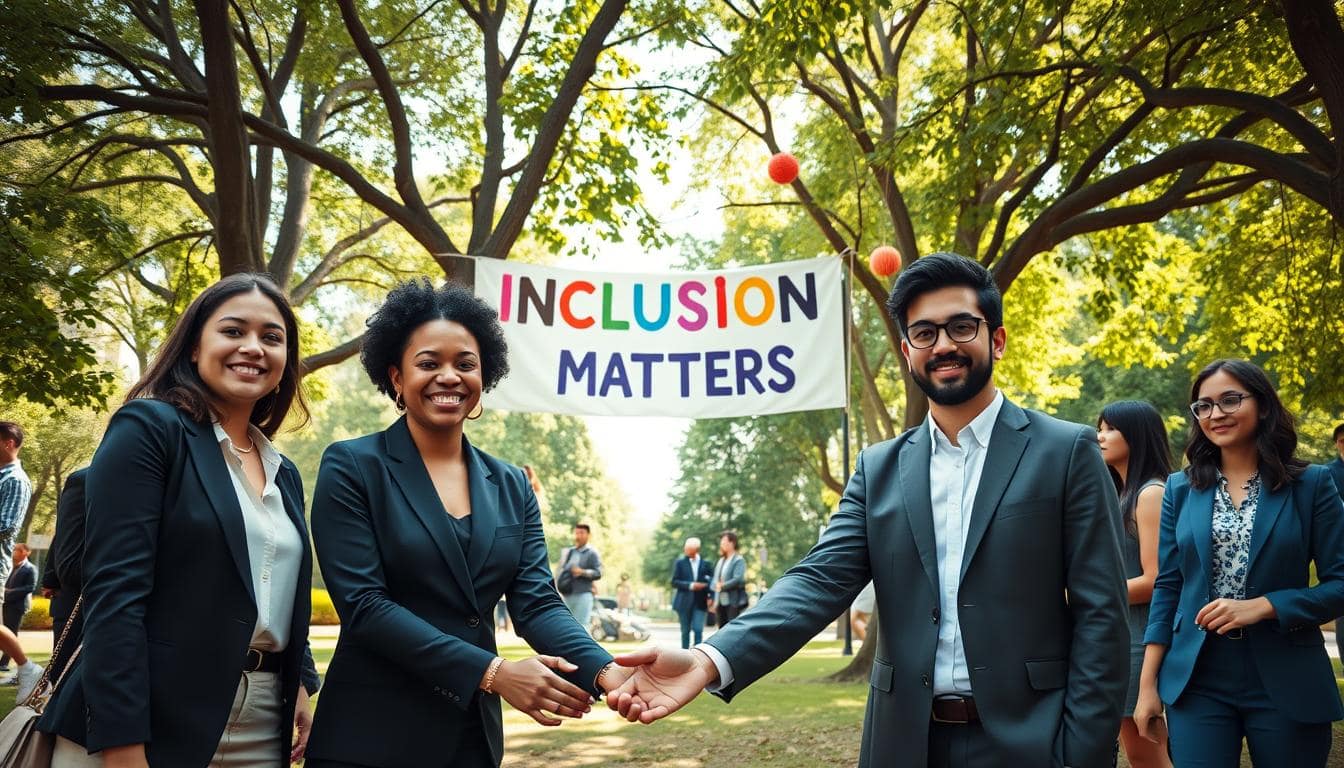
Let’s step back from the rainbow logos for a moment. Why is it important to create space for queer youth in teams and programs? It’s not just a nice thing to do.
It’s not optional. If your youth program gets federal money, you must follow USDA rules. These rules require inclusivity for all protected classes. It’s like the civil rights act for your after-school club.
The data is shocking. LGBTQ+ kids face a lot of harassment, assault, and homelessness. They also deal with depression and anxiety more often. Sadly, they are at a high risk of suicide.
This isn’t about being “woke.” It’s about keeping kids safe. Creating a team where everyone feels safe isn’t charity. It’s the basic work of positive youth development.
Without a real sense of belonging and safety, you’re not building a team. You’re putting young lives through a stress test. Understanding why LGBTQ+ inclusion is important is the first step. The next is realizing that, for some kids, their survival might depend on it.
Respectful Language and Everyday Behaviors
If language is the operating system of culture, then pronouns are the admin permissions—they determine who gets access to basic respect. Most team environments run on legacy code: binary assumptions, gendered greetings, and the silent tolerance of microaggressions. Updating this system doesn’t require a complete reboot, just a series of deliberate patches applied through everyday behavior.

The update begins with you. Model the behavior by starting introductions with your own pronouns. “I’m Sam, I use she/her.” It feels about as natural as your first karaoke solo, but it signals that identity isn’t presumed here. This simple act creates psychological safety—a digital handshake saying, “Your self-definition is welcome.”
Next, build in systems before rosters lock identities in place. Provide opportunities for students or team members to share their pronouns in low-stakes settings. This isn’t about forcing a public declaration; it’s about creating optional pathways. The goal? To make sharing as routine as stating your preferred email font.
Privacy regarding deadnames isn’t just polite—it’s operational security. A deadname in the wrong hands is social engineering malware. Keep that information on a need-to-know basis, locked down tighter than your smartphone. When rosters must use legal names, offer a separate, internal method for affirming correct names and pronouns.
Normalize pronouns in your digital footprint. Add them to:
- Email signatures
- Syllabi or team handbooks
- Video conference displays
- Staff directory profiles
This isn’t virtue signaling; it’s creating consistent user interfaces across all platforms. When someone sees pronouns in your signature seven times, the eighth time they won’t blink.
Now for the firewall test: handling anti-LGBTQ language. When “that’s so gay” slices through the locker room or a misgendering joke lands in the group chat, your response protocol matters. Think of it as incident response for cultural safety.
- Address immediately. Don’t let toxicity marinate. Silence is interpreted as policy approval.
- Name the behavior specifically. “That comment is derogatory toward LGBTQ+ people.” Not “that’s not nice,” but precise, analytical labeling.
- Use the teachable moment. Explain why the language harms. This isn’t a lecture; it’s a brief system notification about updated community standards.
- Support the targeted student. Check in privately. Your allyship shouldn’t end when the public conversation does.
- Hold students accountable. Consistent consequences teach that words have weight.
The real metric of inclusion isn’t perfect pronoun circles—it’s graceful error correction. When you slip (and you will), apologize briefly and move on. “Sorry, she—they—thanks.” Don’t perform a five-act play of self-flagellation. When you hear others misgender someone, correct it gently but clearly. “Alex uses they/them pronouns.”
Avoid binary divisions that reinforce outdated architecture. Replace “boys vs. girls” with “team red vs. team blue” or “east vs. west.” Ditch “ladies and gentlemen” for “everyone,” “team,” or “folks.” These linguistic patches seem minor, but they collectively rewrite the code your community runs on.
Everyday behavior is the continuous integration of inclusion principles. Each corrected pronoun, each avoided binary, each addressed slur—these are the commits that eventually build a truly inclusive repository. The grammar has consequences, and you’re helping write the syntax.
Locker Room/Uniform Policies
The locker room is one of the last places where gender rules are strict in youth sports. It’s a place where rules meet personal fears. For transgender or non-binary athletes, it’s like walking into a minefield of judgment.
To make safe spaces here, we need more than just good intentions. We need to change the space itself. It’s like rebuilding a city, not just painting walls.
First, we need to check our facilities. Are there single-stall restrooms? Can we make some areas gender-neutral? Having a Gender-Inclusive Restroom Map shows we care. It tells students, “We’ve thought about you.”
Uniforms are also a big issue. Why do we label clothes as “boys'” or “girls'”? We should focus on comfort and function. A menu approach is the solution.
- Activity-Based Options: Provide shorts, leggings, and skirts based on the sport, not gender.
- Comfort-First Design: Let athletes mix and match clothes from any category.
- Unremarkable Inclusion: We want choice to be so normal it’s boring. No big deal.
How we talk about policies matters a lot. Saying “use the facility that matches your gender identity” is a start. But we also need staff who can enforce it calmly. When parents question sharing space, our coaches need to know what to say.
This is where inclusion really matters. A locker room policy is not just words. It’s a test of whether our safe spaces are truly safe. Training staff to handle tough situations turns them into learning moments.
The goal is to make safety normal. When a non-binary kid can get their gear without fear, we’ve done it. The locker room should just be a place to change, not a source of anxiety.
We’re working to change the locker room from a place of fear to a place of safety. Belonging shouldn’t be hard. It should just be.
Handling Harassment and Reporting
Imagine the whistle has blown, but the foul wasn’t called. A slur echoes in the gym, a nasty comment cuts through the team chat. This isn’t just bad sportsmanship; it’s a breach of your core mission. LGBTQ+ youth face significantly higher rates of harassment. If your response is a vague “be kind,” you’ve already lost the play.
True LGBTQ inclusion requires a concrete, actionable protocol. It turns reactive panic into a coached response.
Let’s break down the game film. GLSEN’s 5-step method isn’t feel-good theory. It’s a tactical blueprint for when things go wrong.
The Immediate Interruption: No Neutral Zone
Step one is non-negotiable: address it now. Letting a comment “slide for team harmony” is a myth. Silence isn’t neutral; it’s complicity. Your immediate interruption—a firm “Stop,” a halted activity—signals that the behavior is unacceptable.
This isn’t about drama. It’s about drawing a bright, unambiguous line.
Naming the Foul with Precision
Step two moves from generic to specific. Don’t say “that wasn’t nice.” Say, “That was a homophobic slur.” Or, “That comment is transphobic.” Labeling the behavior precisely does two things.
It educates the perpetrator on the impact of their words. More importantly, it validates the experience of the target and anyone else who heard it. It proves you recognize the specific form of harm, cementing your commitment to real inclusion.

The Teachable Moment Huddle
Step three is where you, as the Sage, coach. This isn’t a public shaming session. It could be a private conversation later or a team discussion about respect.
The goal is enlightenment, not humiliation. Explain why the words are harmful. Connect them to your team’s values. This moment transforms a negative incident into a foundation for stronger, more aware team culture.
Centering the Targeted Player
Step four is critical: support the target. This isn’t about your assumptions. Ask privately, “What do you need right now?” Do they want an apology? Space? To talk?
Your role is to listen and follow their lead. This action alone can rebuild shattered trust. It tells them, “You are seen, and your safety matters here.”
Accountability: Where Values Have Teeth
Lastly, step five: hold students accountable. Consequences must be clear, consistent, and known to everyone beforehand. Whether it’s a formal report, a loss of privileges, or a restorative action, the outcome must have weight.
This step proves your policy isn’t just words on a poster. It’s the enforcement mechanism that makes your safe space a reality.
This systematic approach is your defensive playbook. For a deeper dive into building these structures, review these comprehensive LGBTQ inclusion policies.
| Step | Action | Coach’s Rationale |
|---|---|---|
| 1. Address Immediately | Interrupt the incident in the moment. Stop the activity if needed. | Prevents normalization of harm. Signals zero-tolerance. |
| 2. Name the Behavior | Specifically identify the action (e.g., “homophobic slur,” “bullying”). | Validates the target’s experience and educates the perpetrator on the specific harm. |
| 3. Use the Teachable Moment | Explain the impact privately or to the group, linking to team values. | Transforms a negative event into a learning opportunity for cultural growth. |
| 4. Support the Targeted Student | Ask the affected individual what they need. Listen and act. | Centers the victim’s agency and rebuilds trust in the coach’s protection. |
| 5. Hold Students Accountable | Apply pre-established, consistent consequences for the behavior. | Demonstrates that rules and LGBTQ inclusion values are enforced, creating real safety. |
Implementing this protocol does more than handle a crisis. It broadcasts a systemic message. It tells every team member that respect is procedural, not optional. Your move, coach, just became a lot clearer.
Engagement with Families and Allies
Talking to families about LGBTQ+ inclusion is like trying to sign a treaty. It’s filled with tough conversations and hidden agendas. You’re not just sharing news. You’re dealing with deep beliefs, age gaps, and cultural values.
Your first rule is to respect the kid’s choices above all. For LGBTQ+ youth, your team might be their only safe spaces. A place where they can be themselves without fear. Always ask if you can use their chosen name and pronouns when talking to their parents. This is about treating people with dignity.
When faced with opposition, use facts, not opinions. Explain that inclusion helps every student. It boosts empathy, cuts down bullying, and improves grades for all. You’re not pushing an agenda. You’re preparing kids for the real world.
Different families need different approaches. The table below shows how to handle each situation.
| Family Type | Communication Strategy | Key Messaging | Desired Outcome |
|---|---|---|---|
| The Allied Parent | Collaborative partnership. Empower as ambassadors. | “We value your support. How can we work together to model inclusion?” | Amplify their voice. Create peer-to-peer influence networks. |
| The Curious but Cautious | Educational, patient dialogue. Provide resources. | “This is about respect and safety for all kids. Let’s explore what that looks like.” | Build understanding. Move them from neutral to supportive. |
| The Openly Resistant | Firm, values-based boundary setting. Focus on student welfare. | “Our team’s commitment to inclusion is non-negotiable. Here’s how it protects your child too.” | Establish clear expectations. Minimize conflict’s impact on students. |
Host a family coffee hour. It’s not a lecture. It’s a chance for questions and answers. Invite diverse students and allies to share their stories. This turns abstract issues into real people.
Find your allies early. They can be your strongest supporters. A skeptical parent might listen to another parent who agrees with you.
This isn’t about winning every argument. It’s about showing that your team’s values are strong. You’re not asking for permission. You’re sharing knowledge. By creating safe spaces, you’re building something big. You’re supporting the whole person.
The goal is to be clear, kind, and firm. Some families might not agree. But they’ll understand the rules. And for the young athlete caught between home and team, that clarity is a safe space to breathe.
FAQ
Q: What is a pronoun?
A: A pronoun is a word that takes the place of a noun in a sentence. It helps avoid repetition and makes language more efficient.
Q: What are the different types of pronouns?
A: Pronouns can be classified into several types, including personal pronouns, possessive pronouns, reflexive pronouns, demonstrative pronouns, and interrogative pronouns.
Q: What are personal pronouns?
A: Personal pronouns are used to refer to individuals or groups of people. Examples include “I,” “you,” “he,” “she,” “it,” “we,” and “they.”
Q: What are possessive pronouns?
A: Possessive pronouns show ownership or possession. Examples include “mine,” “yours,” “his,” “hers,” “its,” “ours,” and “theirs.”
Q: What are reflexive pronouns?
A: Reflexive pronouns refer back to the subject of the sentence. Examples include “myself,” “yourself,” “himself,” “herself,” “itself,” “ourselves,” “yourselves,” and “themselves.”
Q: What are demonstrative pronouns?
A: Demonstrative pronouns point out specific nouns or objects. Examples include “this,” “that,” “these,” and “those.”
Q: What are interrogative pronouns?
A: Interrogative pronouns are used to ask questions. Examples include “who,” “what,” “which,” and “whom.”
Q: What is the difference between a pronoun and a noun?
A: A pronoun is a word that takes the place of a noun, while a noun is a word that refers to a person, place, object, or idea.
Q: How do pronouns contribute to sentence structure?
A: Pronouns play a vital role in sentence structure by replacing nouns and making language more efficient. They help avoid repetition and improve the flow of sentences.
Q: What are some examples of pronouns in sentences?
A: Examples of pronouns in sentences include “She is going to the store,” where “she” is a pronoun replacing a noun, and “They are coming over tonight,” where “they” is a pronoun replacing a noun.
Q: How do pronouns enhance clarity in language?
A: Pronouns enhance clarity in language by replacing nouns and avoiding repetition. They help convey meaning more efficiently and make sentences more concise.
Q: What are some common pronouns?
A: Some common pronouns include “I,” “you,” “he,” “she,” “it,” “we,” and “they.”
Q: How do pronouns contribute to effective communication?
A: Pronouns contribute to effective communication by replacing nouns and making language more efficient. They help convey meaning more clearly and improve the flow of sentences.
Q: What are some examples of pronouns in everyday language?
A: Examples of pronouns in everyday language include “I’m going to the store,” where “I” is a pronoun, and “They are coming over tonight,” where “they” is a pronoun.
Q: How do pronouns enhance clarity in language?
A: Pronouns enhance clarity in language by replacing nouns and avoiding repetition. They help convey meaning more efficiently and make sentences more concise.
Q: What are some common pronouns?
A: Some common pronouns include “I,” “you,” “he,” “she,” “it,” “we,” and “they.”
Q: How do pronouns contribute to effective communication?
A: Pronouns contribute to effective communication by replacing nouns and making language more efficient. They help convey meaning more clearly and improve the flow of sentences.
Q: What are some examples of pronouns in everyday language?
A: Examples of pronouns in everyday language include “I’m going to the store,” where “I” is a pronoun, and “They are coming over tonight,” where “they” is a pronoun.
Resource List and Hotlines
What makes a gesture of support real? It’s the infrastructure. Think of these resources as your emergency contacts and intellectual toolkit all in one.
Start with the basics. Know your USDA non-discrimination rules. Bookmark the UConn Rainbow Center for their clear pronoun guide and inclusive classroom tips. This is your playbook, not just paperwork.
For a reality check, check out GLSEN’s National School Climate Survey. Their Safe Space Kit turns data into action. Real LGBTQ inclusion means knowing the landscape, not just decorating it.
The human side is key. Post the numbers: The Trevor Project (1-866-488-7386) for youth, Trans Lifeline (877-565-8860) for the trans community. For a wide range of mental health supports, the HRC’s resource page is your go-to.
This list shows your commitment is real and ready. Distributing it means your work on LGBTQ inclusion is lasting and supported. Now, go use it.