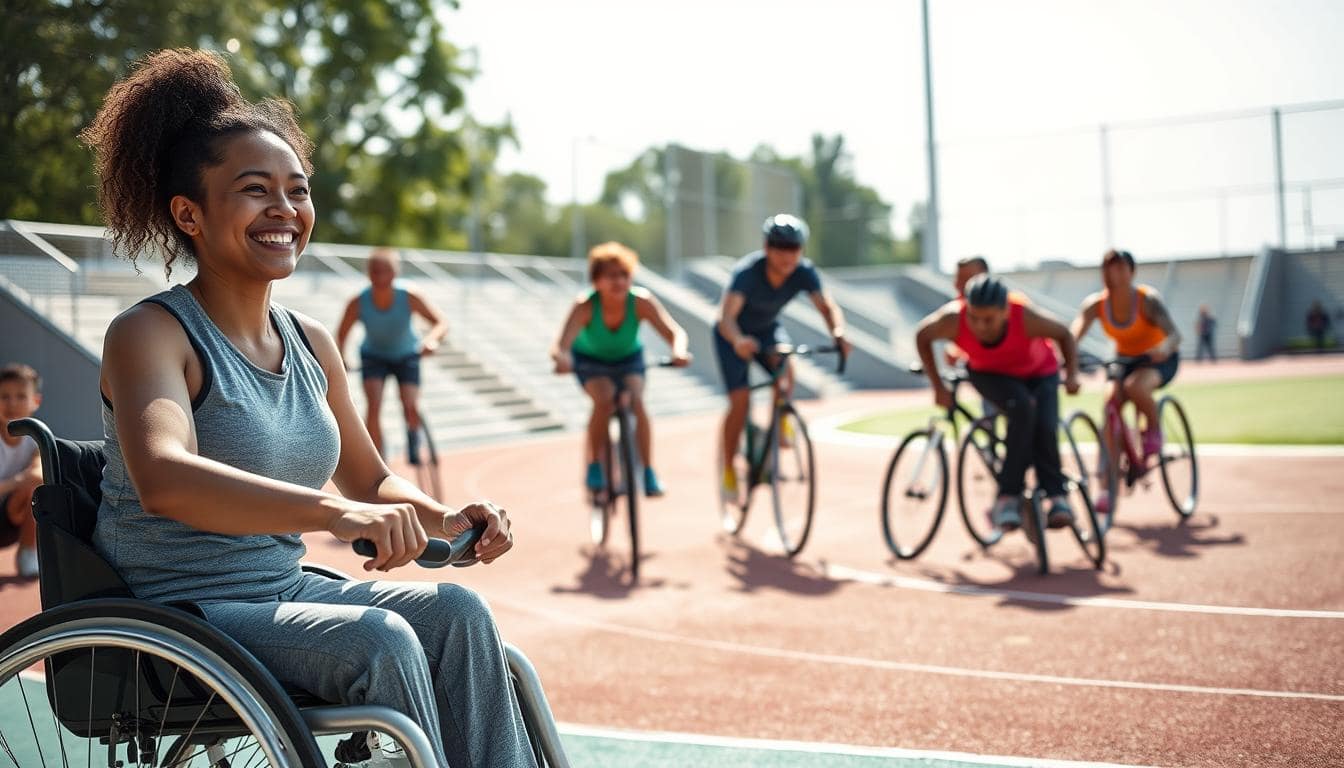
Let’s face it. Most school sports programs are as exclusive as a private club. The Ohio Needs Assessment shows they’re not for everyone. It’s clear they’re not designed for all.
This isn’t about giving special favors. It’s about smart, fundamental design. Universal design means starting from scratch, not just adding a ramp later.
The Ohio report used a public health model to identify the issue. The solution was simple: design for all from the beginning. Why create two systems when one can work for everyone?
This change is key for adaptive sports to become more inclusive. It moves from being an exception to an expected part of the game. The aim is not to have a separate league. It’s to have one game where everyone can play.
Universal design is the upgrade our communities need. It’s not just about making things accessible. It’s about rethinking what sports and community can be.
Assessment and Individualized Modifications
The Ohio Needs Assessment showed a harsh truth about sports for people with disabilities. “Most of the time school sports are not accessible.” This isn’t just a slogan; it’s a real problem.
Many young athletes felt biased and unwelcome. This bias isn’t always loud. Sometimes, it’s the silent assumption that blocks their way.
To solve this, you need to understand the problem first. The Ohio team used surveys and interviews to listen to athletes. This is where disability inclusion starts: with listening, not just talking.
The team found a smart starting point. They focused on sports that are easier to join, like swimming and track. These sports need less teamwork and can be tailored for each athlete.
These sports are like the easy-to-reach fruit. They offer ways to adapt without changing everything. For example, a swimmer’s lane can be widened, and track events can be timed.
These changes make sports more inclusive. They turn inclusion into a clear plan. Listen, understand, and start with the smallest steps.
But trust is key. The Ohio data shows that feeling unwelcome stops athletes before physical barriers do. Building strong relationships is essential for success.
Modifications need trust to work. A ramp is just metal and concrete. It’s the willingness to use it that matters. A coach who respects and explains rules can make all the difference.
The main point is clear. Disability inclusion is like building a house. You need a plan (assessment), the right tools (modifications), and a strong foundation (trust). Without any, the structure fails. With all three, you build a home.
Equipment and Facility Adaptations
If you think modifications are just fancy extras, you’re off track. We’re talking about the basics here. It’s about making things work for everyone, not just a few.
Think of the right equipment as the norm, not something extra. A racing wheelchair is just what an athlete needs to perform. The same goes for a well-designed facility. It’s not about adding on, it’s about building right from the start.
Take Turnstone in Fort Wayne as an example. They didn’t just add a new coat of paint. They built a place from scratch, with wheelchair basketball, indoor rowing, adaptive golf, and sled hockey. It shows that the right space can open up new possibilities.

The Fellowship of Christian Athletes (FCA) also gets it. They focus on small but important modifications. They offer audio Bibles for athletes who can’t see, and make videos accessible to everyone. It’s not about giving out favors; it’s about making things fair.
These stories show us that modifications unlock human talent. They turn a one-size-fits-all approach into something tailored for each person. Whether it’s a special baseball or a lower counter, it says one thing: you belong here.
This idea isn’t just for sports. It’s for making any place welcoming. It’s about asking what someone needs to succeed, not what they can’t do. The answer is in the details.
For more on making workplaces inclusive, check out this article.
Partnering with Therapists and Schools
In the world of adaptive sports, success is not just about what you do. It’s about who you work with. Even with the best equipment and designs, without the right partners, you’re just talking to yourself.
Building an inclusive community is all about partnerships. It’s the hard work behind the scenes that makes dreams come true. Take Visit Fort Wayne and Turnstone, for example. They didn’t just work together; they merged their efforts.
They had a clear plan to host events. They brought together police, college staff, and community leaders. Mike Mushett and Dan O’Connell aimed to improve event quality and make them attractive to visitors. Translation: they made inclusion profitable. It was a smart business move for everyone.
Studies back this approach. A research study found that successful programs have strong partnerships and support from leaders. This makes them more than just temporary fixes.
So, what does this look like in action? It’s a therapist helping a coach, or a school opening its facilities to a sports club. It’s about working together to give young athletes a chance to shine.
The heart of this movement is its network. Therapists and medical experts provide the knowledge needed for modifications. Schools offer the space and participants. Tourism and civic groups help scale up events, drawing in crowds and changing minds.
Don’t see your program as a solo effort. Instead, focus on building connections. Your strongest asset might just be your network of partners.
Volunteer Training and Safety
Training volunteers for disability inclusion is more than just checking a box. It’s the foundation that turns anxiety into confidence and charity into a true partnership. Imagine not letting someone coach a football team without knowing the game plan. Yet, we often let people help athletes without knowing the basics of their needs.
Ohio schools show a clear warning sign. Most staff have zero training on inclusive sports. Yet, they want it and believe their districts would support it. This is a huge opportunity we’re missing by not providing real education.
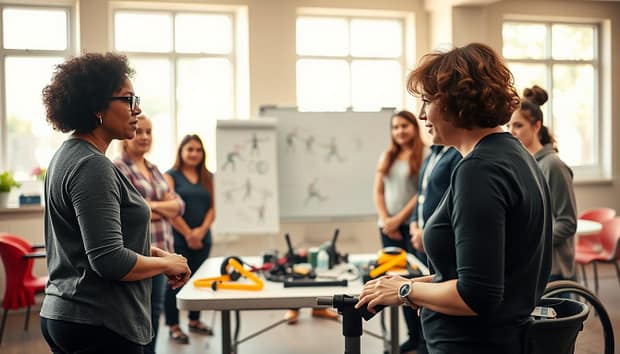
So, what does good education look like? It’s more than just a basic seminar. It includes both practical skills and understanding different cultures. It teaches safe transfer techniques, how to use adaptive equipment, and basic first aid for specific conditions.
It also covers soft skills like alternative communication methods and understanding behavior as communication. This helps volunteers offer support without assuming someone needs it.
The Fellowship of Christian Athletes shows a great example. They don’t just recruit volunteers. They teach them. They even promote leaders from the community, like Shane Sorrentino, who has Down Syndrome. He leads Huddles and shares the Word, teaching others.
This approach changes everything. It breaks down the “us-and-them” barrier. Volunteers become students and partners, learning from the community they serve. Athletes become guides, not just recipients. This builds a culture of true belonging, not just tolerated presence.
Let’s look at the shift in models. The old model relies on goodwill. The new model is built on structured skills and shared leadership.
| Aspect | The Charity Model (The Liability) | The Partnership Model (The Assurance) |
|---|---|---|
| Primary Driver | Pity or Obligation | Respect and Shared Purpose |
| Volunteer Role | Helper / Doer For | Partner / Learner With |
| Training Focus | Basic “Do’s and Don’ts” | Safety Protocols + Cultural Fluency |
| Leadership Source | Exclusively from “Able-bodied” Staff | Integrated from the All Ability Community |
| Outcome | Dependence, Possible Harm | Independence, Mutual Growth, Safety |
Adopting this approach isn’t just about being nice. It’s a smart way to manage risks. A volunteer who knows how to handle a wheelchair or recognize sensory overload isn’t just creating inclusion. They’re preventing accidents and protecting your program’s reputation.
The path forward is clear. Stop mixing enthusiasm with expertise. Use the hunger for training in schools. Create curricula that focus on safety and solidarity. And most importantly, give people like Shane the chance to lead. That’s how you turn volunteers into a competent community of allies.
Inclusive Competition Formats
The true spirit of sports inclusion isn’t about participation trophies. It’s about the complex, thrilling games you might not know about. These games are where “modifications” become a high-stakes game theory. It’s not just about lowering a hoop; it’s about rewriting the game to make it fair for everyone.
Organizations like Sportable understand this. Their “Adaptive Sports 101” workshops are not pity parties. They are places where kids learn new games. They play goalball, a silent game for the blind, and sitting volleyball, a fast-paced game that focuses on power and quick reflexes.
Sitting volleyball is not a watered-down version of volleyball. It’s a unique game that demands power and precision. The modification of the environment and rules makes the game more intense. It’s about pure athleticism, not physical strength.
This idea is seen everywhere, from local gyms to the world stage. Terry Lingenhoel in Hungary took baseball and made it tactile for the blind. His blind baseball club competed in the World Blind Baseball International Cup in London.
These games are not watered-down versions of sports. They are complete, complex athletic worlds with their own strategies and beauty. Wheelchair basketball is a game of angles and momentum. Goalball is a game of spatial awareness.
Inclusive competition formats show that inclusion is not about letting others play our game. It’s about saying our game is worthy of your skill. The biggest modification is in our philosophy of competition. It moves from exclusion to creation. And the results are more exciting, pure, and true to the spirit of sports.
Funding Sources for Adaptive Gear
Adaptive gear is expensive. A racing chair is more than just a piece of equipment; it’s a big investment. The old view was that it was all about charity. But new data shows a different truth.
The first study of its kind found something surprising. Adapted and para sports tourism events bring in $80.5 million to $134.2 million each year. Jon Schmieder from Huddle Up Group said this area has been overlooked by the sports tourism industry. This is a huge chance for investors.
Funding is changing. Federal grants, like those from the Administration for Community Living, help start things off. Organizations like Holland Bloorview offer loan programs for equipment. This makes it easier for people to get started. Cities like Fort Wayne invest in hosting events that attract visitors.
The focus has moved from “Can we afford this?” to “What’s the return?” Adaptive sports can be a strong economic driver. Each piece of gear is an investment in a more inclusive and profitable community. When people see the value, the money will follow.