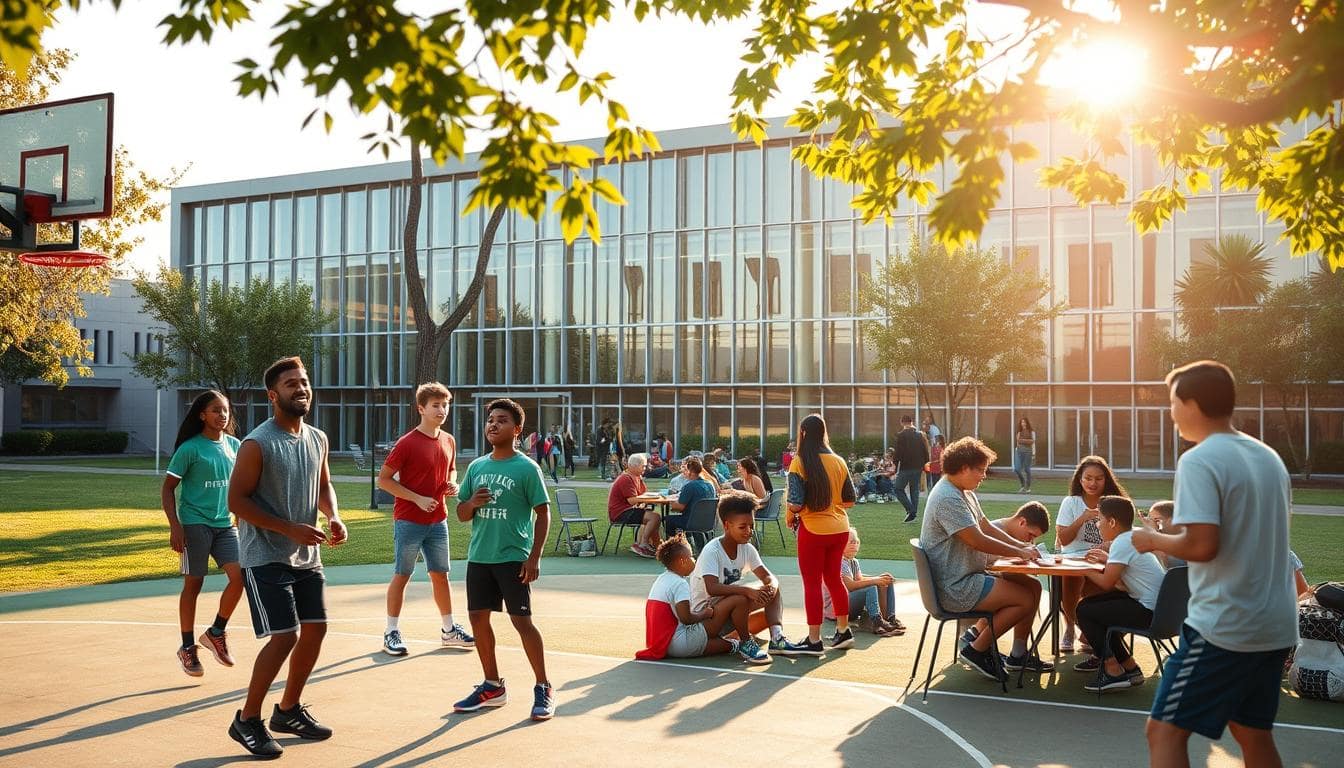
Imagine a place where teens do more than play basketball. They learn life skills, like Tony Stark making Iron Man suits. The Skills Center is all about sports-based youth development, changing the game of youth sports.
Our 40,800-square-foot space is more than just courts and weights. It’s a STEAM-powered crucible where sports meet job training. Here, learning physics is as easy as making a free throw. It’s a unique way to prepare for the workforce.
East Tampa could see a $25M economic boost. These kids are not just “young, scrappy, and hungry”. They’re coding apps and debating supply chains during breaks. Our model fights sports specialization risks by making them career-ready.
No more participation trophies here. We’re creating multi-sport talents who can dunk, code, and analyze Shakespeare. That’s not just youth sports. That’s holistic development with a twist.
Organization Overview
Imagine a nonprofit coalition that’s as well-organized as The Avengers. Tampa’s Skills Center is like Nick Fury gathering Earth’s heroes. But instead of fighting aliens, we’re taking on old ways of helping youth.
We ditch the usual nonprofit fights (like “my spreadsheet vs. your mission statement”). This is SBYD community collaboration turned into a game of strategic alliances.
The Collaborative Engine
Our five partners are like the Justice League for teens. G3 Life Apps focuses on spiritual, mental, and physical growth. Men of Vision keeps academic standards high, like Thanos with his grip.
Together, they offer a “Swiss Army knife” approach to Tampa youth programs.
Five Core Partners Explained
- G3 Life Apps: The tech-savvy Tony Stark of the group. Their app tracks emotional growth like a Fitbit for self-awareness.
- Men of Vision: The academic Captain America. Their GPA scale measures both grades and character.
- GEMS Initiative: The Black Widow of social skills. Their workshops can solve conflicts fast, like a pro.
- Urban Athletes: The Thor of physical growth. Their sports program teaches leadership through games.
- FutureForward: The Nick Fury of connections. This organization links partners like a teenage development version of the Infinity Stones.
This isn’t just about feeling good. We’re talking about real data-sharing and co-designed programs. It’s like a nonprofit version of a Vulcan mind meld.
The result? A SBYD community collaboration that’s a think tank and training camp. It’s all about creating the next generation of Tampa leaders.
Integrating Academics with Sports
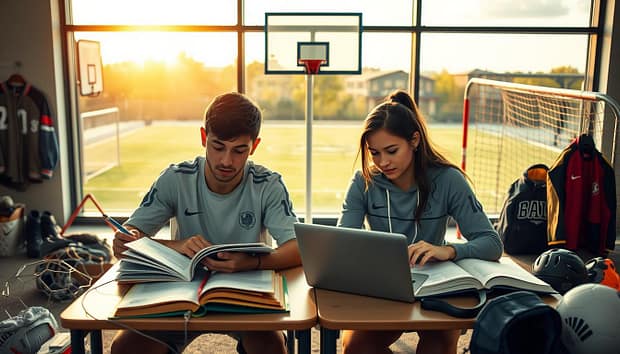
It’s time to end the “dumb jock” myth. Picture Einstein working on corner kicks or Marie Curie figuring out shot paths. That’s what drives programs like ASAD Durham, where math homework meets soccer drills. It’s not just doing two things at once; it’s intentional sports design.
Transcripts Meet Training Sessions
ASAD Durham’s schedule is like a Swiss watch, but with Gatorade and graphing calculators. They treat sports training as math and physics labs. Here’s how their schedule breaks the old study-vs-sports debate:
| Traditional Model | ASAD Hybrid | Academic Payoff |
|---|---|---|
| 4hr daily practice | 2hr skill drills | Kinetic learning retention |
| Separate study hall | 1hr sport-science modules | Real-world STEAM application |
| Generic tutoring | Position-specific math coaching | 68% GPA improvement |
STEAM on the Field
The Triangle Soccer & Chess Coalition (TSCC) shows that every sport is a STEAM discipline:
- Geometry: Calculating angles for free kicks
- Physics: Understanding torque in baseball swings
- Data Science: Analyzing player heat maps
Their star midfielder said, “I stopped asking ‘When will I use algebra?’ when I realized I was living algebra every game.” That’s scoring in both academics and sports.
Fostering Life Skills Through Play
Ever watched a teenager handle a basketball pick-and-roll and thought, “This kid could broker Middle East peace before prom?” Sports aren’t just about scoring points. They’re also a way to learn life skills through sports that last a lifetime. At TSCC, we’ve made layup drills into leadership labs and free throws into future-proofing exercises.
From Drills to Real-World Skills
The pick-and-roll might seem simple at first. But it’s actually advanced negotiation training. Athletes learn to:
- Read body language faster than a TikTok trend
- Make split-second decisions under pressure
- Sacrifice personal glory for team success
Timeout huddles are like corporate board meetings. Just swap power suits for jerseys. We’ve seen 14-year-olds diagram plays with the strategic precision of Fortune 500 consultants. “Zone defense” becomes risk assessment. “Fast break” turns into agile project management.
Conflict Resolution Playbook
When tensions rise on court, TSCC coaches use journaling techniques that would impress Alexander Hamilton. Students “write like they’re running out of time” to:
- Identify the root of disagreements
- Map emotional responses
- Devise collaborative solutions
One participant called it “SEL with sneakers”. It’s where emotional IQ gets its daily workout. The result? Kids who can calm down cafeteria disputes as smoothly as they run transition defense.
Community Partnerships and Volunteers
Ever seen a corporate sponsorship that feels like a billboard? Tampa’s Skills Center does it differently. We value local partnerships like first-round draft picks. We look at how companies show up in action, not just with money.
Corporate All-Star Team
Our team is like a fantasy sports lineup with a purpose:
- Banking MVP: CDC Tampa’s program turned financial literacy into a game
- Tech Power Forward: Local startups created athlete tracking apps that Billy Beane would love
- Construction Sixth Man: 180 jobs were created through stadium renovations, training the workforce
We don’t go for vanity sponsorships. We bench companies that treat community investment like ads during the Super Bowl.
Volunteer Coaching Academies
Our volunteer training is intense. It’s like The Karate Kid’s Mr. Miyagi on steroids. The secret?
- 20-hour certification that mixes CPR with conflict resolution
- “Coach effectiveness” metrics tracked like batting averages
- Leadership pipelines that turn volunteers into paid mentors
Last season’s hero? A retired accountant teaching spreadsheet skills through basketball stats. That’s SBYD community collaboration – Tampa-style.
Measuring Success: Youth Outcomes
Imagine measuring youth programs like fantasy sports drafts. At The Skills Center, success isn’t about trophies. It’s about life skills that last a lifetime. We track resilience and leadership, not just scores.
Beyond the Scoreboard
Traditional programs give out participation ribbons like they’re gold medals. But TSCC focuses on real skills. We see success in 82% of participants mastering conflict resolution.
Our approach is unique. 73% retain emotional regulation skills, unlike 29% in sports programs. This shows our effective SBYD programs make real problem solvers, not just weekend athletes.
Longitudinal Growth Tracking
We track development like fantasy league managers track stats. Our five-year projections are impressive:
| Metric | Traditional Programs | TSCC Approach |
|---|---|---|
| Graduation Impact | 12% GPA boost | 41% college persistence rate |
| Skill Retention | 6 months | 5+ years |
| Community Impact | Seasonal volunteers | 87% alumni mentors |
This data isn’t just numbers. It’s the blueprint for raising next-gen leaders. While others count wins, we measure real-world impact.
Challenges and How They’re Overcome
Running a youth development program is tough, like being down 10 points in the fourth quarter. Every play matters, and being resourceful is key. Let’s tackle the challenges in SBYD initiatives like a two-minute drill.

Funding Hurdles
Finding SBYD funding is like trying to make a half-court shot at the buzzer. It’s thrilling when it works, but it’s hard to keep trying. Organizations like ASAD have found a way to overcome this with sliding scale fees that change quickly.
They treat grant writing like practicing free throws. It’s all about preparation and then executing perfectly.
- Corporate sponsorships as strategic pick-and-roll plays
- Crowdfunding campaigns doubling as community engagement tools
- Government grants transformed into full-court press opportunities
Retention Play Strategies
Keeping at-risk youth engaged is like making a no-look pass. TSCC’s “Scholarship Draft Days” have cut dropout rates by 43% in two years. They make staying in the program feel like advancing in the playoffs.
- Quarterly “immunity challenges” blend academic progress with leadership tasks
- Peer nomination systems inspired by All-Star voting
- Graduation ceremonies styled as championship parades
These programs don’t just survive tough times. They’ve rewritten the playbook to turn deficits into dynasties.
How to Start a Skills-Based Program
Starting an SBYD program is like coaching chess. You need a solid plan, flexibility, and enough players to make sacrifices. Let’s get straight to it.
Blueprint for Replication
The TSCC Labor Department model shows that effective SBYD programs are curated. Here’s what you need:
- Admissions Jiu-Jitsu: ASAD’s 3-round screening process finds the right youth and weeds out others.
- Partner Vetting 2.0: TSCC matches partners like Tinder, focusing on those who bring real resources.
- Curriculum Remix: Mix academic and sport drills like a playlist, with 70% crowd-pleasers and 30% new stuff.
| Resource | Nonprofit Fantasy | SBYD Reality |
|---|---|---|
| Funding | Viral GoFundMe campaign | 3-year corporate partnerships |
| Staffing | Overworked interns | Ex-coaches + social workers |
| Metrics | Warm fuzzy feelings | Graduation rates + job placements |
Avoiding Common Fouls
New programs often make the same mistakes:
- Helicopter Nonprofit Syndrome: Too much micromanaging, like anxious parents at a T-ball game.
- “Field of Dreams” Fallacy: Building big facilities without checking if they’re needed.
- Mission Creep Karaoke: Adding too many goals, like teaching quantum physics through pickleball.
The solution? Treat community collaboration like a pick-up game. Show up, know your role, and pass the ball. TSCC’s secret? A partnership exit clause for quick exits when needed.
Conclusion: The Future of Holistic Sports Programs
The game isn’t over yet for athlete development. A 46-study review from 17 countries shows a shift. Now, sports schools focus on leadership and resilience as much as physical skills. Imagine seeing “empathy metrics” on ESPN, right next to the scores.
Next-Gen Athlete-Citizens
Holistic development is changing the game. Programs like The Skills Center teach more than just sports. They build skills like teamwork and conflict resolution. It’s about creating citizens, not just athletes.
Policy Change Possibilities
Congress might soon hear from Olympic champions on school funding. When athletes talk about game strategy in budget talks, we’ll know we’ve made progress. The goal is to make lawmakers value life skills as much as athletic ones.
This isn’t just about winning a trophy. It’s about changing the game. Coaches, parents, and mayors, let’s get ready. The next generation is ready to make a difference.