
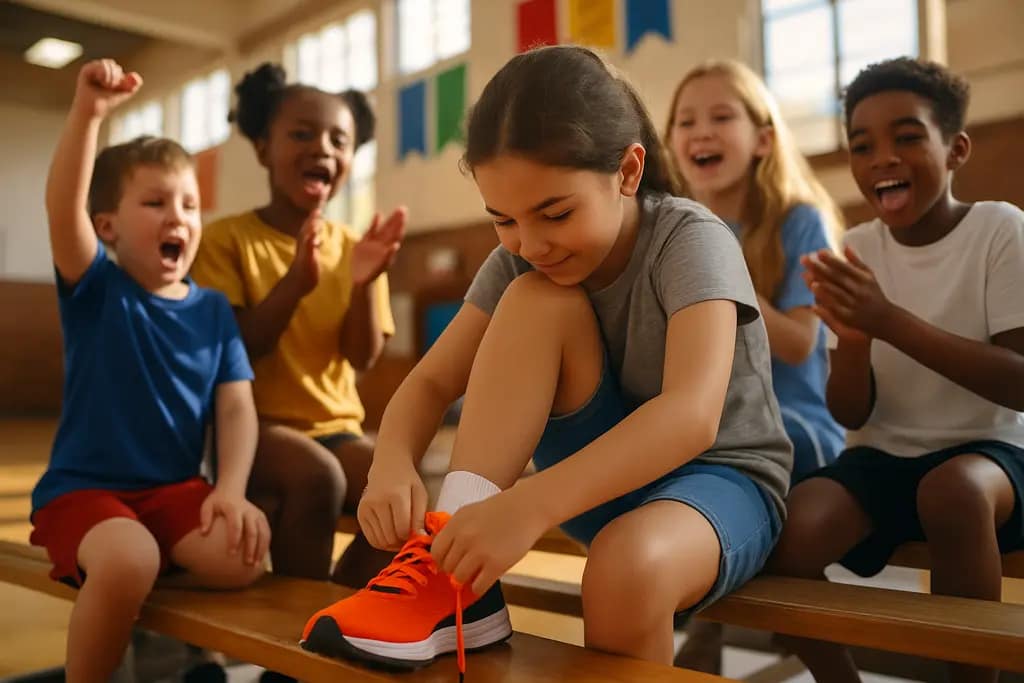
Kicks for Class gave Houston families a clear example of how school sports access often starts before practice begins. On September 10, 2026, about 100 middle school students from Edison Middle, Owens Intermediate, Paul Revere Middle, and Spring Woods Middle took part in an event at Academy Sports + Outdoors, with each school sending 25 students, according to the Houston Chronicle report. The students received free athletic shoes and back-to-school supplies tied to participation in school sports and team activities.
For a student, a new pair of shoes can mean more than fresh gear. It can mean showing up for tryouts without feeling set apart, joining classmates in drills, and stepping into a school team setting with confidence. That is why this Houston effort matters as an impact story: it connects basic needs, youth development, and the everyday details that shape whether a young person feels ready to participate.
What Kicks for Class Delivered In Houston
Why Kicks for Class Matters For Middle School Sports
The event focused on middle school students, a stage when sports can help young people build habits around teamwork, responsibility, time management, and school connection. Middle school athletics often asks students to bring energy, commitment, and the right equipment. When families face cost pressure, the gap between wanting to join and being able to join can grow quickly.
The value of the event was not only in the shoes. Students also received new uniforms, hygiene kits, burger boxes from Whataburger, and H-E-B gift cards through a partnership with CIS National, as reported by the Houston Chronicle. That mix of support speaks to the wider needs around school participation. Athletic gear may open the door, while supplies and personal-care items help students feel prepared during the school day.
Partners Behind The Event
The event was organized as a charitable initiative by Communities In Schools of Houston with the Heil Law Firm, Academy Sports + Outdoors, and Whataburger. Each partner brought a different piece of support to the same goal: helping students participate more fully in school life.
That kind of coordination is important for local sports access because one school, one coach, or one family should not have to carry the full weight alone. Community partners can help remove practical barriers while school-based teams and campus staff keep students connected after the event ends.
Sports Access As Student Development
Gear, Confidence, And Team Belonging
For Kicks for Class, the clearest sports lesson is simple: access affects participation. A student without proper shoes may hesitate to try out, avoid practice, or feel less prepared next to peers. By meeting that need directly, the event supported the first step into team settings where young athletes can learn from coaches, encourage classmates, and take pride in representing their schools.
Sports can also give students a structured place to practice social skills. A team setting asks young people to listen, adjust, encourage others, and keep showing up. Those skills matter in classrooms and neighborhoods, not just on courts, fields, or tracks. When communities help students get the basics needed to participate, they are also supporting a pathway for growth.
Why Local Access Efforts Fit Houston
Houston is a city where school identity, neighborhood support, and youth opportunity often meet through athletics. A shoe event may look small next to a full sports season, but it can be a starting point for students who want to join a team or stay active with classmates.
Access-first efforts also work best when they are connected to broader youth programs. That same spirit appears in local efforts to widen free play opportunities, including Houston youth sports access programs that focus on removing cost barriers for kids. The shared idea is practical and community-centered: meet students where they are, then help them step into healthy team experiences.
What CIS Houston Data Shows

Scale Of Campus Support
Communities In Schools of Houston is not a one-day presence in the region. CIS Houston reported serving over 118,000 students across 135 campuses during the 2024-2025 school year, with a 98% student retention rate and a 97% grade-promotion rate in its annual report. Those numbers give useful context for the shoe event because they show the organization works across many campuses and tracks school-related outcomes.
For sports-focused community improvement, that connection matters. A one-time event can provide a needed item, while a campus-based support network can help students stay connected to school routines. When those two pieces work together, student-athletes are better positioned to keep participating, stay engaged, and feel supported by adults beyond their coaches.
Why School-Based Support Fits Athletics
School sports do not stand apart from attendance, grades, behavior, and student well-being. Coaches often see when a student is discouraged. Teachers may notice when a young athlete is struggling to keep up. Support organizations can help connect those signals so that a student receives help before a problem grows.
The September 10 event fits that model because it addressed a visible participation need. Shoes, uniforms, hygiene kits, and school supplies are tangible. Students can use them right away. At the same time, the event pointed toward a larger goal: helping students feel that school is a place where they belong and where adults are willing to remove obstacles.
Kicks for Class And Houston Youth Sports Access
Kicks for Class did not solve every cost challenge tied to student athletics, and no single event could. Families may still face transportation needs, schedule pressure, sport fees, or equipment costs that vary by activity. What the Houston event did show is that targeted support can make participation more realistic for students who might otherwise miss out.
The next measure of impact will be seen in quieter moments: a student wearing new shoes to practice, a classmate joining a team activity with more confidence, or a family feeling less strain at the start of school. Those moments are hard to reduce to one number, but they are central to youth development through sports.
Kicks for Class offered a hopeful reminder for Houston schools and community partners. When practical needs are met, students gain more room to focus on learning, teamwork, and participation. That is the heart of sports as a community tool: helping young people step onto the court, field, or track with support behind them.