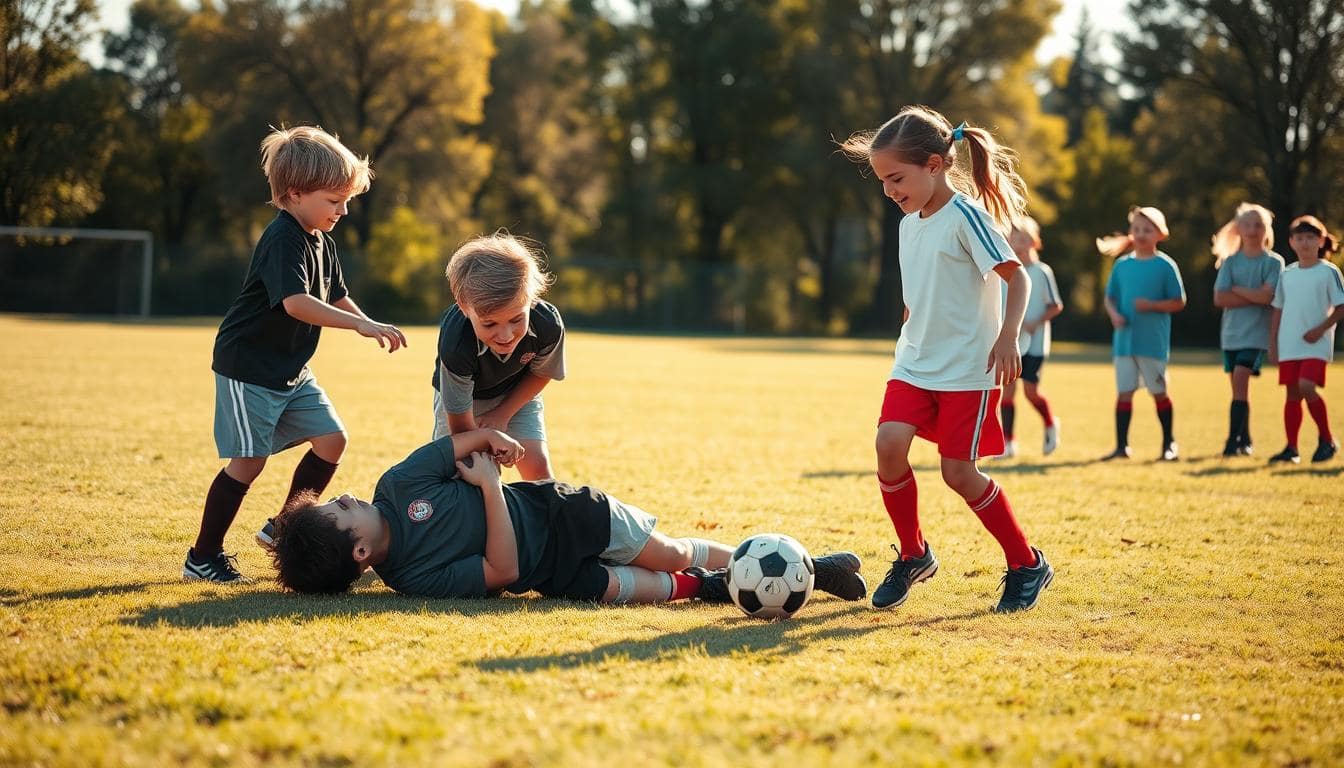
Imagine a grassy field on a Saturday morning. The sound of sneakers and cheers fill the air. It’s more than a game; it’s a classroom for life.
Young athletes do more than play. They learn vital skills to connect and succeed. They learn through both struggles and victories.
The President’s Council on Sports, Fitness & Nutrition backs this up. Playing sports boosts mental, emotional, and physical health. It’s a complete package of benefits.
Sports teach Social and Emotional Learning (SEL). This includes empathy, understanding and sharing feelings. Sports offer a real-world setting to practice these skills.
Every moment on the field is a chance to grow. Kids learn to read emotions, work together, and support each other. They develop emotional intelligence through action.
Parents and coaches know the truth. Youth sports are key. They help create connected, emotionally aware young people. The real win is more than just the score.
Harnessing Sports to Enhance Social Skills
Every pass, every defensive shift, and every shared celebration on the field is a lesson in teamwork. Team sports are a unique place where social skills are practiced. The field is like a lab for learning to work together and communicate.
Team sports teach teamwork through a shared goal. Whether it’s winning a game or improving together, everyone works together. Each player has a role, showing that everyone’s effort is important.
Children learn to cooperate and communicate. They see that sometimes they set up the score, and other times they take the shot. This teaches them about cooperation and responsibility, building strong relationships.
Trust is built through teamwork. When teammates rely on each other, bonds form. This trust is key to a strong team, learned through effort and reliability.
The lessons learned on the field apply to life. Skills like cooperation and teamwork help in school and work. Studies, like those from Michigan State University’s Engaged Scholar, show sports are great for developing these skills.
| Social Skill (Sport) | How It’s Learned | Life Application |
|---|---|---|
| Cooperative Play | Executing a set play, like a basketball pick-and-roll, requiring precise timing and unselfishness. | Collaborating on a work project, where supporting a colleague’s idea leads to a better overall result. |
| Shared Responsibility | Each player maintaining their defensive zone in soccer to protect the team’s goal. | Contributing your fair share to household chores or a team assignment at school. |
| Verbal & Non-Verbal Communication | Calling for a pass on the field or using a hand signal in baseball. | Clearly expressing ideas in a meeting or using attentive body language during a conversation. |
| Conflict Resolution | Quickly moving past a missed assignment during a game to focus on the next play. | Addressing a disagreement with a friend or coworker constructively and without holding a grudge. |
| Leadership & Support | A captain encouraging a teammate after a mistake, or a player stepping up in a critical moment. | Mentoring a new employee or providing emotional support to a family member during a tough time. |
Teamwork is the key to many social skills. It teaches empathy, patience, and how to contribute to a bigger goal. The playing field is a safe place to learn and grow together. These experiences make better athletes and more connected, capable people.
Developing Exercises for Communication
Imagine a practice where every drill strengthens the invisible threads of communication between athletes. This is where theory meets action. Coaches must move from understanding why communication matters to mastering how to build it.
Effective communication is key to any successful team. It’s not just about calling plays. It’s about building trust, solving problems, and working together as one. Here are some practical exercises for coaches and parents.
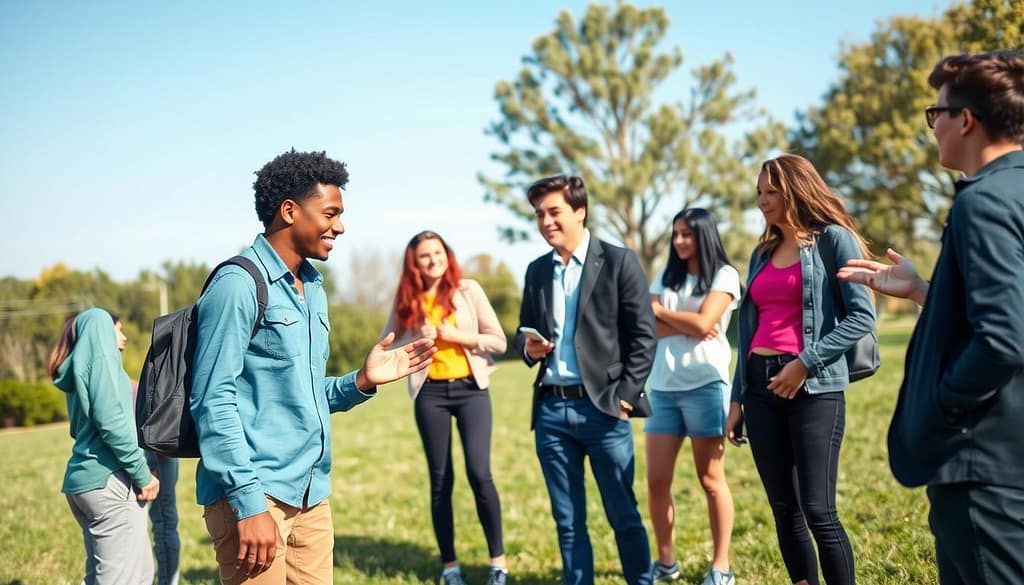
Creating a safe space is the first step. Athletes need to feel safe to share ideas and make mistakes. This environment turns every error into a learning moment.
Intentional drills help skills stick. Use activities that need both words and actions. For example, try a silent passing drill using only eye contact and hand signals. Another great exercise is the “obstacle course relay,” where teams guide a blindfolded teammate through challenges.
Debrief sessions are also key. After a game, ask the team specific questions. “What was one moment you felt perfectly in sync?” or “Where did a misunderstanding happen?” This helps athletes share their feelings and observations, building teamwork language.
Coaches should show active listening. When a player speaks, give them your full attention. Repeat back what they said to show you understand. This teaches young athletes to respect and value each other’s input.
The table below outlines core exercises that turn practice into a communication workshop.
| Exercise Type | Primary Objective | Key Skills Developed | Coach’s Role |
|---|---|---|---|
| Silent Drills (e.g., no-talk scrimmage) | Enhance non-verbal cues and awareness | Body language reading, anticipation, spatial awareness | Observe and highlight successful non-verbal moments |
| Problem-Solving Simulations (e.g., strategy huddle) | Foster collaborative decision-making | Compromise, clear explanation, consensus building | Present a challenge and facilitate the discussion without dictating the answer |
| Structured Debrief & “Feelings Check” | Develop emotional vocabulary and reflective listening | Articulating emotions, giving constructive feedback, active listening | Ask open-ended questions and validate all contributions |
| Role-Reversal Explanations | Build clarity and teaching ability | Instructional clarity, patience, checking for understanding | Have players explain a drill or rule to each other, then step back |
These methods improve more than just game performance. They teach life lessons. Players learn to solve conflicts clearly and respect each other under pressure. They see the power of working together.
By focusing on communication, you give young athletes a valuable gift. They learn to be clear and cooperative, skills that last a lifetime. The field becomes a place for learning, teamwork, and connection.
Case Study of Teams Overcoming Adversity
A community baseball league’s story shows how empathy and teamwork can overcome challenges. The “Riverside Raptors,” a team of 12-year-olds, started strong but hit a tough losing streak. Each loss eroded their confidence.
Players grew frustrated and started blaming each other. The dugout became tense and quiet. The coach saw a chance to teach important life lessons, not just win games.
The coach began by encouraging empathy. At a team meeting, each player shared their biggest frustration. The star pitcher talked about feeling pressured, and the quiet outfielder shared his fear of mistakes. This understanding helped them connect.
Then, the coach taught about working together. He said every win or loss was a team effort. They practiced teamwork through drills, supporting each other even in failure. This built emotional resilience.
The turning point was a close game against a rival. The Raptors were ahead when their shortstop made a costly error. Instead of blaming, the pitcher offered support. This moment of empathy changed them.
This journey reflects the values of programs like The First Tee. They teach perseverance, integrity, and respect through golf. These skills help kids handle setbacks well.
The Raptors’ story shows that true victories are often unseen. Their bond, strengthened through adversity, became unbreakable. They learned that empathy is key to staying together under pressure. By the end, they valued their unity more than wins.
This case study reveals a powerful truth. Adversity, with support, teaches valuable lessons. It turns frustration into teamwork and transforms players into a true team.
Overcoming Social Challenges and Building Bonds
When a team faces challenges together, they form bonds that go beyond winning games. The field becomes a place where kids can overcome shyness, conflicts, and feeling left out. Sports help them connect deeply.
For a quiet kid, speaking up can seem hard. But in a team, every voice is important. Calling for a pass or signaling a play requires teamwork. This teamwork builds trust and relationships.

Conflict is normal in teams. Disagreements over plays or strategies happen. But in a good team, these moments teach how to resolve issues and understand each other. Players learn to listen, compromise, and work together.
Turning into a team takes shared effort. Players do tough drills, face losses, and practice early. These shared struggles create a strong bond. Celebrating wins or getting through tough practices strengthens the team.
Coaches play a big role in this process. They are more than teachers; they are relationship builders. A good coach creates a culture of respect and inclusion. They help players feel valued and learn important social skills.
The friendships made in sports are special. They are built on effort, trust, and success. These friendships support young people in many areas of life. Places like The Skills Center focus on this holistic approach. The real victory in sports is the strong teamwork and bonds that help young people succeed.
Interpersonal Skill Success Stories
National initiatives show how sports build confident communicators and leaders. Programs like Playworks and Girls on the Run teach more than games. They create spaces for social and emotional growth.
Studies from these programs show clear improvements. Kids get better at social behavior and making friends. They grow in cooperation, confidence, and communication.
These changes are real and measurable. Kids learn to handle disagreements and lead with empathy. A shy child might become a captain who motivates others.
Success stories share common themes. Kids start unsure but leave with life skills. They learn to communicate clearly and support their teammates.
This growth impacts their future. Skills like conflict resolution and teamwork help in school and work. Being able to work together and support others is valuable.
The message is clear. These stories are not just luck. They come from sports programs that focus on social-emotional learning. Such programs prepare young adults to be capable, connected, and compassionate.
Monitoring Social Growth and Team Dynamics
The journey of building social skills through sports doesn’t stop when the game ends. Like physical skills, social and emotional skills grow over time. Coaches and parents must watch this growth closely, seeing how team dynamics change each week.
Look for small changes in how your young athletes interact. See how they handle conflicts or when new leaders step up. These moments show how they’re growing socially. It’s as important as tracking their physical stats.
Social skills grow in stages, just like athletic skills. A ten-year-old needs different help with communication than a teenager. Using age-appropriate training helps you support each athlete where they are. Your ongoing learning about social-emotional growth helps them progress.
Working with families is key to reinforcing these lessons. Give feedback on more than just technique. Talk about empathy and teamwork too. View the whole season as a chance for growth, where character wins are the biggest victories. Your guidance turns every practice into a step towards lifelong teamwork.