
As the 2026 World Cup approaches, a different kind of competition is happening. It’s happening on local fields every weekend. This competition isn’t about scoring goals. It’s about recognizing emotional struggles that statistics can’t fully show.
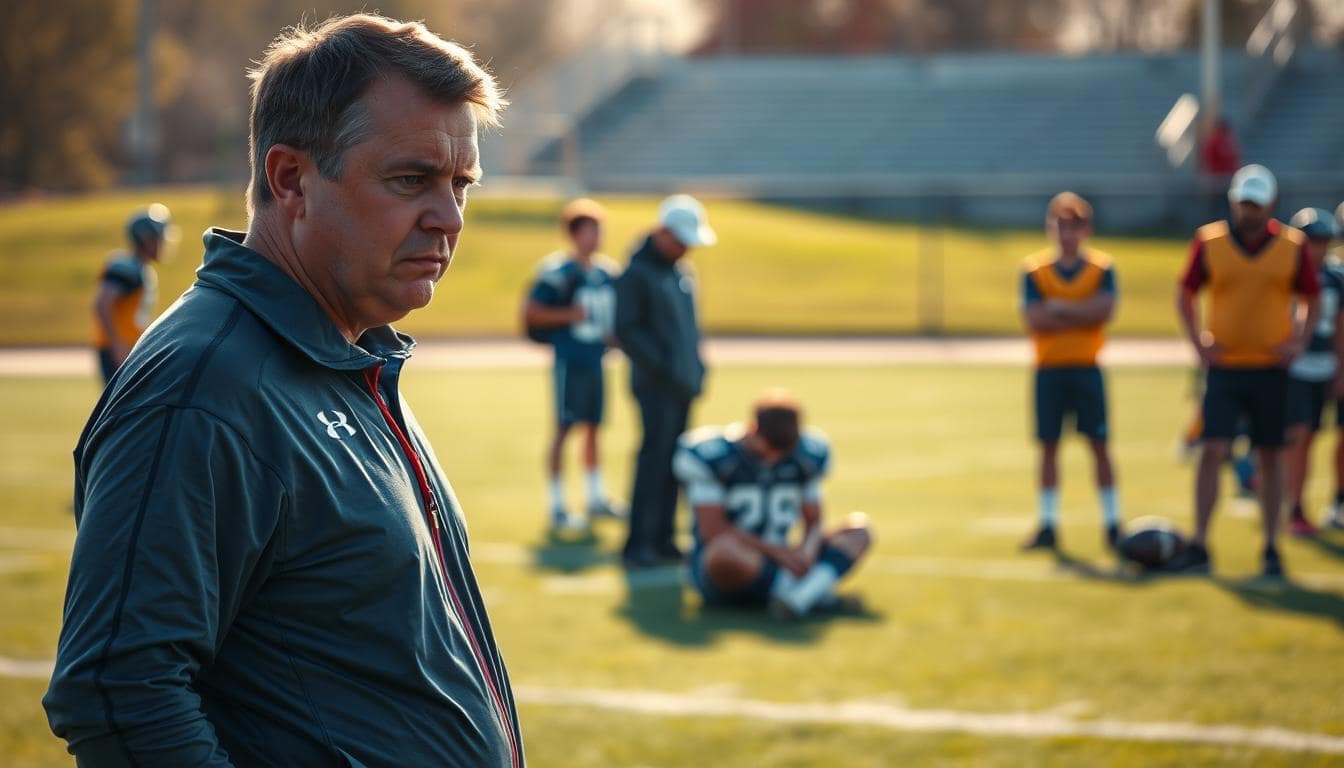
I’ve seen it from the sidelines. A player’s focus wanders like a bad pass. A usually loud teammate becomes silent. You notice these changes before anyone else.
The CDC reports a shocking statistic: 40% of U.S. high school students feel sad or hopeless all the time. One in five has seriously thought about suicide. These aren’t just numbers. They’re kids on your team.
Coaches have a special eye for spotting these signs. They notice when a player seems disconnected or their energy changes. It’s not just about the game.
Your field is more than just grass and lines. It’s a place of community and connection, as Australian expert Simon Rice calls it. This makes you more than a coach. You’re a key part of a support system.
Boundaries of a Coach vs. Clinician
Your clipboard isn’t a medical chart, and your whistle isn’t a prescription pad. This difference is key. You coach performance, not treat illnesses. Never mix the two.
Dr. Simon Rice of Orygen says it clearly: “We aren’t advocating for coaches to become mental health professionals and to diagnose.” Your skills are on the field, not in a doctor’s office. If a player’s behavior hints at mental health issues, you step back. You watch, not treat.
Imagine watching a foreign film. You see the emotional storylines—the player’s odd behavior, sudden withdrawal, or aggression. You know the story has changed. But you’re not writing it. Your job is to see when it’s beyond your area.
There’s a lesson in “sideline coaching” gone wrong. Sue Mak and her son Justin’s story is a caution. Well-meaning but wrong, the parent’s yelling was harmful. Your role is to notice, connect, and help find the right help.
Tony Corr’s advice is spot on: “As a coach, you don’t have to do everything yourself.” Your strength is in spotting issues and connecting people to mental health experts. This is your key role, not treatment.
Going too far can confuse everyone. Imagine a referee trying to explain rules and diagnose a player’s anxiety. Roles get mixed up. The referral system breaks down. Knowing your limits is your greatest asset.
Your value is in being a trusted adult who sees when something’s wrong. You can say, “This is more than a slump,” and guide the next step. You link sports and mental health, building a vital bridge.
Knowing your limits helps you work better with others. It’s not stepping back, but stepping into your role. The right time to pass the ball is key. And making the right referrals is your greatest assist.
Understanding these boundaries leads to better teamwork, not conflict. You’re not stepping back—you’re stepping into your right place. The wise leader knows when to pass the ball. And making the right referrals is your ultimate help.
Learn more about these boundaries and how they help in collaborative opportunities in making appropriate referrals.
Coping Skills You Can Teach at Practice
You can’t bench-press anxiety away. But you can teach a young athlete how to manage it, right there between the stretching and the sprints. Your job isn’t to be a clinician. It’s to be a coach of resilience, adding a set of mental fitness drills to your playbook.
First, master the supportive conversation. This isn’t a halftime rant. It’s a tactical dialogue. A great blueprint is the ALGEE framework from Youth Mental Health First Aid. Think of it as your game plan for a tough talk:
- Assess for risk of harm.
- Listen non-judgmentally.
- Give reassurance and information.
- Encourage appropriate professional help.
- Enable self-help and other support strategies.
Your tone in all this? Be the master cheerleader for emotional fortitude. Your positive feedback builds confidence for handling internal pressure, not just external opponents.

The real magic happens when you weave practical coping skills into practice itself. These are the passing drills for the psyche—fundamental, repeatable, and building muscle memory for stress.
Take box breathing. Inhale for four, hold for four, exhale for four, hold for four. It’s a simple tool for pre-game nerves or post-error frustration. Teach it during cool-downs.
Then there’s the 5-4-3-2-1 grounding technique. Spot five things you see, four you can touch, three you hear, two you smell, one you taste. It yanks the mind out of a spiral and back into the present moment. Perfect for when emotions boil over.
These aren’t therapy sessions. They’re life skills disguised as practice routines. You’re giving them tools for the internal game. For a deeper dive into building a supportive environment, explore these broader mental health strategies for youth sports leaders.
The goal is psychological preparedness. You’re not just training athletes who are physically fit. You’re developing competitors who are mentally fortified. That’s a win no scoreboard can fully capture.
Referral Networks and Consent
Consent in mental health referrals is not just a formality; it’s a sign of respect. You’ve already done a lot by noticing signs and talking about them. Now, it’s time to work together.
Your referral network is like your game plan for emergencies. It helps you respond professionally, not just react. Keep a list of trusted therapists, school counselors, and crisis hotlines handy.
This list should be as important as your emergency contacts. Mental health is just as vital as physical health.
But many people struggle to use these resources. They worry about asking for consent. Dr. Simon Rice says the answer is simple: just call.
Reach out to parents or guardians and express your concerns. Ask if you can talk to the young person about getting help. This isn’t a betrayal; it’s a team effort.
That call can turn a secret worry into a shared plan for support. It makes you a valuable ally, not just a solo worker. The “Connect” phase of Youth Mental Health First Aid relies on this consent.
So, what does a good network look like? It’s like a strong defense, with different levels for different needs. Some situations need a therapist, while others might just need a mentor. Here’s a breakdown of the different tiers.
| Referral Type | Best For | Action Required | Typical Response Time |
|---|---|---|---|
| Immediate Crisis Line | Suicidal thoughts, self-harm, acute panic | Call directly, stay with athlete | Immediate |
| School Counselor | Academic stress, peer issues, mild anxiety | Email introduction, follow-up in 24 hrs | 1-3 days |
| Local Therapist (Specialist) | Eating disorders, trauma, ongoing depression | Parent consent required, provide contact info | 1-2 weeks for intake |
| Community Support Group | Grief, family stress, identity questions | Share meeting details, offer to accompany first time | Ongoing/weekly |
| Primary Care Physician | Medication questions, sleep issues, physical symptoms | Suggest parent schedule check-up | Varies by practice |
Notice how consent is part of every step. Effective referrals are a team effort. You’re the one who sees the opportunity, and the parent is the one who makes it happen.
Many think asking for consent weakens their position. But it actually shows you respect boundaries and care. It’s the difference between fixing a problem alone and solving it together.
Build your network before you need it. Practice asking for consent. Remember, the simplest action is often the most professional: a phone call, a clear message, and an invitation to work together. That’s how you become part of the solution.
Confidentiality and Documentation Basics
That spiral-bound notebook in your gym bag is more than just drills. It’s where kids share their deepest secrets. It’s your duty to keep this information safe, but remember, safety always comes first.

Documentation is like taking photos, not writing a story. You should only note what you saw, not what you think. This way, you avoid crossing any lines.
Always stick to the facts. Write down what happened, who said what, and when. Leave the big labels to the experts. This keeps everyone safe.
Good documentation is like a caring observer’s report. For example, “October 26: Player Jordan was quiet after practice and didn’t join the team huddle. He said his head felt heavy and he didn’t sleep. I told him to talk to his parents tonight.” It’s clear and shows you care without guessing.
Bad documentation is like guessing a diagnosis. “October 26: I think Jordan has anxiety or depression. He seems really sad.” Guessing about mental health issues is not your job. It’s not helpful.
This isn’t about spying on kids. It’s about tracking their well-being. If you notice a pattern, like Jordan being quiet a lot, you can share that with parents or mental health experts.
Why do this? It protects you and the athlete. It shows you were careful and followed the right steps. It also helps when you need to talk to a professional.
Confidentiality is not just about keeping secrets. It’s about knowing when to share information to keep someone safe. Understanding confidentiality helps you do this right.
Your notebook is a tool for helping kids. Each entry is a piece of their story. By documenting well, you’re not spying. You’re helping them get the support they need.
So, keep that notebook. Use it to help kids. In the world of sports and mental health, sometimes the best thing you can do is just listen and write it down.
Family Communication Plans
Coaching is more than just teaching plays. It’s about connecting the field with the family room. This isn’t about playing therapist or replacing parents. It’s about building the triangle of trust.
Sue Mak and her son Justin’s story is common. Many parents yell from the sidelines, not because they’re bad, but because they’re left out. A good communication plan changes this. It turns worry into teamwork.
Think of it as building a team, not a solo act. Mental health support works best when everyone works together. Your role is to connect everyone.
Start at the beginning of the season. Talk about your communication plan as part of your team’s health strategy. Be open about how you’ll share concerns. We all call home about injuries. Why not about emotional ones?
Share the coping skills you teach at practice. Give parents the words and methods to use at home. This way, you’re not just teaching kids to handle pressure. You’re teaching families to support each other.
This changes everything. The “problem call” becomes a chance to work together. Parents go from being defensive to being part of the solution. Organizations like NAMI say family involvement is key for mental health.
What should this plan include? Keep it simple but clear:
- Regular check-in cadence: Monthly emails or updates on emotional skills taught
- Clear protocols: When and how you’ll contact them about emotional concerns
- Shared vocabulary: Explain the coping skills you teach so they can use the same language
- Resource sharing: Links to community supports, like positive coaching strategies that help beyond your work
The coach becomes a key part of the community. You’re not alone. You’re connecting practice, home, and support networks. This formalizes the positive change Sue Mak saw.
Every athlete has two main places: the field and their home. The space between is where problems can grow. Your communication plan is the bridge. It keeps the support line strong.
When parents understand the coping skills framework, they stop worrying. They start asking how they can help. This is a big change. It turns worry into empowerment.
This isn’t extra work. It’s smarter work. You’re using the most powerful force in a young person’s life—their family. You’re giving them a playbook for emotional support that works everywhere. The triangle of trust is your best defense against life’s pressures.
And those coping skills you teach? They get used at dinner, in the car, and before bed. That’s how real change happens. Not through one coach, but through a whole ecosystem speaking the same supportive language.
Crisis Protocol One-Pager
Remember the last time you felt real panic? Not just nerves from a game. The real deal of a mental health crisis. In those moments, all your clever ideas disappear.
You need a simple guide. A cheat sheet that’s easy to follow, even when you’re in a rush. This is your Crisis Protocol One-Pager. It’s like a map to keep your team safe.
Make it easy to read, like a football playbook. Use big letters and avoid complicated words. Start with IMMEDIATE ACTIONS. Make sure everyone is safe and don’t leave them alone. Call 988 for the Suicide & Crisis Lifeline or 911 if it’s an emergency.
Next, list your emergency contacts. Include parents, the athletic director, and your local crisis center. Then, outline your referral pathway. This might include a therapist’s number from Open Path Collective or your school’s EAP. Lastly, cover what to do after the crisis. This includes debriefing with a professional and supporting your team.
This one-page guide is your foundation. It outlines your plan, your network, and how to communicate. Laminate it for easy access. When a crisis hits, you’ll know exactly what to do. Your team will feel supported, and you’ll be ready to act.