
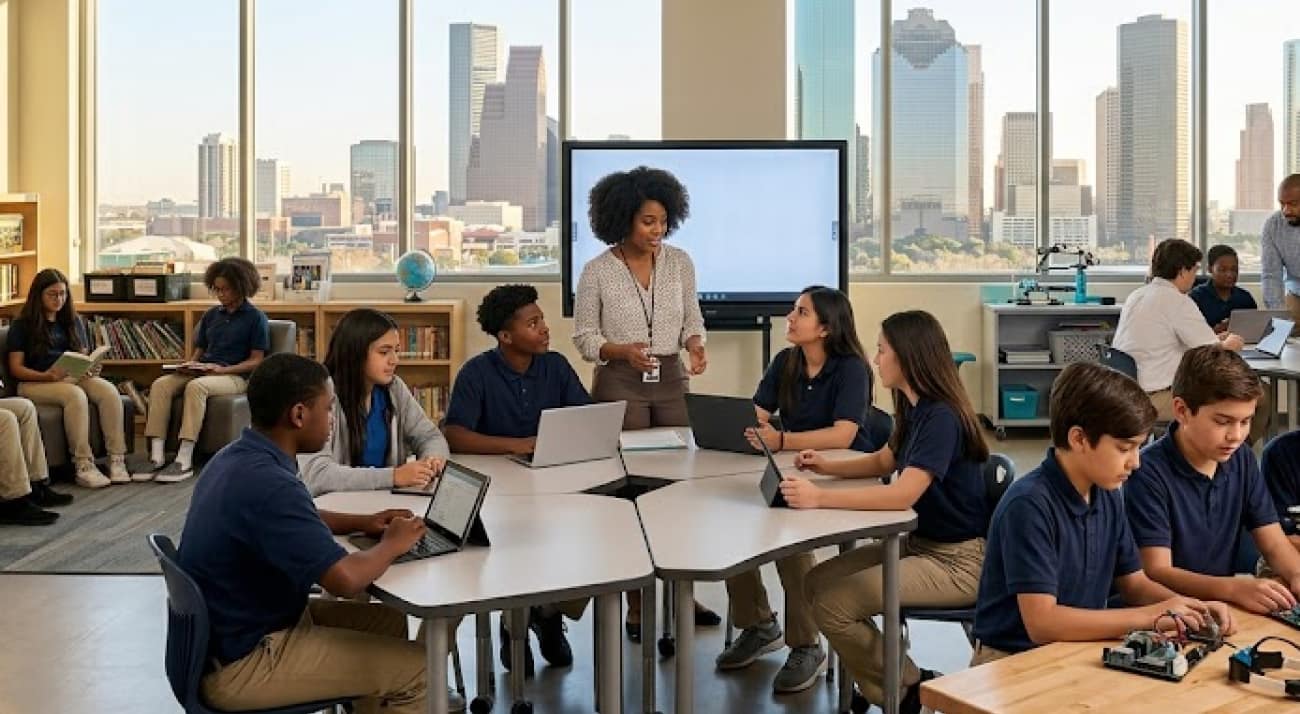
Houston Independent School District is entering the 2026–27 academic year with a renewed focus on improving student outcomes through technology integration, literacy development, and expanded learning strategies designed to prepare students for future academic and career opportunities.
As schools across Texas adapt to a rapidly changing educational environment, Houston ISD is placing greater emphasis on foundational reading skills while exploring how emerging technologies, including artificial intelligence, can support teachers and students.
The district’s approach reflects a broader national shift in education: schools are no longer only preparing students to consume information but also teaching them how to analyze, create, collaborate, and use technology responsibly.
With more than 180,000 students across hundreds of campuses, Houston ISD’s initiatives have the potential to influence a significant portion of Texas’ next generation of learners.
Houston ISD Makes Literacy A Central Priority For Student Achievement
Literacy remains one of the strongest predictors of long-term academic success.
Students who develop strong reading skills early are more likely to succeed across subjects, from mathematics and science to social studies and career-focused courses.

For the 2026–27 school year, Houston ISD is continuing efforts to strengthen literacy instruction by focusing on structured learning approaches, classroom support, and strategies designed to improve reading outcomes.
The district’s literacy focus aligns with statewide efforts to improve student performance following increased attention on reading achievement across Texas schools.
According to the Texas Education Agency, improving literacy outcomes remains a major priority as districts work to ensure students develop essential academic skills needed for graduation and future success.
Houston ISD’s literacy initiatives are designed to provide teachers with stronger instructional tools while creating more consistent learning experiences for students across campuses.
| Literacy Focus Area | Student Benefit |
|---|---|
| Reading intervention | Additional support for struggling learners |
| Teacher training | Improved classroom instruction |
| Academic monitoring | Earlier identification of learning needs |
| Family engagement | Stronger support outside school |
These efforts highlight a broader understanding that literacy is not limited to language arts classrooms. Strong reading comprehension influences every area of education.
Artificial Intelligence Becomes Part Of Houston ISD’s Future Learning Strategy
Artificial intelligence is quickly becoming one of the most influential technologies shaping education.
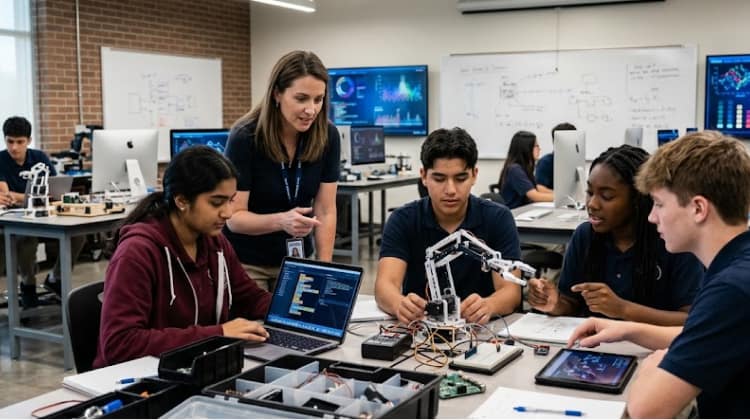
Schools across the country are exploring how AI tools can assist educators, personalize learning experiences, and help students develop digital skills needed in modern careers.
Houston ISD’s interest in AI education reflects the growing importance of preparing students for a workforce where technology will influence nearly every industry.
Students entering careers in healthcare, engineering, business, manufacturing, and technology will increasingly need to understand how artificial intelligence works and how to use it responsibly.
Rather than treating AI only as a technology subject, educators are examining how it can support broader learning goals.
Potential applications include:
- Supporting personalized instruction
- Helping teachers analyze student progress
- Creating additional learning resources
- Teaching students responsible technology use
The U.S. Department of Education has emphasized the importance of responsible artificial intelligence integration in schools while ensuring technology supports teachers rather than replacing human instruction.
For Houston students, early exposure to AI concepts can create new opportunities to explore future careers and develop skills that will become increasingly valuable.
Preparing Students For A Technology-Driven Workforce
The expansion of AI and digital learning initiatives connects directly with workforce preparation.
Texas continues experiencing growth in industries that require technology skills, including energy innovation, aerospace, healthcare technology, cybersecurity, and advanced manufacturing.
Students who develop digital literacy while still in school gain advantages when pursuing higher education or entering the workforce.
Houston’s position as one of the nation’s largest metropolitan areas creates unique opportunities for connecting education with industry.
The city is home to major employers, research institutions, universities, and innovation centers that rely on workers with strong technical backgrounds.
Houston ISD’s student success initiatives reflect the need to prepare students not only for existing careers but also for jobs that may emerge in the future.
Teacher Support Remains Essential To Successful Innovation
While technology receives significant attention, educators remain the foundation of effective learning.
Introducing new tools into classrooms requires strong teacher training, thoughtful implementation, and ongoing support.
Teachers play a critical role in determining how students interact with technology and how digital resources improve learning.
Houston ISD’s approach emphasizes that artificial intelligence and other educational technologies should complement teachers’ expertise.
A successful classroom combines technology with human connection, creativity, communication, and mentorship.
The most effective learning environments are those where teachers use technology strategically while continuing to build relationships with students.
This balance is particularly important when working with younger learners who need guidance developing critical thinking and responsible decision-making skills.
Student Success Programs Focus On More Than Academic Scores
Academic achievement remains a major goal, but student success involves more than test results.
Modern education increasingly focuses on preparing students socially, emotionally, and professionally.
Houston ISD’s initiatives connect with broader student success strategies involving:
- Academic support systems
- Career exploration
- Digital skills development
- College preparation
- Community partnerships
These programs recognize that students need multiple forms of support to reach their goals.
A student interested in engineering may need access to STEM activities, mentorship, and technology resources.
A student preparing for college may benefit from academic advising and career planning.
A student developing leadership skills may need opportunities to participate in community programs.
Families seeking additional educational resources can explore Texas youth education opportunities for examples of programs supporting student growth beyond traditional classroom instruction.
Community Partnerships Help Expand Student Opportunities
Large school districts often rely on partnerships with universities, nonprofit organizations, and businesses to expand opportunities for students.
Houston’s education ecosystem includes numerous organizations focused on improving access to technology, mentorship, literacy programs, and career preparation.
These partnerships help schools connect classroom learning with real-world experiences.
For example, industry partnerships can introduce students to career possibilities through internships, workshops, and professional mentorship.
University partnerships can provide exposure to research, innovation, and advanced learning opportunities.
Community organizations can offer additional academic support and enrichment programs.
| Partnership Type | Impact On Students |
|---|---|
| Universities | Exposure to higher education and research |
| Businesses | Career exploration and professional skills |
| Nonprofits | Mentorship and enrichment opportunities |
| Community groups | Family and student support |
These collaborations strengthen the educational ecosystem surrounding students.
Houston ISD’s Approach Reflects A Changing Education Landscape
The expansion of AI, literacy, and student success initiatives represents a larger transformation occurring throughout American education.
Schools are being asked to prepare students for a world where technology changes quickly and where adaptability is one of the most important skills.
Students graduating in the coming years will enter workplaces that require creativity, communication, technical knowledge, and the ability to learn continuously.
Houston ISD’s initiatives demonstrate an effort to address these changing expectations while maintaining focus on fundamental academic skills.
Technology can create new opportunities, but strong literacy, effective teaching, and meaningful student support remain essential.
Building The Next Generation Of Houston Learners
Houston ISD’s focus on literacy, artificial intelligence, and student success reflects the changing needs of modern education.
By combining foundational academic skills with emerging technology opportunities, the district is working to create learning environments that prepare students for future challenges.
The success of these initiatives will depend on effective implementation, teacher support, community collaboration, and continued investment in students.
As Houston students return to classrooms for the 2026–27 school year, the district’s approach represents a larger effort to ensure young people have the knowledge, skills, and confidence needed to succeed in an increasingly digital world.
Through stronger literacy instruction, responsible AI education, and expanded student support systems, Houston ISD is helping shape a future where students are prepared not only to participate in tomorrow’s economy but also to lead it.