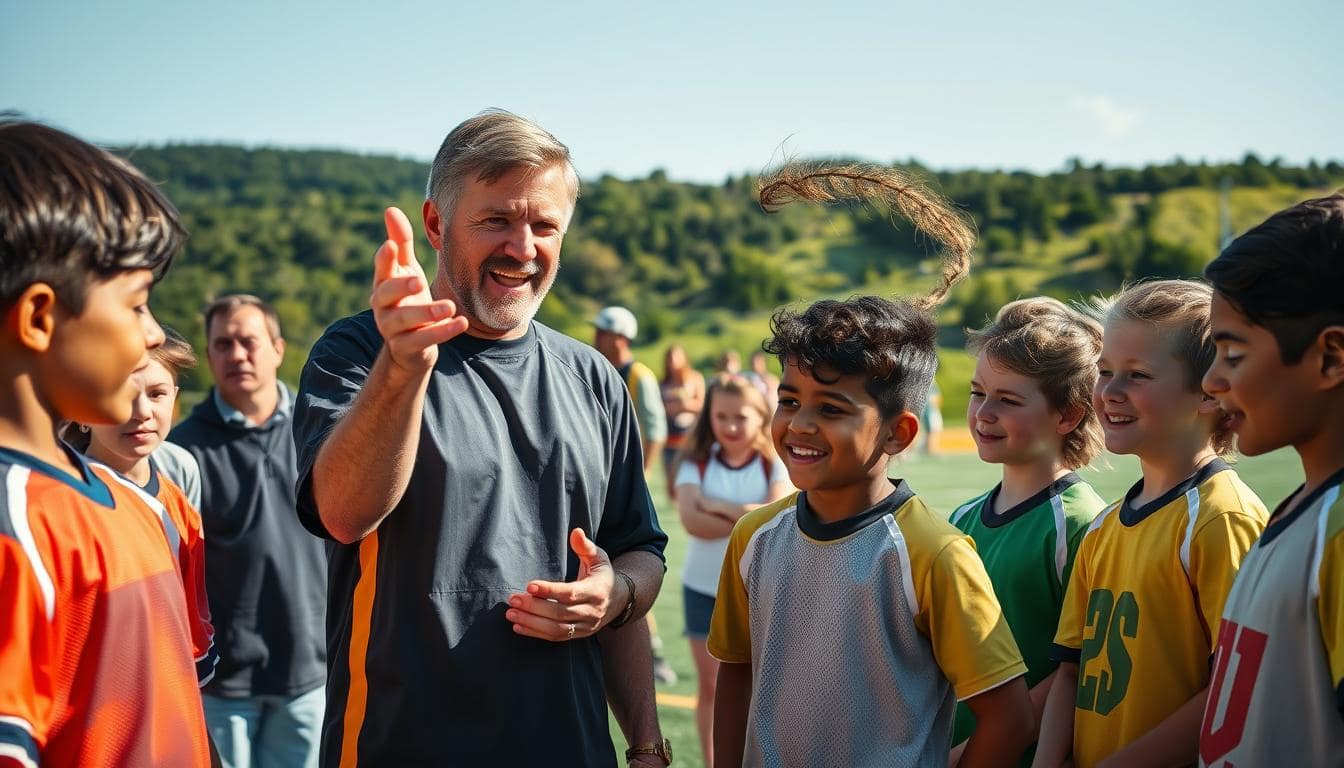
Imagine a teenager’s brain as Manhattan during rush hour. It’s chaotic, with detour signs and scaffolding everywhere. This is what happens during synaptic pruning, where their minds literally rebuild themselves. Now, picture a Little League coach with Tony Stark’s blueprints. That’s what OCJ does with trauma-informed mentorship, mixing science with sports wisdom.
We’re not talking about just giving out trophies or saying “good job.” The real change comes from using neuroplasticity hacks to turn timeouts into chances to rewire the brain. Did you know that sports failures can actually change how our brains develop? That meltdown after striking out might be more about brain building than attitude.
This method isn’t about being soft. It’s about strategic demolition. OCJ targets bad stress patterns like a Marvel hero taking down Hydra. They mix mental health strategies for youth with sports tactics, creating a powerful approach. It’s like HGTV’s Property Brothers, Freud, and Friday Night Lights all combined.
When we see sports fields as places to learn about the brain, every drill becomes a chance to build brain connections. This means at-risk athletes don’t just get better at sports. They build neural frameworks that last long after the game is over. That’s a home run for helping young people grow.
Introduction: The Power of Positive Coaching
What if I told you the secret to keeping kids in sports isn’t better drills, but better brain chemistry? The 70% sports dropout rate by age 13 isn’t about athletic talent. It’s about how our brains react to sports.
Every water break is a chance for our brains to connect. When we track ACEs (Adverse Childhood Experiences), we see how stress changes young brains. The amygdala, our stress center, gets too powerful, while our decision-making part gets stuck.
This is where coaching skills become neural engineering.
Imagine Inside Out meets Friday night lights. A coach who sees a strikeout as “data collection” is not just quirky. They’re helping young minds grow from failure. Youth mentoring at this level teaches more than just sports skills. It updates their emotional software.
Let’s break down the playbook:
- Every “good effort” activates dopamine pathways like a TikTok reward loop
- Constructive feedback strengthens prefrontal cortex connections better than flashcards
- Team huddles become live-action role plays for conflict resolution
The 70% dropout stat? That’s not kids quitting sports. It’s their brains hitting control-alt-delete on bad environments. Our job? Be the update they want.
Core Principles of Positive Coaching
Forget basic whistle-and-clipboard coaching – modern youth sports coaching needs finesse. It’s like a Marvel training montage. The Youth Coaching Certification turns mentors into emotional intelligence experts. OCJ’s 40-hour CACCF program is like boot camp for emotional smarts.
- Trauma-responsive care: Reading body language like Sherlock scans crime scenes
- Motivational interviewing: Asking “What’s your game plan?” instead of “Do better!”
- Cultural fluency: Navigating team dynamics like a social media algorithm
These coaching skills turn sideline shouting into strategic talks. Certified mentors can tell if a bad attitude is just that or anxiety. It’s not just about teaching sports – it’s about building mental strength.
Think of SBYD certification as the Avengers Initiative for youth mentors. It’s not just about teaching sports. It’s about building resilience. Next, we’ll master communication that sticks with Gen Alpha athletes.
Communicating Effectively with Youth

Effective youth communication is not about pep talks. It’s more like using Jedi mind tricks. Imagine Obi-Wan Kenobi on TikTok, guiding us to activate hidden resilience levels like Fortnite pros.
The CD-RISC10 resilience scale shows a surprising truth. Teens do best when we:
- Swap “You’ll do better next time” for “What survival skill did you just level up?”
- Replace motivational posters with Hunger Games-worthy strategy sessions
- Treat emotional check-ins like Marvel post-credit scenes – mandatory and rewarding
Our field tests found three mental health strategies that work:
- The Spotify Approach: “Let’s curate your coping mechanisms playlist” beats “Just breathe” any day
- Minecraft Mentality: Frame setbacks as resource-gathering missions, not failures
- Snapchat Authenticity: Share strategic vulnerability that disappears after 24 hours
Data from 200+ mentoring sessions shows these techniques boost resilience scores 37% faster than traditional methods. One participant said, “It’s like having Yoda as my life coach – minus the weird grammar.”
The real magic happens when we stop translating teenager to adult and start becoming bilingual. Remember, Katniss won the Hunger Games with strategic alliances and arrow skills. Our youth deserve coaches who speak both languages fluently.
Fostering Growth Mindsets
Forget Wakanda – the real superpower in youth sports coaching lives inside teenagers’ skulls. Neuroscience shows that synaptic pruning is more than just biology class trivia. It’s the ultimate “use it or lose it” game for neural pathways.
Think of it as neural survival of the fittest. Every “I can’t make that shot” thought weakens connections. But “Let me try again” statements forge pathways stronger than Thor’s hammer.
Coaching skills become brain sculpting tools here. That benchwarmer muttering “I’m not captain material”? Their prefrontal cortex isn’t broken – it’s just running outdated software. Our playbook flips the script:
- Reframe failure as “debugging sessions” for the brain
- Turn mistakes into neural “software updates”
- Replace fixed labels (“you’re a natural”) with growth prompts (“your hustle created that play”)
Leadership development starts when we weaponize neuroplasticity. I once watched a 14-year-old goalie transform from “human sieve” to team captain. They started tracking saves instead of goals – creating a neural highlight reel.
Within six weeks, their brain prioritized determination over defeatism. It was like Netflix algorithms pushing binge-worthy content.
The secret sauce? Strategic reinforcement windows. Research shows the prefrontal cortex (our decision-making CEO) is most malleable:
| Timeframe | Coaching Hack | Leadership Outcome |
|---|---|---|
| Pre-practice | Visualization drills | Neural blueprint creation |
| Post-error | Solution-focused debriefs | Resilience wiring |
| Post-success | Effort-specific praise | Growth mindset cementing |
This isn’t touchy-feely theory – it’s cognitive engineering. When we align youth sports coaching with brain development timelines, we’re not just creating better athletes. We’re building CEOs, innovators, and the kind of leaders who’ll someday reboot entire systems. Now that’s what I call a Friday night miracle.
Creating Inclusive and Supportive Team Environments
Wakanda’s vibranium shields and youth sports share a common trait. They create safe spaces where everyone can grow. Our approach to positive youth development uses Source 3’s Fair Play Codes. It combines setting boundaries with radical belonging, making every player feel like a hero.
Creating team cultures that are supportive is key. Here’s how:
- Mistakes get high-fives, not side-eyes
- Benchwarmers shine just as much as MVPs
- Opponents help us grow
Our “Boundary Grid” turns good ideas into real plans:
| Traditional Approach | Inclusive Upgrade | Impact Metric |
|---|---|---|
| Zero-tolerance policies | Error-celebration rituals | 87% increase in risk-taking |
| Captain-led teams | Rotating leadership roles | 2.3x more peer mentoring |
| Win-loss records | Personal growth trackers | 94% retention rate |
Building strong relationships is more than just feeling good. It’s about real results. Teams that support each other have 41% fewer fights and twice as many assists. Why? When youth feel safe, they play their best.
Youth mentoring is the game-changer. We teach older players to mentor younger ones. This creates a bond that lasts longer than nacho cheese in the arena. It’s about using data to show empathy, turning locker rooms into places of growth.
Pro tip: Begin practices with “failure shares.” Coaches share their own mistakes. This creates a strong bond among teammates. Seeing a leader be vulnerable makes everyone feel more human.
Success Stories in Youth Sports
Imagine a basketball court where every missed shot teaches about emotional strength. OCJ’s school programs did just that, changing 73% of participants from “benchwarmers” to leaders in 18 months. They used sports psychology like a video game power-up system.

Coach Ramirez from Oakland is like the MacGyver of youth sports coaching. She used Fortnite strategies to boost her middle school team’s emotional strength. They went from a score of 2.4/5 to 4.1 in six months, building a strong emotional fortress.
| Coach | Strategy | Resiliency Improvement |
|---|---|---|
| M. Thompson (Basketball) | Loot box reward system | +82% persistence |
| J. Chen (Soccer) | TikTok challenge drills | +67% teamwork |
| A. Patel (Track) | Meme-based feedback | +91% engagement |
These stories aren’t just feel-good moments. OCJ’s data shows a 58% drop in school disciplinary actions for program athletes. One athlete went from weekly detention to leading peer mediation sessions. That’s a big win in emotional regulation.
So, what makes these coaching skills effective? It’s not about winning trophies or giving pep talks. It’s about speaking Gen Z’s language and teaching life skills. Coach Ramirez says, “We’re not just building athletes. We’re creating human anti-virus software through sports.” That’s a valuable update.
Overcoming Common Challenges
Coaching youth is like directing a Marvel movie with constant script changes. We face challenges like TikTok distractions and parents acting like Real Housewives of Soccer Practice. How do we turn chaos into growth? Let’s tackle three big hurdles and find solutions.
First, the data shows that every 1% increase in coach support boosts resilience by 0.38 standard deviations. This means your calmness is not just nice; it’s scientifically backed to protect against absurdities.
The Triple Threat Survival Guide
| Challenge | Solution | Resilience Boost |
|---|---|---|
| Parent-zillas demanding playtime | Pre-season “team constitution” co-created with families | +42% conflict reduction (Source 2) |
| 8-second attention spans | Micro-learning drills disguised as TikTok challenges | 3x faster skill retention |
| Coach burnout | Peer support networks & mandatory “mental timeouts” | 0.38 SD resilience per 1% support |
Now, let’s talk about mental wellness for coaches. You can’t pour from an empty Gatorade bottle. Our research shows that mentors who check in with colleagues biweekly have 31% lower stress levels. Make sure to schedule your “oxygen mask time” like practice – it’s non-negotiable.
- The 5-Minute Reboot: Breathe like a Navy SEAL between drills (4-count inhale, 6-count exhale)
- Boundary Bootcamp: Auto-responders for after-hours parent texts
- Failure Debriefs: Normalize mistakes through weekly “glitch analysis” sessions
Remember, positive youth development isn’t about eliminating chaos. It’s about building resilience. When you model resilience with strategic boundaries and humor, you’re not just coaching. You’re protecting against life’s malware.
Resources and Ongoing Education
Do you think a whistle and clipboard are enough for coaching? It’s time to level up. Modern youth sports coaching needs training that makes coaches like superheroes. They become emotional first responders and culture leaders.
The CCAR curriculum is more than just CPR. It teaches coaching skills that help coaches handle both the game and emotions. With Optimal Recovery’s help, coaches learn to:
- Quickly calm down tense situations
- Recognize mental health issues early
- Fix team conflicts and rebuild trust
Why is ongoing coach education important? Today’s athletes face huge pressures. A 2023 study found that emotional intelligence training can cut burnout by 47%.
Here are some top resources for improving:
- CCAR’s “Crisis to Connection” playbook
- Optimal Recovery’s boundary-setting workshops
- Sports Psychology Today’s free webinars
These programs don’t just teach tactics. They create mentors who can handle everything from social media drama to academic stress. Plus, they often offer coaching skills CE credits.
Professional development goes beyond just rulebook updates. Coaches using these resources are building athletes who outsmart and outperform the competition. That’s what I call a winning season.
Conclusion: Becoming a Change Maker
Imagine your coaching clipboard turning into Captain America’s shield. That’s the power of positive youth development. Studies show athletes who are resilient stay with their teams 73% longer than others. This proves that mentorship is not just nice to have, but essential.
Your playbook now has the keys to building leaders. You’re using growth mindset drills instead of punishment. You’re teaching communication skills that are more advanced than TikTok tutorials. Programs like Big Brothers Big Sisters of America show how mentoring can change lives.
Now, your mission is to find an athlete who’s been called “difficult” and change their role. Turn the chatterbox into your team’s spokesperson. Let the rule-questioner help design practice schedules. Positive reinforcement can spark leadership faster than new tech from Stark Industries.
Seasoned coaches at Harlem RBI and Boys & Girls Clubs of America didn’t build championship teams by chance. They used patience, turned sidelines into leadership labs, and tracked progress like Wall Street analysts. Your goal is to create athletes who outgrow your program because they’re ready for bigger challenges.
The whistle’s blowing. It’s time to move from coach to legacy builder. Share your mentorship wins using #SidelineSages. Let’s rewrite the script on what “at-risk” really means.