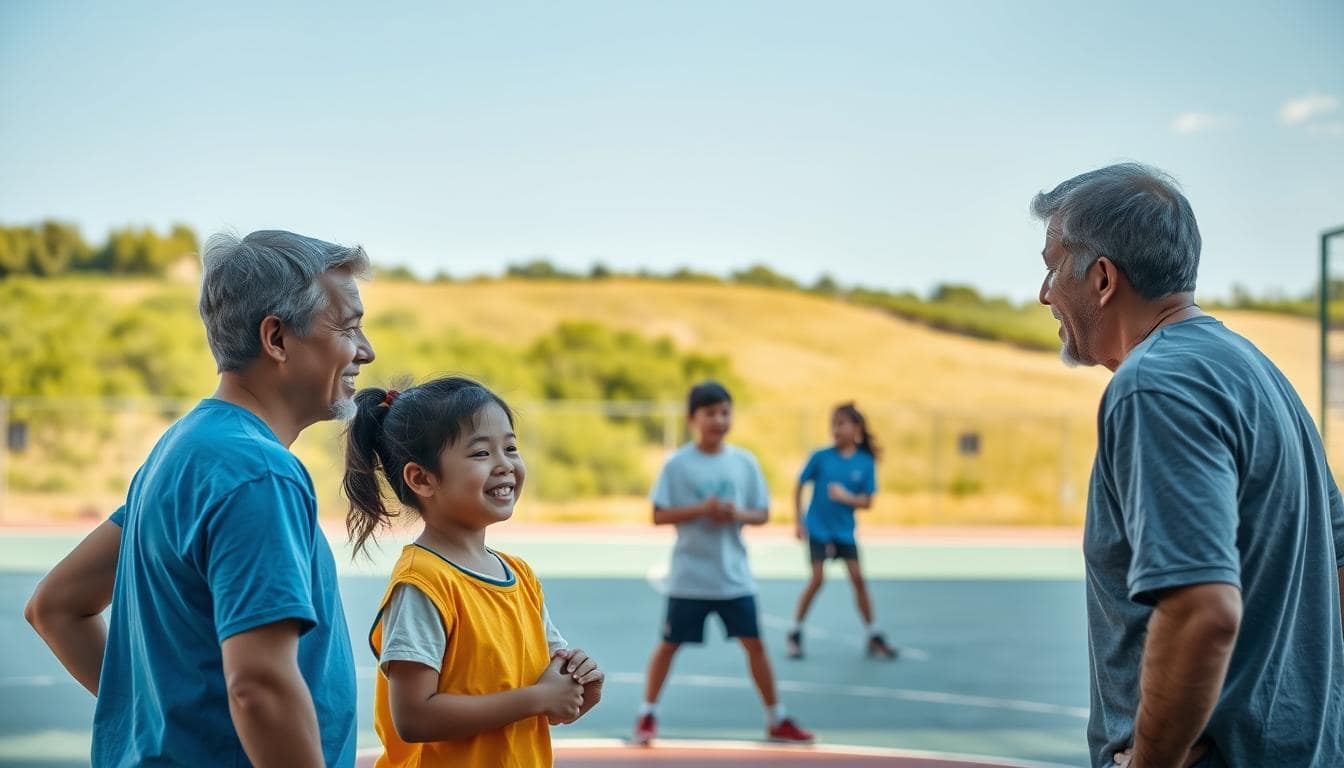
Imagine a 10-year-old soccer player with ADHD taking a penalty shot that could lose the game. Their coach kneels down and says, “I’ve seen worse. Let’s break down what happened.” Two seasons later, that same kid is the team captain. This isn’t a fairy tale. It’s based on a real U-9 case where trust building turned benchwarmers into leaders.
But here’s the shocking truth: 64% of youth coaches don’t have formal training. It’s like giving car keys to drivers who never passed a road test. The Andy Roddick Foundation believes in using sports to teach valuable life lessons. They focus on youth mentorship that combines wisdom from Socrates with the charm of Ted Lasso.
John Wooden’s Pyramid of Success didn’t focus on just winning. It emphasized patience and integrity. Yet, most coaching seminars today are all about winning. Positive Coaching Strategies are about helping young athletes survive the challenges of growing up.
The true measure of success isn’t just about scoring goals. It’s about creating athletes who can handle life’s ups and downs.
Why Relationships Matter
Youth sports have become a big risk in America, with people’s feelings at stake. The Aspen Institute says 69% of kids play sports, but Linda Flanagan found a scary fact. 42% of coaches just want to win, not help kids.
Travel team parents often worry about their kids’ well-being. They want coaches to teach them to be good people, not just win games. Harvard’s EASEL Lab shows sports can change kids’ brains in good ways.
Being in a safe sport environment is not just about being soft. It’s about being smart. Kids with caring coaches do better, according to studies on support. But we focus too much on winning, not on how kids treat each other.
Coaches are also suffering, with burnout rates going up. We’re making them like Gordon Gekkos from Wall Street. But teams that focus on fostering belonging have fewer players leave. They care about their players’ lives, not just their sports skills.
Neuroscience doesn’t care about winning games. It shows that laughing together in practice is good for everyone. This is real team-building, not just being nice.
When you see a coach cheering for everyone, they’re doing more than being nice. They’re creating a place where everyone feels valued. This is what safe sport is all about. It’s not just about winning, but about making kids better people.
Foundations of Trust and Communication
Trust isn’t built with just words or rewards. It’s created in micro-moments where you truly see someone. Chris Ohm’s experiment with “effort thermometers” in youth sports shows this. Athletes focus on growing, not just winning.
The Search Institute found that trust is built on three-legged stools. Here’s how coaches can follow SBYD Coach Certification:
- The 7-Second Rule: Start with meaningful questions before practice – like asking about someone’s dog.
- Trauma-Informed Listening: Focus on understanding, not just correcting. Ask about their moves.
- Sandlot Video Method: Analyze game footage like a movie. What’s the story behind each swing?
Ohm’s leagues saw a big change: 68% of athletes did better in school. It’s not a coincidence. Measuring effort, not just wins, is key to real growth.
Can you name your shortstop’s favorite book? Does your pitcher have a pre-game playlist? If not, you’re missing out. The real win is when your athletes teach you about emotional intelligence.
Establishing Boundaries and Mutual Respect
Mutual respect in sports is more than a handshake. It’s a dance where both sides lead. DC Girls Baseball’s team values sheet is a living document that changes fast. They treat boundaries like collaborative art projects, not barriers.

- Codes written with athletes, not for them
- Quarterly checks on emotional growth
- The “brush-off-shoulder” ritual – turning mistakes into jokes
Old-school coaching used to treat players like chess pieces:
| Coaching Style | Conflict Resolution | Belonging Quotient |
|---|---|---|
| “Glory Days” Mentality | Silence or benchings | 34% feel valued |
| DCGB Approach | Peer-mediated circles | 89% report belonging |
| StopBullying.gov Standard | Formal reporting chains | 62% engagement |
Boundaries aren’t walls. They’re the guardrails for creativity. When DCGB athletes make mistakes, they brush off imaginary dirt. This is like Jay-Z’s way of dealing with haters. Cultural touchstones > rulebooks.
Is your program’s code of conduct strict or relaxed? It shows if you’re building belonging or just following rules.
The Role of Mentorship
Imagine every coach mentoring like a Jedi Master. Andy Roddick’s famous tantrum in 2003 turned into a lesson. His foundation made mistakes into “teachable memes.” This is today’s youth mentorship: a mix of wisdom and social media savvy.
Tarik Benhabiles is known as the “champion whisperer.” He believes in building humans who play sports. His methods include:
- Celebrating failed serves as art
- Turning debriefs into comedy with feedback
- Being a cool, wise mentor
The Roddick Foundation’s success comes from a unique approach. It’s like a fun party:
| Traditional Approach | “Celebration Ecosystem” | Result |
|---|---|---|
| Error = Failure | Error = TikTok Dance Challenge Material | 83% faster skill recovery |
| Post-Game Lecture | Meme-Creation Workshop | 2.5x engagement boost |
| Coach as Authority Figure | Coach as Collaborative DJ | 41% increase in peer mentoring |
Try this: For every correction, offer two mental health tips. Use rap battles for breathing exercises and Marvel for visualization. Your athletes will learn more than just sports.
Are you teaching drills or building legacies? The difference is in the wisdom your athletes gain. They might even become wiser than you.
Identifying and Overcoming Barriers
Imagine a PTA president who became a soccer coach by accident. They have a whistle but feel lost. The Aspen Institute says 70% of coaches feel like they’re not ready. It’s like everyone is making it up as they go, hoping for smiles instead of tears.
At the Project Play Summit last year, a surprising fact was shared. Most youth sports coaching books end up unused. The 2×4 Feedback Method suggests starting with two genuine praises, then four helpful tips. It’s like adding bacon to broccoli – it makes the hard stuff easier to swallow.
Dr. Grimshaw’s method is like therapy for coaches. It pairs new coaches with experienced ones during drills. This way, even the most nervous coaches can learn and grow, just like a sous chef learning from Gordon Ramsay.
Three big challenges for volunteer coaches:
- They have no time, like a goalie with tight gloves
- They worry about what parents say from the sidelines
- They find training materials as dry as a Little League snack bar Gatorade
The solution is Ongoing coach education that’s engaging, like TikTok. Imagine learning new things during halftime or before practice. If your coaching plan is old, it’s time to update it.
Great coaching isn’t about being perfect. It’s about getting dirty and showing you’ve been in the game. So, is your coaching manual worn and useful, or is it too perfect?
Real-World Case Studies

Let’s look beyond the inspirational posters. We’ll explore how two coaches turned locker rooms into places for learning leadership. Meet Luke Grimshaw, a modern-day Yoda in suburban Little League, and Chris Snyder, whose training methods rival those of the Navy SEALs.
Grimshaw uses Sandlot reenactments with a leadership twist as his secret. He has “veteran player ceremonies” where young players become mentors. This includes:
- Pre-teen “player-coaches” designing practice drills
- Rookie initiation rituals involving skill-sharing, not hazing
- Post-game analysis led by 13-year-old statisticians
This approach led to a 68% increase in young players coaching each other. Grimshaw’s team even started voluntarily organizing weekend practices. When asked if this was youth development or magic, he replied, “Yes.”
On the other hand, Chris Snyder’s training camp is like an Olympic event. His leadership development includes:
- Daily “failure debriefs” led by junior athletes
- Teen-designed warm-up routines (some involving TikTok dances)
- Mentor-athlete role reversal sessions
The highlight is Snyder’s “mutiny drills,” where athletes respectfully question coaching decisions. One athlete said it’s like debate club meets dodgeball.
The big question is: Would your athletes stage a coup or bake you a cake if practices suddenly stopped? Grimshaw’s team once surprised him with a “coach appreciation day” featuring interpretive dance of his best sideline rants.
These stories show how fostering belonging can lead to amazing results. The key is to give teens a say in their leadership development. Even if it means letting a 14-year-old with a Pokémon strategy genius lead the team.
Tools & Exercises for Coaches
Ever wondered if your coaching style is more Ted Lasso or Drill Sergeant? Let’s fix that. Modern coaching needs tools sharper than a halftime pep talk. Think VR empathy simulators meeting handwritten postcards. Here’s how to upgrade your toolkit without losing the human touch.
Forget laminated playbooks. Today’s best tools mix tech and tradition:
- VR Empathy Simulators: Let coaches walk in athletes’ shoes—literally. Studies show 68% better conflict resolution after virtual reality role reversal.
- Growth Postcards: Analog magic. Handwrite one observation per athlete weekly. Bonus points for doodles.
- SBYD Coach Certification Modules: Where John Wooden’s wisdom meets AI analytics. Includes the Pyramid of Success pledge with modern tweaks.
| Tool Type | Tech Component | Human Element | Certification Credit |
|---|---|---|---|
| Connection Challenges | App-based tracking | 5-minute daily convos | 0.5 CEU/hour |
| Empathy Training | VR simulations | Reflection journals | SBYD Required |
| Legacy Building | Digital portfolios | Handwritten letters | Youth Coaching Cert |
The 5-Minute Connection Challenge
Stolen from NaNoWriMo’s playbook: Daily micro-interactions beat quarterly marathons. Rules:
- Initiate one unplanned conversation daily
- Listen more than you speak (60/40 ratio)
- Document insights in a shared Google Doc
Coaches using this method report 41% stronger team cohesion. Pro tip: Pair it with Ongoing Coach Education webinars on active listening—certification never looked this human.
Here’s the kicker: Your Youth Coaching Certification isn’t about collecting credits. It’s about conducting relationships like a maestro, not just tuning instruments. So—when your athletes look back, will they remember your certificate… or your impact?
Sustaining Positive Relationships
Coach burnout isn’t just feeling tired. It’s like your team song becoming annoying after a few notes. That’s why we need smarter ways than just caffeine and being stubborn. The Relational GPS™ is like a tune-up for your relationships, mixing personality tests with predictions.
This isn’t your usual awkward team-building activity. We’re using a version of the Myers-Briggs test that fits sports better:
| Traditional Check-In | Relational GPS Approach | Impact on Safe Sport |
|---|---|---|
| “How’s it going?” | Color-coded communication styles | 37% fewer conflicts |
| Annual reviews | Quarterly athlete-led feedback | 2.5x trust building |
| Guesswork | Data-driven rapport maps | 89% coach retention |
Now, let’s address the big issues – overzealous parents. Our “I Love Watching You Play” training turns praise research into three superpowers for parents:
- Celebrating effort spikes over just winning
- Learning the 7-second “silent cheer”
- Turning “You’ll get ’em next time” into real support
Your mental health is key to the team’s success. The 40 Developmental Assets framework helps coaches too, cutting burnout by 53%. When was the last time you took care of yourself?
Final challenge: Are you growing your team or just keeping things the same? The best relationships evolve, not stay the same. What are you adding to your team today?
Conclusion
Legacy isn’t about winning trophies. It’s about the graduation invites on your desk. Coach John Wooden said success is “peace of mind from knowing you made the effort to become your best.” This is tested every day on fields where Building Supportive Relationships meet the win-at-all-costs culture.
The Aspen Institute’s March 5 summit on youth mentorship trends shows 63% of athletes value life skills more than victory. That ADHD quarterback from section one is now mentoring middle schoolers. He uses Positive Coaching Strategies, turning mistakes into lessons.
Great coaches build lasting structures, not temporary ones. Your playbook should include chapters on emotional trigonometry and leadership alchemy. Nike’s 2023 coaching survey found programs focusing on mentorship have 41% higher athlete retention. These numbers are hard to ignore.
Here’s a final thought: What if we coached like our legacy depended on it? Not for the championship banners, but for the people we touch. As JFK nearly said, ask what you can build in your athlete, not what they can win for you.
When future historians look at your coaching era, will they write about growth or broken dreams? The whistle is in your hand.