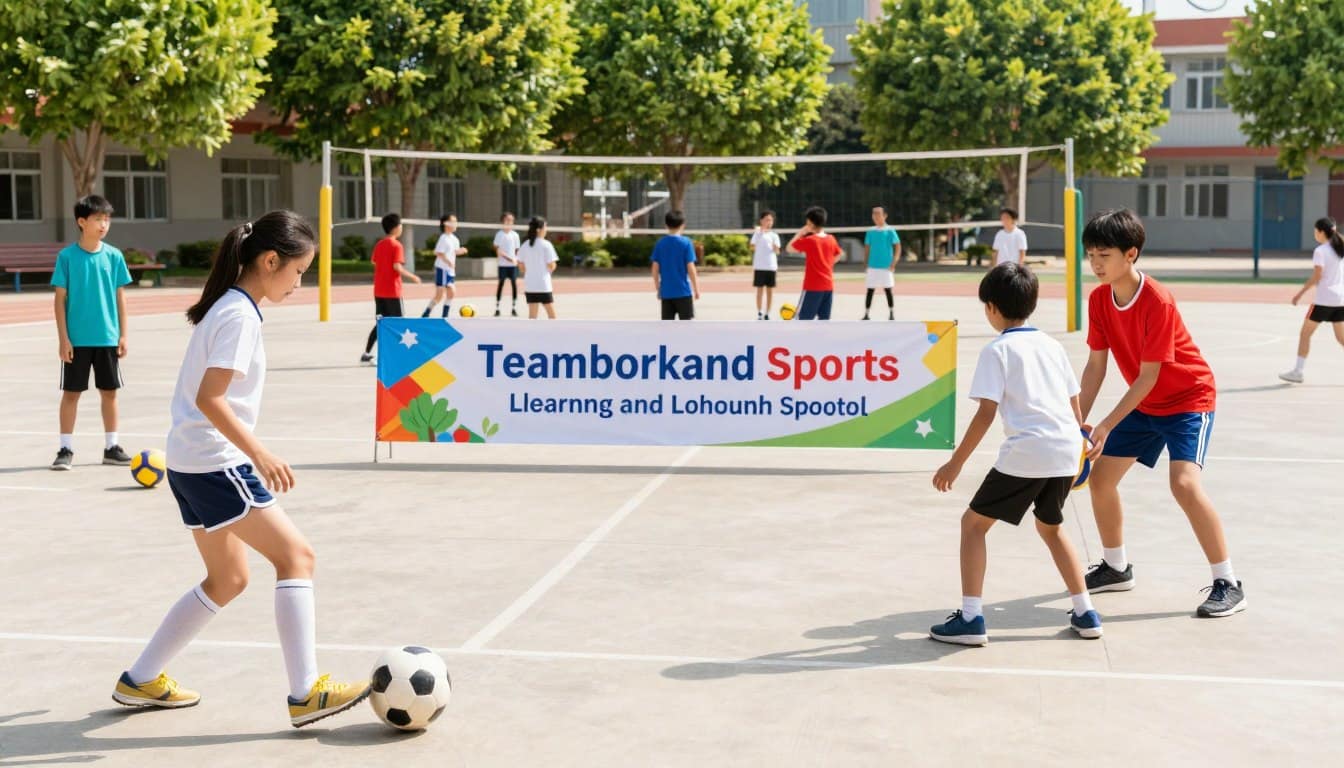
In today’s world, sports are more than just fun. They are a key part of learning, helping students gain important skills and values. This idea, called sport-based education (SBE), uses sports to teach specific lessons.
SBE focuses on more than winning. It aims to teach teamwork, discipline, and perseverance. By using kids’ love for sports, teachers can help them grow and succeed in school.
Playing sports also helps students focus better in class. It teaches them to make quick decisions and be resilient. This shows that sports are a big part of a child’s education today.
Want to learn more about sports in education? Check out this article on sport education.
Key Skills Developed through Sports
Young people gain many skills through sports. These skills help them grow personally and academically. Sports education focuses on physical skills and life competencies. These competencies include cognitive, social, psychological, moral, and physical development.
Cognitive skills like strategic thinking and decision-making are key. Athletes learn to analyze and make quick decisions. This helps them solve problems better in school.
Sports also improve social skills. Team sports teach communication, cooperation, and conflict resolution. Students learn to work together and improve their teamwork skills.
Psychologically, sports help develop resilience, self-regulation, and confidence. Athletes learn to handle challenges and stay positive. This is important for success in life.
Moral development is another important aspect. Sports teach values like respect, responsibility, and integrity. These values help shape ethical individuals who make a positive impact on society.
Physical skills gained through sports are also vital. They include motor skills and health habits for lifelong well-being. Sports emphasize the importance of staying physically fit.
The Skills Center shows how these values apply to school and work. The PLUS model ensures skill development through sports is intentional and backed by research.
Successful Educational Programs in Sports
In the United States, new youth programs are changing sports education. The Skills Center (TSC) in Tampa Bay, Florida, is a great example. It offers programs that mix learning with sports.
The Academic Café is a key program at TSC. It lets students get homework help while doing sports. This way, they stay focused on their studies and enjoy sports too.
PLUS Learn to Lead is another important program. It teaches young athletes leadership skills. These skills are useful both in sports and in life.
The Y.E.S. Programs focus on empowering youth and teaching social skills. They help kids feel more confident and learn how to work with others. This prepares them for the future.
Started in 1984, Sports PLUS has helped over five thousand kids. It has also trained two thousand coaches in the U.S., Canada, Cyprus, and Hong Kong. This shows how effective their programs are.
USA Hockey introduced the American Development Model (ADM) in 2011. Before, many kids stopped playing hockey by age nine. ADM made changes like removing bodychecking for under-12s and improving practice-to-game ratios.
A 2014 study found that these changes boosted kids’ physical activity and skill learning by 60 percent. Now, hockey is one of the few sports where participation is going up.
| Program Name | Focus Area | Impact |
|---|---|---|
| Academic Café | Academic Support | Enhances learning while engaging in sports |
| PLUS Learn to Lead | Leadership Development | Builds essential leadership skills |
| Y.E.S. Programs | Youth Empowerment | Develops confidence and social skills |
| American Development Model | Player Retention | Increases participation and activity levels |

Integrating Curriculum with Athletics
Mixing sports into school curricula makes learning exciting. The PLUS model helps do this well. It has five key steps: Philosophy, Psychology, Pedagogy, Programs, and Progress.
Philosophy lays the groundwork by setting the program’s values. It explains why sports are important in education.
Psychology looks at how kids learn. Knowing how teamwork and responsibility develop helps teachers create better learning experiences.
Pedagogy deals with teaching methods. It makes sure learning is fun and effective, getting students involved.
Programs cover all activities. This includes practices, team meetings, and readings that teach important lessons through sports.
Progress shows how to check if the program works. It’s key to see if kids are learning what’s important for their growth.
The American Development Model (ADM) works with the PLUS model. It mixes sports, play, education, and health. It has a five-stage plan that matches kids’ abilities. The first rule is to make it fun, as kids see it.
For example, using many balls in training helps kids learn basic skills in a relaxed way. This method of education through sports is practical and works well.
| Model Component | Description | Importance |
|---|---|---|
| Philosophy | Defines core values and outcomes | Guides program direction |
| Psychology | Focuses on how children learn | Enhances learning experiences |
| Pedagogy | Methods of teaching and coaching | Promotes engagement |
| Programs | Structured activities | Reinforces lessons |
| Progress | Assessment strategies | Measures effectiveness |
Future Trends in Sports-Based Education
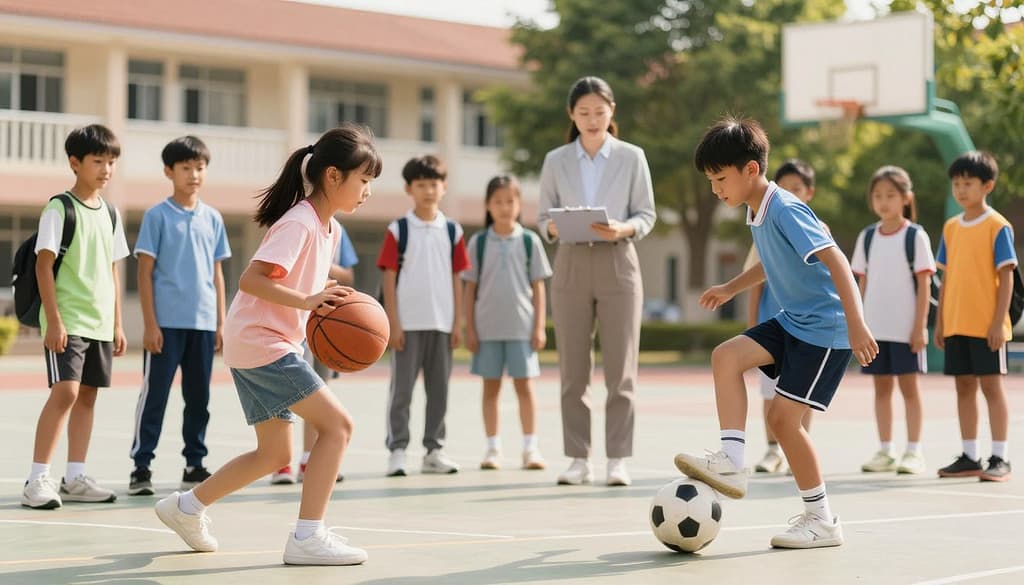
The world of sports-based education is changing fast. Now, youth programs focus on more than just sports skills. They also aim to build character and leadership.
The U.S. Olympic and Paralympic Committee has led this change. They started the American Development Model in 2014. This model helps kids grow at their own pace, making sports more inclusive.
Stars like Kobe Bryant and Chris Webber stress the value of patience. They say kids should try different sports, not just one. This way, late bloomers have a chance to show their talent.
Now, mental health and social skills are key in youth sports. Coaches learn about child development to help their athletes. This approach makes sports a positive part of kids’ lives.
Looking ahead, we’ll see more focus on playing many sports and being inclusive. The aim is to help every child succeed, both in sports and in life.