
Forget the usual networking events. Community partnerships are about connecting local groups in a meaningful way. It’s like bringing together The Avengers for a big impact in your neighborhood.
The Future of Nursing 2020-2030 report shows coalitions are key for better health. Groups like LATIN-19 and the Black Coalition Against COVID are examples. They combined resources to make real changes.
But, there’s a catch. Building strong partnerships takes time, effort, and resources. This article is your guide. We’ll explore how to map local assets and make alliances work. Let’s create something lasting.
Mapping Local Assets
Starting a partnership without knowing the local assets is like planning a heist without knowing the layout. You need to know what’s already there before you start. This isn’t about randomly calling non-profits. It’s about strategic planning.
You’re creating a detailed map of power, resources, and influence in your area. This map will show you the real community, not just the pretty pictures from the Chamber of Commerce. It’s a network of people, businesses, and places waiting to be used for learning, fun, and support.
The goal is not just to list names. It’s to find your own Charles R. Drew University of Medicine. The BCAC coalition didn’t start from scratch. They used existing assets like HBCU medical schools and the National Black Nurses Association. That’s how you build power.
Your map should also show where things are missing. Where are there food deserts? Where is public transportation unreliable? Knowing this is key. It helps you know where to build bridges and where to strengthen defenses.
This process, often called a resource audit, turns vague goodwill into a place full of opportunities for working together. It’s like planning a heist, but for good. You find the players, the vaults, and the weak spots.
| Asset Category | Examples | Potential Partnership Role |
|---|---|---|
| People & Networks | Retired professionals, faith leaders, cultural ambassadors, influential small business owners. | Trusted messengers, volunteer pools, cultural liaison roles. |
| Institutions | Community colleges, public libraries, federally qualified health centers, local credit unions. | Shared space, expertise, credible branding, and client access. |
| Organizations (CBOs, Civic) | Rotary Club, ethnic associations, veteran groups, youth sports leagues. | Event co-hosts, grassroots outreach, and existing community touchpoints. |
| Physical Spaces | Parks, community gardens, vacant storefronts, school auditoriums after hours. | Low-cost venues for screenings, classes, or pop-up services. |
See the table? It turns a vague idea into a list of things to find. Your job is to fill it with local details. That local credit union with deep trust? That’s your partner. The park with a pavilion? That’s where you’ll hold your health fair.
This map does more than list contacts. It shows the paths for referrals and support before any agreement is made. You see how a student at a school event can be connected to a clinic through a trusted navigator you’ve mapped.
Ultimately, this asset map is your key intelligence. Every joint event, shared van, or data agreement depends on this first map. Don’t partner without a map.
Designing MOUs and Data-Sharing Agreements
Drafting an MOU is like the prenuptial agreement in a romantic relationship. It’s about being clear and realistic. A good Memorandum of Understanding turns a handshake deal into a solid plan that lasts through changes.
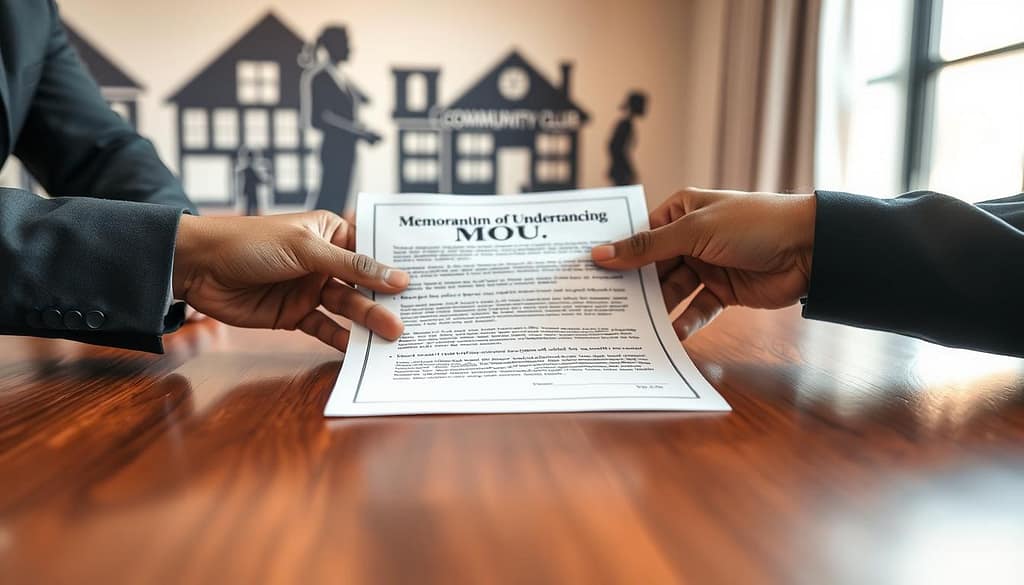
Let’s face it, nobody loves reading through endless legal documents. A good MOU is like a living, breathing playbook. It answers the questions everyone is too polite to ask at the start: Who does what? Who pays for what? And who owns the data, and how do we share it?
The key to a great MOU is setting up clear governance. Look at the LATIN-19 coalition’s structure. It has an executive team and a community advisory board. Your MOU should have a similar architecture of accountability. It makes “inter-agency collaboration” a real protocol.
So, what are the must-have clauses? Think of your MOU as having a few key parts:
- Scope and Responsibilities: This part explains who does what. Is the clinic providing staff? Is the school providing the venue and outreach?
- Governance and Communication: This sets up the structure like LATIN-19. How often do partners meet? Who makes the final decisions?
- Resource and Financial Commitments: This is about who pays for what. Be clear about contributions, funding, and cost-sharing.
- The Data-Sharing Annex: This is a critical part. It needs to be clear and separate.
The data-sharing part is very important. It’s the heart of coordinated care. This section must explain how data is shared, who can see it, and how it’s protected.
This isn’t about building walls. It’s about creating permissionless pathways for action. A teacher shouldn’t need a board meeting to get a student help. The MOU makes this possible.
In the end, a well-designed MOU turns a partnership into a strong connection with shared responsibility. It’s the foundation for all the impactful work. It’s not romantic, but it’s essential.
Joint Events and Health Screenings
Forget the boardroom; the true test of any collaboration happens in the church parking lot on a Saturday morning. This is where abstract partnerships get their public debut. It’s not just about service delivery volume—it’s about strategic presence and vibe.
Take LATIN-19. This coalition didn’t just rent a booth. They hosted weekly meetings and executed testing events in trusted, pre-existing community spaces. The result? Vaccination rates in the local Latinx population soared from a dismal 5% to a formidable 57%. They worked the community’s rhythm, not against it.
Similar to school-community partnerships, they create a “second shift” on campus. After the final bell, sites transform. They offer academic support, recreation, and family involvement events. It turns a school from a daytime institution into a full-spectrum community hub.
The magic of a joint event is its dual purpose. It delivers immediate value—a vaccine, a check-up, a hot meal. More importantly, it builds the relational capital that a pure transaction never can. It’s the difference between a handout and a handshake.
So, what does a strategic event portfolio look like? It leverages shared audiences and spaces for maximum trust and impact.
| Event Type | Strategic Goal | Key Partnership Leverage |
|---|---|---|
| School-based Health Fair | Increase preventive care access for students & families | School provides venue & captive audience; clinic provides staff & supplies. |
| Financial Literacy Workshop at Community Club | Build holistic wellbeing beyond physical health | Club offers trusted space & membership; credit union provides expert facilitators. |
| Mobile Vaccination Clinic at Faith Center | Boost immunization in hesitant populations | Faith center lends moral authority & traffic; public health agency provides logistics & vaccines. |
| Family Fitness Night at Recreation Center | Promote wellness through social connection | Rec center offers facilities; school district & local gym promote to their networks. |
Think of it as pop-up diplomacy. A health screening at a Friday night football game or a tax prep clinic at a local library does more than a dozen flyers. It builds visibility and trust simultaneously, creating a feedback loop that strengthens the collaborative foundation. This approach is supported by community health research highlighting the efficacy of integrated, place-based interventions.
Ultimately, a joint event is your partnership’s living resume. It shows you can move from planning to action, and that you understand the community’s pulse. It’s where goodwill is earned, one conversation at a time.
Shared Transportation and Facilities
Trust is more than just a signed agreement. It’s about sharing the gym keys on a Tuesday night. This shows real teamwork. It moves from just talking to doing things together, like cleaning and planning bus routes.
The “community school” model is a simple yet powerful idea. It turns the school into a community center after 3 PM. The library hosts adult classes, and the cafeteria is for support groups. A classroom becomes a health clinic.
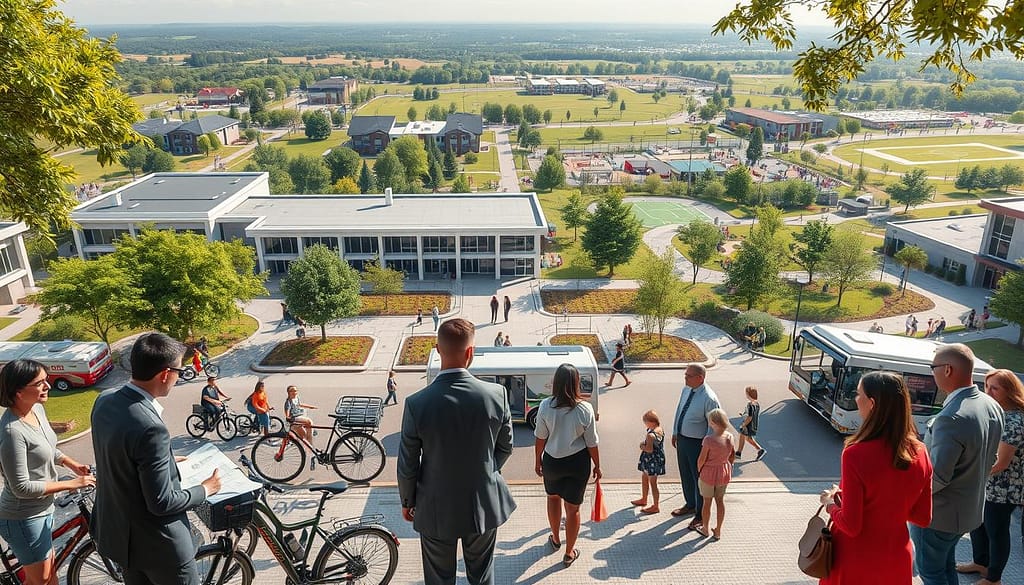
Transportation can stop good plans in their tracks. But shared solutions can solve this. Imagine a van that takes people from homes to schools and clinics. Or a bus for weekend sports games.
This makes getting to services easier. Why send a student to a counselor far away when they can meet in the school every Thursday?
Asking “What if this asset wasn’t just *ours*?” is bold. High school auditoriums and clinic rooms are often empty. Seeing this is the first step to using them better.
Using these spaces well means working together, not just talking. You’ll face challenges like insurance and scheduling. But this is what makes real partnerships.
Yes, it’s hard. You’ll have to work out details like who pays for cleaning and when. But this effort makes services feel like a seamless part of life. It’s about making every referral feel like a natural step.
This is what happens when you really work together with schools and community groups. It’s about making resources available to people, not the other way around. The bus schedule and building key are your tools for change.
Learn more about collaborating with schools and community organizations here.
Risk Management and Insurance
Building a community coalition is like launching a rocket. Risk management is the parachute you hope you never need but must have. It’s about building trust so you can take smart risks that change things.
Risk comes in two types. The first is the paperwork that lawyers love. The second is the harder stuff, like reputation and relationships. These can hurt your partnership more than missing insurance.
For the love of all things efficient, get those certificates of insurance. If you’re using a school bus or a clinic’s parking lot, you need agreements. General liability coverage is a must. Your Memorandum of Understanding (MOU) spells out who’s responsible for what.
The biggest risk is losing trust. The LATIN-19 coalition found that mistrust of health systems was a big problem. Your partnership’s strength comes from your shared credibility. A good reputational risk plan is about being open and honest.
A strong risk management plan for partnerships should include:
- Clear Crisis Communication Protocols: Who speaks, when, and how?
- A joint process for reviewing incidents to learn and improve.
- Regular “trust audits” to check how the community sees you.
- An exit strategy for when priorities change.
This is the boring but essential work of building trust. It’s about planning for problems so you can focus on your mission. The right insurance and a good risk management plan let you take bold steps. They turn liability into the key to lasting partnerships.
Sustaining Partnerships Over Time
The excitement of starting a new project often wears off quickly. But, the real challenge is making it last. It’s not just about getting more funding. It’s about designing for entropy. You want to turn a short-term project into a reliable community asset.
The Baltimore City Asthma Coalition shows how to make a lasting impact. They leveraged their members’ long history of community service. Their strategy was to be everywhere, using existing networks to sustain themselves.
LATIN-19 faced a similar challenge. They knew a task force needs a solid structure to survive. So, they created a non-profit for advocacy and a research center at Duke University. This approach ensured their work continued even after the crisis passed.
The SWIFT framework emphasizes the importance of strong partnerships. It’s about finding a rhythm, like LATIN-19’s weekly Zoom calls. It’s about measuring success together and planning for leadership changes.
Your tools and agreements must stay relevant. The initial Memorandum of Understanding should evolve with your goals. Regularly review and update your referrals process to keep things smooth.
Sustaining a partnership means focusing on the everyday tasks:
- Setting up a regular communication schedule.
- Creating shared goals and metrics.
- Developing a leadership plan in your MOUs.
- Improving the referrals process.
The goal isn’t just another big event. It’s when your partnership becomes a seamless part of the community. That’s when you’ve built something truly lasting.
Case Examples
Let’s exit the strategy room and hit the pavement. Real-world partnerships show us the blueprint.
Take LATIN-19, for example. This Duke-born coalition did more than host clinics. They built a rapid-response machine with a formal team and advisory board—a living MOU. Their fight for Spanish-language patient portals shows how deep partnerships drive systemic change.
The Black Coalition Against COVID (BCAC) played a different power game. By convening HBCU med schools and national Black nursing associations, they leveraged legacy credibility. Their “Love Letter to Black America” wasn’t just messaging; it was the glue for trust, making every public health referral stick.
Success isn’t confined to healthcare. The Lifecourse Initiative in Wisconsin mirrors this. A university-community partnership broke down silos, used data to map service gaps, and prioritized Black voices. Their work proves sustainable partnerships need structure and shared identity.
Look at education. Schools in the SWIFT framework thrived on reciprocal partnerships with local businesses. Their secret? An inviting school culture. The host environment’s ethos is everything.
Now, measure the impact. The data from Sports-Based Youth Development is revealing. Programs with strong community ties see an 83% retention rate and a 23% college enrollment boost. That’s the ROI of intentional collaboration.
So, diagnose your own effort. Do you have LATIN-19’s operational speed? BCAC’s cultural resonance? The SWIFT schools’ welcoming core? If not, you’ve just found your starting line. Build those MOUs, streamline those referrals, and get to work.