
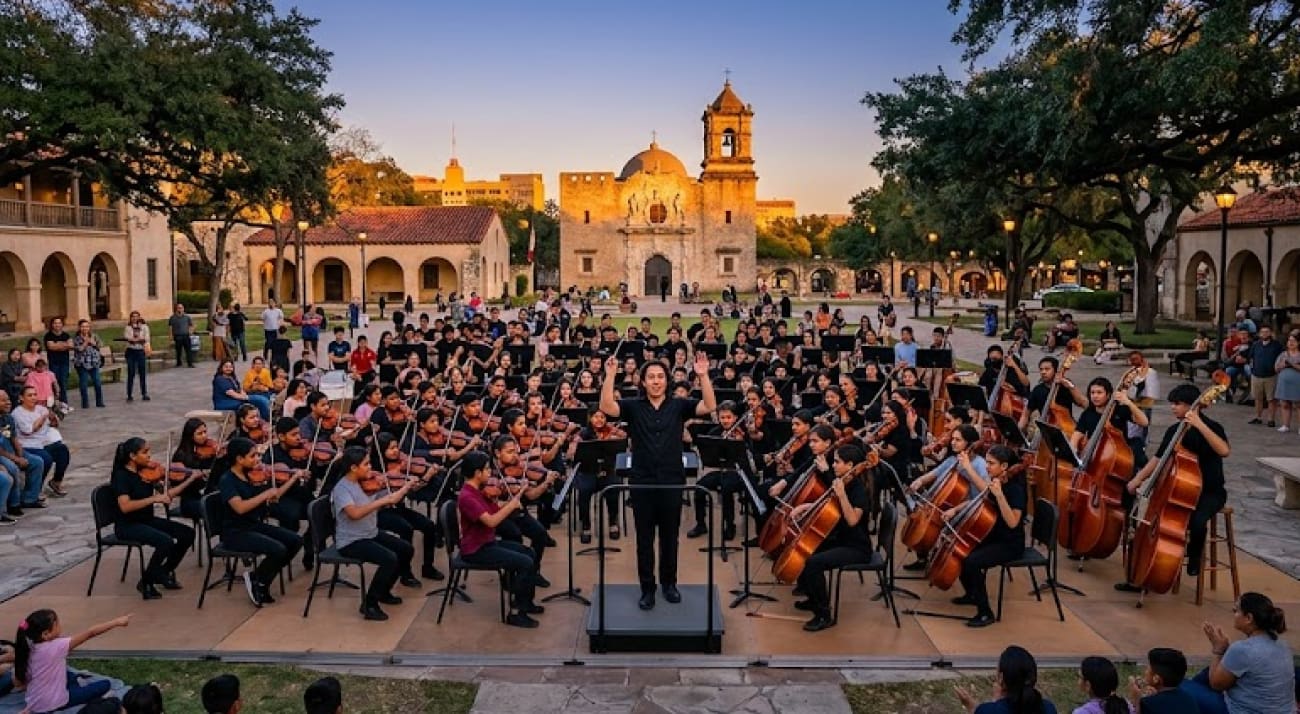
Access to arts education has long been associated with stronger academic performance, increased confidence, and improved social development among young people. Across Texas, educators and nonprofit organizations continue exploring creative ways to make music instruction available to students who may not otherwise have the opportunity to participate in formal arts programs.
A recent expansion by Orchestra San Antonio reflects that growing commitment. Under the leadership of founder and executive director Paul Montalvo, the organization is expanding its Ascend music education initiative into additional San Antonio schools. Inspired by the internationally recognized El Sistema educational model, the free after-school program provides underserved students with access to high-quality string instruction while emphasizing leadership, teamwork, discipline, and personal growth.
As communities increasingly recognize the value of arts education alongside traditional academic subjects, initiatives like Ascend demonstrate how music can become a powerful tool for building confidence, strengthening communities, and preparing young people for future success.
The Ascend Program Brings Music Education to More Students
Orchestra San Antonio created the Ascend program to remove financial barriers that often prevent children from participating in instrumental music education.
Rather than requiring families to purchase expensive instruments or private lessons, the initiative provides students with access to professional instruction, instruments, rehearsal opportunities, and performance experiences at no cost.
The recent expansion into additional San Antonio schools allows even more students to participate in structured after-school learning that complements classroom education.
Inspired by El Sistema, a music education philosophy founded in Venezuela that has influenced youth orchestras around the world, Ascend emphasizes both artistic excellence and personal development.
Students learn violin, viola, cello, and other string instruments while also developing responsibility, collaboration, perseverance, and communication skills that extend beyond musical performance.
Families interested in additional opportunities that encourage creativity and lifelong learning can also explore our guide to youth enrichment programs designed to help students grow through community engagement.
Music Education Supports Academic and Personal Growth
Research consistently demonstrates that participation in music education provides benefits extending well beyond artistic performance.
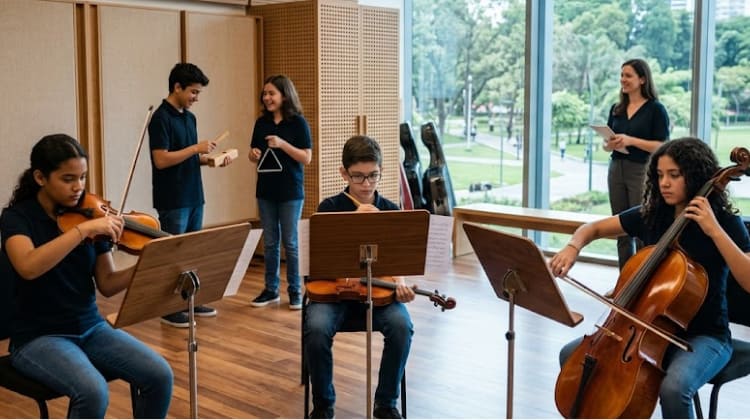
Students involved in structured music programs often strengthen concentration, listening skills, memory, pattern recognition, and problem-solving abilities.
Learning an instrument also requires consistent practice, patience, and goal setting—qualities that support success across multiple academic subjects.
Group rehearsals introduce students to teamwork by encouraging them to listen carefully, adjust their performance, and contribute to a shared objective.
These collaborative experiences build confidence while helping young musicians understand the importance of discipline and mutual respect.
The National Association for Music Education highlights extensive research demonstrating how comprehensive music education contributes to student engagement, academic achievement, and social-emotional development.
Paul Montalvo’s Vision for Community Impact
Founder Paul Montalvo established Orchestra San Antonio with a mission that extends beyond presenting professional performances.
His vision includes making orchestral music accessible to children from every neighborhood while strengthening communities through educational outreach.
The expansion of the Ascend initiative reflects this philosophy by bringing professional music instruction directly into schools serving students who may have limited access to extracurricular arts programs.
Rather than viewing orchestral education as an exclusive opportunity, the organization emphasizes inclusion and community engagement.
Students gain exposure to accomplished musicians, perform together in ensemble settings, and experience the rewards of working toward shared artistic goals.
For many participants, these opportunities introduce entirely new career possibilities within music, education, arts administration, and nonprofit leadership.
Removing Barriers to Opportunity
One of the greatest challenges facing arts education is accessibility.
Instrument costs, transportation, private lessons, and program fees often prevent students from participating even when they demonstrate strong interest and talent.
Programs like Ascend address these barriers by providing resources that allow children to focus on learning rather than financial limitations.
The initiative creates opportunities for students from underserved communities to experience high-quality arts education alongside their peers.
This approach supports educational equity while reinforcing the idea that every child deserves access to enriching extracurricular experiences.
Removing financial obstacles also encourages broader participation, creating more diverse ensembles that reflect the communities they serve.
Arts Programs Build Leadership Through Collaboration
Leadership development occurs naturally within ensemble music programs.
Unlike many individual activities, orchestras require every participant to contribute toward a common objective.

Students quickly learn that success depends on communication, preparation, accountability, and cooperation.
Musicians develop confidence by performing before audiences while also learning how to receive constructive feedback and continually improve their skills.
These experiences strengthen qualities valued by educators and employers alike.
Students participating in collaborative arts programs often develop:
- Effective communication skills.
- Teamwork and shared responsibility.
- Time management through regular practice.
- Confidence in public performance.
- Creative problem-solving.
These transferable skills remain valuable regardless of whether students ultimately pursue careers in music.
The National Endowment for the Arts continues highlighting research showing how arts participation contributes to stronger communities, educational engagement, and lifelong learning.
Expanding Educational Opportunities Across Texas
The Ascend expansion reflects broader efforts throughout Texas to increase access to after-school enrichment programs.
Communities increasingly recognize that learning extends beyond traditional academic instruction.
Programs in music, STEM, athletics, leadership, and the arts provide students with opportunities to discover interests, develop talents, and build relationships with positive mentors.
As public and private organizations collaborate to support educational enrichment, students benefit from more comprehensive learning experiences that address both academic and personal development.
These investments also strengthen neighborhoods by creating environments where young people remain engaged in constructive activities after school.
Organizations like Orchestra San Antonio demonstrate how local nonprofits can complement classroom instruction while helping students build confidence and resilience.
Community Partnerships Make Arts Education Sustainable
The continued growth of Ascend depends upon collaboration among schools, nonprofit organizations, community supporters, educators, musicians, and volunteers.
Each partner contributes unique expertise that allows the program to serve more students while maintaining high instructional quality.
Schools provide learning environments.
Professional musicians offer mentorship.
Community donors help fund instruments and educational resources.
Families encourage consistent participation.
Together, these partnerships create sustainable opportunities that benefit both students and the broader community.
| Program Component | Student Benefit |
|---|---|
| Free Instrument Access | Removes financial barriers |
| Professional Instruction | Builds technical and artistic skills |
| Ensemble Performance | Strengthens teamwork and leadership |
| After-School Programming | Supports safe, enriching learning environments |
| Community Partnerships | Expands long-term educational opportunities |
This collaborative model illustrates how community investment can create educational experiences that influence students far beyond the classroom.
Music Creates Pathways for Future Success
The expansion of Orchestra San Antonio’s Ascend program represents more than increased access to music lessons. It reflects a broader commitment to ensuring that children from every background have opportunities to discover their talents, build confidence, and develop leadership skills through meaningful educational experiences.
By removing financial barriers and bringing professional music instruction directly into underserved schools, the organization creates pathways that extend into higher education, workforce development, civic engagement, and lifelong learning.
As Texas communities continue investing in youth development, initiatives like Ascend demonstrate that arts education remains an essential part of preparing students for future success. Through collaboration, mentorship, and creative expression, Orchestra San Antonio is helping young musicians develop not only their artistic abilities but also the resilience, discipline, and confidence needed to thrive in school, their careers, and their communities.